

The Acura Integra name carries weight. It always has. For decades, it meant sharp handling, attainable performance, and just enough refinement to feel premium without losing its edge. Now, as Acura pushes deeper into electrification, the obvious question surfaces: will there be an Acura Integra EV?
Short answer: not yet — at least not officially.
As of early 2026, Acura has not formally confirmed an electric Integra. What we do know is that Acura is aggressively building its Acura EV lineup 2025 and beyond, beginning with the ZDX (built on GM’s Ultium platform) and transitioning to Honda’s in-house next-generation EV architecture later this decade. That roadmap makes an Acura Integra electric sedan not just plausible — but strategically logical.
This article serves as a central hub for everything currently known, confirmed, and realistically projected about the Acura Integra EV. We’ll break down the platform roadmap, battery direction, performance expectations, design clues, interior leaks, regenerative braking technology, towing capacity realities (if any), pricing strategy, and how an Integra Type S EV could reshape Acura electric performance.
No hype. No guessing games. Just what makes sense — and what doesn’t.
Table of contents
- Acura’s Electrification Roadmap: The Foundation Matters
- Is There an Acura Integra Electric Release Date?
- What Would the Acura Integra EV Look Like?
- Interior Leaks and Cabin Expectations
- Battery Strategy and Range Expectations
- Acura Electric Performance: Could There Be an Integra Type S EV?
- Acura Integra EV Price: Where Would It Land?
- Towing Capacity: Realistic Expectations
- How It Compares to the Acura EV Lineup 2025
- Real-World Driving Considerations
- Potential Limitations and Risks
- The Enthusiast Question
- Where Things Stand Today
- What to Watch Moving Forward
- Final Thoughts: A Logical Evolution
- Who Should Consider Waiting for the Acura Integra EV?
- FAQs About the Acura Integra EV
Acura’s Electrification Roadmap: The Foundation Matters
To understand whether the Acura Integra EV is coming, you have to understand Acura’s timeline.
Phase 1: Ultium-Based Models (2024–2026)
Acura’s first modern EV is the Acura ZDX, launched for the 2024 model year. It rides on GM’s Ultium platform, offering up to 500 horsepower in Type S trim and an estimated 300+ miles of range. That partnership was a bridge solution — a way to get to market quickly.
However, Acura has publicly confirmed that future EVs will transition to Honda’s own next-generation architecture.
Phase 2: Honda e:Architecture (Late 2020s)
Honda’s dedicated EV platform (often referenced internally as part of the 0 Series strategy) is expected to underpin future Acura and Honda electric vehicles later this decade. These models will likely feature:
- Improved battery density
- Faster DC charging capability
- Lower center of gravity
- More performance-focused AWD configurations
- Enhanced regenerative braking systems
This is where an Acura Integra EV would logically fit.
Why? Because the Integra is a compact performance sedan/hatchback. It needs a lightweight, scalable EV platform — not a heavy SUV base. Acura won’t risk diluting the Integra badge with something bulky or compromised.
Acura’s Electrification Timeline
To understand where an Integra EV might land, it helps to look at Acura’s broader electrification path.
2024 – Launch of the Acura ZDX, the brand’s first modern electric vehicle.
2025–2026 – Expansion of Acura’s EV lineup, refining battery performance and software integration.
2026–2027 – Introduction of Honda’s next-generation in-house EV platform.
2027 and beyond – Potential expansion into compact electric performance models.
If Acura decides to electrify the Integra nameplate, it would most logically arrive once the new architecture is fully operational and optimized for performance sedans.
Is There an Acura Integra Electric Release Date?
At this moment, there is no officially confirmed Acura Integra electric release date.
However, based on Acura’s publicly stated electrification strategy:
- Acura plans for 100% EV sales in North America by 2040.
- Honda’s next-gen EV platform is expected around 2026–2027.
- Acura traditionally launches performance derivatives after foundational models.
Realistically, if an Acura Integra electric sedan enters production, a late 2027 or 2028 launch would align with platform readiness.
That’s not speculation pulled from thin air — it’s timeline logic.
Acura will not build a bespoke compact EV on GM’s Ultium platform. It makes more sense to wait for internal architecture optimized for performance and packaging efficiency.
What Would the Acura Integra EV Look Like?
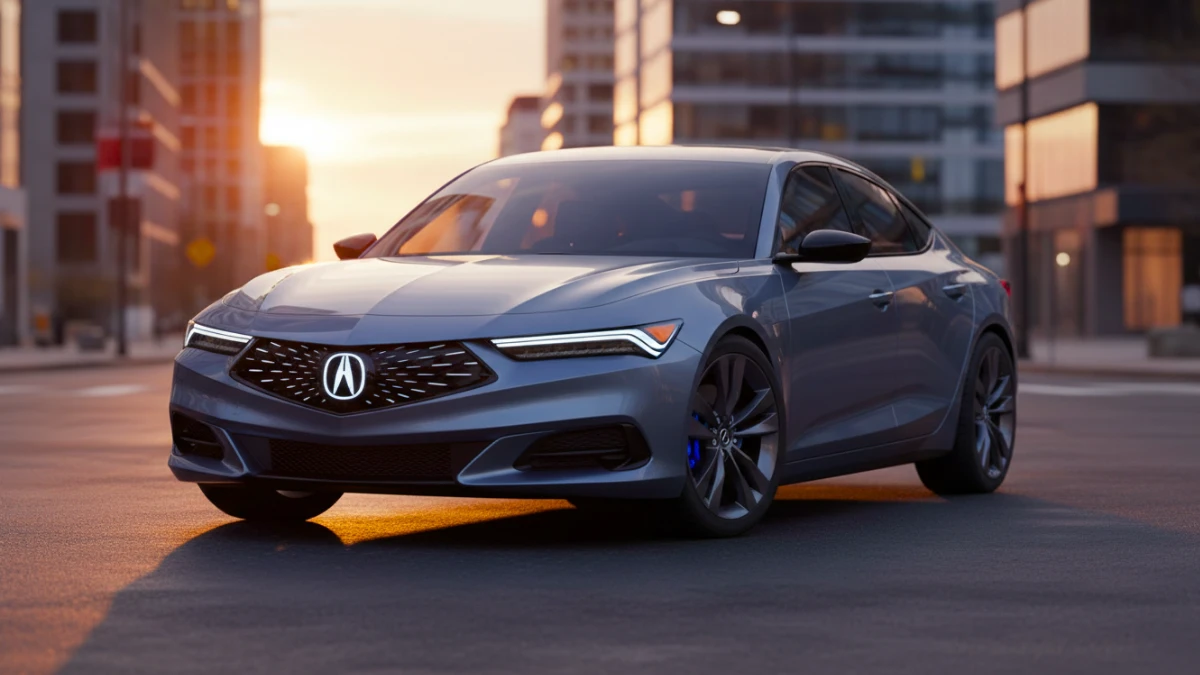
The current gasoline-powered Integra leans toward a liftback profile — sleek but practical. If Acura electrifies it, expect subtle but meaningful changes.
Design Direction
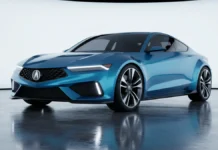
Based on Acura’s recent EV design language (as seen in the ZDX and Precision EV concept):
- Slim LED lighting signatures
- Closed-off grille with illuminated Acura badge
- Sharper character lines
- Shorter overhangs (thanks to EV packaging)
- Wider stance for stability
EV platforms allow designers to stretch wheelbases without increasing overall length. That means an Acura Integra EV could have:
- More interior space
- Better rear legroom
- Improved trunk depth
Without sacrificing its compact footprint.
One thing is certain: Acura won’t make it anonymous. The Integra name demands visual attitude.
Interior Leaks and Cabin Expectations
There have been no verified interior leaks for an Acura Integra EV. But looking at Acura’s trajectory gives us strong indicators.
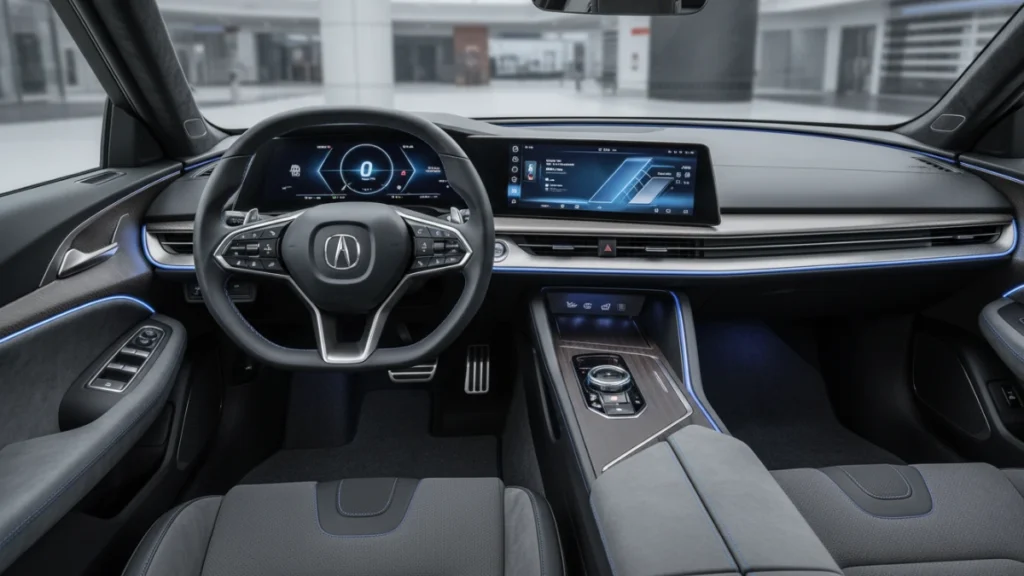
What We Can Expect Inside
- A fully digital instrument cluster
- Larger central infotainment display
- Over-the-air update capability
- Enhanced driver-assistance tech
- Sustainable material options
Acura’s latest cabins balance sportiness and minimalism. For an electric Integra, expect:
- Flat floor for improved rear comfort
- Lower seating position due to battery placement
- Improved weight distribution feel
- Integrated regenerative braking displays
And here’s where things get interesting: Acura will likely lean into a driver-focused EV experience. Unlike some competitors that overdo screens, Acura tends to preserve tactile controls for climate and performance settings — something enthusiasts appreciate.
If done right, the Integra EV interior won’t feel like a tech gadget. It’ll feel like a sport sedan that happens to be electric.
Battery Strategy and Range Expectations
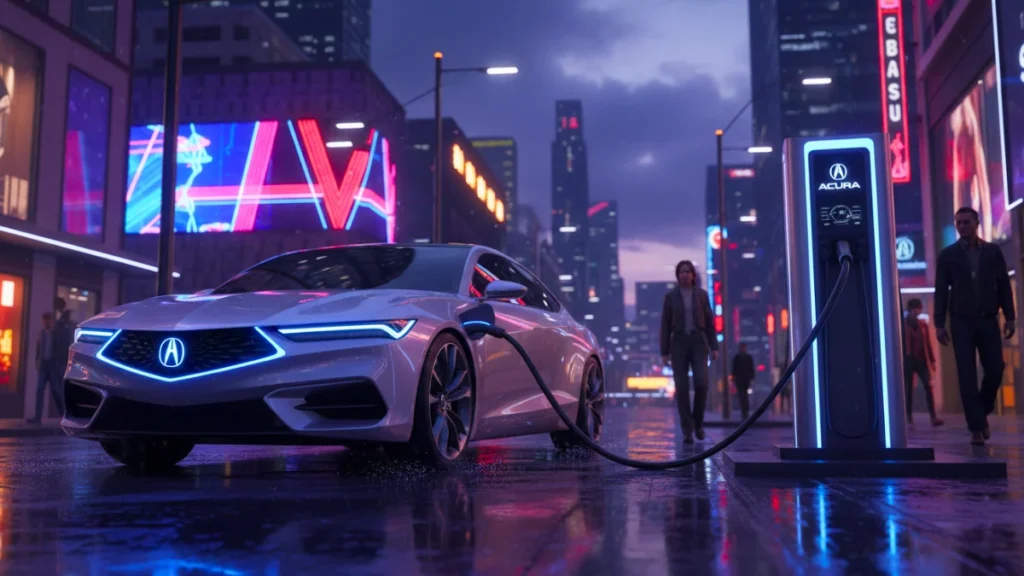
Battery technology is where the story gets serious.
Honda has publicly discussed next-generation battery development aimed at:
- Higher energy density
- Reduced weight
- Improved thermal management
- Faster DC fast charging
If the Acura Integra EV launches around 2027–2028, it could benefit from:
- 350+ mile EPA range target
- 10–80% charging under 20–25 minutes
- Improved regenerative braking efficiency
That last point matters.
Regenerative Braking: More Than Just Efficiency
Modern EV buyers expect adjustable regenerative braking levels. Acura, being performance-oriented, would almost certainly include:
- Multiple regen modes
- Steering wheel paddles for control
- One-pedal driving capability
- Performance-tuned regen calibration
This isn’t just about saving range. Properly tuned regenerative braking changes the driving feel — especially in city environments.
In a compact electric sedan like the Integra, responsive regen tuning could mimic engine braking feel. That’s important for drivers transitioning from gasoline models.
Expected Technical Targets (If Launched)
While Acura has not released specifications, any future Integra EV would need to meet clear benchmarks in the premium compact EV segment.
- Estimated Driving Range: 300–350 miles (EPA methodology reference)
- Charging Capability: Competitive DC fast charging, potentially 10–80% in under 30 minutes
- Drivetrain Options: Rear-wheel drive and dual-motor all-wheel drive
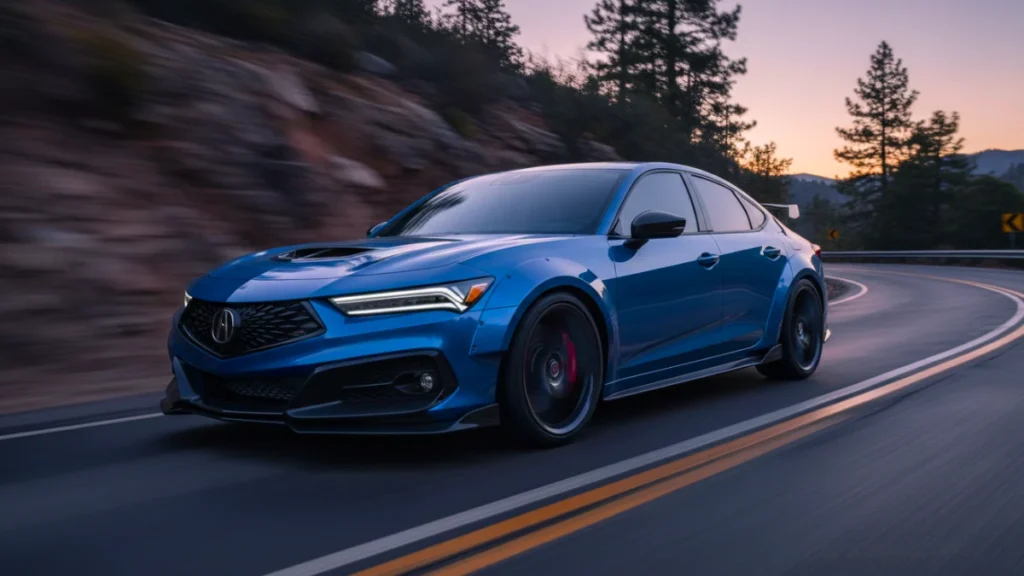
- Performance Variant: A likely Type S model with enhanced output and sport-tuned suspension
These targets aren’t speculation — they reflect the minimum standards required to compete with current electric sport sedans in the U.S. market.
Acura Electric Performance: Could There Be an Integra Type S EV?
This is where things get fun.
The gasoline Integra Type S already pushes over 300 horsepower. If Acura builds an Acura Integra Type S EV, expectations skyrocket.
Based on Acura’s ZDX Type S:
- Dual-motor AWD
- Performance torque vectoring
- Aggressive acceleration tuning
An Integra Type S EV could realistically target:
- 400–450 horsepower
- Sub-4-second 0–60 mph
- Track-oriented cooling systems
- Adaptive suspension
But here’s the challenge: weight.
EVs are heavy. The engineering focus would need to be on:
- Battery placement for optimal center of gravity
- Suspension recalibration
- Brake cooling (since regen reduces but doesn’t eliminate heat)
If Acura nails this balance, it could redefine what “Acura electric performance” means.
If they miss it, it risks becoming just another fast EV without personality.
Acura Integra EV Price: Where Would It Land?
No official numbers exist, but market positioning gives clues.
Current Integra (gasoline) pricing:
- Starts around mid-$30,000s
- Type S climbs into high $40,000s
Acura ZDX pricing:
- Starts around mid-$60,000s
An electric Integra would logically slot between them.
Estimated Positioning Strategy (Based on Segment Trends)
- Base Acura Integra EV: $45,000–$50,000
- Dual-motor AWD: $50,000–$55,000
- Potential Type S EV: $60,000+
Why higher than gasoline? Battery cost and technology.
However, Acura must stay competitive with:
- Tesla Model 3 Performance
- BMW i4
- Hyundai Ioniq 6 N (if launched)
Pricing will be critical. Too high, and it loses its accessible-performance identity.
Competitive Landscape: Where the Integra EV Would Compete
If launched, the Acura Integra EV would enter one of the most competitive segments in the electric market — compact premium sport sedans.
Here’s where it would likely position itself:
Tesla Model 3 Performance – Tech-forward, brutally quick, but sometimes criticized for build consistency and ride firmness.
BMW i4 – Polished, refined, and driver-focused, with traditional luxury appeal.
Hyundai Ioniq 6 – Efficient, aerodynamic, and aggressively priced.
Polestar 2 – Minimalist Scandinavian design with sharp handling character.
Acura’s opportunity would be clear: blend Japanese reliability with genuine driver engagement — something that sits between Tesla’s speed and BMW’s refinement.
If priced correctly, the Integra EV could attract buyers who want electric performance without stepping into six-figure territory.
Towing Capacity: Realistic Expectations
Let’s address a common question: would the Acura Integra EV have towing capacity?
Compact electric sedans typically offer limited or no official towing ratings in the U.S. market. Even if technically capable, Acura may avoid advertising towing to protect range estimates and battery longevity.
If rated at all, expect something modest — perhaps under 2,000 pounds.
But realistically, the Integra buyer isn’t shopping for towing capability. This isn’t an SUV. It’s a sport compact. And Acura will likely focus on performance rather than utility ratings.
How It Compares to the Acura EV Lineup 2025
Right now, Acura’s EV presence centers on the ZDX. That’s a midsize SUV. It’s spacious, powerful, and premium.
What’s missing? A compact performance EV.
That’s exactly where the Acura Integra electric sedan would shine.
It would:
- Lower the entry point to Acura’s EV lineup
- Attract younger buyers
- Compete directly in the sport EV sedan category
- Preserve the Integra legacy in a modern form
Without it, Acura risks leaving the enthusiast EV market to competitors.
Real-World Driving Considerations
EV ownership isn’t just about acceleration numbers.
For daily driving, the Integra EV would need:
- Consistent DC charging curve
- Efficient thermal management
- Smooth regenerative braking transitions
- Predictable steering feel
Acura traditionally tunes steering with more feedback than many rivals. If that philosophy carries into the EV era, the Integra could feel more connected than competitors like Tesla.
And that matters.
Because driving engagement is what built the Integra name in the first place.
Potential Limitations and Risks
No vehicle is perfect — and an Acura Integra EV would face real challenges.
- Battery Weight – Compact EVs can feel heavy compared to gas counterparts.
- Pricing Pressure – Staying affordable while offering strong range is difficult.
- Charging Infrastructure Variability – Not Acura’s fault, but still affects ownership.
- Brand Identity Transition – Enthusiasts may resist electrification.
Acura will need to communicate clearly: this isn’t replacing performance — it’s redefining it.
The Enthusiast Question
Will an electric Integra still feel like an Integra?
That depends on execution.
If Acura prioritizes:
- Balanced chassis tuning
- Honest steering feedback
- Controlled regenerative braking
- A purposeful driving character
Then yes, it can work.
If it becomes just another silent commuter sedan with a premium badge, the nameplate loses meaning.
Where Things Stand Today
As of now:
- No official Acura Integra EV announcement
- No confirmed Acura Integra electric release date
- No verified interior leaks
- No production specs
What we do have is a clear electrification roadmap and a strategic gap in Acura’s future portfolio.
That gap looks exactly like an electric Integra.
What to Watch Moving Forward
If you’re tracking the Acura Integra EV story, keep an eye on:
- Honda’s next-gen EV platform rollout
- Acura concept cars in the compact segment
- Performance-focused EV announcements
- Battery partnership news
- Updates to the Acura EV lineup 2025 strategy
Those signals will tell us when — not if — the Integra goes electric.
Final Thoughts: A Logical Evolution
The Acura Integra has always represented attainable performance with personality.
Electrification doesn’t automatically erase that identity. In many ways, instant torque and lower center of gravity could enhance it.
But execution will define everything.
An Acura Integra EV isn’t confirmed — yet. Still, the trajectory of the brand makes it one of the most anticipated future possibilities in Acura’s electric future.
If done right, it won’t just join the Acura EV lineup.
It could become the car that proves electric performance doesn’t have to feel synthetic.
And for longtime Integra fans, that’s the only outcome that matters.
Who Should Consider Waiting for the Acura Integra EV?
An electric Integra wouldn’t be for everyone. But certain buyers would have a strong reason to wait.
- Current Integra owners who love the badge but want to transition to electric.
- Tesla Model 3 shoppers looking for a more traditional driving feel.
- BMW 3 Series drivers considering their first EV.
- Younger buyers entering the premium market for the first time.
- Performance enthusiasts who want instant torque without giving up handling balance.
For drivers who value brand heritage as much as technology, an electric Integra could represent a meaningful evolution rather than a departure.
FAQs About the Acura Integra EV
Is the Acura Integra EV officially confirmed?
No, Acura has not officially confirmed an Acura Integra EV as of 2026. However, given Acura’s long-term electrification strategy and the expansion of the Acura EV lineup 2025 and beyond, a compact electric sedan remains a strong possibility in the coming years.
What is the expected Acura Integra electric release date?
There is currently no confirmed Acura Integra electric release date. Based on Acura’s transition to its next-generation EV platform, a realistic timeframe would be around 2027 or later if the model enters production.
How much will the Acura Integra EV cost?
Acura has not announced official pricing. However, based on segment positioning and current EV market trends, the Acura Integra EV price would likely start between $45,000 and $50,000, depending on battery size and drivetrain configuration.
A potential Acura Integra Type S EV could exceed $60,000.
Will there be an Acura Integra Type S EV?
There is no official confirmation of an Acura Integra Type S EV. That said, Acura has already introduced performance-oriented EVs like the ZDX Type S, signaling that Acura electric performance models are part of the brand’s future strategy.
If the Integra goes electric, a performance variant would make strategic sense.
What range could the Acura Integra EV offer?
While no specifications exist yet, most compact premium electric sedans today target between 300 and 350 miles of EPA range. A future Acura Integra electric sedan would likely aim for similar numbers to remain competitive.
Will the Acura Integra EV support fast charging?
Although not confirmed, Acura’s next-generation EV platform is expected to support DC fast charging. Future models will likely target 10–80% charging times under 30 minutes, depending on battery capacity and charging infrastructure.
How will regenerative braking work in the Integra EV?
If launched, the Acura Integra EV would almost certainly feature adjustable regenerative braking modes, potentially including:
- Multiple regen levels
- Steering wheel paddle adjustment
- One-pedal driving capability
Acura typically tunes systems for driver engagement, so regenerative braking would likely prioritize smooth transitions and predictable control.
Will the Acura Integra EV have towing capacity?
Compact electric sedans typically offer minimal or no official towing ratings in the U.S. market. If rated at all, towing capacity would likely be modest and not a primary focus of the vehicle.
The Integra EV would prioritize performance and efficiency over utility.
How will the Acura Integra EV differ from the ZDX?
The ZDX is a midsize electric SUV, while the Integra EV would be a compact electric sedan. The Integra would likely focus more on agility, sport handling, and a lower price point within the Acura EV lineup 2025 strategy.
Is the Acura Integra EV replacing the gasoline Integra?
There has been no announcement that the electric version would replace the gasoline model. For the near future, it’s more realistic to expect both to coexist before Acura transitions fully to electrification later in the decade.