







Overview
For three decades, the Subaru Outback has occupied a unique place in the American market—part wagon, part SUV, and unapologetically built for people who actually leave the pavement behind. With the arrival of the 2026 Subaru Outback, Subaru is giving its most recognizable adventure vehicle a comprehensive redesign, one that modernizes the formula without losing the character that made the Outback a household name across the U.S.
At first glance, the changes are obvious. The new model adopts a bolder exterior design with sharper lighting, a more upright stance, and subtle cues that push it closer to the SUV side of the spectrum. Inside, the transformation is even more noticeable. Subaru has reworked the cabin with a cleaner layout, significantly upgraded technology, and materials that feel more premium than what longtime Outback owners may remember. Yet beneath the updates, the core formula remains intact: the horizontally opposed boxer engine layout and the brand’s signature Symmetrical All-Wheel Drive, two mechanical traits that have defined Subaru vehicles for decades.
The Outback also continues to play a central role in Subaru’s lineup. While crossovers like the Subaru Forester and the smaller Subaru Crosstrek attract huge numbers of buyers, the Outback still sits at the heart of the brand’s identity—bridging the gap between family practicality, outdoor capability, and everyday comfort.
In this guide, we’ll break down everything that matters about the 2026 Outback. That includes its performance and engine options, interior technology, cargo capacity, safety features, pricing expectations, and how it actually fits into real-world American driving—from long road trips to weekend trailheads.
Specs
A Legacy of Practicality and Adventure
Since its debut in the mid-1990s, the Outback has carved out a unique position in the market. It’s not quite a traditional wagon and not quite an SUV, but something in between.
That unique identity has worked remarkably well. In the United States, the Outback consistently ranks among Subaru’s best-selling models, often competing with the Subaru Forester and the Subaru Crosstrek for the top sales spot.
Recent sales figures show the Outback approaching 170,000 units annually in the U.S., a remarkable achievement for a vehicle that still carries wagon roots in an SUV-dominated market.
The new generation builds on that legacy while addressing modern expectations for design, technology, and everyday usability.
What’s New for 2026
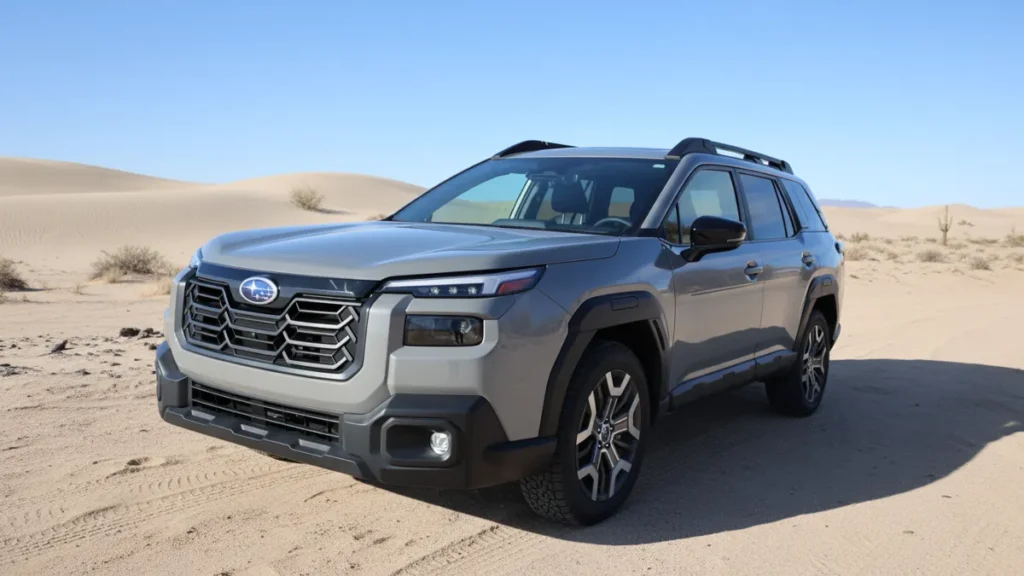
The 2026 model year marks the debut of the seventh-generation Outback, and it brings the most substantial update the wagon has seen in years. Subaru didn’t simply refresh the design; the company rethought several aspects of how the vehicle looks, feels, and functions.
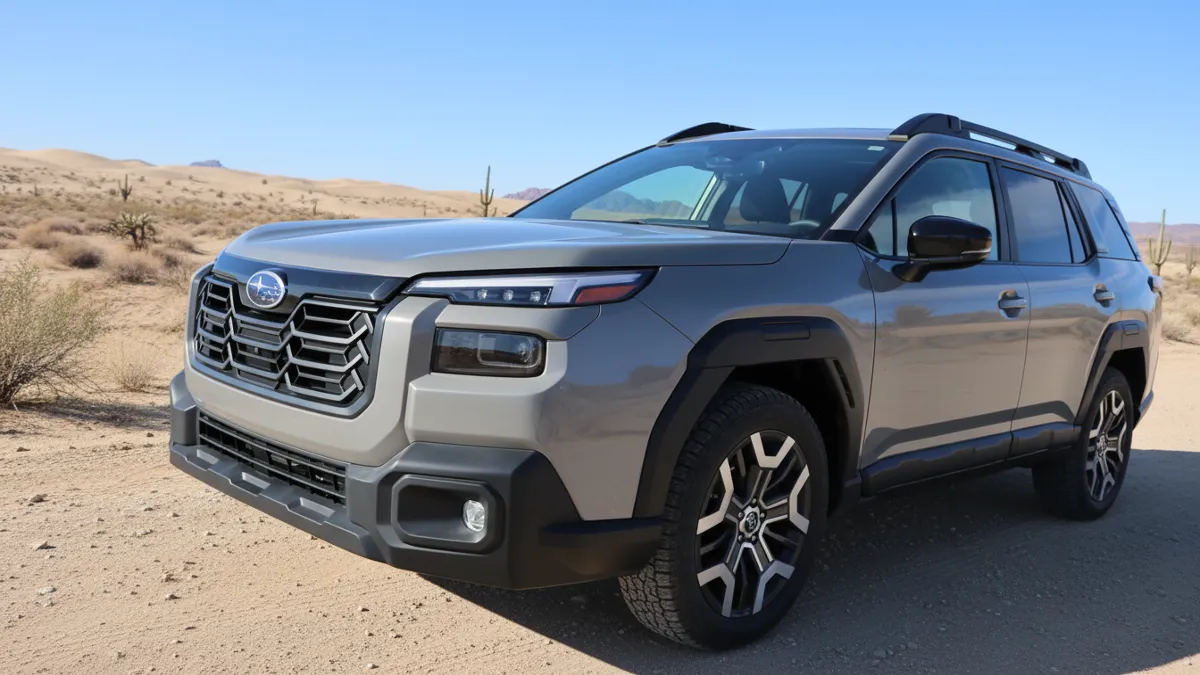
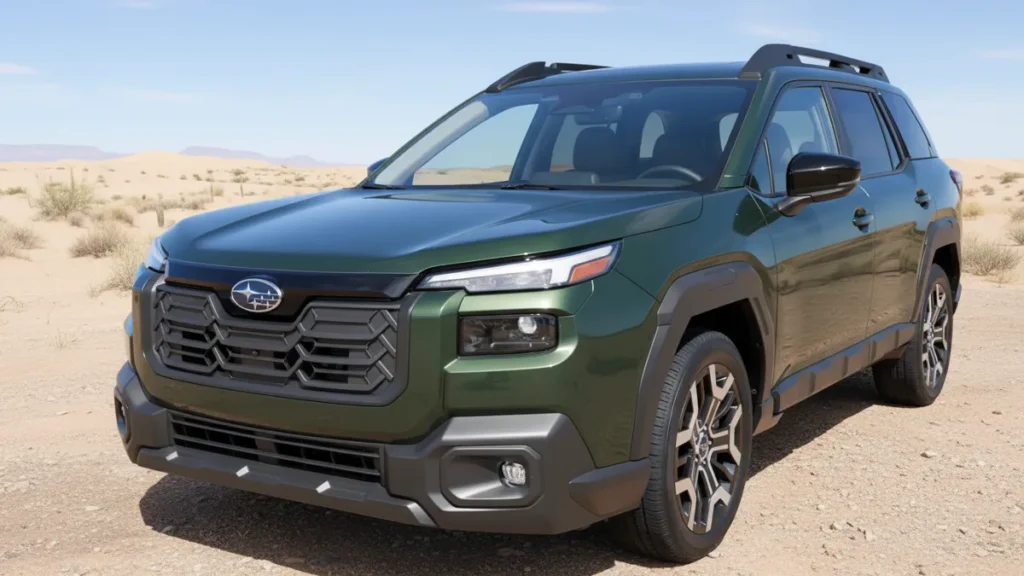
Visually, the new Outback adopts a fully redesigned exterior with stronger proportions and more SUV-like cues. The front fascia now features a split-headlight arrangement, where slim LED daytime running lights sit above the main headlamp units. The result is a more modern, almost truck-inspired face that clearly separates this generation from its predecessor.
Another notable change is the taller roofline, which increases overall cabin volume and improves cargo flexibility. It’s a small dimensional tweak that makes a real difference when loading camping gear, bikes, or travel luggage—exactly the kind of use case Outback buyers tend to have.
Inside the cabin, technology takes a significant step forward. Subaru introduces dual digital displays, pairing a large digital instrument cluster with an updated infotainment touchscreen running new software designed for faster processing and improved graphics. The interface feels more contemporary, addressing one of the biggest criticisms of the previous generation.
Material quality has also improved throughout the interior, with more soft-touch surfaces, updated trim designs, and available premium upholstery in higher trims.
A few functional upgrades stand out as well:
- First-ever 360-degree camera system for easier maneuvering and trail visibility
- Redesigned roof rails capable of supporting more weight for rooftop gear
- Improved interior packaging thanks to the taller roof structure
Despite all the changes, Subaru has been careful not to erase what makes the Outback recognizable. The proportions still echo the long-roof wagon shape that defined the model for years, even as the design leans slightly more toward the rugged crossover look that today’s buyers expect.
Powertrain and Performance
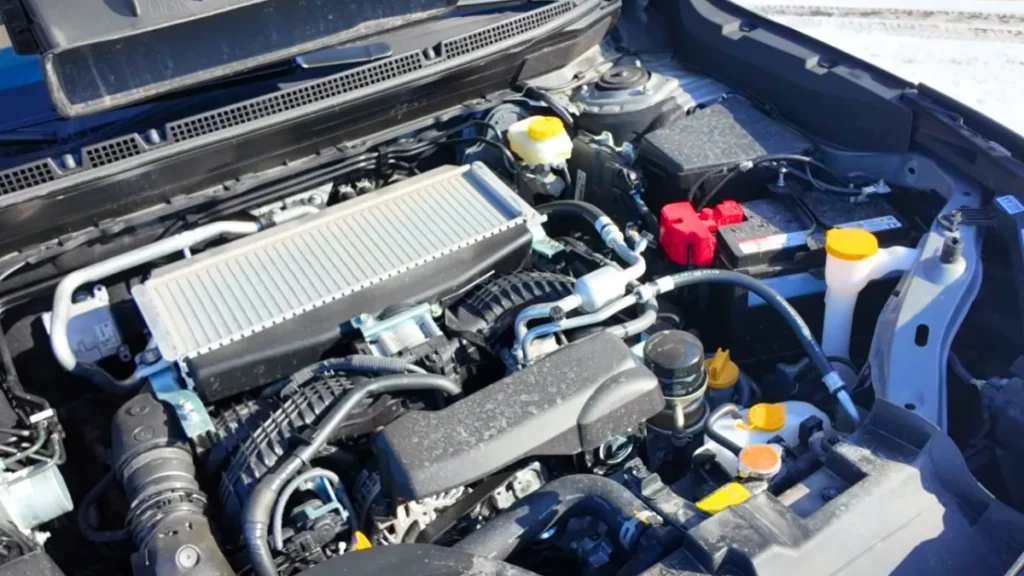
Under the hood, the 2026 Outback keeps a familiar mechanical formula, and that’s largely intentional. Subaru chose evolution rather than reinvention, sticking with the boxer engine architecture that has long been central to the brand’s identity.
The base engine is a 2.5-liter naturally aspirated flat-four, delivering roughly 180 horsepower and 178 lb-ft of torque. It’s not designed to be a performance powerhouse, but it provides steady, predictable power for everyday driving, commuting, and long-distance travel. The engine is paired with Subaru’s Lineartronic CVT transmission, which prioritizes smoothness and efficiency rather than aggressive shifts.
For buyers who want stronger performance, Subaru continues to offer the XT models, which upgrade to a 2.4-liter turbocharged boxer engine. This unit produces about 260 horsepower and 277 lb-ft of torque, delivering noticeably quicker acceleration and far more confident highway passing power. It also improves the Outback’s capability when hauling cargo or towing gear.
Speaking of towing, turbocharged Outback models can handle up to 3,500 pounds, enough for small trailers, boats, or outdoor equipment—an important factor for drivers who use their vehicles as adventure platforms.
Regardless of engine choice, every Outback comes standard with Subaru’s Symmetrical All-Wheel Drive system. The layout distributes power evenly across all four wheels and works in tandem with the vehicle’s low center of gravity, thanks to the horizontally opposed engine design. The result is predictable traction in snow, rain, gravel roads, and other conditions where traditional front-wheel-drive crossovers can struggle.
In other words, while the design and technology may have evolved significantly for 2026, the Outback still drives the way Subaru owners expect: stable, capable, and ready for just about any road—or trail—you point it toward.
Fuel Economy
Official EPA fuel economy numbers for the 2026 Subaru Outback had not yet been finalized at the time of writing, but early expectations suggest the new model should land very close to the efficiency figures of the outgoing generation. In practical terms, that likely means mid-20s MPG in the city and around 30 MPG on the highway for the base engine, with slightly lower numbers for the turbocharged XT models.
Subaru’s signature boxer engine layout continues to play a role here. Because the horizontally opposed engine sits lower in the chassis, it helps lower the vehicle’s center of gravity, which can improve overall drivetrain efficiency and stability. It’s also a design Subaru engineers know extremely well after decades of refinement.
Another factor influencing fuel economy is the updated Lineartronic CVT tuning. Subaru has adjusted the transmission’s calibration to better balance smooth acceleration with efficiency. In everyday driving—especially highway cruising—the system can hold optimal engine speeds more consistently, helping reduce unnecessary fuel consumption.
For many Outback buyers, that combination of all-wheel-drive capability and respectable MPG remains one of the vehicle’s biggest strengths. Few vehicles in the segment offer standard AWD while still maintaining competitive fuel efficiency.
Exterior Design
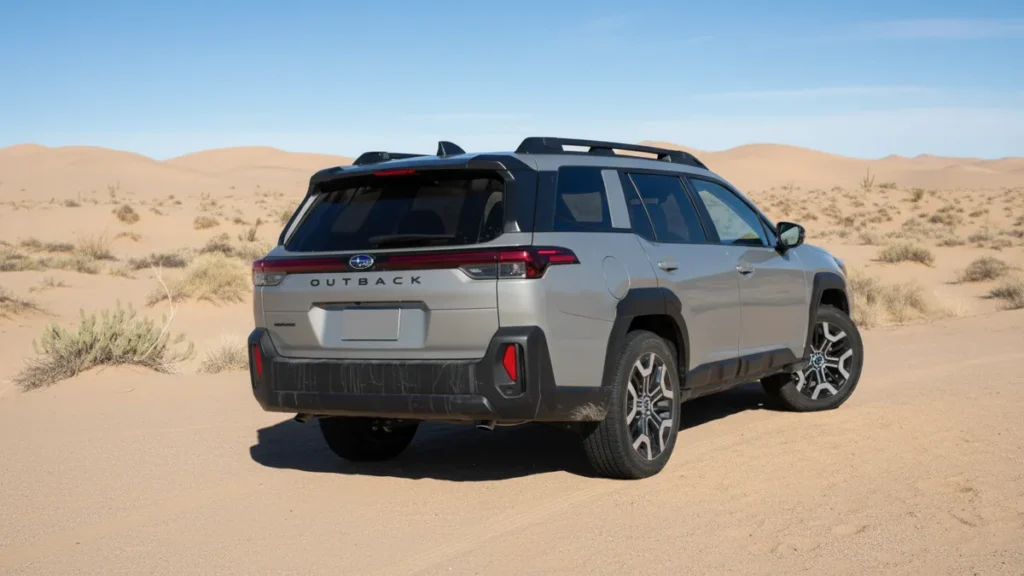
The first thing people notice about the new Outback is its styling.
Subaru has moved toward a boxier, more rugged design language, giving the vehicle stronger SUV proportions without abandoning its wagon DNA.
The front end is completely redesigned. A new lighting layout introduces a split headlight configuration, where the daytime running lights and turn signals sit higher on the fascia, while the primary LED headlights are positioned lower. This design trend is becoming increasingly common across the industry, and Subaru has now adopted it for the Outback.
The grille is also larger and more pronounced, emphasizing a tougher presence on the road.
One improvement many observers immediately noticed is the cleaner approach to body cladding. Previous Outback generations sometimes had heavy plastic cladding that divided opinion among buyers. On the new model, the cladding remains functional but looks more integrated and less intrusive.
From the side, the Outback maintains its familiar long-roof silhouette, but subtle changes give it a more SUV-like appearance.
Interior Technology
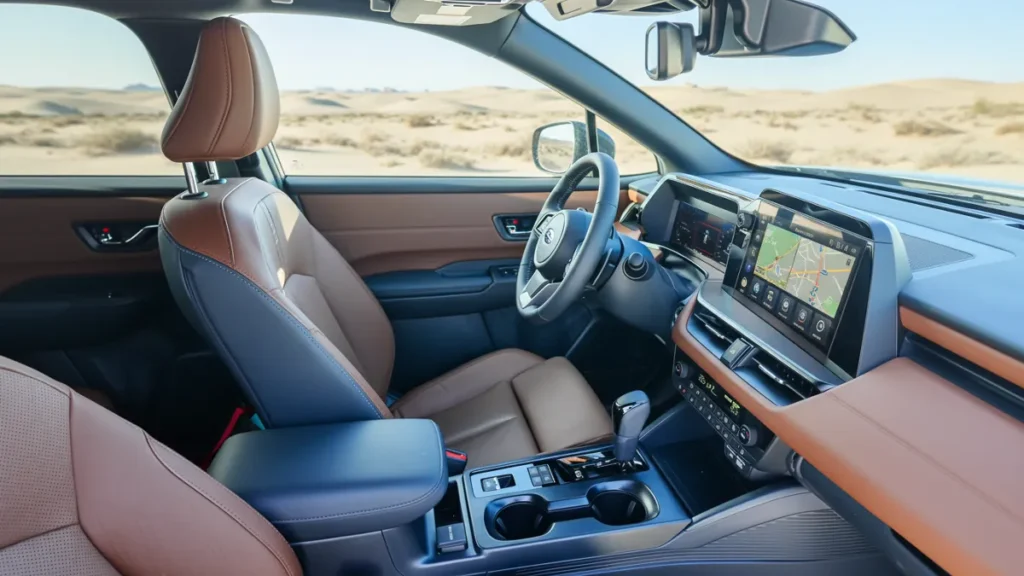
Inside the cabin, the 2026 Outback introduces one of the biggest technology upgrades the model has seen in years. Subaru clearly focused on modernizing the digital experience while still keeping the cabin intuitive for everyday drivers.
The centerpiece of the dashboard is a 12.3-inch digital instrument cluster, replacing the traditional analog gauges with a configurable display that can show navigation, vehicle information, and driver-assist data. It’s paired with a 12.1-inch infotainment touchscreen positioned prominently in the center of the dash.
Under the surface, Subaru has moved to a new Android-based infotainment platform, delivering noticeably faster response times and smoother graphics compared with the previous system. Everyday tasks—like switching menus, loading navigation, or adjusting settings—feel more fluid than before.
Connectivity is also fully up to date. Drivers get wireless Apple CarPlay and Android Auto, eliminating the need for cables while still allowing seamless smartphone integration.
Importantly, Subaru didn’t abandon physical controls altogether. While the infotainment system handles navigation and media functions, dedicated climate control buttons remain in place, a decision many drivers will appreciate. In real-world use—especially when wearing gloves or driving on rough roads—physical buttons are often faster and easier to operate than touchscreens alone.
The result is a cabin that feels significantly more modern without sacrificing usability.
Comfort & Space
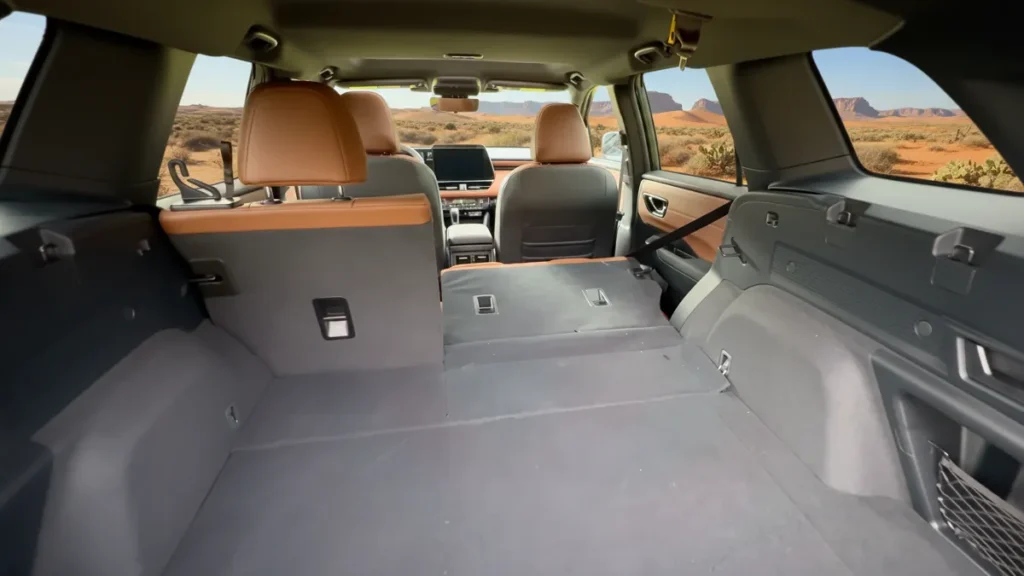
Practicality has always been one of the defining traits of the Outback, and the 2026 model continues that tradition while adding a few meaningful improvements.
One of the most noticeable changes is the slightly taller roofline, which increases interior volume and improves overall passenger comfort. Rear-seat occupants benefit from additional headroom, making long trips more comfortable for adults sitting in the back.
Up front, higher trims offer a noticeably more premium environment. Buyers can opt for Nappa leather seating, along with heated and ventilated front seats—features that make the Outback feel closer to a luxury crossover than a traditional wagon.
Rear passengers also benefit from generous space, with wide seating and good legroom that make the Outback a solid family vehicle. The rear bench can fold flat, transforming the cargo area into a large, continuous load floor.
Cargo capacity remains one of the Outback’s biggest strengths:
- 34.6 cubic feet behind the rear seats
- Around 75 cubic feet with the rear seats folded
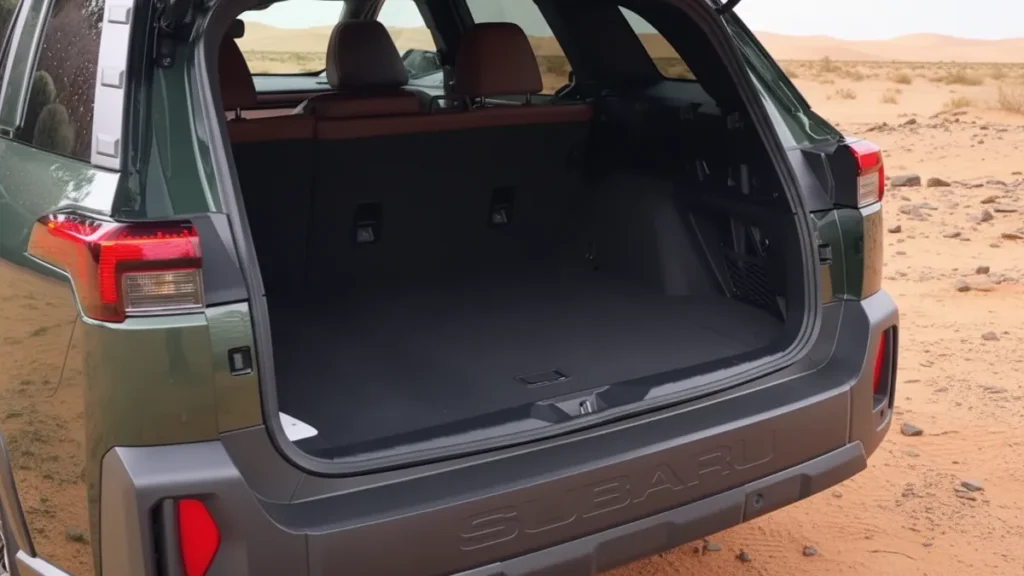
That level of space makes the Outback particularly appealing for road trips, camping equipment, bikes, skis, and other outdoor gear. Combined with Subaru’s signature roof rail system, the vehicle continues to function as a versatile adventure platform.
Safety and Driver Assistance
Safety has long been a cornerstone of Subaru’s brand identity, and the 2026 Outback continues to emphasize advanced driver-assistance technology.
At the heart of the system is the latest generation of EyeSight Driver Assist Technology, Subaru’s camera-based safety suite designed to help prevent accidents and reduce driver fatigue on long trips.
Key features include:
- Adaptive cruise control, which automatically adjusts speed to maintain a safe following distance
- Lane centering assist, helping keep the vehicle positioned within its lane
- Automatic emergency braking, designed to detect potential collisions and apply braking if needed
- Blind-spot monitoring, which alerts drivers to vehicles approaching from adjacent lanes
- Rear cross-traffic alert, useful when backing out of parking spaces
New for this generation is an available 360-degree camera system, providing a bird’s-eye view around the vehicle. This feature not only makes tight parking easier but can also help drivers navigate narrow trails or crowded campsites more confidently.
Together, these technologies reinforce the Outback’s reputation as a safe and dependable family vehicle.

Pricing Expectations
Subaru has not yet announced official pricing for the 2026 Outback, but based on previous model years, the lineup is expected to remain competitively positioned within the midsize adventure crossover market.
Estimated pricing could look roughly like this:
Premium
$34,995 Starting MSRP
Standard Symmetrical AWD, 2.5L boxer engine, updated infotainment system, and Subaru’s latest EyeSight safety technologies.
Limited / Limited XT
$41,715 – $44,365 MSRP
More premium interior materials, larger wheels, advanced driver assistance features, with the XT model adding the 2.4L turbocharged boxer engine.
Touring / Touring XT
$45,395 – $47,995 MSRP
Top-of-the-line trims with Nappa leather, advanced technology features, and the optional turbocharged 2.4L engine in the Touring XT.
If these estimates hold true, the Outback will continue to offer strong value compared with many rivals that charge extra for all-wheel drive. With standard AWD, a spacious interior, and strong safety credentials, the Outback has historically delivered a compelling balance between price, capability, and everyday practicality.
For buyers who want a vehicle capable of handling commuting, long-distance travel, and outdoor adventures without moving into full SUV territory, the Outback remains one of the more versatile options on the market.
Comparison With Competitors
The midsize adventure wagon segment isn’t crowded, but the 2026 Subaru Outback still faces serious competition from several crossover SUVs that target similar buyers. Among the most relevant rivals are the Toyota Crown Signia, Honda Passport, and Ford Edge. Each of these vehicles offers a different take on practicality, performance, and everyday usability.
The table below highlights how these vehicles compare across the most important categories for buyers.
| Category | 2026 Subaru Outback | Toyota Crown Signia | Honda Passport | Ford Edge |
|---|---|---|---|---|
| Cargo Space | ~34.6 cu ft behind seats / ~75 cu ft max. Long, flat cargo floor. | Good cargo space but reduced height due to sloping rear. | Wide cargo area; higher load floor. | Competitive space but less versatile layout. |
| AWD Capability | Standard Symmetrical AWD on all trims. | Optional AWD focused on efficiency. | i-VTM4 AWD with torque vectoring. | AWD available depending on trim. |
| Off-Road Usability | 8.7-inch clearance; X-Mode system. | Mainly designed for paved roads. | Strong off-road ability for an SUV. | Mostly road-focused crossover. |
| Fuel Economy | Good efficiency for a standard AWD vehicle. | Hybrid system delivers best efficiency. | V6 engine increases fuel use. | Turbo engines with moderate efficiency. |
| Starting Price | From $34,995 to about $47,995. | Higher price due to hybrid system. | Starts in the mid-$40K range. | Similar pricing to Passport. |
| Best For | Adventure buyers needing AWD and cargo space. | Drivers wanting comfort and hybrid efficiency. | Buyers seeking rugged SUV capability. | Drivers wanting a comfortable highway crossover. |
Where the Outback Stands Out
Across the midsize crossover segment, the Outback continues to stand out thanks to its unique wagon-like design and balanced capabilities. Its long roofline provides excellent cargo flexibility, while standard all-wheel drive and generous ground clearance make it particularly appealing for drivers who frequently encounter snow, gravel roads, or outdoor terrain.
Driving Impressions
Driving the Outback has always been about balance rather than outright performance.
On the highway, the vehicle delivers a smooth, composed ride that makes long journeys feel effortless. The suspension tuning leans toward comfort, soaking up rough pavement and expansion joints without transmitting harsh vibrations into the cabin.
This relaxed ride quality is one reason the Outback has become a favorite among long-distance travelers.
The steering is predictable and stable, giving drivers confidence during extended highway cruising. Even when fully loaded with gear or passengers, the vehicle remains composed and easy to control.
Subaru’s Symmetrical All-Wheel Drive system adds another layer of reassurance. Whether driving through heavy rain, snowy mountain roads, or loose gravel surfaces, the Outback maintains steady traction and predictable handling.
Drivers who opt for the turbocharged engine in XT trims will appreciate the extra power. The 2.4-liter turbocharged boxer engine produces strong low-end torque, making highway merging and mountain driving much easier.
It’s not designed to be a performance vehicle, but the added torque gives the Outback a noticeably more confident character.
Overall, the driving experience feels refined and comfortable—exactly what many buyers want in a vehicle designed for road trips, family travel, and outdoor exploration.
Pros and Cons
Pros
- Standard all-wheel drive across the entire lineup
- Spacious interior and highly practical cargo area
- Strong turbocharged engine option
- Excellent safety technology and driver-assist systems
- Significantly improved interior technology for 2026
Cons
- Continuously variable transmission may not appeal to all drivers
- Base engine performance feels modest in some situations
- No hybrid option announced yet
Who Should Buy the 2026 Subaru Outback
The 2026 Subaru Outback continues to appeal to a wide variety of buyers, but certain drivers will appreciate it more than others.
Outdoor enthusiasts will find the Outback especially appealing. Its ground clearance, all-wheel drive capability, and practical cargo space make it ideal for hiking trips, camping adventures, and winter sports.
Families looking for a spacious and versatile vehicle will also appreciate its roomy interior and flexible cargo area.
Drivers living in snowy or rainy climates benefit greatly from the Outback’s standard AWD system, which delivers consistent traction throughout the year.
Long-distance travelers are another perfect match. The Outback’s comfortable ride, supportive seats, and quiet cabin make it a strong choice for cross-country road trips.
Finally, many buyers are simply loyal Subaru owners upgrading from older models of the Outback, Forester, or Crosstrek.
Final Verdict
The 2026 Subaru Outback successfully modernizes one of America’s most recognizable adventure vehicles.
With a bold exterior redesign, significantly improved interior technology, and the same dependable all-wheel drive capability that made it famous, Subaru has ensured the Outback remains relevant in a highly competitive market.
It continues to offer something few competitors can match: the practicality of an SUV combined with the comfort and driving dynamics of a wagon.
For many drivers seeking a vehicle capable of daily commuting, family hauling, and weekend adventures, the Outback remains one of the most versatile choices available.
FAQ
Yes. XT trims come equipped with a 2.4-liter turbocharged boxer engine producing approximately 260 horsepower.
Turbocharged models can tow up to 3,500 pounds, making the Outback suitable for small trailers, boats, or camping equipment.
The Outback provides about 34.6 cubic feet of cargo space behind the rear seats and roughly 75 cubic feet with the seats folded down.
At launch, Subaru has not announced a hybrid version of the Outback. However, future electrified variants remain a possibility as the brand expands its hybrid lineup.