









Inside the automotive enthusiast’s psyche, the letters “CS” carry the weight of a holy relic. Competition Sport. It’s a badge reserved for BMW M cars that go beyond raw horsepower and lap times. A CS model is supposed to feel sharper, lighter, more emotional — the kind of machine that makes even an ordinary commute feel like a qualifying lap.
The 2026 BMW M2 CS interior combines carbon bucket seats, Alcantara surfaces, BMW Operating System 9, and track-focused ergonomics to create one of the most engaging modern BMW M cabins.
That expectation now falls on the 2026 BMW M2 CS. And unlike some modern performance cars that bury their personality under layers of digital isolation, the latest M2 CS uses its interior to remind you exactly what kind of car it wants to be. This isn’t just a cabin with sport seats and carbon trim. It’s a tightly focused driving environment designed around engagement.
Contents
The M Carbon Bucket Seats Define the Entire Experience
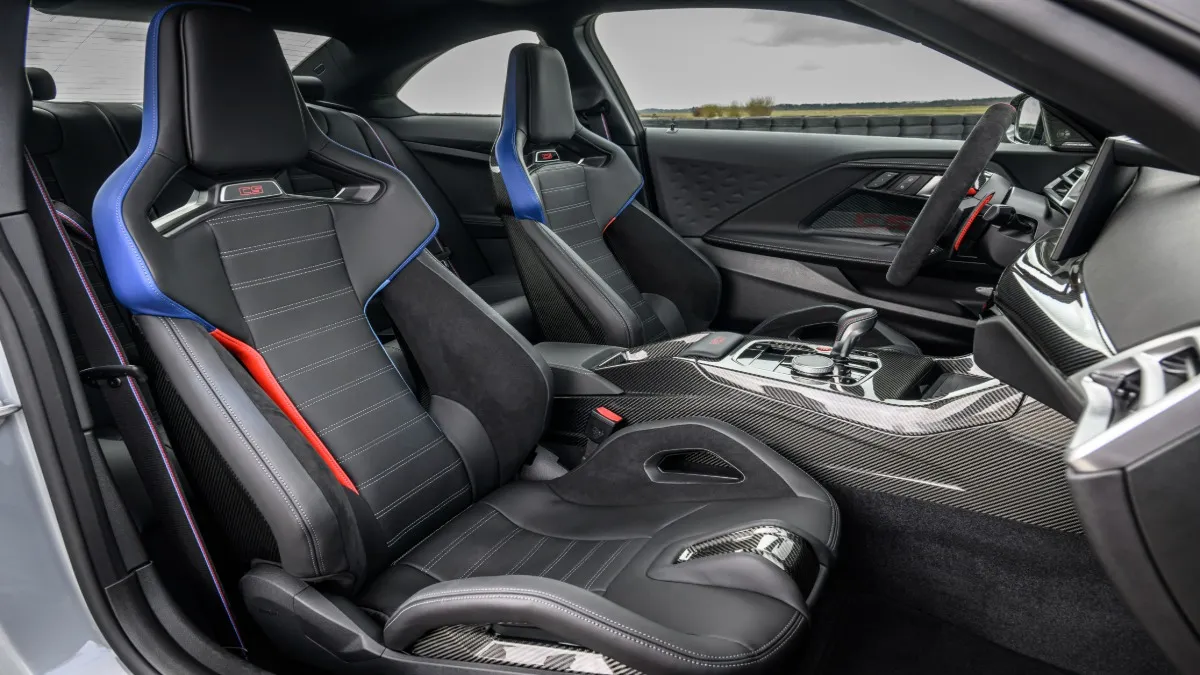
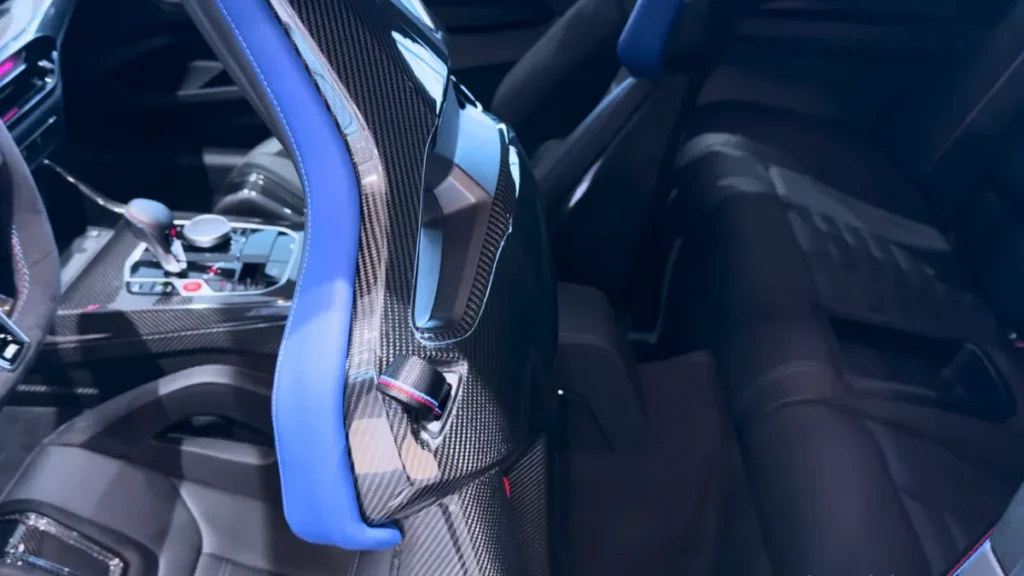
The first thing that grabs your attention inside the 2026 BMW M2 CS is the pair of M Carbon bucket seats. They completely change the atmosphere of the cabin and instantly make the car feel more serious than the standard M2. Before the engine even starts, the lower seating position and aggressive side bolsters already give the impression that this coupe was built with track driving in mind. The exposed carbon shell structure wraps tightly around the driver, creating a cockpit that feels focused and purpose-built rather than simply sporty.
BMW trims the seats in a combination of Merino leather and Alcantara with subtle contrast stitching and illuminated CS badging integrated into the upper backrest area. The materials feel premium, but the design never becomes overly flashy or artificial. Everything inside the M2 CS serves a function, and the seats perfectly reflect that philosophy.
On the road, they provide exceptional support during hard cornering and quick directional changes. Your body stays firmly in place, allowing you to focus entirely on steering precision and driver feedback. They can be slightly awkward to climb in and out of because of the pronounced bolsters, but once properly adjusted, the driving position feels low, natural, and unmistakably connected to the car.
A Driver-Focused Cockpit That Feels Purpose-Built
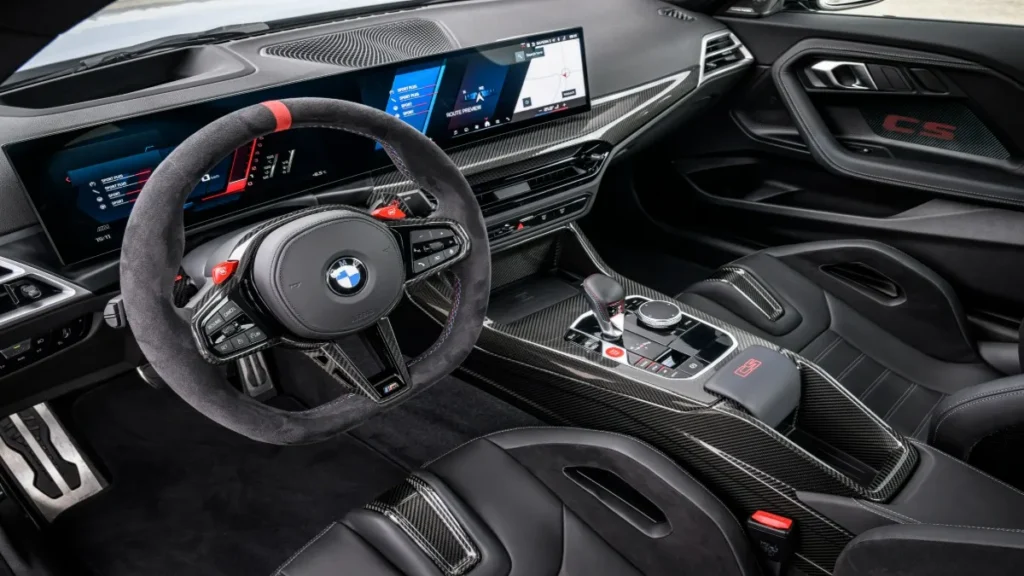
Beyond the aggressive bucket seats, the rest of the cabin in the 2026 BMW M2 CS follows the same philosophy: minimize distractions and maximize the connection between driver and machine. Everything inside feels intentionally designed around performance driving rather than pure luxury, and that focus becomes obvious the moment you settle behind the wheel.
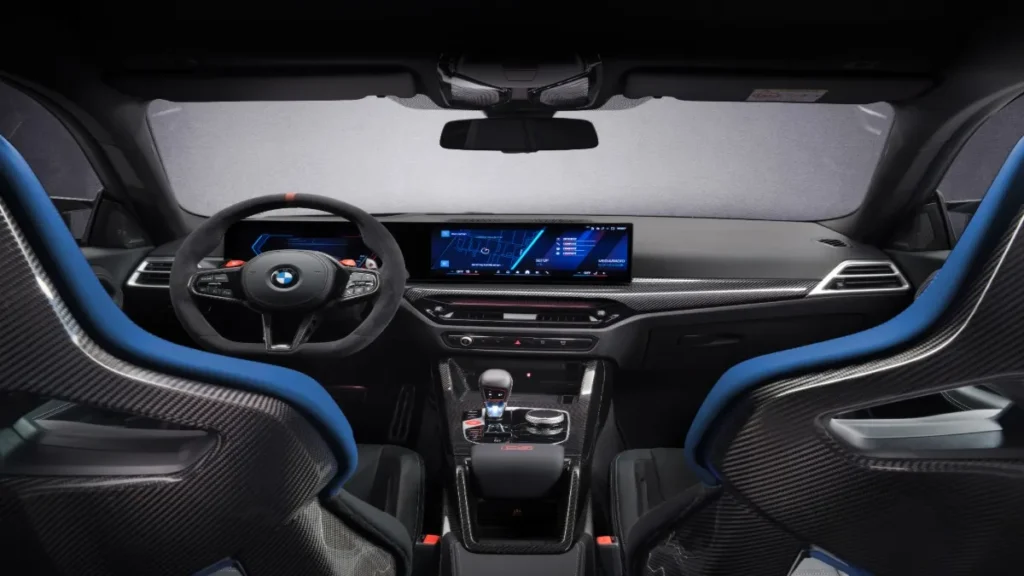
The Alcantara-wrapped steering wheel is easily one of the highlights of the interior. It has a thick, perfectly shaped rim that feels substantial in your hands, while the suede-like material provides excellent grip during spirited driving. BMW also adds a subtle red 12 o’clock marker at the top of the wheel, giving the cockpit a motorsport-inspired detail without making it feel overly dramatic or artificial.
The carbon-fiber paddle shifters further reinforce the car’s performance character. Unlike the lightweight plastic paddles found in many modern performance cars, these feel solid and mechanical, producing a crisp click with every shift. Even small actions like changing gears feel deliberate and satisfying.
BMW also simplified parts of the center console in the pursuit of weight reduction and a cleaner driving environment. Alcantara replaces some traditional trim materials, while unnecessary visual clutter has been reduced. The result is a cockpit that feels focused, intimate, and surprisingly old-school in the best possible way. Everything from the steering angle to the pedal placement feels carefully engineered around enthusiastic driving, making the entire cabin feel tightly centered around the driver.
Technology Hasn’t Ruined the Experience
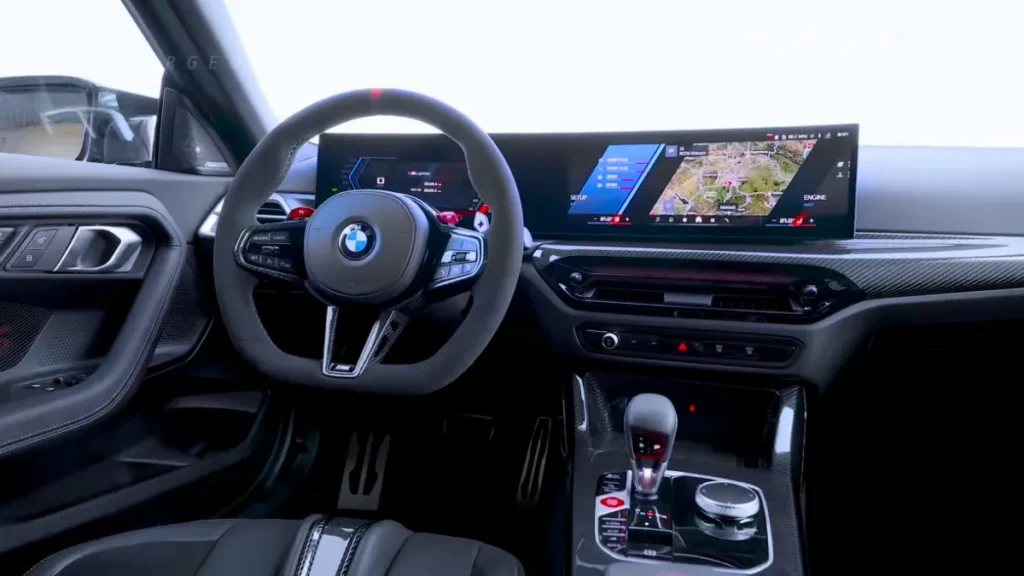
Modern performance cars often rely so heavily on screens and digital interfaces that they start to feel detached from the driving experience, but the 2026 BMW M2 CS avoids falling into that trap. BMW has clearly embraced modern technology inside the M2 CS, yet the cabin still manages to feel centered around the driver rather than the software running in the background.
The curved display setup remains a major focal point of the dashboard, pairing a 12.3-inch digital instrument cluster with a 14.9-inch central infotainment screen powered by BMW Operating System 9. BMW provides additional technical details about its latest infotainment technologies and BMW Operating System 9 through its official media resources.
Fortunately, BMW didn’t simply copy the standard interface from its regular models. The M2 CS receives unique graphics and dedicated performance displays that give the cabin a more purposeful atmosphere, especially when the car is pushed harder.
Track Mode is where the system feels most natural. The digital gauges become cleaner and easier to read, placing the tachometer front and center while prioritizing critical information such as oil temperature, tire pressure, and gear position. During spirited driving, the optional Head-Up Display becomes genuinely useful as the shift lights appear directly within the driver’s line of sight, reducing the need to glance away from the road.
BMW has also improved the responsiveness of the infotainment system itself. Menus load quickly, wireless Apple CarPlay connects without frustration, and the navigation system feels far smoother than older iDrive generations. Some drivers may still miss traditional climate-control buttons since several HVAC functions are now integrated into the touchscreen, but overall, the technology supports the driving experience rather than distracting from it.
Carbon Fiber Everywhere — But Used With Restraint
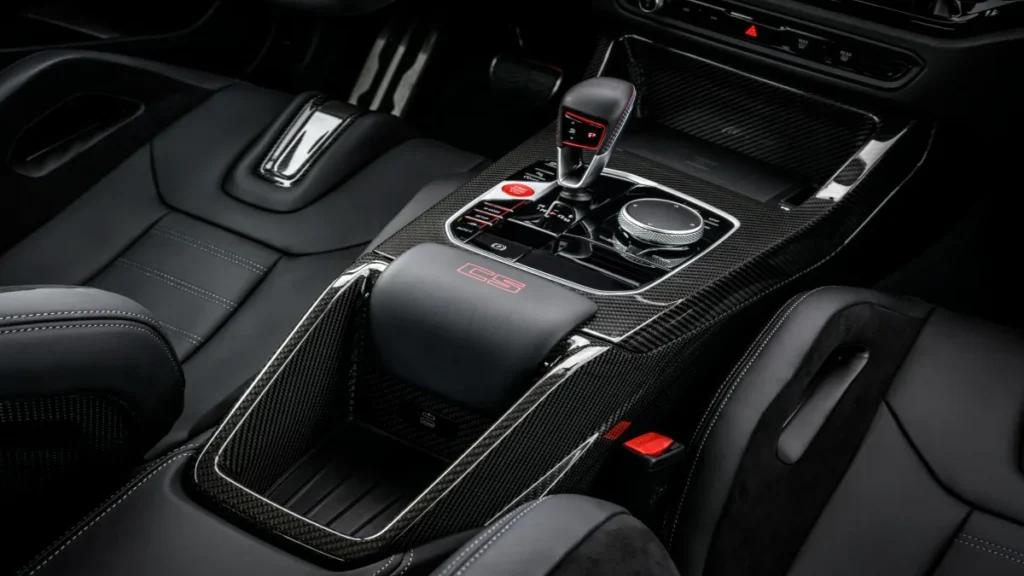
Many performance cars today overload their interiors with glossy carbon-fiber trim simply because it looks expensive. The M2 CS avoids that mistake. Instead, the carbon elements feel intentional. Several automotive journalists have also praised BMW’s recent M interiors for balancing modern technology with genuine driver engagement.
The dashboard inserts, center console trim, steering-wheel accents, and seat structures all use exposed carbon fiber in a way that enhances the motorsport atmosphere without turning the cabin into a visual circus.
More importantly, BMW combines those materials with Alcantara surfaces that soften the overall experience. The contrast between cold carbon textures and suede-like trim creates an interior that feels technical but still emotional.
Even the door panels contribute to the atmosphere. Pull straps, lightweight materials, and subtle CS branding reinforce the sense that weight reduction mattered during development. But perhaps the most important thing BMW removed wasn’t physical weight. It was isolation.
The reduced sound deadening allows more engine noise, turbo induction sounds, and drivetrain vibrations to enter the cabin. You hear more of the S58 engine’s personality. You feel more of the road surface beneath the chassis. Some luxury buyers may consider that tiring. Driving enthusiasts probably won’t care.
Daily Comfort Is Better Than Expected
Hardcore performance cars often become exhausting after a few hours, but the M2 CS avoids crossing that line. Yes, the ride is firm. Yes, the cabin is noisier than the standard M2. But BMW has stopped short of turning the car into a track-only machine.
Visibility remains acceptable for a modern coupe, outward dimensions are manageable in urban environments, and the infotainment system is easy enough to use during everyday driving. There’s also enough practicality to prevent the car from feeling completely compromised.
The rear seats remain in place, although adults won’t enjoy spending much time there. Legroom is tight, and the aggressive front seatbacks reduce available space even further. Still, the second row remains useful for bags, camera gear, or occasional short trips with passengers.
The trunk is also surprisingly usable for a compact performance coupe. Weekend luggage, helmets, and small track-day equipment fit without major issues. This balance between usability and focus is actually one of the M2 CS’s greatest strengths. It feels special without becoming unlivable.
How It Compares to the Standard M2 Interior
Compared to the regular M2, the CS cabin feels noticeably more serious.
The standard car already offers strong ergonomics and modern technology, but it still leans slightly toward everyday usability. The CS changes the emotional tone entirely.
The seats alone transform the driving experience. Add the extra Alcantara surfaces, the unique trim elements, the louder cabin, and the sharper visual details, and the CS begins to feel like a genuine collector-grade M car rather than just another performance trim level.
Even small details contribute to that sensation. The steering wheel feels more special. The cabin atmosphere feels more intimate. The reduced insulation makes the engine feel closer to the driver. Everything becomes more emotional, and in a world where many performance cars are becoming increasingly sterile, that matters. For a complete breakdown of the car’s performance, chassis upgrades, and driving dynamics, check out our full 2026 BMW M2 CS Review.
The Verdict
The 2026 BMW M2 CS interior succeeds because it understands something many modern performance cars have forgotten:
Emotion matters just as much as technology. This cabin isn’t trying to impress passengers with oversized screens or futuristic gimmicks. Instead, it focuses on the relationship between driver and machine. Every major component — from the carbon bucket seats to the Alcantara steering wheel — exists to heighten that connection. It’s loud, tight, uncompromising, and occasionally inconvenient. But it’s also one of the most engaging interiors BMW M has created in years.
If the standard M2 feels like an excellent performance coupe built for everyday life, the M2 CS feels like a machine designed for people who still romanticize driving itself, and honestly, that’s exactly what a CS model should be.
Looking for more BMW specs & buying advice?
Explore our detailed BMW Buyer’s Guide or browse all vehicle reviews in the Carshyd Buyer’s Guides Hub.