




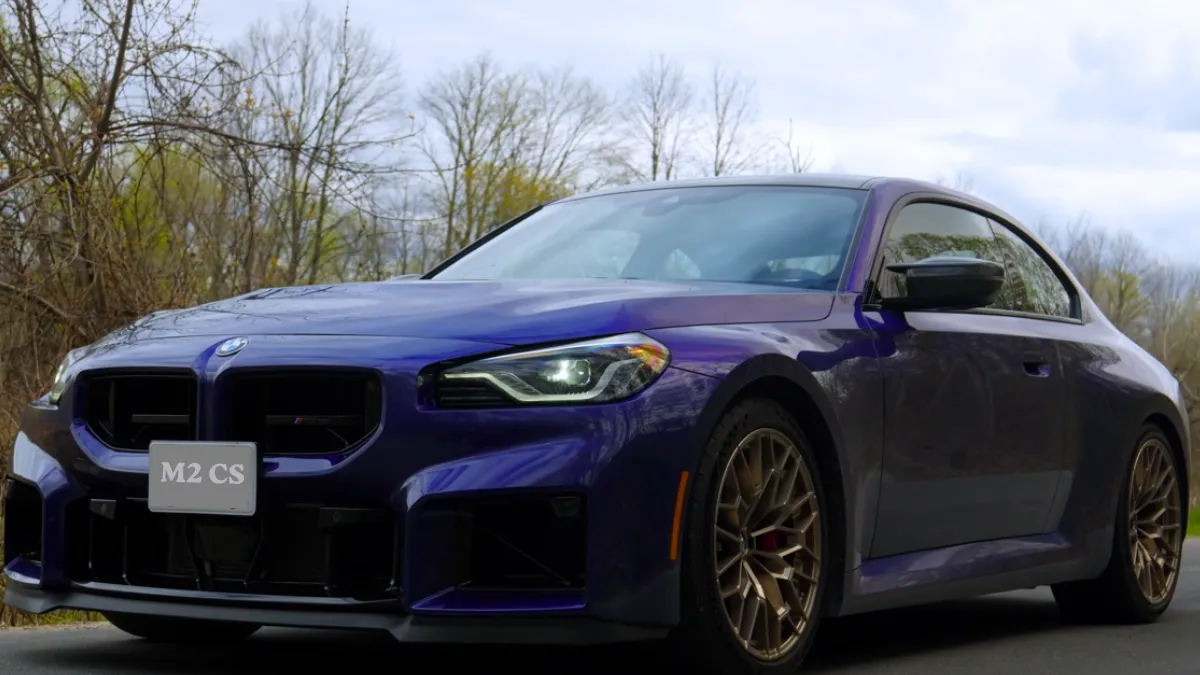
For a while there, it felt like BMW’s smallest M car was starting to grow up. Not in a bad way — but that slightly reckless edge, the one that made you hunt down the next corner just to see what happened, had quietly faded. The BMW M2 G87 was better than its predecessor in almost every measurable way. But it traded some raw energy for composure and refinement. Then BMW built the 2026 BMW M2 CS. Two corners in, all that madness came flooding right back. This isn’t just an M2 with extra horsepower and carbon fiber trim. The CS genuinely changes the car’s personality — more aggressive, more impatient, and honestly a little bit unstable at times. Exactly what a lot of enthusiasts were hoping BMW would do.
The moment you push hard into a damp corner and feel the rear differential lock aggressively under power, you understand exactly what this car is about. It’s not trying to be polished like a Porsche. It’s not trying to shield you from the experience. The M2 CS wants you involved in everything — sometimes maybe a little too involved. That’s what makes it interesting.
Contents
- The Engine — BMW Didn’t Hold Back
- The Automatic Transmission — And Why It Works
- The Driving Experience — Slightly Unhinged, in the Best Way
- Weight Savings and Carbon Fiber
- Inside — Modern Tech, Motorsport Attitude
- The Exterior Styling — Still a Conversation Starter
- BMW M2 CS vs. Porsche 718 Cayman GTS vs. BMW M4 Competition
- 2026 BMW M2 CS Price and US Availability
- Fuel Economy
- Final Verdict — Is the 2026 BMW M2 CS Worth It?
- Frequently Asked Questions — 2026 BMW M2 CS
What’s New for the 2026 BMW M2 CS?
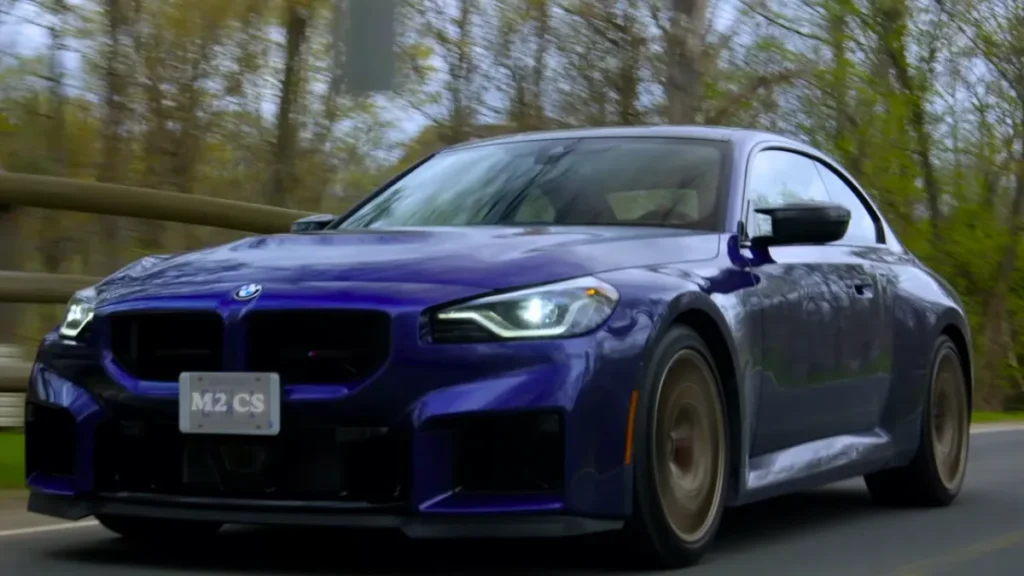
The 2026 BMW M2 CS returns with significantly more power, revised chassis tuning, lighter carbon-fiber components, and a more aggressive suspension setup compared to the standard M2. BMW also retuned the rear differential, adaptive dampers, and transmission calibration specifically for the CS model.
- 523-hp version of the S58 twin-turbo inline-six
- CS-specific suspension and differential tuning
- Reduced weight through carbon-fiber parts
- Exclusive forged wheels and aerodynamic upgrades
- 8-speed automatic transmission only
2026 BMW M2 CS — Key Specs at a Glance
The Engine — BMW Didn’t Hold Back
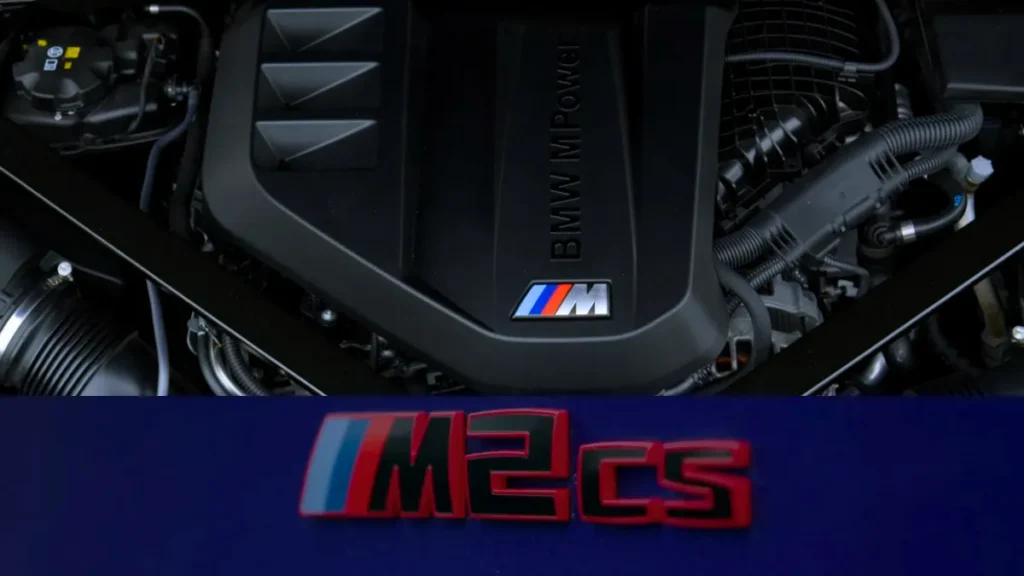
Under the hood sits the BMW M-developed twin-turbocharged 3.0-liter S58 inline-six — the same block found in the M3 Competition and M4 Competition — but here it puts out roughly 523 horsepower. That’s a big jump over older M2 generations, and you feel it the instant you get on the gas. For a deeper breakdown of the engine, acceleration figures, and full performance specs, check out our 2026 BMW M2 CS horsepower guide.
The standard M2 already felt quick, but the CS delivers power with a lot more urgency. Mid-range pull is genuinely violent, especially once the turbos build full boost. BMW also revised the engine mounts for the CS. On paper that sounds like a footnote. In practice, it changes the experience more than you’d expect — you feel more vibration through the cabin, more texture through the chassis, more connection to what the engine is actually doing. At idle, the car feels tense. Like it’s waiting for something.
“At idle, the car feels tense. Like it’s waiting for something. That sensation never fully goes away, no matter how many miles you put on it.”
The Automatic Transmission — And Why It Works
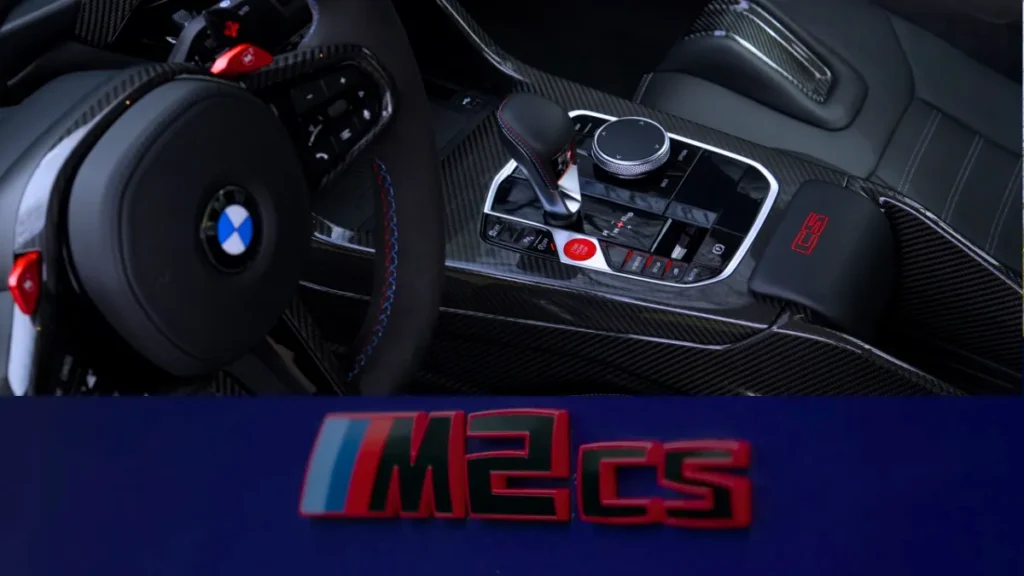
A few years back, enthusiasts would’ve complained endlessly about an M2 without a stick shift. Honestly? That argument gets weaker every time I drive one of these. The eight-speed M Steptronic automatic works brilliantly in the CS. BMW retuned the gearbox specifically for this model, and it behaves differently from the standard M2. Upshifts hit harder. Downshifts are sharper and occasionally dramatic enough to actually unsettle the rear axle — which, in this car, is a feature, not a bug. In manual mode, shifts arrive fast enough that you stop thinking about the missing clutch pedal after a handful of corners.
The Driving Experience — Slightly Unhinged, in the Best Way
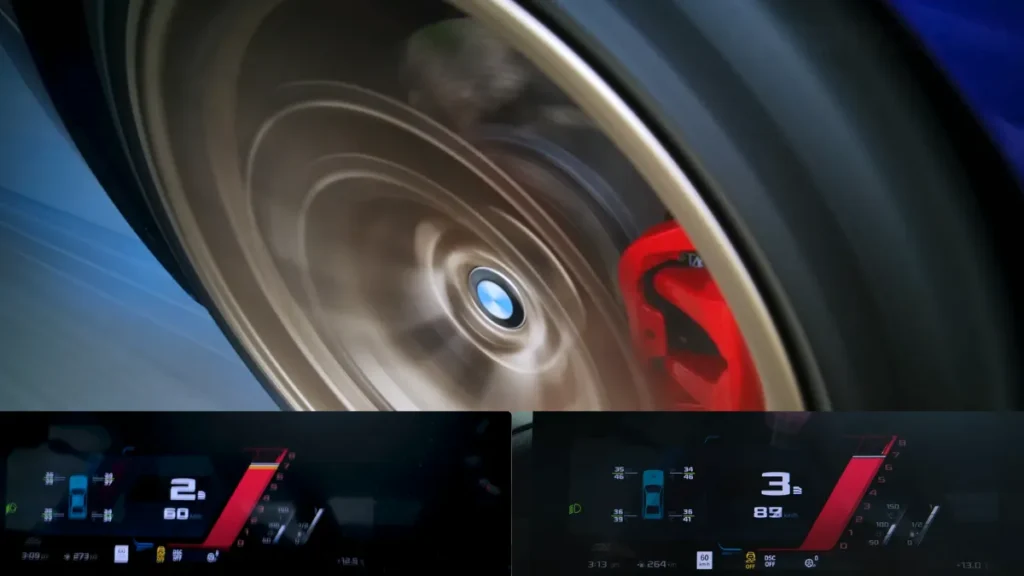
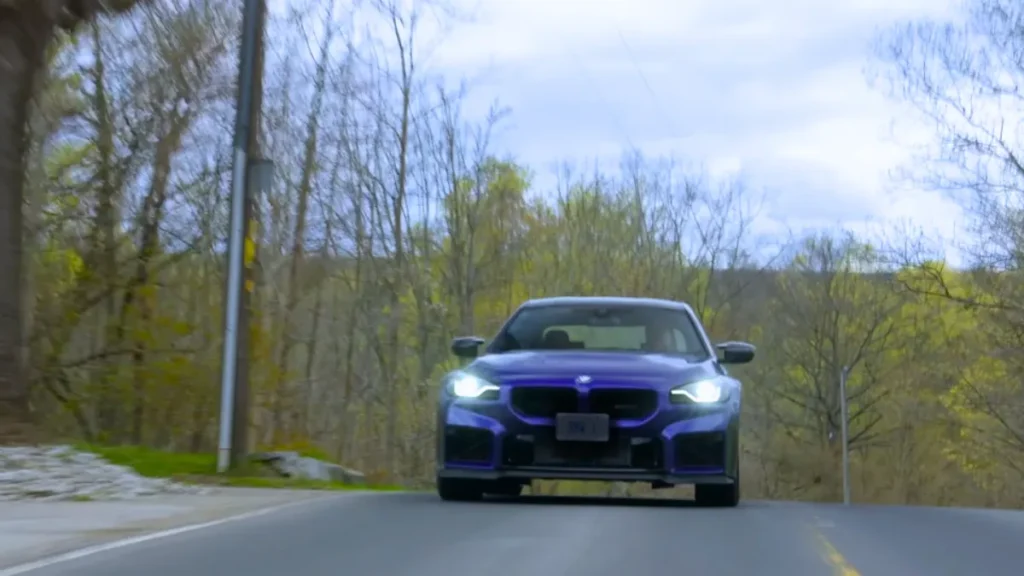
This is where the M2 CS separates itself from nearly everything else at this price point. Most modern performance cars are engineered to feel incredibly stable — fast, sure, but also planted and predictable above all else. The M2 CS goes a completely different direction. It’s restless. The rear axle constantly wants to join the conversation, and the car reacts aggressively to throttle inputs even when the stability systems are active. There’s an old-school BMW attitude here that many enthusiasts assumed had disappeared somewhere around 2018.
Even on Michelin Pilot Sport Cup 2s, traction isn’t a given the second the road gets damp. Roll into the throttle too hard coming out of a corner and You feel the rear tires start to smear across the pavement before the steering even fully loads up. Some drivers will hate that. Others will absolutely love it. BMW made serious hardware changes to get here. The suspension is stiffer, the adaptive dampers have been recalibrated, and the front axle now runs extra negative camber to sharpen front-end grip. The rear differential got its own CS-specific tune — under power it locks hard and rotates the car more than you’d expect. On dry pavement it’s thrilling. On wet pavement it can get a little hairy. BMW could’ve made this car easier to drive fast. They chose personality over perfection instead. That decision changes everything.
Weight Savings and Carbon Fiber
The CS formula has always been straightforward: less weight, more power, sharper responses. BMW says the M2 CS sheds about 100 pounds compared to the standard M2 through extensive carbon fiber use and the optional carbon ceramic brake package.
Objectively, 100 lbs doesn’t sound transformative in a car that still tips the scales close to 3,800 lbs. But subjectively, the CS feels noticeably more alert. The nose changes direction faster. The chassis reacts more sharply during transitions. Even the steering feels quicker just because the car responds with more urgency. It doesn’t feel lighter in the traditional Lotus sense — it still feels muscular and dense through certain corners. But now it also feels aggressive again. That’s the bigger difference.
Carbon Fiber Lightweight Components
| Component | Material |
|---|---|
| Roof | Carbon Fiber (CFRP) |
| Rear Diffuser | Carbon Fiber (CFRP) |
| Front Splitter | Carbon Fiber (CFRP) |
| Interior Trim | Carbon Fiber (CFRP) |
| Wheels | Forged Alloy |
| Brakes (optional) | Carbon Ceramic |
Inside — Modern Tech, Motorsport Attitude
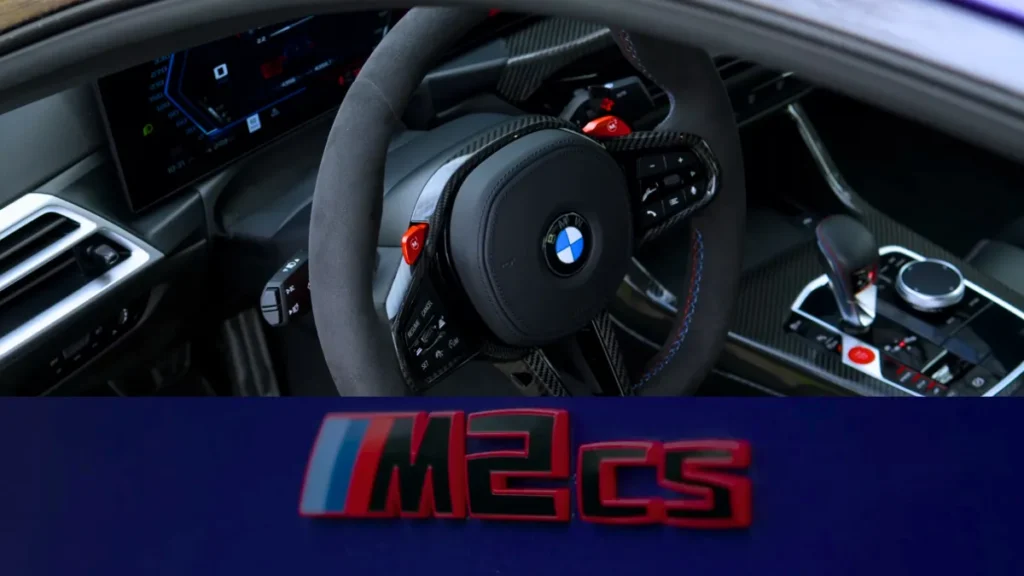
The interior blends current BMW technology with just enough motorsport influence to feel special. You get the curved display setup from the standard M2 — 12.3-inch digital gauge cluster, 14.9-inch infotainment screen, BMW iDrive 8.5, wireless Apple CarPlay, Android Auto, and a head-up display. The tech side is genuinely good and intuitive.
The carbon fiber bucket seats are one of the real highlights. They look extreme at first — aggressive bolsters, exposed carbon sections — but once you settle in they’re surprisingly comfortable. During hard driving they hold you firmly without becoming miserable on a longer highway haul. Rear-seat space, though, is tight. The previous-gen M2 felt more usable as a compact four-seater. This one traded some practicality for extra width, technology, and structural rigidity. But nobody shopping for a 523-horsepower BMW M car is expecting minivan practicality.
The Exterior Styling — Still a Conversation Starter
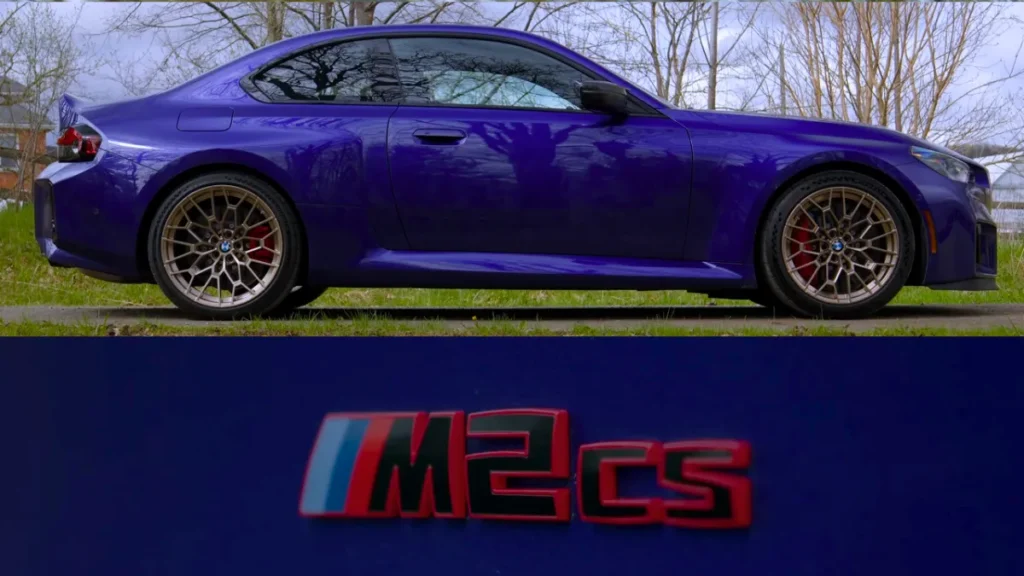
The design debate around the current M2 probably isn’t going away anytime soon. Some people love the boxy proportions and squared-off rear. Others still think the old F87-generation M2 looked cleaner and more cohesive — and honestly, it’s hard to fully disagree.
The CS treatment does improve things. The lowered stance, carbon fiber details, forged wheels, and subtle aero tweaks make the car look more serious than the standard M2. The side profile works especially well — compact, muscular, properly aggressive. Darker colors help a lot; some of the brighter paint choices exaggerate the unusual proportions in ways that don’t flatter the car. After an hour of driving it hard, though, the styling conversation becomes basically irrelevant. The experience behind the wheel takes over completely.
BMW M2 CS vs. Porsche 718 Cayman GTS vs. BMW M4 Competition
The M2 CS occupies a strange but fascinating spot in today’s performance car market Several early impressions from MotorTrend also suggest the CS delivers a noticeably sharper front end and more aggressive chassis balance compared to the standard M2.
| Model | Horsepower | Drivetrain | Character | Starting Price |
|---|---|---|---|---|
| 2026 BMW M2 CS | 523 hp | RWD | Aggressive & playful | $95,000 |
| BMW M4 Competition | 503 hp | AWD | Fast & composed | $85,000 |
| Porsche 718 Cayman GTS | 394 hp | RWD | Precise & balanced | $90,000 |
Against the Porsche 718 Cayman GTS, the BMW feels louder, less precise, and far more theatrical. The Porsche is still the benchmark for balance and steering feel — it genuinely is — but the BMW generates more adrenaline at normal road speeds. Compared to the BMW M4 Competition, the M2 CS feels smaller and more playful. The M4 is more composed and probably the better long-haul car, but the M2 CS has more personality. And at this price point, personality matters.
2026 BMW M2 CS Price and US Availability
BMW is expected to price the 2026 M2 CS around $95,000 in the United States before options. Add carbon ceramic brakes, premium paint, and a few M Performance accessories and you’re looking at six figures without much effort. That’s a lot for an M2 — and it genuinely is. The challenge for BMW is that lightly used M4 CSL models already exist in that price neighborhood, and buyers shopping at this level have serious alternatives. But exclusivity matters here. The M2 CS isn’t the rational choice — it’s aimed squarely at enthusiasts who want the most intense version of BMW’s smallest modern M car, full stop.
Fuel Economy
Nobody’s cross-shopping a 523-horsepower track weapon on fuel economy, but according to early EPA fuel economy estimates, the 2026 BMW M2 CS should land around 16 city / 23 highway / 19 combined on premium. Drive it hard — which you will — and the tank drains quickly. No surprises there.
Final Verdict — Is the 2026 BMW M2 CS Worth It?
Publications like Road & Track have repeatedly praised modern CS models for bringing back the rawer, more emotional side of BMW M performance cars — and this new M2 CS clearly follows that philosophy. The 2026 BMW M2 CS feels like BMW finally remembered what made old M cars exciting in the first place. It’s loud, impatient, occasionally intimidating, and far more emotional than the standard M2. Some buyers will still prefer the cleaner look and smaller footprint of the previous-gen M2 CS — that’s a completely fair take. But from the driver’s seat, this new car delivers something modern performance cars are quietly starting to lose.
Character. Not software-generated excitement. Real personality, movement, tension.
The M2 CS doesn’t always feel polished, and that’s exactly why it works. In a market full of fast cars desperately trying to feel perfect, the 2026 BMW M2 CS is It feels raw in ways most modern performance cars simply don’t anymore. — and better for it.
Road & Tarmac Scores
Looking for more BMW specs & buying advice?
Explore our detailed BMW Buyer’s Guide or browse all vehicle reviews in the Carshyd Buyer’s Guides Hub.
Frequently Asked Questions — 2026 BMW M2 CS
The 2026 BMW M2 CS produces approximately 523 horsepower from its twin-turbocharged 3.0-liter S58 inline-six engine — the same block used in the M3 and M4 Competition models.
BMW estimates a 0–60 mph time of approximately 3.3 seconds for the 2026 M2 CS, thanks to its 523 hp engine and revised 8-speed M Steptronic automatic transmission.
The 2026 BMW M2 CS is expected to start at around $95,000 in the United States before options. With carbon ceramic brakes, premium paint, and M Performance extras, the price can easily exceed $110,000.
No. The 2026 BMW M2 CS comes exclusively with an 8-speed M Steptronic automatic transmission, retuned specifically for the CS with harder upshifts and more aggressive downshifts compared to the standard M2.
The Porsche 718 Cayman GTS remains the benchmark for balance, precision, and steering feel. The BMW M2 CS, however, generates more drama and adrenaline at everyday road speeds. The Porsche is more refined; the BMW has more raw personality.