

Table of contents
- Overview
- Where This Vehicle Ranks
- What’s New for 2025?
- Pricing and Which One to Buy
- Engine, Transmission, and Performance
- 0–60-MPH Times
- Fuel Economy and Real-World MPG
- Interior, Comfort, and Cargo
- Infotainment and Connectivity
- Safety and Driver-Assistance Features
- Warranty and Maintenance Coverage
- SPECIALISTS’ VERDICT
- Final thoughts
- FAQs
Overview
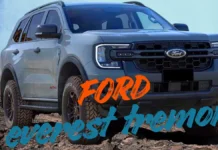
The Ford Raptor 2025 has carved out a distinct niche in global markets as a body-on-frame, mid-size, seven-seat SUV built to balance family practicality with truck-like durability. Positioned as a more rugged sibling to the Ford Edge or Explorer in markets where the Ranger is popular, the Everest shares DNA with the popular Ford Ranger pickup — meaning it’s designed for towing, off-road excursions, and everyday family duties. Over recent model years, styling, tech, and capability improvements have nudged it further into the premium mainstream while retaining its reputation for go-anywhere mechanical toughness.
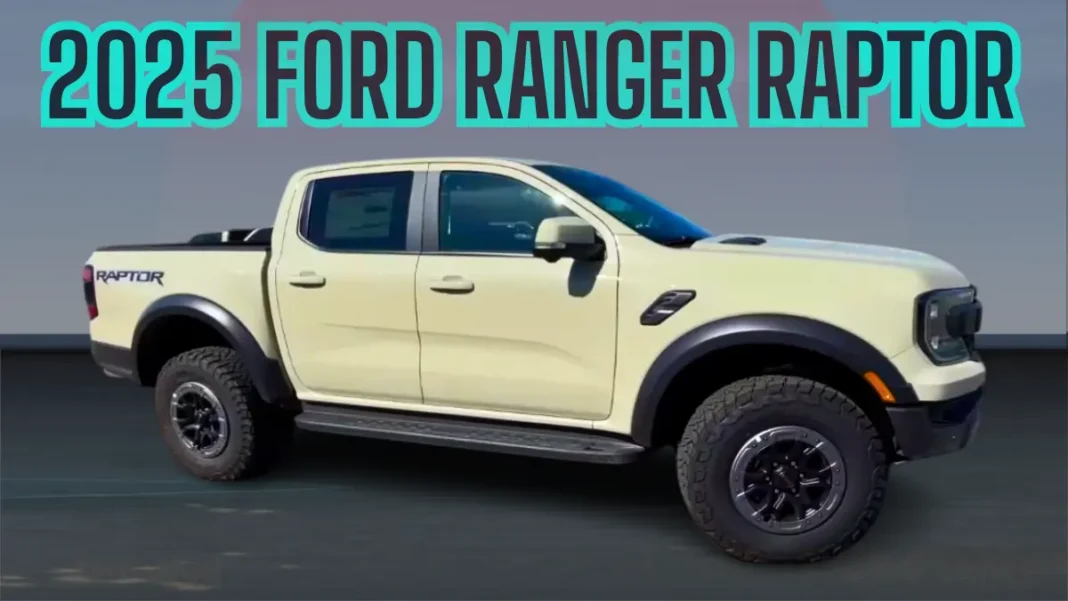
The buzz around a possible “Ford Raptor 2025” variant taps into the success of the high-performance Raptor brand (Ranger Raptor, F-150 Raptor). Those models pair upgraded suspension, more aggressive styling, and off-road-oriented powertrain tuning with a marketing identity that sells lifestyle and capability in equal measure. But how realistic is an Everest Raptor? And how does the Everest family stack up in 2025 for buyers who want a blend of adventure credentials and family comfort?
Where This Vehicle Ranks
In the mid-size, body-on-frame SUV segment — a class dominated by vehicles designed for durability and towing — the Everest competes with models such as the Toyota Fortuner, Mitsubishi Pajero Sport, Isuzu MU-X, and Chevrolet Trailblazer (where offered). It’s also often cross-shopped with softer-road alternatives like the Ford Everest’s platform cousins (depending on region), and with unibody SUVs for buyers prioritizing ride quality over maximum off-road toughness.
The Everest’s strengths are clear: robust chassis and drivetrain derived from the Ranger, generous cargo and towing capacity, and 7-seat utility without pushing into full-size SUV dimensions. Where it typically lags in comparison is cabin refinement when measured against unibody rivals, and fuel economy relative to lighter alternatives. From a brand perspective, the addition of a performance-focused Raptor badge would elevate its positioning — effectively combining hardcore off-road hardware with a premium image to attract a younger, performance-minded buyer.
What’s New for 2025?
For 2025, updates to the Everest focus on technology upgrades, minor styling revisions, and refinement of powertrain options in markets where emissions and efficiency pressures are increasing. Notable updates include:
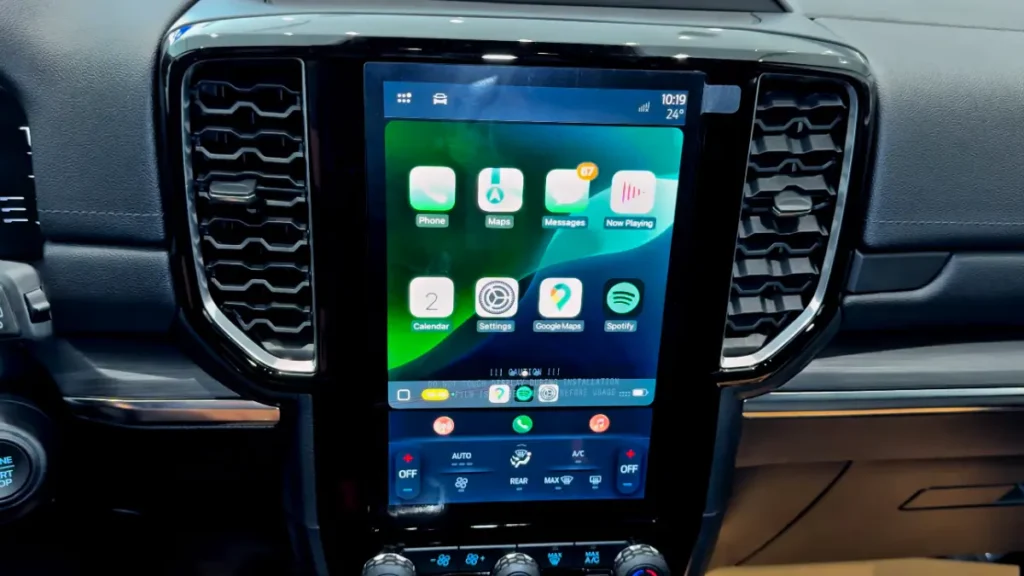
- Infotainment refresh: A larger, faster touchscreen with improved smartphone integration (wireless Apple CarPlay/Android Auto) and cloud-based navigation options where connectivity is available.
- Driver-assistance upgrades: Expanded standard safety tech such as adaptive cruise control, lane-keeping assist, and automatic emergency braking across more trim levels.
- New suspension tuning: Select trims receive revised suspension calibration for improved on-road comfort without compromising the SUV’s off-road capability.
- Special edition trims: Increased availability of sportier appearance packages and off-road option packs that bring skid plates, all-terrain tires, and unique graphics — hinting at what a true Everest Raptor could look like.
While there was speculation in 2024–2025 automotive circles about Ford expanding the Raptor family to include more SUVs, as of 2025 Ford has not globally confirmed a production Everest Raptor. However, limited-run “Raptor-inspired” packages that borrow styling cues and suspension hardware from the Ranger Raptor are an effective way to test demand.
Pricing and Which One to Buy
The Ford Everest lineup typically spans from a base, value-focused model to a top-tier, luxury-oriented variant with advanced driver aids and premium materials. Pricing varies widely by market due to taxes, local equipment, and currency differences, but a general guide:
- Base/Workhorse Trim: Best for buyers who need towing and utility without all the frills. Prioritize this if you’ll use the Everest primarily for hauling, commercial work, or as a budget-conscious family hauler.
- Mid-Level Trim (recommended for most buyers): Offers a strong balance of comfort, tech, and capability. This trim usually includes upgraded infotainment, key driver-assistance features, and more attractive interior materials.
- Top Trim / Limited / Titanium: For buyers who want near-luxury amenities, advanced safety tech, and the best seats and audio. The top trims often include adaptive suspension and premium leather.
If an Ford Raptor 2025 or Raptor-inspired pack is available in your market and you genuinely plan to do serious off-road driving or want the dramatic aesthetics and louder exhaust notes, opt for that variant. For everyday family use mixed with occasional adventure, the mid-level trim with an off-road pack provides the best compromise between comfort and capability.
Engine, Transmission, and Performance
The Everest traditionally borrows engines from the Ranger, leaning heavily on a range of turbocharged diesel engines in many markets and more gasoline-friendly options in others. Typical powertrain highlights:
- 2.0-liter bi-turbo diesel: Offered in higher trims, this engine delivers strong low-end torque ideal for towing and off-road control. Outputs vary by tune but commonly sit between 170–210 kW (230–280 hp) equivalent and torque figures around 500–600 Nm.
- 2.0-liter single-turbo diesel: A more economical option in lower trims with adequate torque for daily driving and towing smaller loads.
- 3.2-liter or 2.7–3.5-liter gasoline options: In markets favoring petrol, V6 or turbocharged four-cylinder petrol engines are available, offering smoother on-road refinement but often at a penalty to fuel economy.
Transmissions are typically 6–10 speed automatics depending on market and model year. Higher-end Everests come with selectable drive modes (Normal, Sport, Tow/Haul, Sand, Mud/Rut, Rock in some trims), low-range gearing, and electronically controlled four-wheel-drive systems. A hypothetical Everest Raptor would likely include a specially tuned transmission mapping, retuned gear ratios for performance and off-road responsiveness, and possibly a more potent engine or performance software.
0–60-MPH Times
Acceleration depends heavily on engine choice and market spec. Typical 0–60-mph estimates for the Everest range:
- 2.0L bi-turbo diesel: Mid-6 to low-8 second range, depending on tune and vehicle weight. Diesel torque delivers strong low-speed launch feel but diesel powerbands often result in slightly slower straight-line numbers than equivalently powered petrol engines.
- Petrol V6 or turbocharged petrol variants: Faster, often in the mid-5 to high-6 second bracket for the most powerful gasoline configurations.
If a true Ford Raptor 2025 were introduced, expect more aggressive tuning, sportier gearing, and a sub-6-second 0–60-mph target (assuming a high-output petrol or high-output diesel tuned for performance). Keep in mind that a body-on-frame construction and three-row seating will always make the Everest heavier and less sprightly than lighter unibody SUVs or sports utility crossovers.
Fuel Economy and Real-World MPG
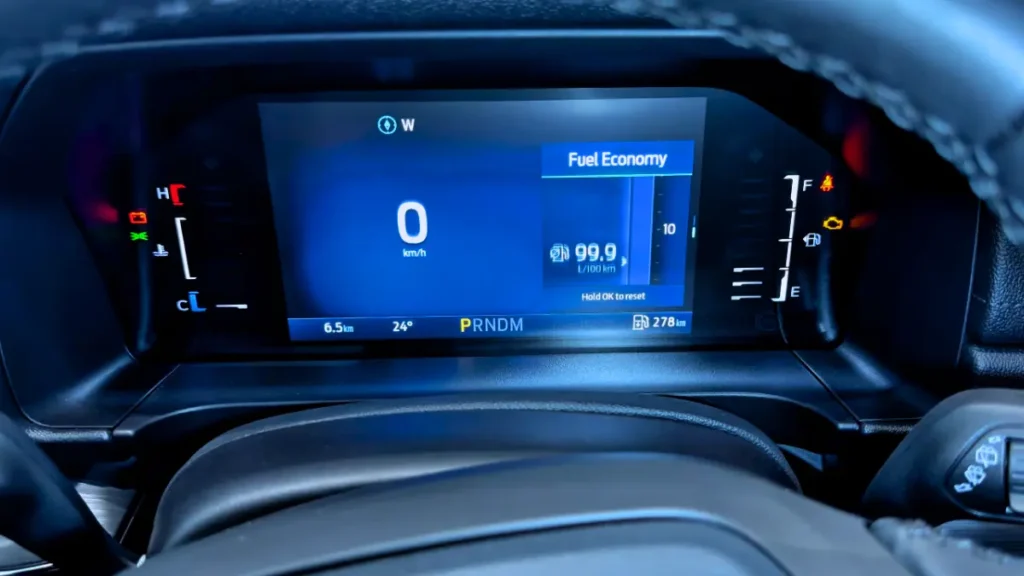
Real-world fuel economy for the Everest varies by powertrain, load, and terrain:
- 2.0L diesel (single- and bi-turbo): Expect real-world numbers in the ballpark of 28–35 mpg (US) during mixed driving in markets with conservative driving habits and diesel-friendly conditions. Tow heavier loads or frequent off-roading will drop these figures significantly.
- Petrol engines and V6s: Generally lower economy, often in the 16–22 mpg (US) range under mixed driving.
- Heavier trims and models fitted with all-terrain tires or larger wheels commonly see a 5–15% hit to fuel efficiency.
Keep in mind that manufacturer-rated figures and real-world results often differ; towing, roof racks, and off-road driving will reduce mileage. Diesel variants typically offer the best long-distance efficiency and torque for towing and off-road applications. For more information about the Ford Raptor‘s fuel economy, visit the EPA’s website.
Interior, Comfort, and Cargo
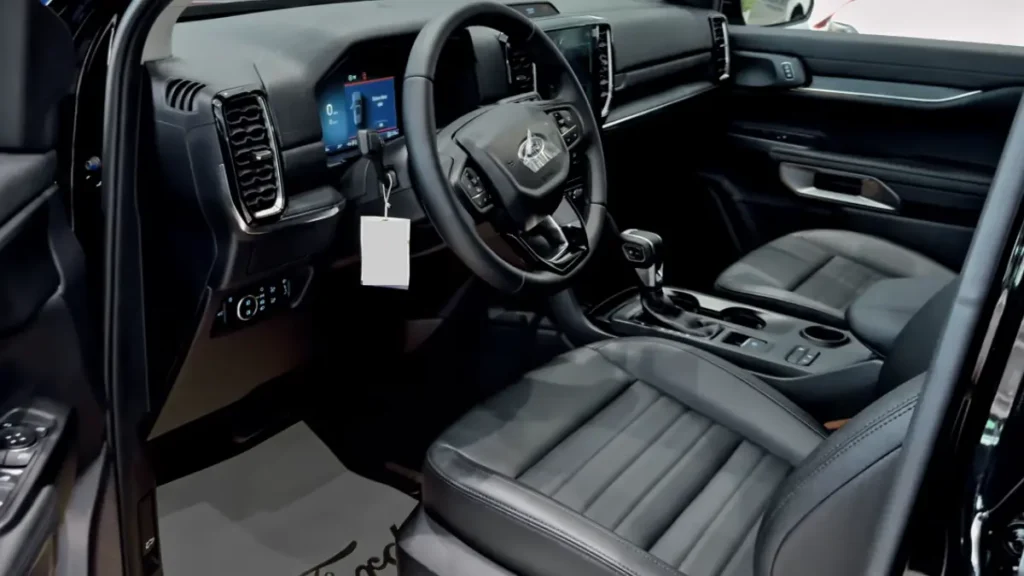
The Ford Raptor 2025 prioritizes practicality. Seating for seven is arranged in three rows, with second-row captain’s chairs or benches depending on trim. Key interior features:
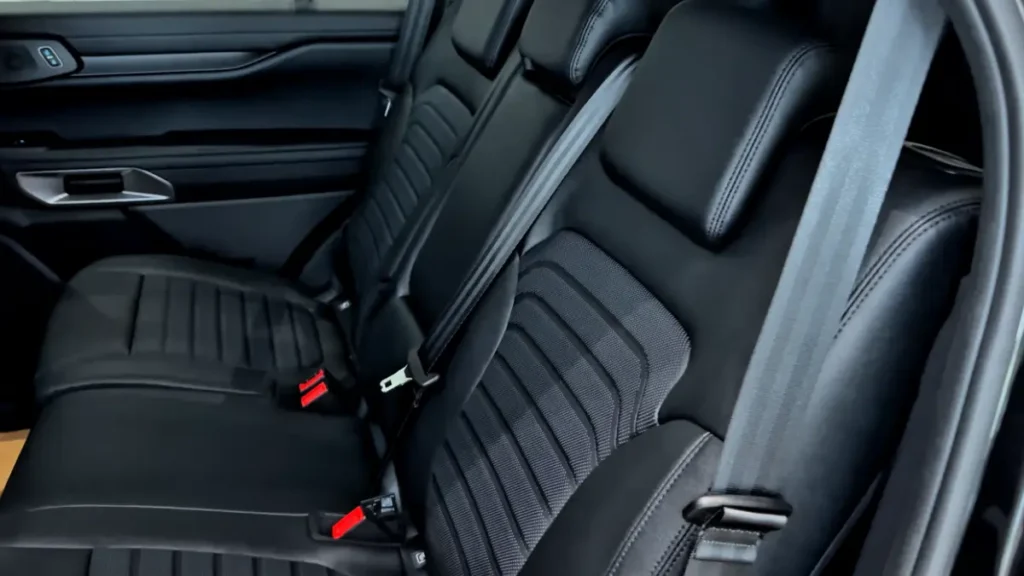
- Space: Generous second-row legroom in most configurations; third row is suitable for kids and shorter adults on shorter trips.
- Materials: Higher trims offer leather, soft-touch surfaces, and upgraded finishes. Lower trims use durable plastics designed to withstand rugged use.
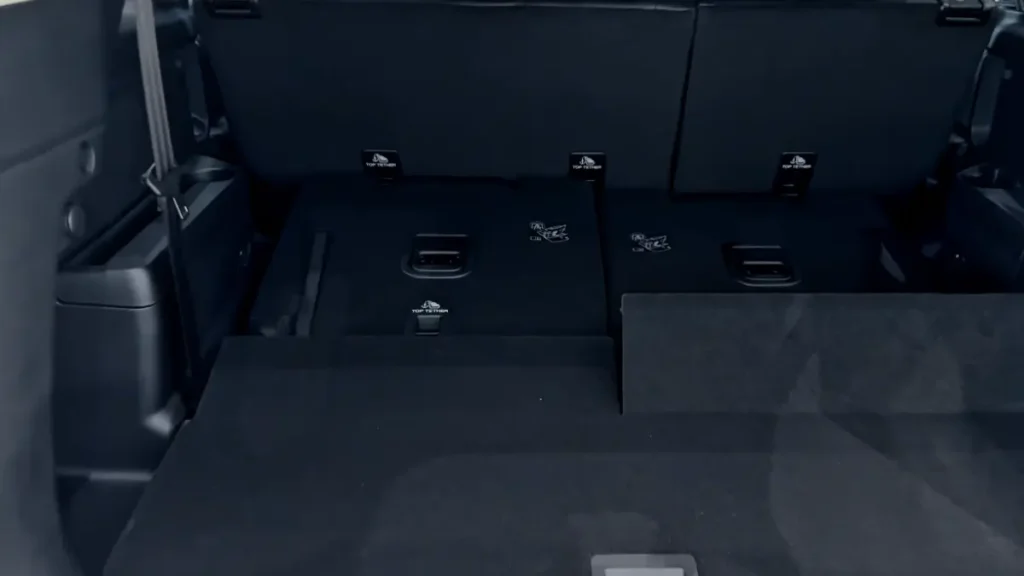
- Cargo: With all seats in use, cargo is limited; folding the third row yields a usable cargo area for family trips while folding both rear rows gives near-pickup-level load space (with a higher floor than a pickup bed).
- Comfort: Higher trims commonly include heated/ventilated front seats, multi-zone climate control, and quieting measures, though road noise can be more noticeable than in unibody competitors.
If you prioritize a refined, car-like interior, a unibody crossover may feel more luxurious; the Everest excels in durability, configurability, and practical cargo solutions.
Infotainment and Connectivity
Infotainment in the Ford Raptor 2025 generally centers on a larger central touchscreen, improved voice recognition, and smartphone connectivity. Highlights:
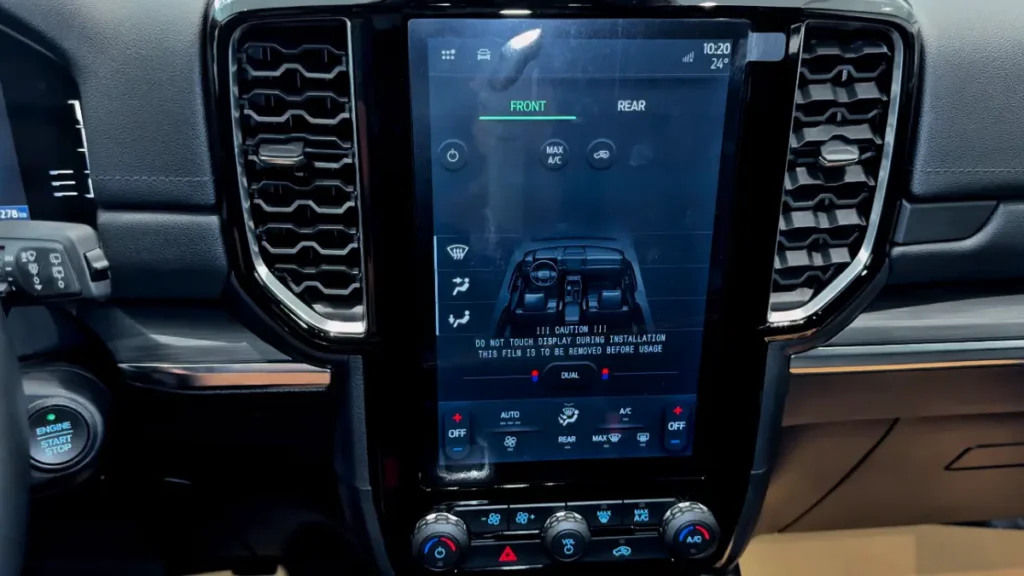
- Touchscreen: Up to 10–12 inches in higher trims with an intuitive UI, physical climate controls to reduce driver distraction, and customizable home screens.
- Smartphone integration: Wireless Apple CarPlay and Android Auto are increasingly standard. Some regions benefit from built-in 4G/5G connectivity enabling remote services and OTA updates.
- Audio: Premium trims may include multi-speaker premium audio systems with enhanced bass and clarity for long drives.
- Practical tech: Multiple USB ports, rear-seat charging points, and rear-seat entertainment options are available in family-focused trims.
Safety and Driver-Assistance Features
Ford has improved safety equipment offerings across the Everest line, making advanced driver assistance systems (ADAS) more widely available. Common features include:
- Adaptive cruise control with stop-and-go capability
- Lane-keeping assist and lane-centering options
- Forward collision mitigation with pedestrian detection
- Blind-spot monitoring with rear cross-traffic alert
- 360-degree camera systems and parking assistance
These features increase highway comfort and reduce fatigue on long trips, while off-road aids help in challenging low-speed maneuvers.
Overall Safety Rating (NHTSA)
Specific NHTSA ratings for the Ford Everest Raptor vary by market and the Everest is not sold in the U.S. under that name; therefore, NHTSA crash-test results may not be available. Instead, safety ratings are typically provided by regional testing agencies such as ANCAP (Australasia) or Euro NCAP where applicable. Historically, the Everest and its platform relatives have received solid safety marks when equipped with full safety suites. For buyers, prioritize models with full airbag arrays, electronic stability control, and active safety packages.
visit the National Highway Traffic Safety Administration (NHTSA) and Insurance Institute for Highway Safety (IIHS) websites.
MORE ON THE CAR SAFETY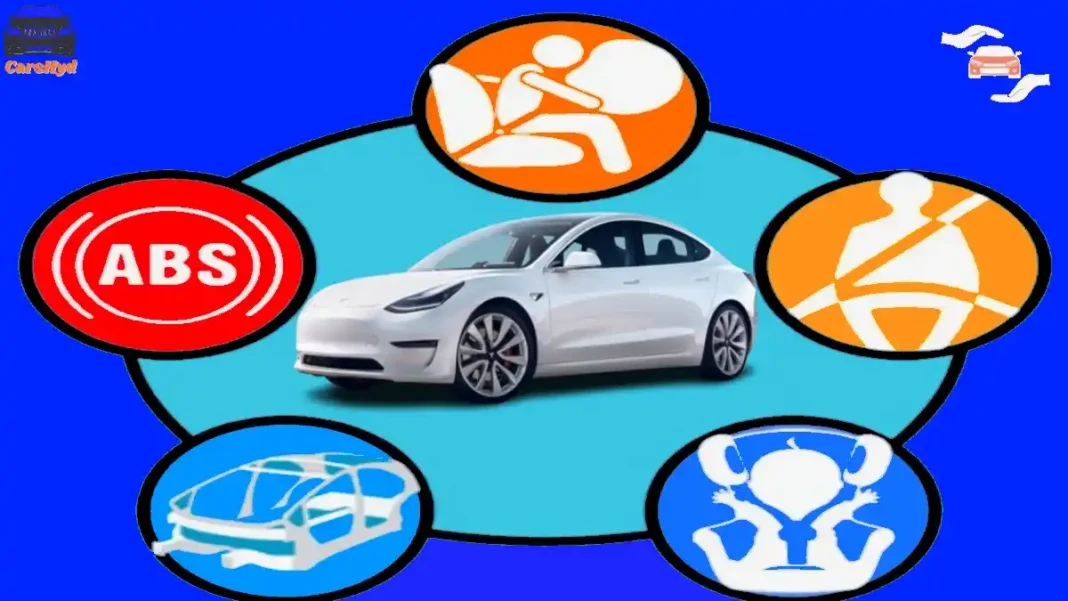
Warranty and Maintenance Coverage
Warranty packages for the Everest are competitive in many markets, often featuring:
- New vehicle limited warranty: Typically 3–5 years or a mileage cap (e.g., 60,000–100,000 miles), depending on region.
- Powertrain warranty: Often included within the main warranty window; some markets offer extended powertrain plans.
- Corrosion and roadside assistance: Commonly an included or optional package for several years.
- Scheduled maintenance plans: Available as add-ons or included for a limited period, varying by dealership.
Check local dealer offers for promotions: extended warranties or maintenance plans can be particularly valuable for a vehicle intended for towing or heavy off-road use.
SPECIALISTS’ VERDICT
Specialist reviews of the Ford Everest Raptor consistently praise its durability, towing capacity, and off-road competence. Common conclusions across reviewers typically include:
- Strengths: Robust construction, exceptional torque for towing, versatile seven-seat layout, and a strong value proposition in markets where body-on-frame SUVs are preferred.
- Weaknesses: Heavier, less fuel-efficient than unibody crossovers; ride and handling are competent but not class-leading for on-road refinement; interior material quality can lag top unibody rivals.
- Who should buy it: Buyers who need real off-road ability, serious towing capacity, and flexible passenger/cargo arrangements. Families who attend outdoor activities (trailers, boats, camps) will appreciate the Everest’s capabilities.
- Raptor possibility: Automotive outlets and influencers are intrigued by the idea of a full Everest Raptor. Car and Driver or Edmunds-style reviewers would likely note that while a Raptor-branded Everest would be exciting and likely attract attention, it would also need careful calibration to preserve towing capability and everyday usability while delivering aggressive off-road hardware and performance. If introduced, it would elevate the Everest’s desirability but also narrow its appeal to buyers seeking performance and lifestyle branding.
Final thoughts
The Ford Everest Raptor remains a compelling option for buyers who want a durable, seven-seat SUV with genuine off-road ability and towing credentials. For most families seeking a comfortable weekly driver with occasional adventure capability, a mid-level Everest with an off-road pack is a smart compromise. A factory Everest Raptor would position the SUV as a halo model — a louder, more performance-oriented variant that could draw attention and younger buyers while underscoring the Everest’s rugged DNA. Until Ford confirms such a model globally, “Raptor-inspired” special editions provide a taste of that wild side without compromising the Everest’s broad, practical appeal.
📊 Ford Raptor (2025) – Specifications (Expected / Market Dependent)
🚙 Vehicle Type
Body-on-frame midsize SUV
Front-engine, four-wheel drive (4WD)
7-passenger, 5-door
💰 Price (Estimated)
Expected starting price: ~$65,000–$75,000
(If produced as a Raptor or Raptor-inspired variant)
🛢 Engine & Powertrain
Engine (expected): High-output petrol V6 or upgraded bi-turbo diesel
Estimated Output: 350–400 hp (petrol) / 250+ hp (diesel)
Transmission: 10-speed automatic
Drivetrain: Advanced 4WD with low range
🛠 Suspension & Off-Road Hardware
Raptor-tuned suspension (FOX-style performance dampers expected)
Increased ride height
Reinforced skid plates & underbody protection
All-terrain or mud-terrain tires
📏 Dimensions (Approx.)
Wheelbase: ~114.8 in
Length: ~193 in
Width: ~75 in
Height: ~74 in
Ground Clearance: ~10 in
⏱ Performance (Estimated)
0–60 mph: ~5.5–6.0 sec (petrol V6)
Towing Capacity: up to ~7,500 lb
Drive Modes: Normal, Sport, Tow/Haul, Sand, Mud/Ruts, Rock
⛽ Fuel Economy (Real-World Est.)
Diesel variants: ~22–28 mpg (US)
Petrol variants: ~16–22 mpg (US)
🖥 Interior & Technology
10–12 in central touchscreen
Digital instrument cluster
Wireless Apple CarPlay & Android Auto
Raptor-specific interior accents
🛡 Safety & Driver Assistance
Adaptive cruise control
Lane-keeping assist
Automatic emergency braking
Blind-spot monitoring
360° camera system
🔒 Warranty (Market Dependent)
Basic: 3–5 years
Powertrain: up to 5 years
Roadside assistance included