


Table of contents
- The C-HR Is Back—But Not as You Remember It
- Why the 2026 Toyota C-HR XSE Matters in Toyota’s EV Strategy
- Expected US Release Date: When Will the 2026 Toyota C-HR XSE Arrive?
- Platform and Architecture: What Underpins the 2026 C-HR XSE?
- Powertrain and Performance: Will the XSE Live Up to Its Badge?
- Estimated Electric Range and Charging Performance
- Exterior Design: Sharper, Lower, More Aggressive
- Interior and Technology
- Safety and Driver Assistance
- Pricing Expectations and Federal Incentives
- bZ Compact SUV vs C-HR: What’s the Difference?
- Key Competitors in the US Market
- Who Should Wait for the 2026 Toyota C-HR XSE?
- Ownership Expectations: Reliability, Maintenance, and Resale
- Final Verdict: Is the 2026 Toyota C-HR XSE Worth the Wait?
- FAQ
The C-HR Is Back—But Not as You Remember It
When the Toyota C-HR first landed in U.S. showrooms, it looked like a concept car that slipped past production reality. The styling was bold, almost defiant, with hidden rear door handles and sharp body creases. But underneath that dramatic skin sat a modest 2.0-liter engine and front-wheel drive only. Buyers noticed. In a market obsessed with power and practicality, the C-HR struggled to find consistent traction. By 2022, Toyota quietly pulled it from the American lineup.
Fast forward to 2026, and the landscape has changed completely. Compact crossovers are no longer judged solely by horsepower or cargo space. Electrification now shapes buying decisions. Charging access, range estimates, and software updates matter as much as ride comfort. A Toyota compact electric SUV 2026 entry arrives at a moment when mainstream EV adoption is accelerating, yet trust and affordability remain critical.
That is why the return of the C-HR nameplate carries weight. It signals more than nostalgia. It suggests Toyota sees an opportunity to reenter the small crossover space with stronger fundamentals and electric credibility. Positioned below larger EV offerings, the 2026 Toyota C-HR XSE could serve as a bridge between today’s lineup and future Toyota electric crossovers designed for urban and suburban drivers.
This guide does not rely on hype. It separates confirmed developments from informed projections based on Toyota’s production patterns, regulatory trends, and competitive benchmarks. For U.S. buyers waiting for a compact EV that blends style, efficiency, and brand reliability, this is a grounded, data-driven look at what to expect next.
Why the 2026 Toyota C-HR XSE Matters in Toyota’s EV Strategy
Toyota’s Slow-but-Steady EV Rollout in the US
Not long ago, Toyota was still defending hybrids while rivals rushed headfirst into battery power. When the Toyota bZ4X arrived, it marked a cautious but necessary shift. The launch was not flawless. Early recalls and charging criticisms shaped first impressions. Yet the bZ4X gave Toyota something more important than headlines: real-world EV data from American drivers navigating extreme climates, fast chargers, and daily commutes.
Compared to aggressive rollouts from brands like Hyundai and General Motors, Toyota’s battery-electric strategy feels measured. Some would say slow. Toyota would say deliberate. The company has consistently prioritized durability, supply chain stability, and long-term resale value over rapid expansion. That mindset explains why its EV portfolio remains lean entering 2026.
Within that context, the 2026 Toyota C-HR XSE becomes more than just a new model. It represents the next logical step in Toyota’s electrification roadmap. Instead of jumping straight into high-volume mainstream EVs without preparation, Toyota appears to be scaling carefully. A compact electric SUV allows the brand to expand downward in price and size while leveraging lessons learned from the bZ4X program. It also aligns with Toyota’s broader vision of future Toyota electric crossovers that target urban and suburban buyers seeking efficiency without compromise.
Filling the Gap Below the bZ4X
The American EV market is maturing quickly, but one pressure point remains clear: affordability. Many shoppers want a compact electric crossover under $40,000 without sacrificing performance or modern tech. That gap is growing more visible as incentives fluctuate and larger electric SUVs push transaction prices higher. A well-equipped Toyota compact electric SUV 2026 model could land precisely where demand is strongest.
Urban buyers, in particular, are reshaping expectations. They want bold design, responsive acceleration, and usable range for real life. Most daily drives fall well under 40 miles, yet weekend flexibility still matters. A smaller footprint also improves maneuverability in dense cities, where parking and tight streets define ownership. The original C-HR leaned heavily on style but lacked power and all-wheel drive. An electric XSE variant has the opportunity to correct both.
If Toyota positions the 2026 Toyota C-HR XSE below the bZ4X in price while emphasizing sport-focused tuning and competitive range, it could attract first-time EV adopters who previously leaned hybrid. That strategic placement strengthens Toyota’s lineup from the bottom up. Instead of overlapping its existing EV, the C-HR XSE could become the accessible performance entry point. In a segment that is rapidly crowding with new contenders, filling that exact gap may prove to be Toyota’s smartest move yet.
Expected US Release Date: When Will the 2026 Toyota C-HR XSE Arrive?
Global Launch Timeline Clues
Toyota rarely launches new EVs in the U.S. first. Europe and parts of Asia typically get early access. That pattern gives us useful clues. The latest C-HR generation already debuted overseas in hybrid form, signaling that the production groundwork is complete.
When the Toyota bZ4X rolled out, Europe saw initial deliveries before the U.S. market stabilized supply. Toyota used staggered production to manage battery logistics and regulatory differences. Expect a similar cadence here.
If the electric C-HR follows Toyota’s recent EV playbook, international production will ramp first. U.S.-spec certification, software calibration, and safety validation will follow. That process typically adds several months between global unveiling and American availability. Watching European order books and Japanese press releases will provide early indicators of scale and timing.
Realistic US Arrival Window
Based on Toyota’s current EV rollout rhythm, a late 2025 debut feels realistic. That could mean a North American reveal at a major auto show or standalone digital event. Deliveries would likely begin in the first half of 2026. A Q1 or Q2 showroom arrival aligns with typical Toyota production cycles.
The 2026 Toyota C-HR EV US release date will depend on more than marketing plans. Battery sourcing remains a decisive factor. Federal incentives under the Inflation Reduction Act require strict North American sourcing thresholds. If Toyota localizes battery assembly, timelines could accelerate. If imports dominate early production, compliance adjustments may delay incentives.
Assembly location also matters. Domestic production would strengthen pricing flexibility and tax credit eligibility. Imported units could reach dealers first but without full federal incentives. In short, late 2025 reveal, early-to-mid 2026 sales, and gradual volume ramp-up is the most credible scenario today.
Platform and Architecture: What Underpins the 2026 C-HR XSE?
e-TNGA Platform Expectations
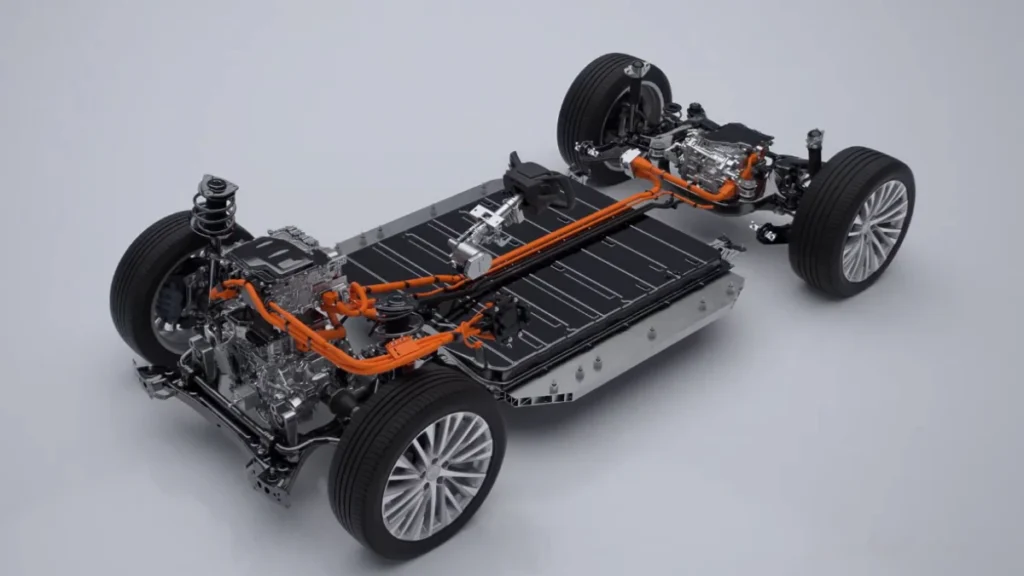
The 2026 Toyota C-HR XSE is expected to ride on Toyota’s dedicated e-TNGA architecture. This modular EV platform already supports the Toyota bZ4X and related global models. That shared DNA reduces development risk and improves scalability.
Compared to the outgoing gasoline Toyota C-HR, the EV version should benefit from a stiffer chassis and lower center of gravity. Battery placement within the floor increases torsional rigidity. That translates to improved ride control and more confident cornering. Engineers can also fine-tune suspension geometry without the packaging compromises of an internal combustion drivetrain.
Expect slightly shorter overall dimensions than the bZ4X, but with similar structural fundamentals. That balance keeps costs manageable while preserving Toyota’s safety standards.
Battery Sourcing and Chemistry
A lithium-ion battery pack is the most probable configuration for launch models. Toyota has prioritized durability and thermal stability in its battery management systems. That conservative calibration may slightly limit peak charging speeds but should support long-term reliability.
An LFP battery option for entry trims is possible. Lithium iron phosphate chemistry lowers material costs and reduces reliance on certain supply chains. The tradeoff is typically lower energy density. For urban-focused trims, that compromise may be acceptable.
Battery sourcing will directly affect pricing and federal incentives. Packs assembled in North America would strengthen eligibility for federal tax credits. Imported battery components could reduce incentive access, influencing effective transaction prices. For buyers tracking total ownership cost, battery origin will matter almost as much as range figures.
Powertrain and Performance: Will the XSE Live Up to Its Badge?
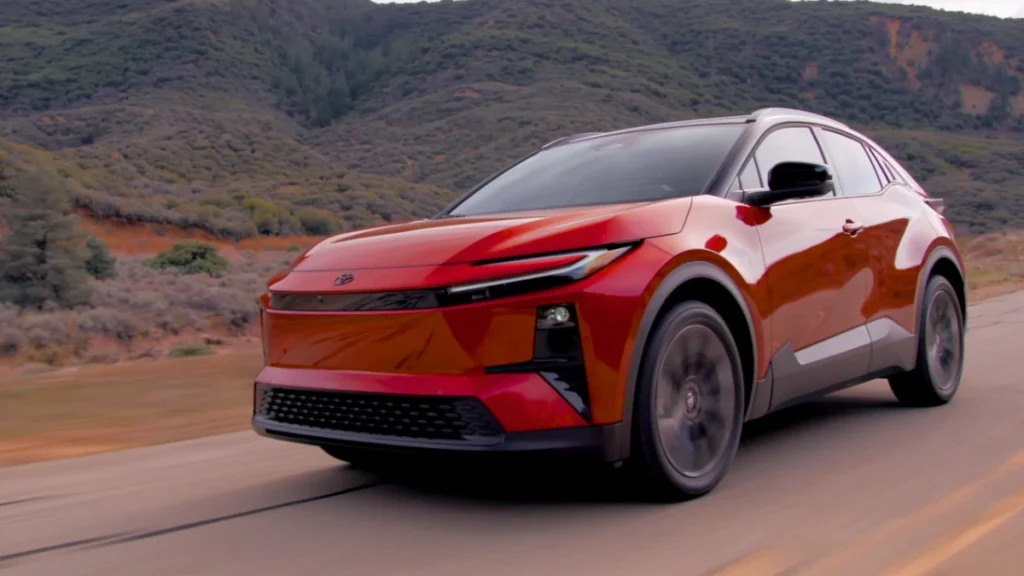
Expected Horsepower and Torque
The XSE badge has historically implied a sport-oriented trim, blending sharper styling with performance-focused tuning. For readers who want a full explanation of how Toyota structures its XSE trims across both gasoline and electric models, we’ve broken it down in detail in our dedicated guide.
For the electric version, expect a meaningful power upgrade over base models. A single-motor front-wheel-drive configuration producing roughly 201 to 215 horsepower seems likely. That output would place it comfortably above the outgoing gasoline variant.
A dual-motor all-wheel-drive setup remains a strong possibility. Sharing components with the Toyota bZ4X could simplify development. In that configuration, total output could climb significantly, transforming the compact crossover into a genuinely quick daily driver.
Compared to the previous gas-powered XSE, the difference should feel immediate. Instant torque delivery changes how the vehicle responds in traffic. Passing maneuvers and on-ramp merges become effortless rather than planned events.
0–60 MPH and Driving Character
A sub-7-second 0–60 mph time is a realistic target for a well-equipped XSE. Dual-motor variants could dip even lower. That would place the model firmly in the quick, not just adequate, category.
Toyota XSE electric performance will likely focus on balance rather than brute force. Suspension tuning should prioritize responsive steering and body control without sacrificing daily comfort. The battery’s low placement reduces body roll and enhances stability through corners.
Electric propulsion also smooths power delivery. There are no gear changes, no engine vibration, just steady acceleration. If Toyota pairs that refinement with sharper steering calibration, the 2026 Toyota C-HR XSE could finally deliver the sporty character the badge has long promised.
Estimated Electric Range and Charging Performance
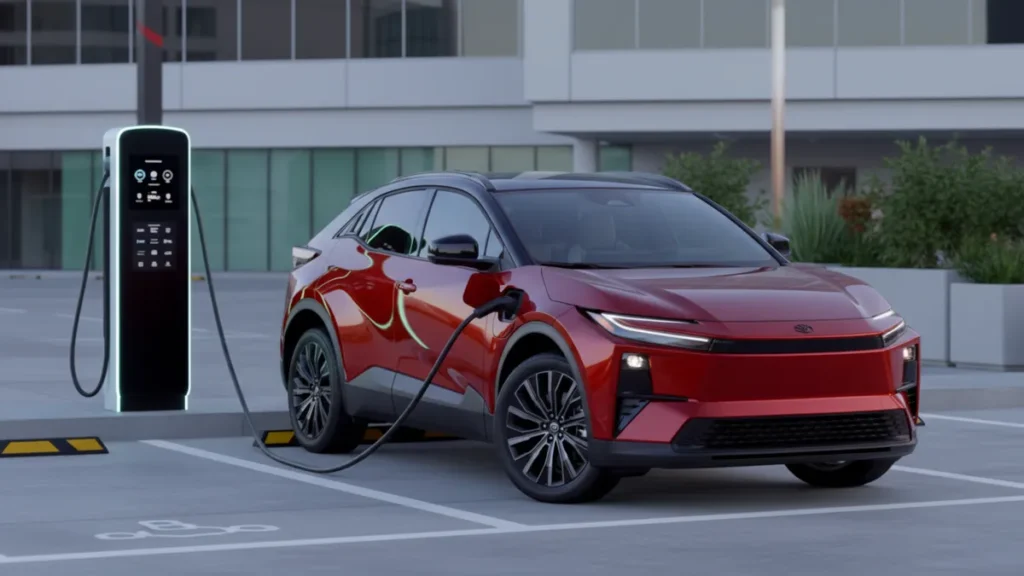
Toyota C-HR XSE Electric Range (Projected)
Range will make or break the 2026 Toyota C-HR XSE for many buyers. In this segment, anything under 230 miles feels dated. Anything above 300 miles pushes pricing higher. The sweet spot likely sits between 240 and 280 miles of EPA-rated range.
That estimate aligns with what we’ve seen from the Toyota bZ4X in comparable configurations. A slightly smaller battery pack would help control weight and cost. It would also position the C-HR clearly below Toyota’s larger EV offerings.
In real-world mixed driving, expect usable range to land slightly below EPA numbers. Cold climates, highway speeds above 70 mph, and aggressive acceleration reduce efficiency. Urban commuters, however, may see results close to official ratings. Regenerative braking in stop-and-go traffic can meaningfully extend daily usability.
Battery size will likely define trim structure. A standard-range model could target affordability and city buyers. A larger pack for the XSE trim would justify its premium badge. That strategy gives Toyota flexibility without diluting the model’s value proposition.
Charging Speeds and Infrastructure Compatibility
Fast charging performance matters just as much as range. Based on current Toyota hardware, a 10 to 80 percent DC fast charge in roughly 30 to 35 minutes is realistic. That would keep the C-HR competitive in the compact EV class without chasing extreme peak charging numbers.
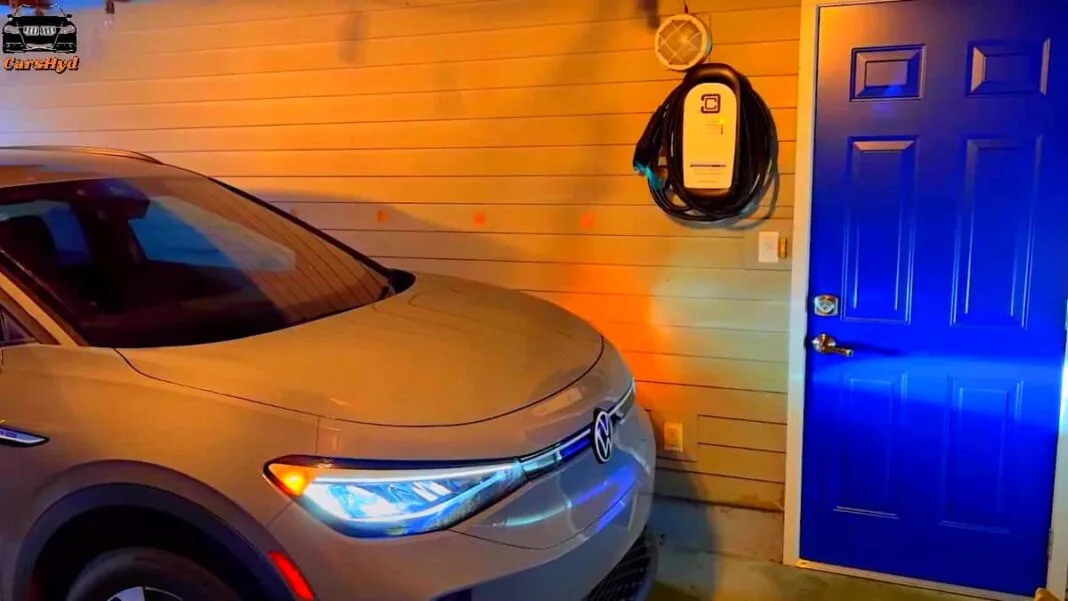
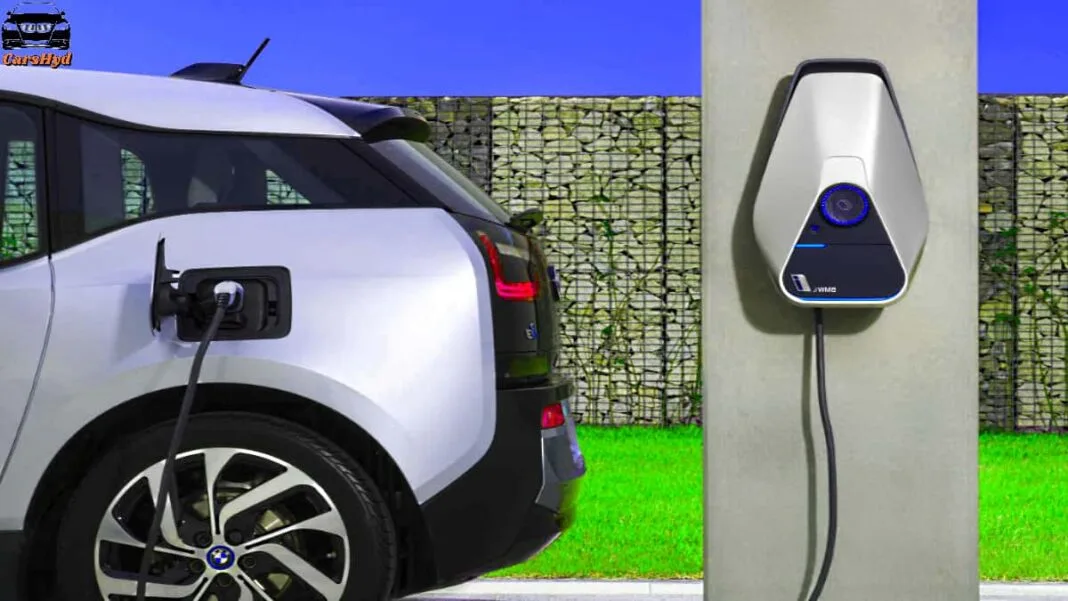
At home, Level 2 charging should replenish the battery overnight. Expect full charging times between seven and nine hours, depending on pack size and onboard charger capacity. For most owners, plugging in after dinner will be routine.
Infrastructure compatibility is evolving quickly in the U.S. Toyota has already signaled adoption of the North American Charging Standard. That means future models should gain access to the growing Tesla Supercharger network through NACS ports or adapters. Broader access reduces range anxiety and strengthens long-distance practicality. For many first-time EV buyers, that alone could tip the scale.
Exterior Design: Sharper, Lower, More Aggressive
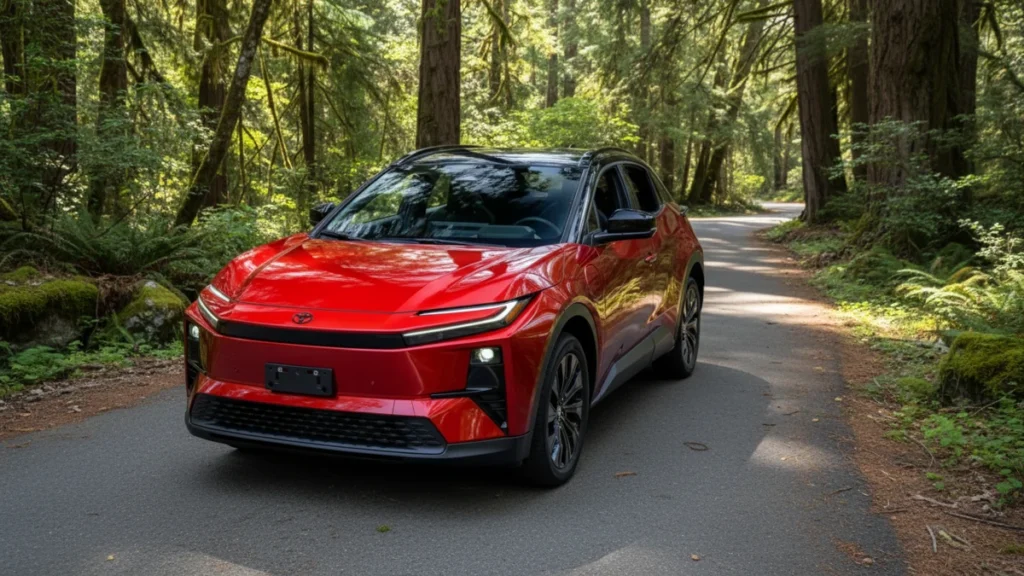
Evolution of the Coupe-SUV Silhouette
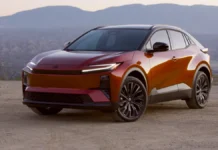
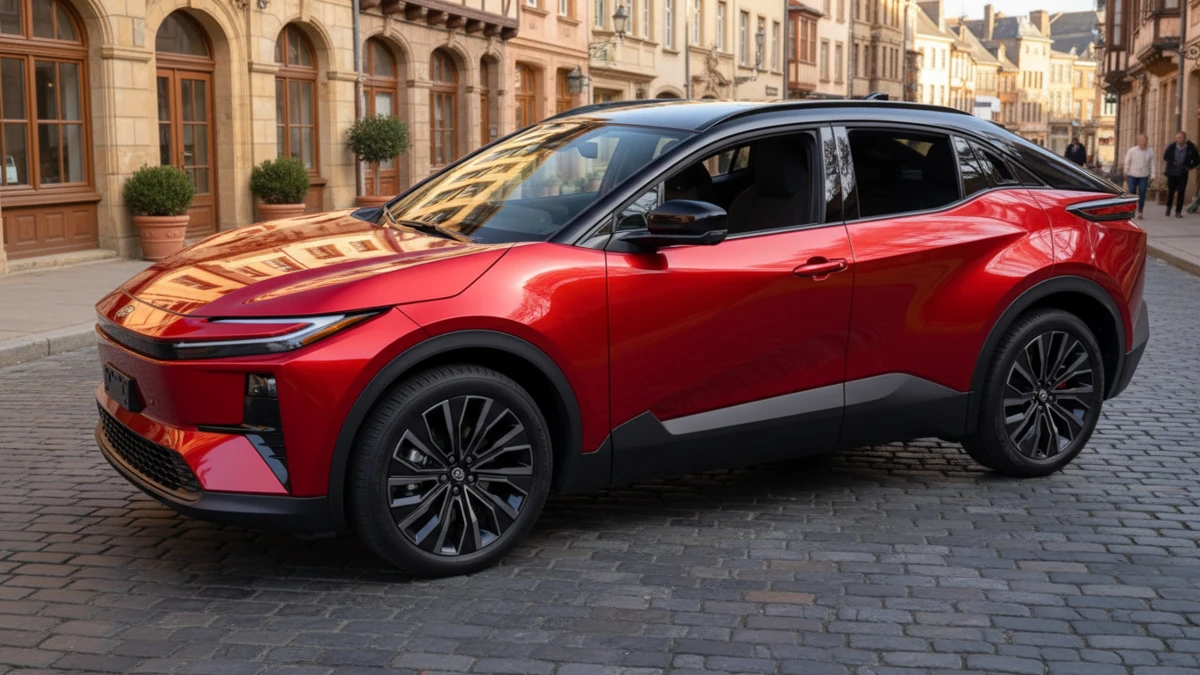
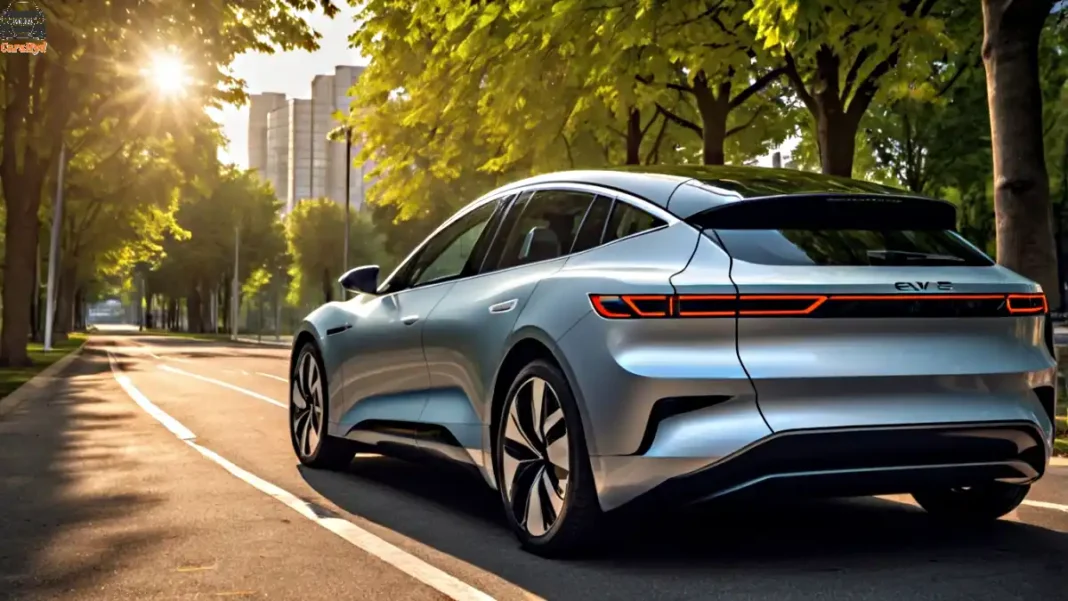
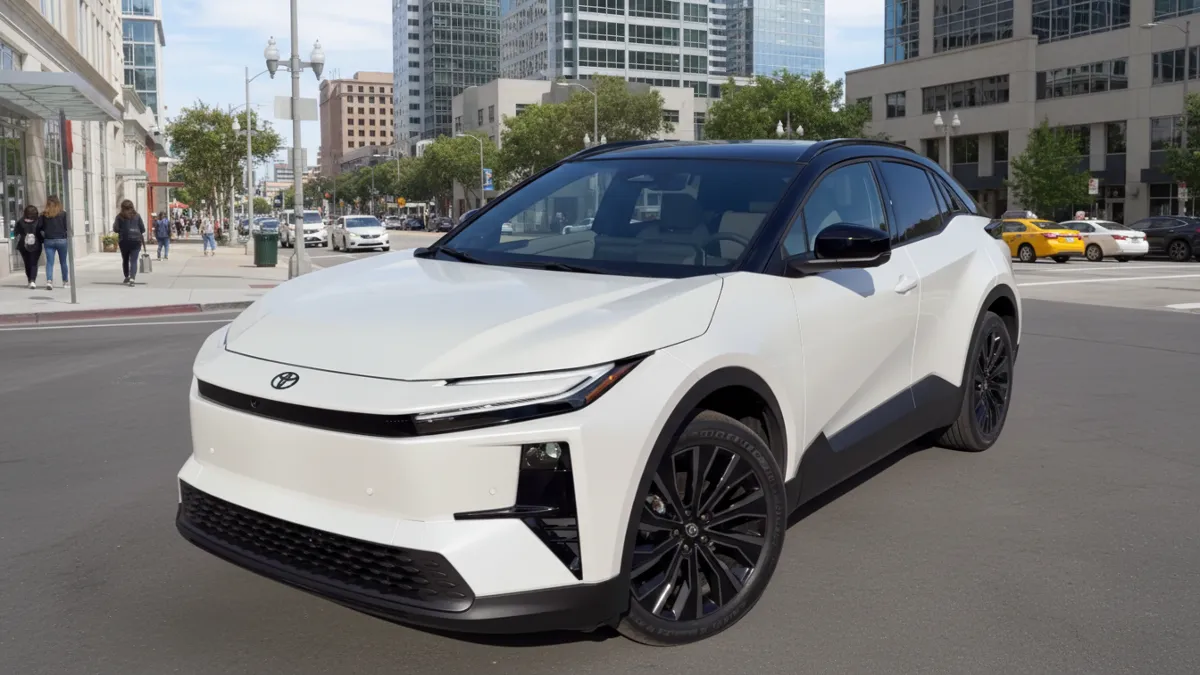
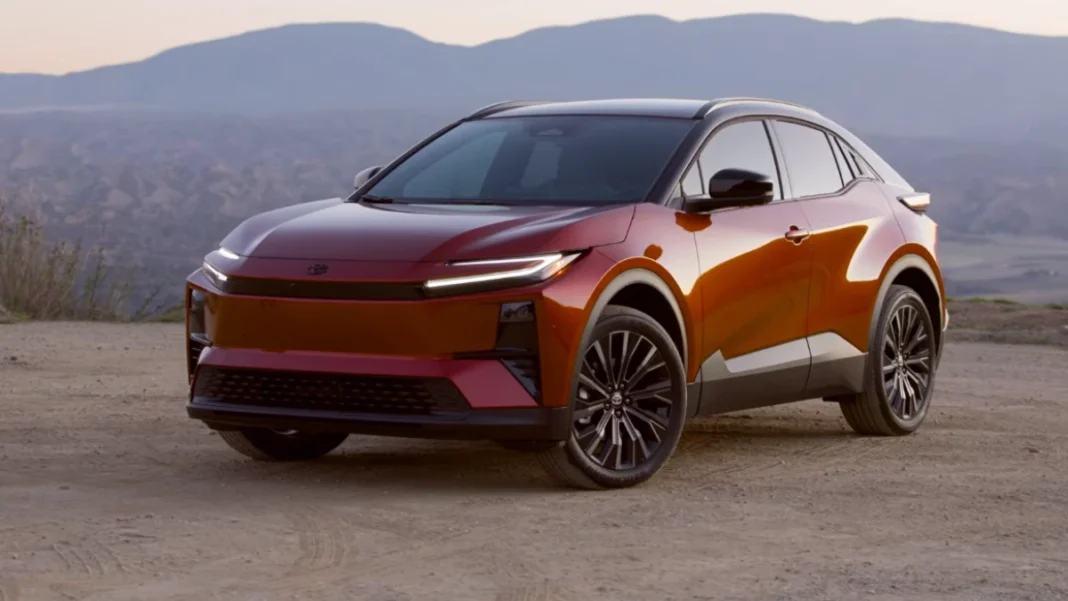
The original Toyota C-HR leaned heavily on bold styling. The 2026 electric version is expected to refine that formula rather than abandon it. The coupe-SUV profile remains, but proportions should look tighter and more planted.
An EV platform allows for shorter overhangs and a longer wheelbase relative to body size. That subtle shift improves stance. The roofline may still slope dramatically, yet improved packaging should preserve usable rear headroom.
Aerodynamics will play a larger role this time. Expect smoother underbody panels, reshaped mirrors, and carefully sculpted front air curtains. Every detail contributes to efficiency. In a compact electric SUV, design is no longer just about drama. It directly influences range.
XSE-Specific Styling Elements
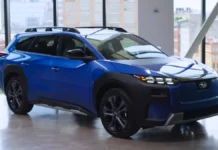
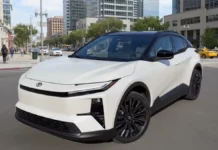
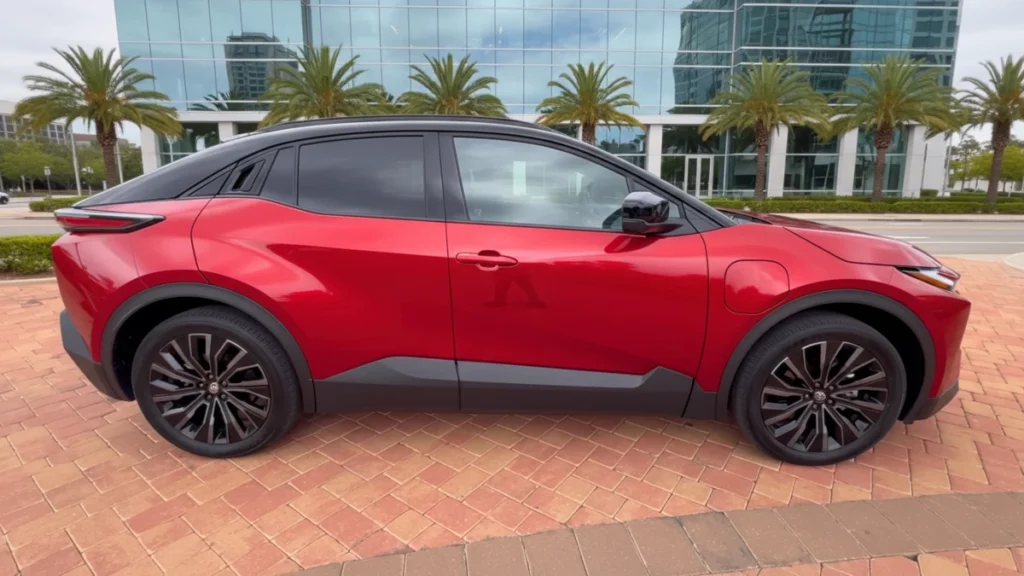
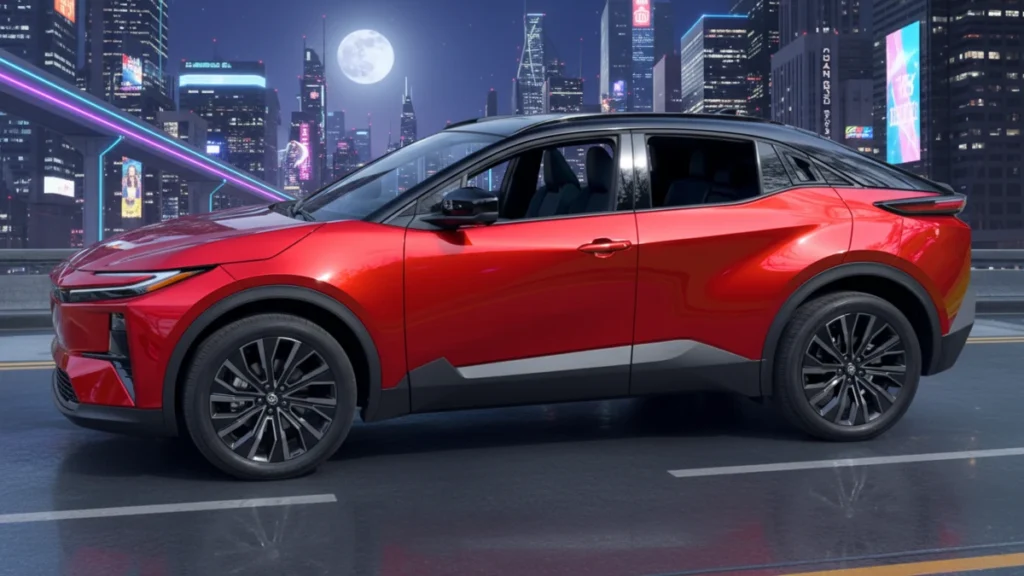
The XSE trim should amplify the sporty identity. Larger alloy wheels are almost certain, likely with low-profile tires that enhance visual aggression. A contrasting black roof would create a floating effect, a design cue that continues to resonate with younger buyers.
Unique LED lighting signatures will help distinguish the electric model from its predecessor. Thin daytime running lights and a full-width rear light bar would align with Toyota’s current design direction. Subtle gloss-black accents may replace heavy chrome, reinforcing the performance tone.
These details are not cosmetic afterthoughts. In a crowded segment, visual identity matters. The C-HR XSE needs to look as energetic as it feels.
Interior and Technology
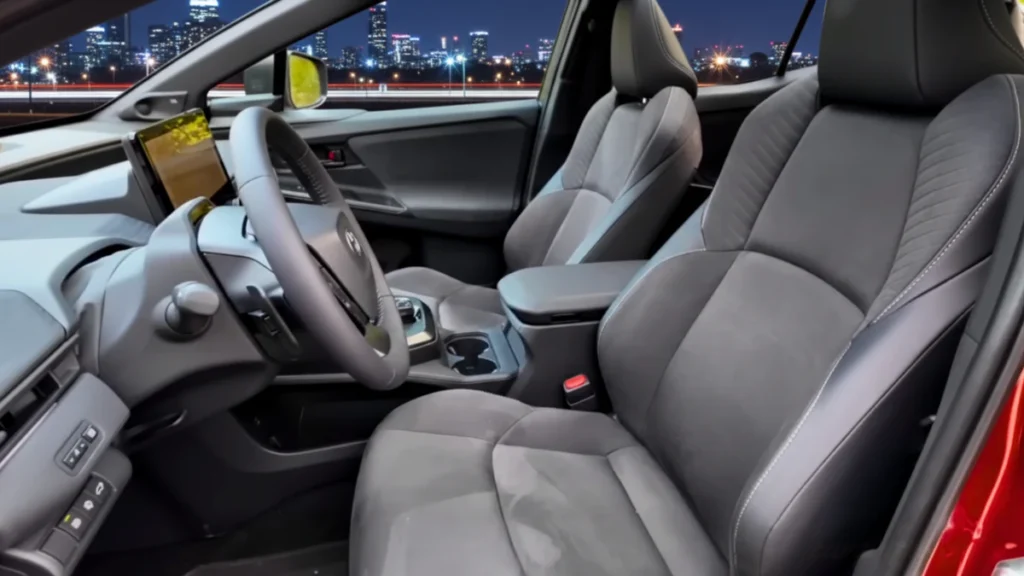
Cabin Layout and Materials
Inside, the transformation could be even more significant. The flat-floor EV architecture eliminates the bulky transmission tunnel found in the previous generation. That change alone improves rear passenger comfort and front cabin openness.
Expect a driver-focused dashboard with a slightly angled center stack. Toyota has moved toward cleaner layouts in recent models, and the C-HR should follow suit. Softer touchpoints and upgraded trim materials will be essential to justify XSE pricing.
Compared to the outgoing gas-powered C-HR, cabin refinement should take a noticeable step forward. Reduced drivetrain noise and improved insulation enhance perceived quality. Small crossovers no longer get a pass for feeling entry-level.
Infotainment and Connectivity
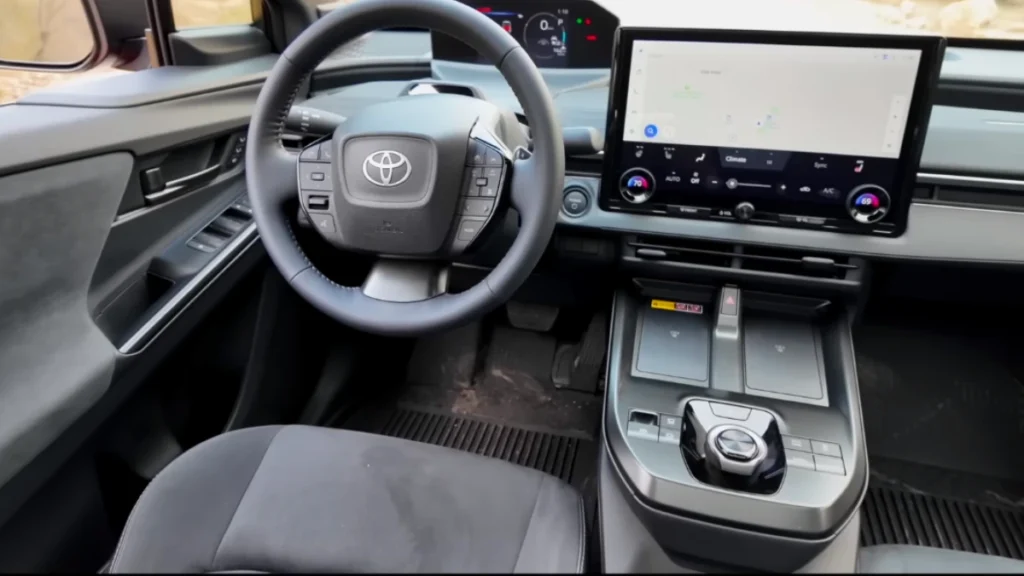
Technology will be central to the C-HR XSE’s appeal. Toyota’s latest multimedia interface, already seen in newer models, should anchor the dashboard. A large central display, likely in the 12-inch range, would feel appropriate for 2026 expectations.
Wireless Apple CarPlay and Android Auto integration will be standard, not optional. Over-the-air update capability ensures software improvements arrive without dealer visits. That matters in an era where digital features evolve quickly.
A configurable digital gauge cluster should complement the main display. Clear energy usage graphics, charging status, and navigation overlays enhance daily usability. For first-time EV owners, intuitive tech reduces the learning curve and builds confidence from day one.
Safety and Driver Assistance
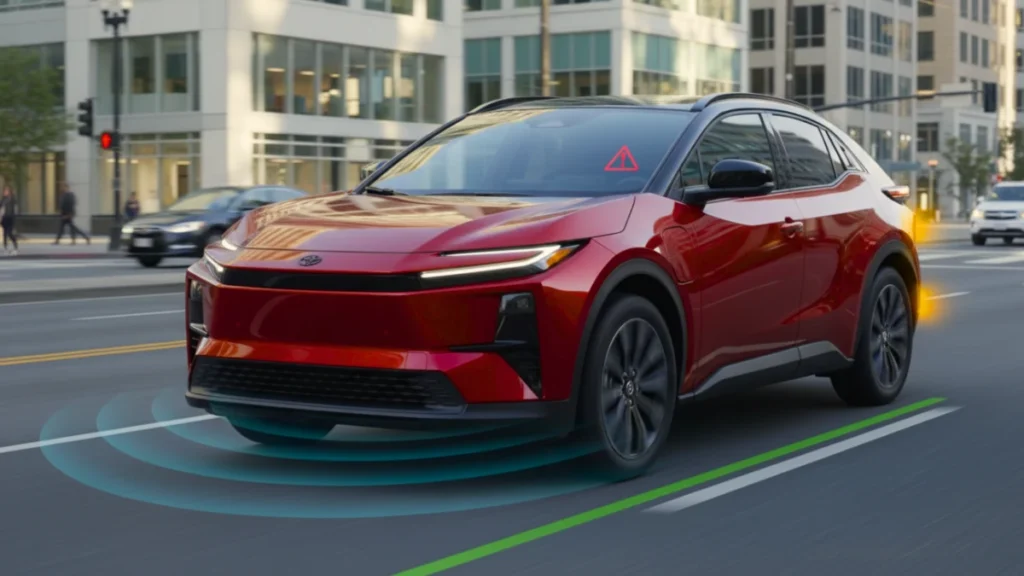
Toyota Safety Sense 3.0 Expected Features
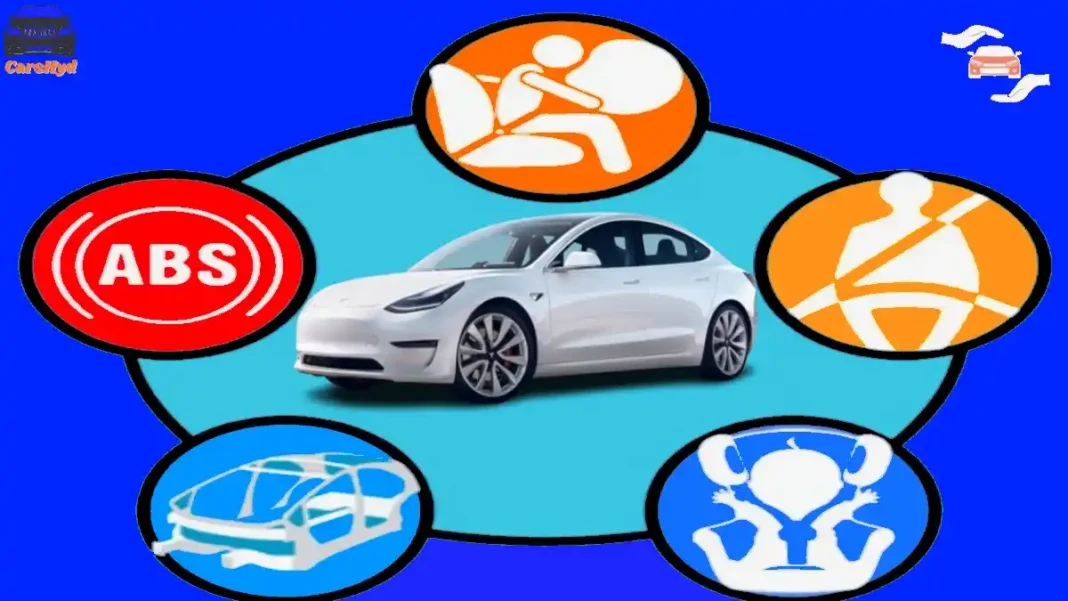
Safety will remain central to the 2026 Toyota C-HR XSE’s appeal. Toyota rarely skimps here. Expect the latest Toyota Safety Sense 3.0 suite to come standard across trims.
Adaptive cruise control should operate smoothly in stop-and-go traffic. Lane centering assist will likely provide subtle steering inputs on highways. Blind-spot monitoring with rear cross-traffic alert should be standard, not optional.
Toyota has steadily refined its driver-assist calibration. The system feels less intrusive than earlier versions. That balance matters for daily commuters who rely on these features.
For urban drivers, automatic emergency braking and pedestrian detection will be critical. The compact size makes city maneuvering easier, but dense traffic demands constant awareness. A strong active safety package reinforces the C-HR XSE’s value proposition.
Anticipated IIHS and NHTSA Performance
On the structural side, the dedicated EV platform should improve crash performance. Battery placement within the floor increases rigidity and lowers rollover risk. Compared to the older gas-powered C-HR, structural integrity should take a measurable step forward.
Battery protection is equally important. Reinforced casing, automatic disconnect systems, and thermal management safeguards reduce post-collision risks. Expect competitive ratings from both the National Highway Traffic Safety Administration and the Insurance Institute for Highway Safety (IIHS) once testing is complete.
For families considering a compact EV, strong safety scores will be non-negotiable.
Pricing Expectations and Federal Incentives
Estimated Starting MSRP
Affordability will define the 2026 Toyota C-HR XSE’s success. A projected starting MSRP between $34,000 and $39,000 feels realistic. That range keeps it competitive without undercutting Toyota’s larger EV offerings.
The XSE trim will likely sit toward the upper end of that bracket. Expect upgraded wheels, enhanced tech, and potentially a larger battery pack. Pricing strategy must balance performance credibility with mainstream accessibility.
In today’s market, transaction price matters more than sticker. Lease programs and dealer incentives could play a decisive role.
Federal Tax Credit Eligibility
Federal incentives remain a moving target. Under the Inflation Reduction Act clean vehicle tax credit requirements, eligibility depends on battery sourcing and assembly location. North American production improves qualification odds. Imported battery components could limit or reduce credits.
Shoppers tracking the 2026 Toyota C-HR XSE should monitor official sourcing disclosures. A full federal credit could significantly lower effective cost. Partial eligibility still improves value.
State-level incentives also matter. California, Colorado, and several northeastern states offer additional rebates. When combined, total savings may shift the C-HR from aspirational to attainable for many buyers.
bZ Compact SUV vs C-HR: What’s the Difference?
Understanding the bZ Naming Strategy
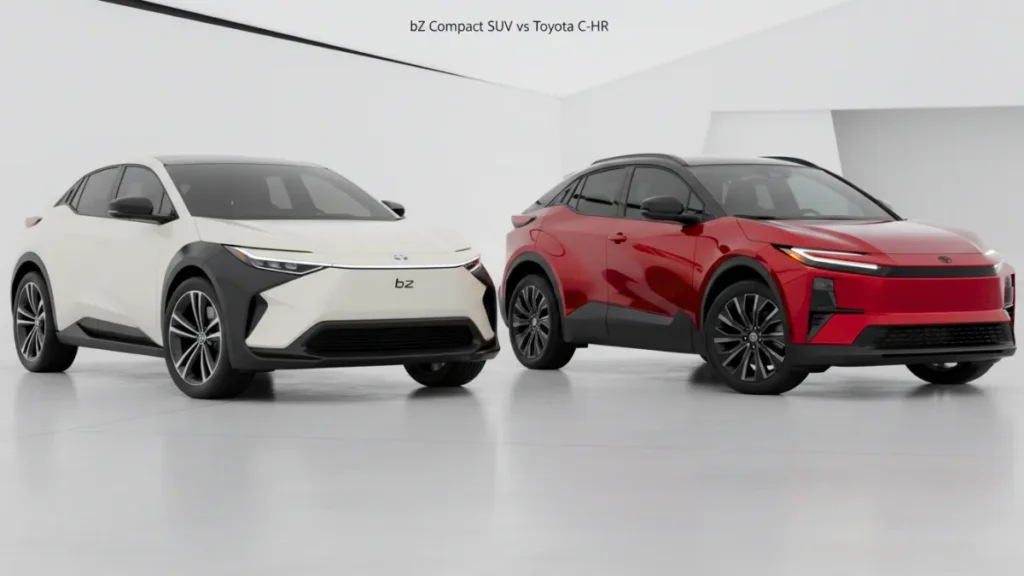
Toyota’s “bZ” branding signals its dedicated electric lineup. The Toyota bZ Compact SUV Concept previewed a smaller, design-forward EV within that family. It hinted at aggressive styling and a youth-oriented identity.
Dimensionally, the concept suggested proportions similar to a compact crossover. Stylistically, it leaned futuristic. Sharp surfacing and dramatic lighting defined its character.
In the ongoing bZ compact SUV vs C-HR discussion, overlap seems inevitable. However, branding may separate them. The C-HR name carries recognition in the U.S. market. The bZ badge emphasizes next-generation EV ambition.
C-HR vs Future Toyota Electric Crossovers
The C-HR XSE is expected to focus on sporty urban appeal. Smaller footprint. Sharper handling. Youthful design cues. It targets style-conscious drivers who value agility over maximum cargo space.
Future Toyota electric crossovers under the bZ umbrella may skew more practical. Think family-friendly packaging and broader trim diversity. That distinction allows Toyota to avoid internal competition.
Trim hierarchy will likely reflect this separation. The C-HR XSE could represent the fun-forward entry point. Larger bZ models would address family-oriented buyers needing more room and range.
Key Competitors in the US Market
Direct Rivals
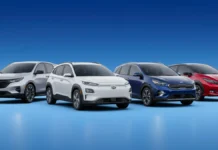
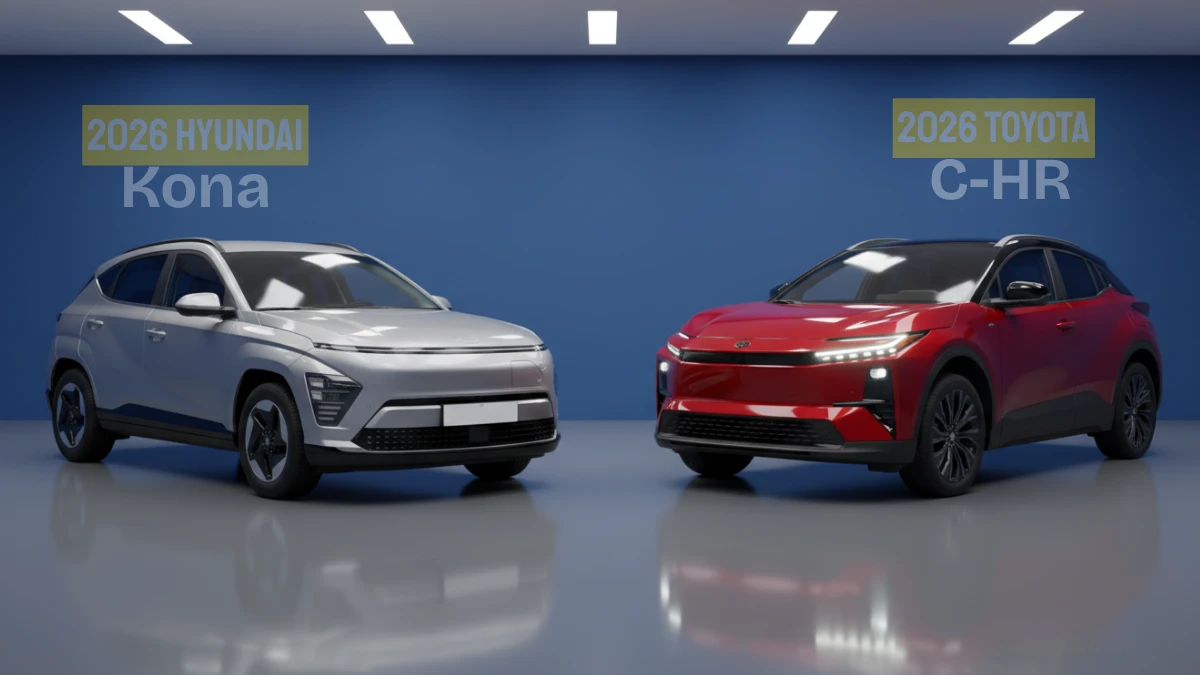
The compact EV segment is filling quickly. The Hyundai Kona Electric remains a strong benchmark for range and value. The Chevrolet Equinox EV pushes aggressive pricing with solid range claims. The Volvo EX30 offers premium design at a surprisingly accessible entry price. For a detailed side-by-side comparison covering range, performance, pricing, and interior technology, see our full 2026 Toyota C-HR EV vs Hyundai Kona Electric: SUV Comparison.
Each competitor targets slightly different priorities. Range, brand cachet, or aggressive leasing may define their appeal.
Competitive Advantages
Toyota’s greatest advantage remains brand trust. Reliability perception continues to influence American buyers. That reputation carries weight in a relatively new EV market.
The XSE sporty positioning could also differentiate the C-HR. Not every compact EV emphasizes driving character. A sharper chassis and confident acceleration would give it personality.
Finally, Toyota’s dealer network spans nearly every U.S. region. Service accessibility reduces ownership anxiety. For many first-time EV adopters, proximity and familiarity still matter.
Who Should Wait for the 2026 Toyota C-HR XSE?
Ideal Buyer Profile
Urban professionals stand out as the primary audience. They want manageable size, modern tech, and quick acceleration for city traffic. First-time EV adopters seeking a recognizable brand may also gravitate toward the C-HR XSE.
Style-focused drivers who felt the original C-HR lacked power may find this electric evolution compelling. Instant torque changes the experience entirely.
Who Might Look Elsewhere
Buyers demanding over 300 miles of EPA range may prefer larger alternatives. Long-distance commuters with limited charging access should evaluate carefully.
Families needing expansive rear seating or cargo flexibility might outgrow the C-HR quickly. In those cases, a larger electric crossover may prove more practical.
Ownership Expectations: Reliability, Maintenance, and Resale
Toyota’s Electrified Track Record
Toyota’s hybrid history speaks volumes. Models like the Toyota Prius built a reputation for long-term durability. That credibility will influence perceptions of its EV lineup.
Toyota typically adopts conservative battery management strategies. That approach may limit peak performance slightly but supports longevity. For risk-averse buyers, that philosophy is reassuring.
Projected Long-Term Value
Residual values for Toyota products traditionally outperform segment averages. If the C-HR XSE maintains reliability expectations, resale strength should follow.
Battery warranty coverage will likely match industry standards, potentially eight years or more. Transparent warranty terms will help reduce hesitation among cautious buyers.
Maintenance costs should also remain lower than comparable gasoline models. Fewer moving parts and no oil changes simplify ownership.
Final Verdict: Is the 2026 Toyota C-HR XSE Worth the Wait?
The 2026 Toyota C-HR XSE represents a calculated evolution rather than a gamble. Confirmed details remain limited, but strategic signals are clear. Compact size, competitive range, and sporty positioning define its projected identity.
Strengths appear promising. Design should feel sharper. Efficiency should meet mainstream expectations. Toyota’s brand trust remains a powerful asset.
Unknowns still exist. Final EPA range, official pricing, and AWD availability will determine true competitiveness. Incentive eligibility may also shift value perception.
For buyers waiting on a compact electric crossover that blends personality with reliability, the C-HR XSE deserves serious attention. It may not aim to dominate headlines. Instead, it aims to deliver balance. And in today’s EV market, balance often wins.
FAQ
Toyota is expected to reveal the 2026 Toyota C-HR XSE in late 2025, with US sales likely beginning in early to mid-2026, depending on production and battery sourcing.
Projected EPA range is between 240 and 280 miles, depending on battery size and drivetrain configuration.
Eligibility will depend on battery sourcing and assembly location under the Inflation Reduction Act. North American production would improve qualification chances.
The C-HR XSE is expected to be smaller, sportier, and potentially more affordable than the Toyota bZ4X, targeting urban buyers instead of family-focused EV shoppers.
A dual-motor AWD configuration is possible, especially for the XSE trim, but final specifications have not been confirmed.