





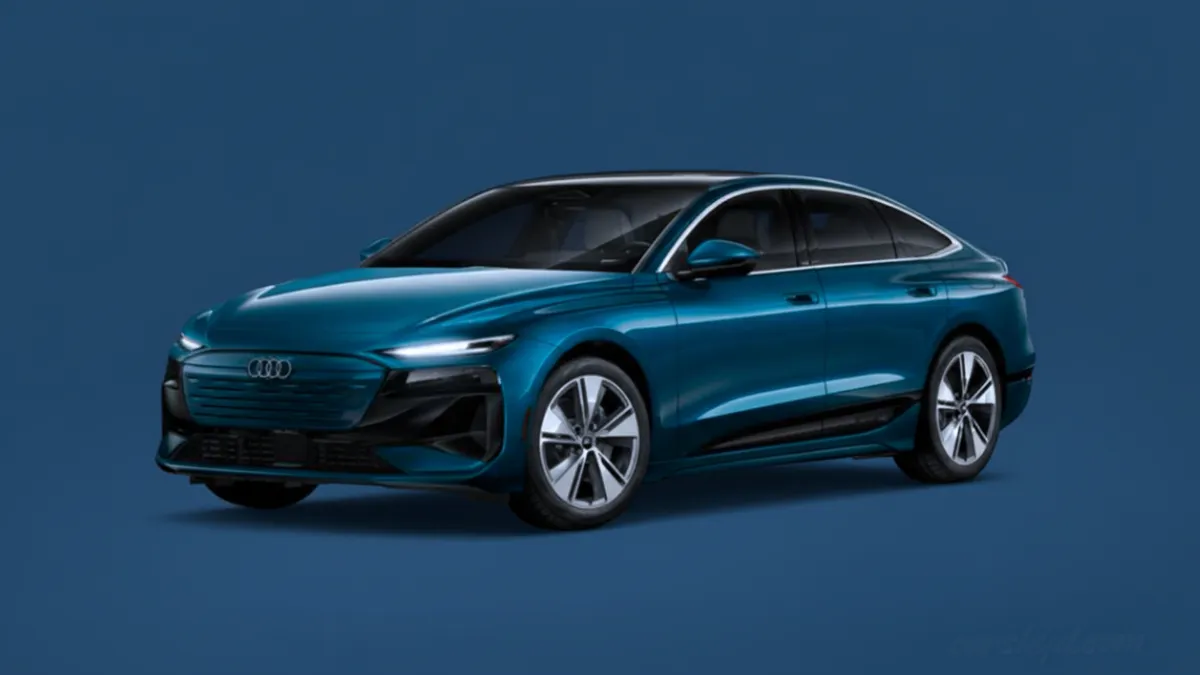
The 2027 Audi A6 Sportback e-tron marks a turning point for Audi’s electric ambitions in the United States. This isn’t a converted gasoline sedan with a battery tucked underneath. It’s the brand’s first fully realized executive EV built on the new Premium Platform Electric architecture. For American buyers, that distinction matters. It shapes everything from range and performance to charging speed and long-term ownership value.
Audi has hinted for years that its next-generation electric sedans would feel purpose-built. The A6 Sportback e-tron is where that promise starts to take form. Early projections suggest competitive EPA range estimates, a dual-motor Quattro setup aimed at real performance credibility, and 800-volt fast-charging capability designed for modern U.S. infrastructure. The launch timing also aligns with Audi’s broader 2027 electrification push, as the company transitions core nameplates toward fully electric replacements.
This guide explains what we know so far about the 2027 Audi A6 Sportback e-tron and what those details mean for real-world U.S. buyers. We’ll examine range expectations, horsepower figures, platform engineering, and U.S. release timing. For a deeper technical dive into the underlying architecture, see “Inside the Audi PPE Platform: How 800V Tech Powers the A6 e-tron.”
Contents
- Where the 2027 Audi A6 Sportback e-tron Fits in the 2027 Audi EV Lineup
- Audi PPE Platform Explained — The Technical Foundation
- Performance Specs — Horsepower, Torque, and Quattro Dynamics
- Audi A6 e-tron Range Estimates and Efficiency
- Charging the 2027 Audi A6 Sportback e-tron in the United States
- Design, Aerodynamics, and Sportback Efficiency
- 2027 Audi A6 Sportback e-tron vs BMW i5 vs Mercedes EQE
- U.S. Release Date and Availability
- MSRP Expectations, Trims, and Tax Credit Status
- Battery Warranty, Longevity, and Ownership Outlook
- Who Should Consider the 2027 Audi A6 Sportback e-tron?
- Final Verdict — Is the 2027 Audi A6 Sportback e-tron Worth Waiting For?
- FAQ About 2027 Audi A6 Sportback e-tron
Specifications & At‑a‑Glance
2027 Audi A6 Sportback e-tron RWD
2027 Audi S6 Sportback e-tron Quattro
2027 BMW i5 xDrive40
2027 Mercedes EQE (Estimated)
Where the 2027 Audi A6 Sportback e-tron Fits in the 2027 Audi EV Lineup
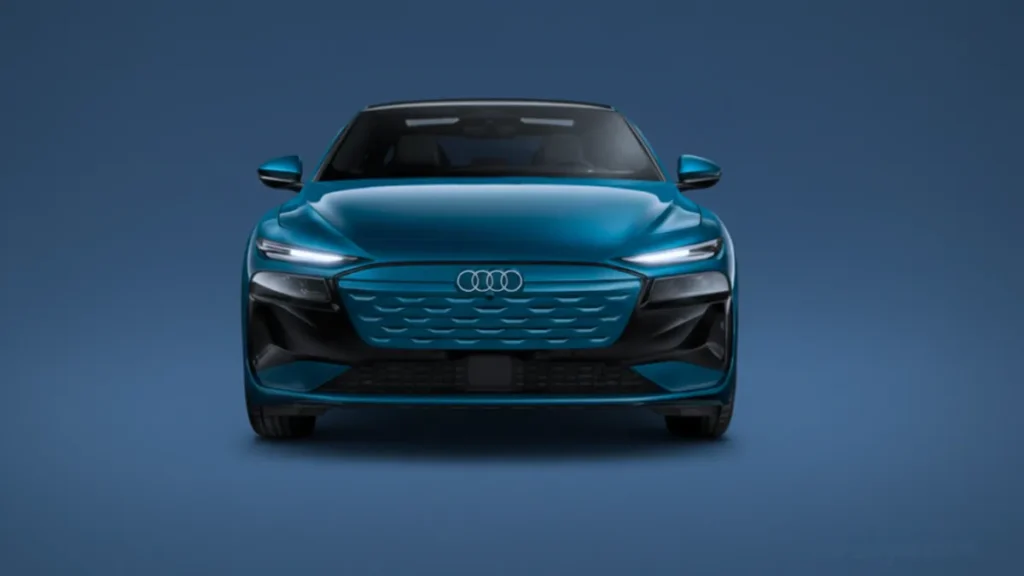
Audi’s 2027 EV roadmap is no longer theoretical. By this point, the brand’s electric portfolio is expected to span compact crossovers, midsize SUVs, and executive sedans. The 2027 Audi A6 Sportback e-tron sits at the heart of that expansion, positioned as the brand’s primary luxury electric sedan for the U.S. market.
In the broader 2027 Audi EV lineup, the A6 Sportback e-tron complements SUV offerings such as the Q6 e-tron and Q8 e-tron, while also previewing what a future A4 e-tron could look like. Audi’s strategy is deliberate. SUVs drive volume, but sedans define brand identity. A well-executed luxury electric sedan in 2027 still carries weight, especially among professional buyers who want refinement without moving into a crossover.
The A6 Sportback e-tron also plays a strategic role in the evolving luxury electric sedan 2027 segment. Competition from German rivals and Tesla is intense. Audi’s approach leans on balanced performance, understated design, and high-speed charging capability. Instead of chasing extremes, the company appears focused on delivering a complete executive EV package built around the PPE platform.
For more on upcoming models across the range, readers can explore our full coverage of future Audi electric vehicles.
Audi PPE Platform Explained — The Technical Foundation
The 2027 Audi A6 Sportback e-tron is built on the Premium Platform Electric (PPE), a dedicated electric architecture developed specifically for premium EVs. According to the official Audi MediaCenter, PPE was engineered to support 800-volt charging, scalable battery modules, and both rear-wheel and dual-motor configurations. This is not an adaptation of a combustion chassis. It was engineered from day one to support high-density battery packs, advanced thermal management, and performance-oriented dual-motor setups.
What Is the Audi PPE Platform?
The Audi PPE platform is a co-developed architecture designed for midsize and larger electric vehicles. Its layout centers around a flat battery pack integrated into the floor, optimizing cabin space and lowering the center of gravity. Because it was designed as a pure EV structure, it avoids the compromises common in retrofitted combustion platforms.
Battery modules are modular by design. That allows Audi to adjust capacity depending on trim level and market requirements. The structure also supports rear-wheel-drive and dual-motor all-wheel-drive configurations without major mechanical complexity.
This flexibility is one reason PPE will underpin multiple models across Audi’s premium EV portfolio.
800V EV Architecture Benefits in Real Driving
One of the defining features of the Audi PPE platform is its 800-volt electrical system. On paper, 800V EV architecture benefits include faster DC charging and reduced energy loss. In practice, those advantages translate into shorter highway charging stops and more consistent performance under load.
Higher voltage reduces current for a given power level. That lowers thermal strain on wiring and components. It also helps maintain charging speeds deeper into the battery’s state of charge window. For U.S. drivers covering long interstate distances, that matters.
Beyond charging, the 800V setup supports sustained high-speed performance without significant heat buildup. Efficiency at highway speeds improves as well, particularly when combined with aerodynamic refinements.
Performance Specs — Horsepower, Torque, and Quattro Dynamics
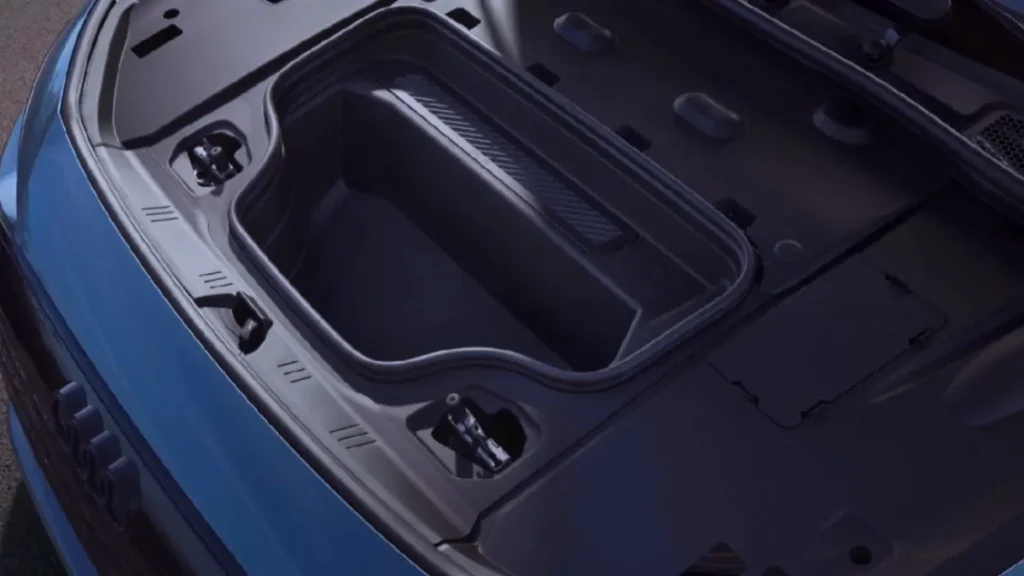
Performance remains central to the A6 nameplate. The electric transition does not change that expectation. Instead, it reshapes how power is delivered.
Audi A6 e-tron Horsepower Breakdown
Early projections for Audi A6 e-tron horsepower suggest a clear split between configurations. The single-motor rear-wheel-drive model is expected to prioritize efficiency while still delivering strong acceleration by segment standards. Output estimates place it comfortably within premium territory.
The dual-motor variant, marketed under the familiar Quattro badge, raises the stakes. Combined system output is expected to exceed many traditional midsize luxury sedans, with instant torque available from zero rpm. That changes the character of everyday driving. Passing maneuvers feel effortless. Highway merges become less dramatic.
Audi A6 e-tron dual-motor Quattro models are likely to balance performance with traction, rather than chase extreme figures.
Dual-Motor Quattro System Explained
In electric form, Quattro operates differently from legacy mechanical systems. Instead of a driveshaft linking front and rear axles, separate motors handle torque distribution electronically. This allows near-instant adjustments based on traction conditions.
Torque vectoring becomes software-controlled. Rear bias is expected in dynamic modes, preserving a familiar Audi driving feel. Compared with traditional Quattro systems in gasoline A6 models, the EV version reduces mechanical complexity while increasing response speed.
That responsiveness can improve stability on wet or icy roads. It also enhances corner exit behavior when driven enthusiastically.
0–60 mph and Real-World Acceleration Expectations
While official figures remain subject to final EPA certification, 0–60 mph times for dual-motor versions are projected to land well under five seconds. That places the 2027 Audi A6 Sportback e-tron squarely in competitive territory within the executive EV class.
Compared with previous gasoline-powered A6 models, acceleration will feel more immediate. There’s no gear shifting. No turbo lag. Power arrives in a smooth, uninterrupted surge. Against segment rivals, the numbers should align closely with established electric competitors, putting it directly in line with other luxury electric sedans in this segment.
Audi A6 e-tron Range Estimates and Efficiency
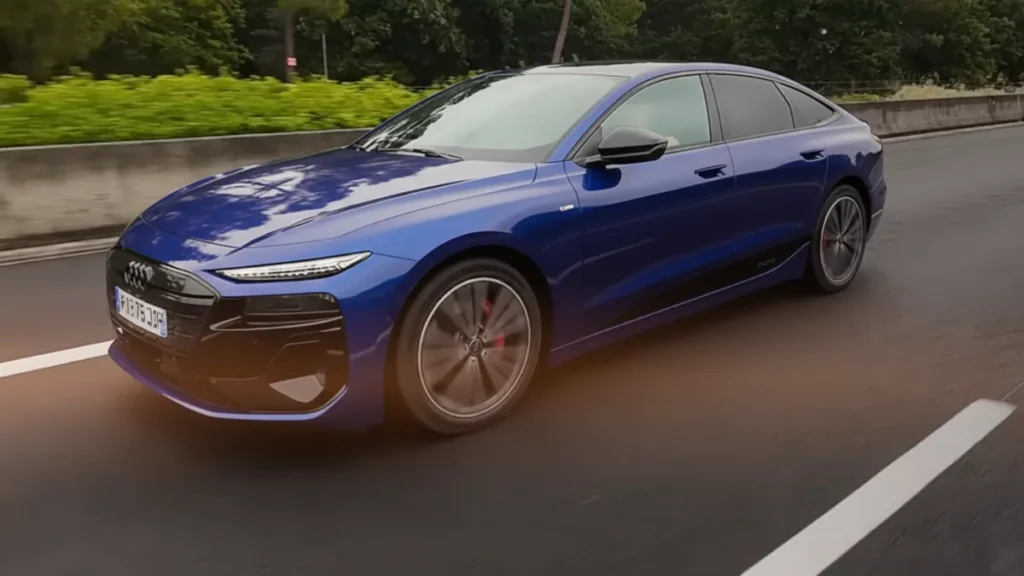
Range is still the first number most U.S. buyers look for. In the case of the 2027 model, Audi A6 e-tron range estimates will likely define how seriously this sedan is taken against established electric rivals. Battery size, charging architecture, and aerodynamic design all work together here, and none of them exist in isolation.
Expected EPA Range Estimates
While final EPA certification figures will not be confirmed until closer to launch, early projections suggest a usable battery capacity in the mid- to high-90-kWh range for higher trims. That capacity, paired with the 800-volt architecture, positions the car for competitive range on paper and usable distance in practice.
It’s important to separate EPA numbers from European WLTP figures. The U.S. Environmental Protection Agency (EPA) testing cycle, detailed on FuelEconomy.gov, typically produces more conservative and realistic highway range estimates compared with WLTP standards. WLTP testing often produces higher range claims due to different cycle conditions. U.S. EPA testing is typically more conservative and better reflects sustained highway driving at American speeds. Buyers comparing European and U.S. specifications should keep that difference in mind.
In real-world U.S. conditions, expect highway range to sit below the official combined EPA rating, especially at 70–75 mph. Climate control use, wheel size, and dual-motor configuration will also influence total distance per charge. Rear-wheel-drive versions will likely deliver the longest range. Dual-motor Quattro models may sacrifice some efficiency for traction and performance.
Efficiency vs Other Luxury Electric Sedans in 2027
Within the luxury electric sedan 2027 segment, efficiency margins are tight. Most competitors operate in a similar battery-capacity window. The difference often comes down to aerodynamics, curb weight, and software calibration.
Highway efficiency is especially critical for executive sedans, as they are more likely to cover long interstate distances than compact city EVs. A low drag coefficient and carefully managed underbody airflow can translate into measurable gains at speed. Wheel design also plays a role, particularly in larger 20- or 21-inch configurations.
Weight remains a structural factor. Larger battery packs increase mass, which can reduce efficiency in stop-and-go traffic. However, careful packaging within the PPE platform helps distribute weight evenly, improving balance and potentially limiting consumption penalties.
Charging the 2027 Audi A6 Sportback e-tron in the United States
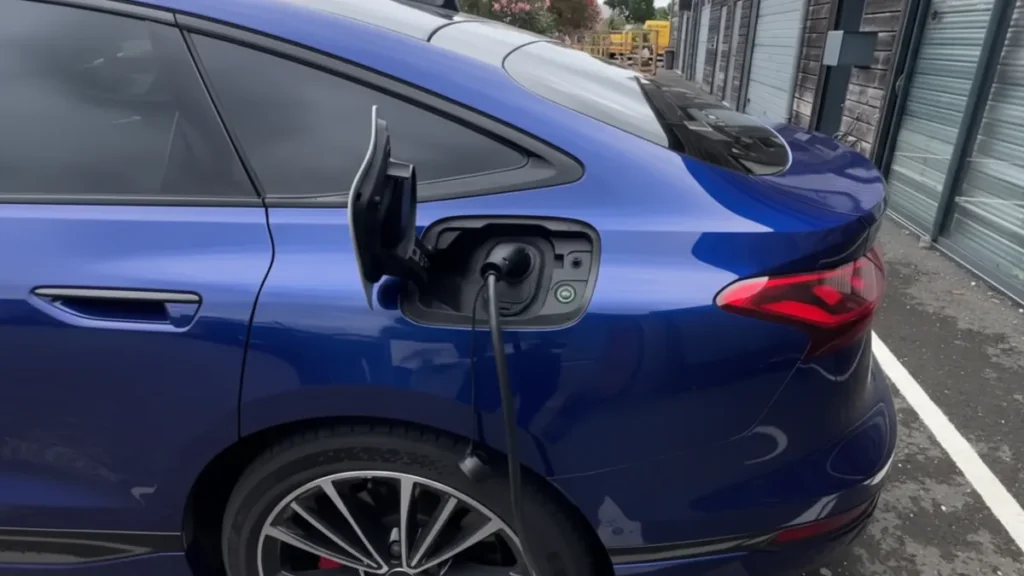
Charging infrastructure is no longer an afterthought for U.S. EV buyers. It is part of the ownership equation. The 2027 Audi A6 Sportback e-tron is engineered around high-speed charging capability, but real-world experience depends on network compatibility and installation readiness at home.
DC Fast Charging at 350kW Stations
One of the headline figures surrounding the model is its projected peak charging capability at high-output stations. Audi A6 e-tron charging speed at 350kW stations is expected to approach the upper limits of current public infrastructure, thanks to its 800-volt system.
Peak numbers, however, tell only part of the story. The charging curve matters more than the top figure. Sustained high charging rates between 10 and 60 percent state of charge significantly reduce travel time on long trips. Early data suggests a 10–80 percent session could fall within a competitive window for the segment, assuming ideal temperature and station performance.
In real life, the charging curve matters more than the peak number. Environmental conditions, battery preconditioning, and station reliability all influence results. Drivers relying on public fast charging for road trips should consider those variables when planning routes.
NACS Adapter Availability and U.S. Compatibility
The U.S. market is transitioning from CCS to NACS connectors, reshaping the charging landscape. For early production models, compatibility is expected through an adapter solution, allowing access to expanding NACS-equipped networks.
Adapter rollout timing will be key for early adopters. Audi has signaled alignment with broader industry shifts, suggesting that long-term native NACS integration is likely. That would simplify access to high-speed chargers across multiple networks.
Buyers should verify dealer guidance at time of purchase, especially if they plan to rely heavily on public fast charging rather than home installation.
Home Charging Setup and Requirements
For most owners, daily charging will occur at home. A Level 2 setup using a 240-volt circuit remains the practical standard. Installation costs in the United States vary depending on panel capacity and garage configuration, but estimates typically range from moderate electrical upgrades to more extensive rewiring in older homes.
Overnight charging expectations are straightforward. With a properly installed Level 2 charger, a full recharge from low state of charge can generally be completed within a single evening. That routine reduces dependence on public networks and keeps operating costs predictable.
Design, Aerodynamics, and Sportback Efficiency
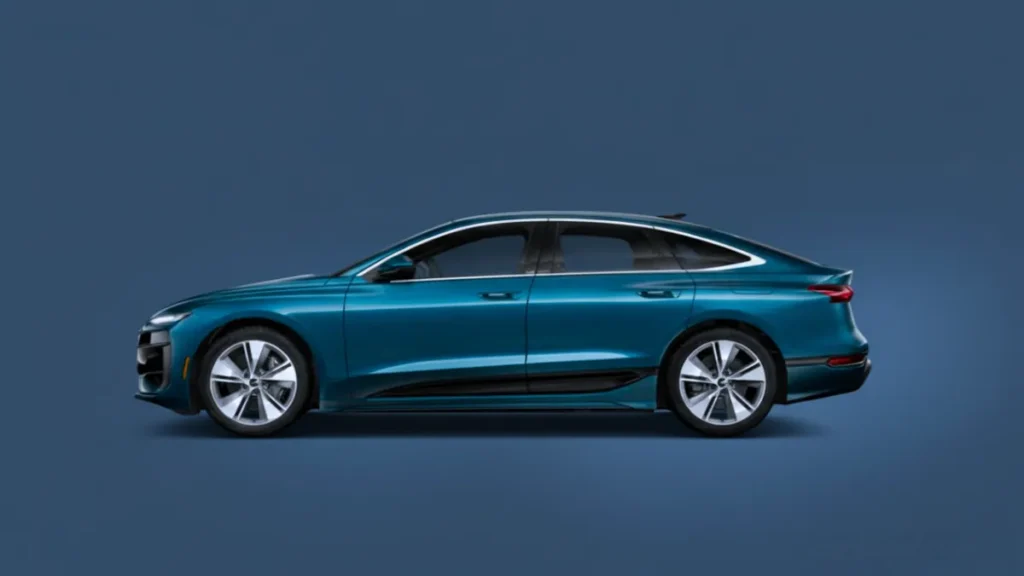
Executive sedans have always been about proportion. With the 2027 model, the shift to electric architecture gives designers more freedom to refine those proportions without the packaging limits of a combustion engine. The result is a low-slung Sportback profile that prioritizes airflow as much as visual presence.
Sportback Silhouette and Drag Coefficient
The sweeping roofline is not just aesthetic. It directly influences efficiency. Early projections suggest a drag coefficient that places the car among the more aerodynamic entries in its class. For shoppers comparing numbers, the Audi A6 Sportback e-tron drag coefficient vs Tesla is an inevitable data point. The Tesla Model S has long been a benchmark for low aerodynamic drag, so Audi’s ability to approach or match that figure matters in highway range discussions.
Beyond the roofline, underbody optimization plays a major role. A flat floor, carefully managed rear diffuser, and active air inlets help reduce turbulence at speed. Wheel design also contributes, with aero-optimized patterns reducing rotational drag. At 70 mph on an open interstate, those incremental gains translate into measurable efficiency improvements.
Digital Matrix LED and Exterior Innovation
Lighting has become a signature element for modern Audi vehicles. The digital matrix LED system expected on upper trims does more than illuminate the road. It adapts beam patterns in real time, helping maintain visibility without blinding oncoming traffic. Animated light signatures and customizable daytime running light elements reinforce the sedan’s modern identity.
U.S. regulatory considerations remain part of the equation. Adaptive high-beam matrix functionality has faced restrictions in the past, though federal standards have evolved. Buyers should expect some calibration differences between U.S. and European versions, particularly in how advanced beam shaping features are deployed.
Exterior innovation extends beyond lighting. Flush door handles, precise panel alignment, and tight shut lines reflect a premium positioning strategy. These details influence both aerodynamics and perceived quality.
Interior Technology and Sustainable Materials
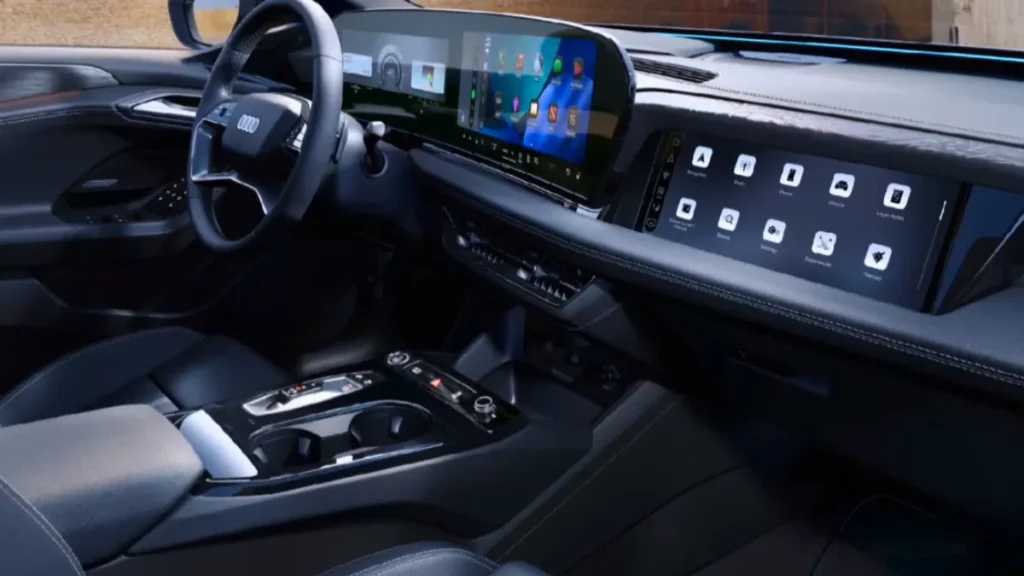
Inside, the evolution of Audi’s virtual cockpit continues. The digital instrument cluster is expected to feature updated graphics, faster processing, and expanded customization options. Paired with the latest MMI interface, the system aims to reduce menu complexity while improving responsiveness.
Over-the-air update capability allows software refinements without dealership visits. That matters in a segment where digital experience increasingly defines brand perception. The layout favors horizontal lines and layered materials, reinforcing the sedan’s width.
Sustainable cabin materials are part of the broader electric narrative. Recycled textiles, responsibly sourced trim elements, and optional animal-free upholstery reflect shifting buyer expectations in the premium market. None of this diminishes the tactile feel expected in a luxury electric sedan 2027 competitor. The goal is refinement without excess, supported by careful acoustic insulation that takes advantage of the quiet electric powertrain.
2027 Audi A6 Sportback e-tron vs BMW i5 vs Mercedes EQE
No executive EV launches into a vacuum. The 2027 Audi A6 Sportback e-tron vs BMW i5 comparison is unavoidable, and the Mercedes EQE remains a central reference point. Each brand approaches the luxury electric sedan 2027 segment with a distinct philosophy.
Range and Efficiency Comparison
Projected EPA range figures place the A6 Sportback e-tron in direct competition with both the BMW i5 and Mercedes EQE. Minor differences in battery capacity and drivetrain configuration will influence final numbers. Rear-wheel-drive variants typically lead in efficiency, while dual-motor trims trade some distance for added traction and power.
Highway efficiency becomes a defining metric for executive buyers who travel frequently. Aerodynamic refinement and energy management software may create small but meaningful gaps between these sedans in real-world testing.
Performance and Driving Character
Performance expectations align closely across the trio. Instant torque is standard. The distinction lies in tuning. Audi’s dual-motor Quattro system is expected to deliver balanced traction with a subtle rear bias in dynamic modes. BMW traditionally emphasizes sharper steering response, while Mercedes often prioritizes ride comfort and isolation.
Acceleration figures will likely sit within similar ranges, especially in upper trims. The difference may come down to throttle calibration and chassis feedback rather than raw numbers.
Interior Quality and Technology
All three contenders lean heavily on digital interfaces. Audi’s approach favors a driver-oriented cockpit with layered screens integrated into a cohesive dash design. BMW incorporates its curved display architecture, while Mercedes emphasizes large, sweeping glass surfaces.
Material quality and assembly precision remain critical in this class. Buyers will notice panel fit, switchgear feel, and seat comfort during extended drives. Technology ecosystems also differ, particularly in voice control integration and navigation interface design.
Market Positioning in 2027
In 2027, the executive EV segment is expected to mature further. Audi positions the A6 Sportback e-tron as a balanced alternative, blending performance credibility with understated design. BMW appeals to drivers seeking a sportier dynamic profile. Mercedes targets comfort-focused luxury buyers.
For a detailed breakdown of specifications, driving impressions, and ownership considerations across these models, see our full comparison feature dedicated to this segment rivalry.
| Model | Base Price (USD) | EPA Range (mi) | 0–60 mph (sec) | Peak DC Charging | Drivetrain | Horsepower |
|---|---|---|---|---|---|---|
| 2027 Audi A6 Sportback e-tron RWD | $66,700 | ~300–325 | <4.3 | ~270 kW | RWD | 456 |
| 2027 Audi S6 Sportback e-tron Quattro | $79,600 | ~300–325 | <4.3 | ~270 kW | AWD | 456 |
| 2027 BMW i5 xDrive40 | $86,930 CAD (~$66,000 USD est.) | ~278 | <5.0 | ~200–250 kW | AWD | 389 |
| 2027 Mercedes EQE (estimated) | ~$70,000 | ~280–310 | <5.1 | ~170–250 kW | AWD | 456 |
Notes:
- Charging figures reflect peak capabilities; real-world performance depends on temperature, battery SOC, and station type.
- Range is based on early EPA estimates and may vary with wheel size, climate, and trim.
- Prices are projected U.S. starting MSRP and may differ by options or packages.
U.S. Release Date and Availability
For many buyers, timing matters as much as specifications. The 2027 Audi A6 Sportback e-tron US release date will shape purchasing decisions, lease planning, and cross-shopping with other executive EVs entering the market.
Expected U.S. Launch Timeline
Production is expected to ramp up ahead of the 2027 model year designation, with initial builds likely allocated to key global markets before full U.S. distribution begins. Audi typically staggers its electric launches, prioritizing early-adopter regions and major metropolitan areas with established charging infrastructure.
Delivery window estimates for American customers will depend on trim level and drivetrain configuration. Rear-wheel-drive variants often reach showrooms first, followed by dual-motor Quattro models and higher-performance versions. Early reservation holders in coastal states may see shorter wait times than buyers in secondary markets.
Audi will likely launch the car first in regions where EV adoption and charging infrastructure are already strong. States with stronger EV adoption rates and more developed public charging networks are likely to receive initial inventory. As supply stabilizes, broader national availability should follow. Buyers tracking allocations and reservation updates should also consult our detailed pricing and ordering guide for the latest updates.
MSRP Expectations, Trims, and Tax Credit Status
Pricing strategy will determine how the sedan competes within the broader luxury EV segment. The structure needs to balance premium positioning with realistic market expectations in a rapidly evolving landscape.
Estimated MSRP and Trim Breakdown
2027 Audi A6 Sportback e-tron
$66,700 Starting MSRP
2027 Audi S6 Sportback e-tron
$79,600 Starting MSRP
2026 Audi S e-tron GT
$127,700 Starting MSRP
2026 Audi RS e-tron GT
$170,500 Starting MSRP
Base model pricing is expected to place the A6 Sportback e-tron squarely within the upper midsize luxury bracket. Entry-level rear-wheel-drive trims will likely emphasize efficiency and core technology features while maintaining competitive range figures.
Dual-motor Quattro versions will command a higher MSRP. The added performance, all-wheel traction, and expanded equipment packages justify the premium. These trims may include upgraded wheels, adaptive suspension systems, and enhanced interior finishes.
Performance-oriented variants, if confirmed, could sit at the top of the range. Those models would focus on increased output, sport-tuned suspension, and distinctive exterior accents. Final trim structure and equipment bundling will influence real-world transaction prices, particularly when optional packages are factored in.
Federal EV Tax Credit Eligibility
Federal incentives remain a complex part of the buying equation. Under the Inflation Reduction Act, eligibility for consumer tax credits depends on assembly location, battery sourcing, and income thresholds. Buyers can verify current qualification rules directly through the IRS Clean Vehicle Credit page. Prospective owners should verify how the A6 Sportback e-tron aligns with current federal guidelines at the time of purchase.
Battery sourcing considerations are especially important. The percentage of domestically produced battery components can influence qualification. Automakers continue to adjust supply chains to meet evolving requirements.
Leasing presents an alternative path. Commercial clean vehicle credits applied at the leasing level may allow financial institutions to pass savings on to customers, even if a retail purchase does not qualify. Buyers evaluating monthly payment structures should weigh both purchase and lease scenarios carefully.
Battery Warranty, Longevity, and Ownership Outlook
Long-term ownership concerns often center on battery durability and resale value. For an executive electric sedan, those factors carry financial significance.
Audi Battery Warranty Coverage
Audi is expected to provide a comprehensive battery warranty consistent with industry standards for premium EVs. Coverage typically extends for multiple years or a specified mileage threshold, protecting against excessive capacity loss and manufacturing defects.
Such warranties usually guarantee a minimum percentage of original battery capacity over the coverage period. Buyers should review official documentation at launch for exact terms and conditions.
Degradation Expectations Over 8–10 Years
Battery degradation is gradual rather than sudden. Real-world data from comparable electric vehicles suggests capacity retention remains strong when charging habits are moderate and thermal management systems function as designed.
Factors influencing long-term performance include frequent DC fast charging, climate extremes, and overall mileage accumulation. The PPE platform’s thermal management strategy is engineered to regulate temperature under load, which can help preserve battery health over extended use.
Resale Value and Luxury EV Market Trends
Resale value in the luxury EV market depends on brand reputation, battery confidence, and ongoing software support. Executive buyers often cycle vehicles within three to five years, making projected residual value an important metric.
As the luxury electric sedan segment matures, depreciation curves may stabilize compared with earlier EV generations. Software updates, charging compatibility, and perceived reliability will influence long-term desirability in the used market.
Who Should Consider the 2027 Audi A6 Sportback e-tron?
The 2027 Audi A6 Sportback e-tron is designed with a clear audience in mind, targeting buyers who want executive-level refinement without the bulk of a large SUV.
Executive Buyers
Professionals seeking a technologically advanced sedan with quiet, precise handling will find the A6 Sportback e-tron appealing. Its combination of dual-motor Quattro performance, high-speed charging capability, and interior refinement aligns with expectations for an executive commuter vehicle that can cover long distances efficiently.
Current A6 Owners
Loyal Audi customers considering an upgrade will notice that this EV maintains familiar design cues while introducing the benefits of electric propulsion. Owners who value cabin comfort, ride quality, and brand continuity may find the transition from combustion to electric particularly seamless with this model.
Tesla Switchers
Buyers currently in the Tesla ecosystem may be attracted to Audi’s build quality, premium materials, and traditional German engineering. For those seeking comparable performance with a more refined interior experience and the reassurance of legacy service networks, the A6 Sportback e-tron represents a strong alternative.
Buyers Not Ready for an SUV
Not every EV buyer wants the higher stance or larger footprint of an electric SUV. The Sportback silhouette provides a lower, sleeker profile that prioritizes aerodynamics and cabin ergonomics, offering a driving experience that feels sportier and more connected than a crossover while still delivering modern EV benefits.
By focusing on these segments, Audi positions the A6 Sportback e-tron as both a practical daily driver and a statement of executive taste, bridging technology, luxury, and performance in a single package.
Final Verdict — Is the 2027 Audi A6 Sportback e-tron Worth Waiting For?
The 2027 Audi A6 Sportback e-tron brings several technical strengths to the table. Its PPE platform, dual-motor Quattro system, and 800V charging architecture create a compelling combination of performance, efficiency, and usability that addresses real-world driving needs in the U.S. market.
Charging readiness is another strong point. With compatibility for high-output DC fast charging and evolving NACS infrastructure, the A6 Sportback e-tron aims to remove one of the primary barriers for executive EV adoption: practical long-distance usability.
Competitive advantages include a refined interior with sustainable materials, advanced virtual cockpit technology, and the quiet, controlled handling expected from a premium German sedan. It occupies a space in the market that balances luxury, performance, and everyday practicality.
Potential drawbacks to consider include limited early availability in certain regions, slightly reduced range for dual-motor variants compared with single-motor trims, and the ongoing transition of U.S. charging standards, which may require adapters for some public networks.
Overall, the A6 Sportback e-tron offers a nuanced blend of innovation, comfort, and performance, positioning itself as a credible choice for buyers seeking a luxury electric sedan that maintains traditional executive appeal while embracing the future of electrification.
FAQ About 2027 Audi A6 Sportback e-tron
The 2027 Audi A6 Sportback e-tron is projected to feature a battery capacity in the mid- to high-90-kWh range. EPA estimates suggest a competitive range that should comfortably cover daily commuting and highway trips. Real-world range may vary slightly depending on wheel size, climate, and whether you choose the rear-wheel-drive or dual-motor Quattro version.
Thanks to its 800V architecture, the A6 Sportback e-tron is expected to handle peak DC fast charging rates close to 350kW. In practical terms, a 10–80% charge could take roughly 25–30 minutes under ideal conditions. Charging speed will vary with temperature, battery state of charge, and station performance.
Early estimates suggest a base rear-wheel-drive model could start around $65,000–$67,000 in the U.S., while dual-motor Quattro trims will likely carry a higher premium. Performance-focused variants, if offered, could exceed $70,000 with additional equipment and upgraded interiors. Audi is also expected to offer a full range of optional packages for technology, comfort, and performance upgrades.
The A6 Sportback e-tron competes closely with both the BMW i5 and Mercedes EQE in range, performance, and interior technology. Audi emphasizes balanced handling, dual-motor Quattro traction, and a premium cabin with sustainable materials. BMW tends to focus on sportier driving dynamics, while Mercedes prioritizes comfort and a sleek, tech-forward interior. Each model has its own strengths depending on buyer priorities.
Initial U.S. deliveries are expected early in the 2027 model year, with rear-wheel-drive trims likely reaching showrooms first. Dual-motor and performance trims will follow, and availability will initially focus on regions with strong EV adoption and established charging infrastructure. Nationwide availability is expected to expand over several months following the initial launch.