




Contents
Overview
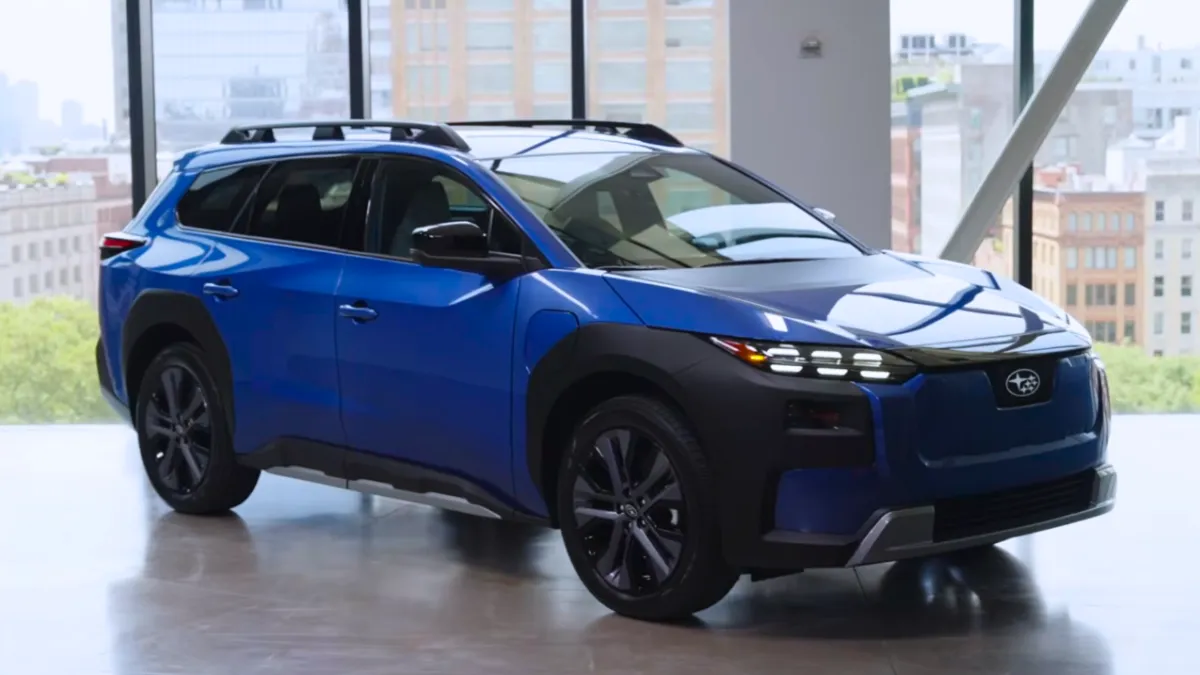
The 2026 Subaru Trailseeker marks a meaningful shift for Subaru. For decades, the brand has built its reputation on practical, go-anywhere wagons and crossovers with standard all-wheel drive. The Trailseeker carries that familiar formula into the electric era.
Think of it as the electric spiritual successor to the Subaru Outback—only fully electric.
Slotting above the Subaru Solterra in size and presence, the Trailseeker blends wagon-like proportions with SUV ride height and genuine utility. It’s longer, slightly taller, and more cargo-friendly than Subaru’s earlier EV effort, leaning heavily into the outdoor lifestyle crowd. Roof rails come standard, ground clearance is generous, and all-wheel drive isn’t optional—it’s baked in.
What makes the Trailseeker especially interesting in today’s EV landscape is its positioning. This isn’t a low-slung performance crossover chasing the Tesla Model Y purely on acceleration numbers. Nor is it a stripped-down compliance EV. Instead, it targets buyers who want electric efficiency without giving up winter capability, outdoor versatility, or long-distance comfort.
In a market filled with rounded, anonymous electric crossovers, the Trailseeker feels unmistakably Subaru—slightly rugged, a little quirky, and unapologetically practical.
Specs
What’s New for 2026
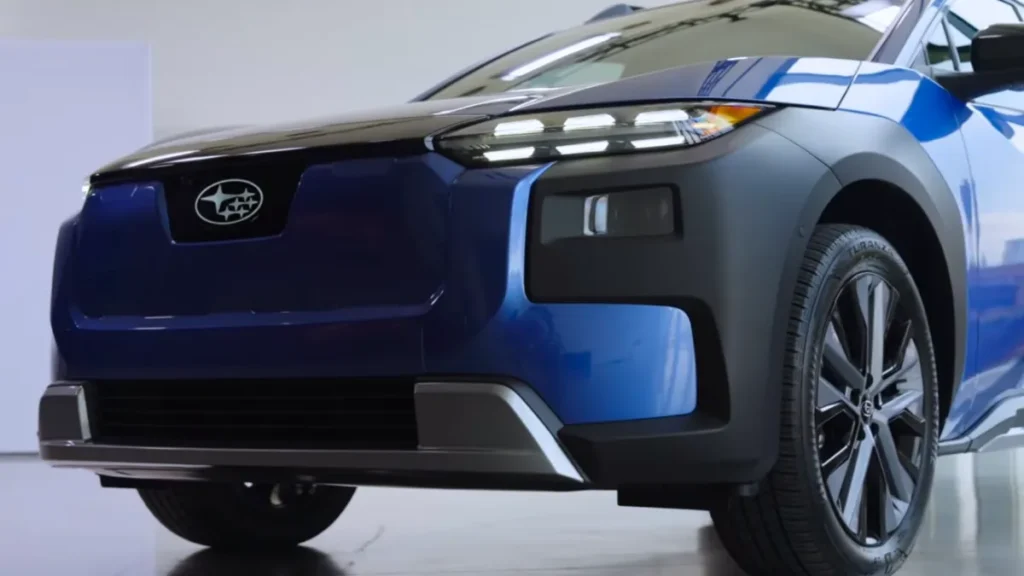
The biggest news? The Trailseeker is an entirely new nameplate.
For 2026, Subaru expands its EV portfolio beyond the Solterra, reinforcing the brand’s growing electrification strategy as outlined on the Subaru official website. While co-developed alongside a Toyota counterpart, Subaru engineers tuned the Trailseeker with their own priorities in mind—ride comfort, usable ground clearance, and a more traditional Subaru driving feel.
Key highlights for 2026 include:
- A 74.7-kWh battery pack
- Standard dual-motor Symmetrical All-Wheel Drive
- Up to 280 miles of estimated range
- 375 horsepower
- 8.5 inches of ground clearance
- Standard heat pump for improved cold-weather efficiency
- Native North American Charging Standard (NACS) port
The move to a NACS charging port is especially important. For American buyers, access to a broader fast-charging network reduces range anxiety and makes road trips more realistic. Subaru clearly understands that charging convenience is now just as critical as horsepower.
The Trailseeker also introduces updated interior tech, including a large 14-inch touchscreen, wireless smartphone integration, dual wireless charging pads, and Subaru’s latest EyeSight driver-assist suite. The overall package feels more competitive—less experimental, more mainstream-ready.
Powertrain & Performance
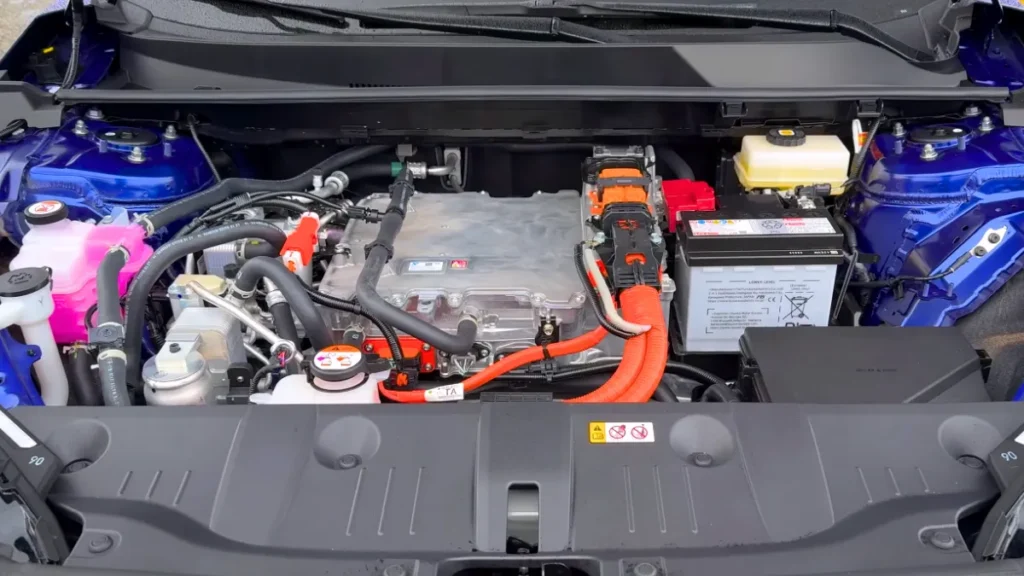
Under the skin, the 2026 Trailseeker uses a dual-motor setup delivering a combined 375 horsepower. That’s enough to push this wagon-shaped EV from 0 to 60 mph in roughly 4.4 seconds—territory that, not long ago, belonged to serious performance cars.
Acceleration is immediate and smooth, with the kind of instant torque EV buyers expect. More impressive, though, is how usable that power feels. It’s quick without being twitchy. Confident without feeling artificially aggressive.
Subaru’s Symmetrical All-Wheel Drive system—reimagined for electric propulsion—comes standard. Power distribution is constantly managed between front and rear motors, helping maintain traction in wet, snowy, or loose-surface conditions. Combined with 8.5 inches of ground clearance, the Trailseeker isn’t just marketing an adventurous image. It has the hardware to back it up.
Ride quality leans toward comfort. The suspension is tuned softer than smaller, sportier EVs in the lineup, which pays dividends on long highway drives. Road imperfections are absorbed cleanly, and cabin noise remains impressively subdued. The longer wheelbase contributes to that planted, relaxed feel.
Regenerative braking is adjustable via steering-wheel paddles, offering multiple levels of energy recovery. While it doesn’t provide full one-pedal driving to a complete stop, the system is intuitive and easy to modulate in traffic.
Towing capacity is rated at up to 3,500 pounds—another nod to Subaru’s outdoors-oriented customer base. Small trailers, bikes, light campers—well within reason here.
The bottom line: the Trailseeker isn’t trying to be the fastest EV in its class. It’s aiming to be one of the most balanced. Strong acceleration, composed handling, real-world comfort, and legitimate all-weather capability—that’s the formula.
Battery, Range & Charging
This is where the 2026 Trailseeker becomes genuinely competitive.
Under the floor sits a 74.7-kWh lithium-ion battery pack, positioned low in the chassis to improve center of gravity and interior space. It’s not the largest battery in the segment—but that’s intentional. Subaru clearly prioritized balance over brute-force capacity.
Real-World Range: What 280 Miles Actually Means
The EPA-estimated range lands at 280 miles (444 km) on a full charge according to data typically published through the EPA fuel economy database. For most American drivers, that’s more than enough for a week of commuting without plugging in. Even better, the efficiency curve is stable at highway speeds—something many EV crossovers struggle with.
Cold-weather drivers will appreciate that a heat pump comes standard. That matters. In northern states, heat pumps can significantly reduce winter range loss compared to resistive heating systems.
Subaru also includes battery preconditioning tied to navigation. Set a DC fast charger as your destination, and the system prepares the pack for optimal charging speed before arrival. Subtle feature. Huge difference in real-world use.
Charging Speed & Daily Usability
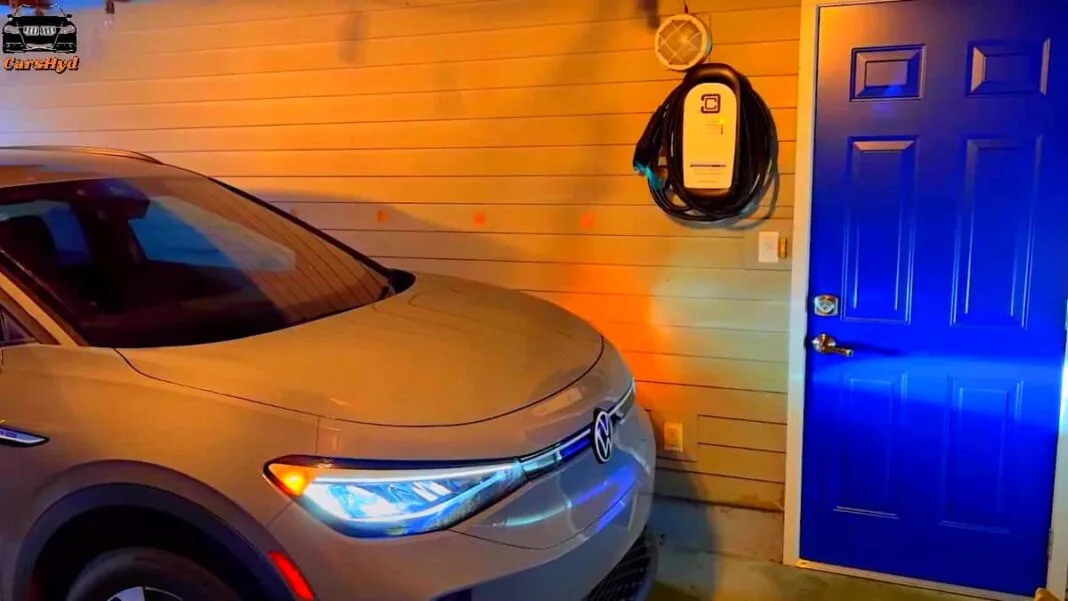
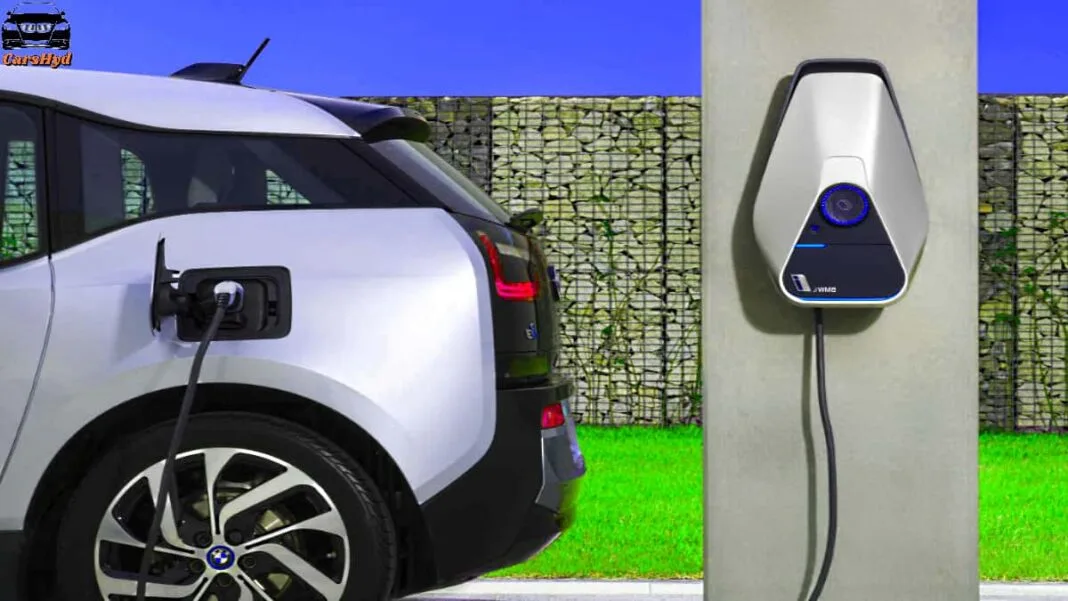
At home, the Trailseeker supports an 11 kW onboard AC charger, meaning a full recharge overnight on a Level 2 setup is realistic. For homeowners with 240V service, that’s about as convenient as it gets.
On the road, DC fast charging peaks at 150 kW. That translates to a 10–80% charge in roughly 30 minutes, assuming ideal conditions. It’s not class-leading on paper, but in practice it keeps road trip stops aligned with a coffee break.
The bigger story is infrastructure.
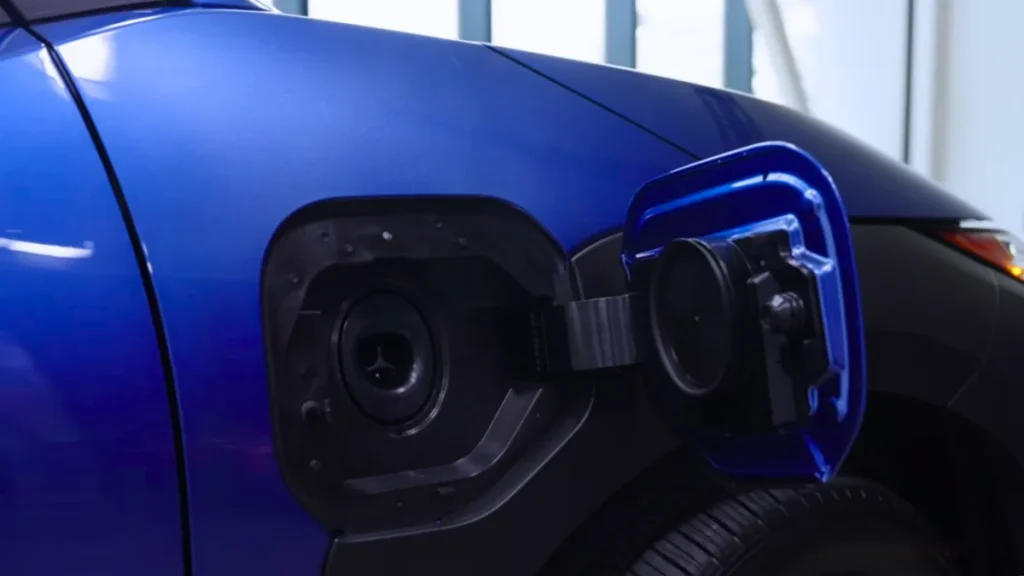
Subaru equips the Trailseeker with a native NACS port, giving drivers direct access to the expanding North American Charging Standard network and the Tesla Supercharger network across North America. In 2026, that’s not just helpful—it’s strategic. Charger reliability and availability are now deciding factors for EV buyers.
Add in Plug & Charge capability, and the experience becomes seamless. Pull up, plug in, and charging initiates automatically without apps or cards. It’s how EV ownership should feel.
Interior, Infotainment & Technology
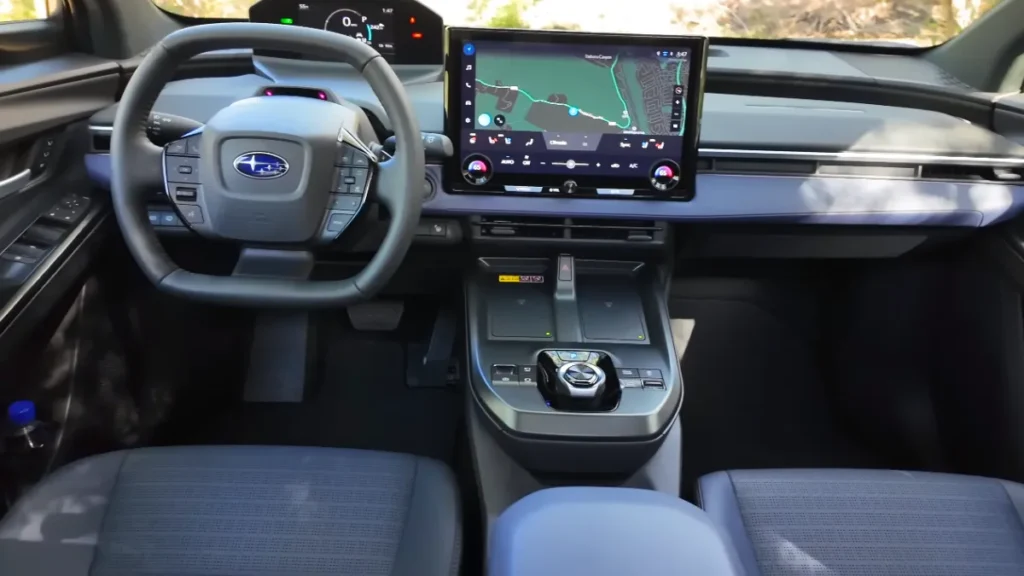
Step inside, and the Trailseeker feels far more mature than earlier Subaru EV efforts.
The dashboard is anchored by a 14-inch central touchscreen, cleanly integrated and angled slightly toward the driver. Graphics are sharper, response times are quicker, and the interface feels less experimental and more refined.
Behind the steering wheel sits a 7-inch digital driver display. It’s not oversized, but it’s clear and functional—showing speed, navigation prompts, efficiency data, and AWD torque distribution when selected.
Connectivity That Actually Matters
Wireless Apple CarPlay and Android Auto come standard, and they connect quickly without the usual hiccups. Subaru also includes dual wireless charging pads, which feels like a small but thoughtful nod to modern households where both front passengers carry smartphones.
Higher trims offer a Harman Kardon premium audio system, delivering noticeably deeper bass and cleaner highs compared to the base setup.
Ambient lighting with 64 selectable colors adds a subtle premium touch at night. It’s not overdone. Just enough to elevate the cabin without feeling gimmicky.
Comfort-Focused Tech Details
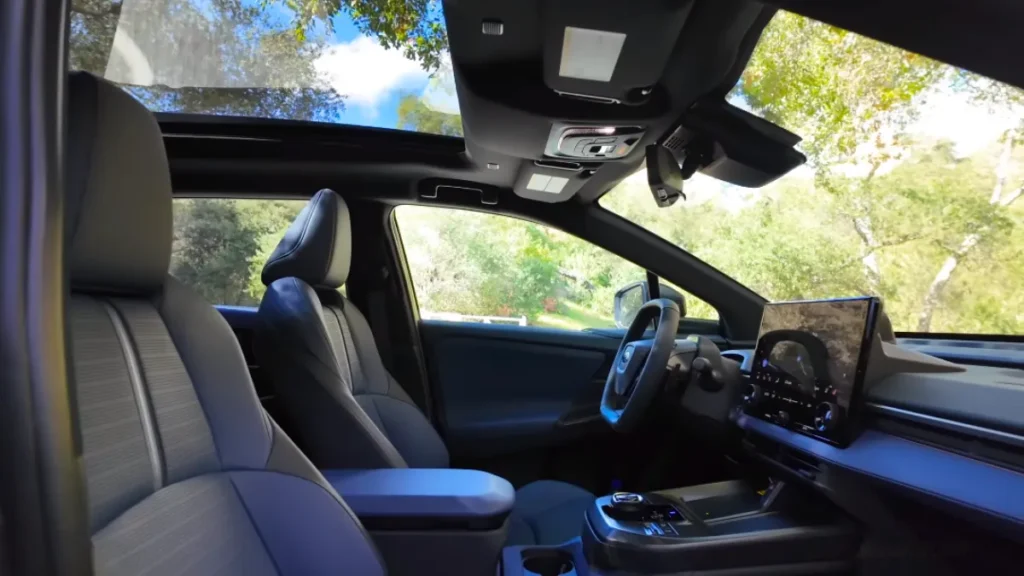
Some features feel distinctly Subaru.
- A full-circle heated steering wheel (not just partial grips)
- A radiant leg heater for front occupants—an efficient way to warm passengers without blasting cabin heat
- Available panoramic glass roof that brightens the interior significantly
Interestingly, there’s no traditional glovebox. Subaru reworked the dashboard storage layout, relocating space into the center console and door compartments. It’s unconventional, but the alternative storage is surprisingly usable.
Overall, the interior doesn’t try to mimic Tesla minimalism or German austerity. It’s functional, slightly rugged, and thoughtfully arranged—very on-brand.
Comfort & Space
For buyers moving from an Outback or Forester, space will feel familiar—if not improved.
Passenger Room
Front legroom measures 42.1 inches, while rear passengers get 35.3 inches. That places it squarely in midsize crossover territory. Adults can comfortably sit in the second row without knees brushing seatbacks.
The flat EV floor enhances rear comfort, especially for middle-seat passengers who no longer straddle a transmission tunnel.
Cargo Capacity
Behind the second row, cargo space measures 31.3 cubic feet. Fold the rear seats down, and that expands to roughly 74 cubic feet.
That’s enough for:
- Camping gear
- Mountain bikes (front wheel removed)
- Large grocery hauls
- Road trip luggage for a family of four
The load floor is low and wide, making heavy items easier to lift in. Subaru also designed underfloor compartments for charging cables and smaller gear.
Smart Storage Layout
A floating center console creates additional open storage beneath it—ideal for bags or larger items that don’t fit traditional compartments. Door bins are deep, cupholders are secure, and the redesigned center console feels less cluttered than previous Subaru interiors.
Seat cushioning leans toward long-distance comfort rather than aggressive bolstering. Combined with quiet electric operation and a well-insulated cabin, the Trailseeker feels built for highway miles as much as trailheads.
In short, this isn’t just an electric crossover with decent specs. It’s a practical, family-ready EV with space, charging confidence, and everyday comfort dialed in for American drivers.
Safety & Driver Assistance
Subaru has built its modern reputation around safety, and the Trailseeker continues that philosophy without compromise.
At the core is the latest version of EyeSight, Subaru’s camera-based driver assistance suite. Unlike many competitors that rely heavily on radar alone, EyeSight uses dual forward-facing cameras combined with additional sensors to monitor traffic, lane markings, and pedestrian activity.
Standard safety features include:
- Adaptive cruise control with lane centering
- Automatic emergency braking
- Blind-spot monitoring
- Rear cross-traffic alert
- Lane departure prevention
The system operates smoothly and predictably—no abrupt steering corrections or overreactive braking. On long highway drives, adaptive cruise paired with lane centering genuinely reduces fatigue.
Full LED lighting comes standard front and rear, improving nighttime visibility while lowering energy consumption compared to older halogen systems. The headlight signature is sharp but not flashy—functional design over theatrics.
Regenerative Braking Control
Drivers can adjust four levels of regenerative braking using steering-wheel paddles. In the strongest setting, lift-off deceleration is noticeable but still smooth. It’s not a full one-pedal stop system, but it strikes a good balance between natural driving feel and energy recovery.
For buyers new to EVs, that adaptability makes the transition easier.
In short, the Trailseeker’s safety approach isn’t experimental or headline-grabbing—it’s mature, predictable, and confidence-building. And for many families, that’s exactly what matters.
Pricing (US & Canada)
Pricing is where the Trailseeker becomes especially compelling.
United States
- Base trim: approximately $40,000
- Top trim: around $46,500
Positioned in the low-to-mid $40K range, it undercuts several premium electric crossovers while offering standard all-wheel drive and solid range. Depending on eligibility, federal or state-level EV incentives could lower effective ownership cost further.
Subaru appears to be targeting practical EV buyers—not luxury shoppers chasing badges.
Canada
- Estimated between $55,000 and $61,000 CAD
Canadian pricing aligns competitively within the electric midsize segment, especially considering standard AWD and cold-weather features like the heat pump and heated steering wheel.
For both markets, the Trailseeker sits in that sweet spot: attainable without feeling stripped down.
Subaru Trailseeker vs Toyota Woodland
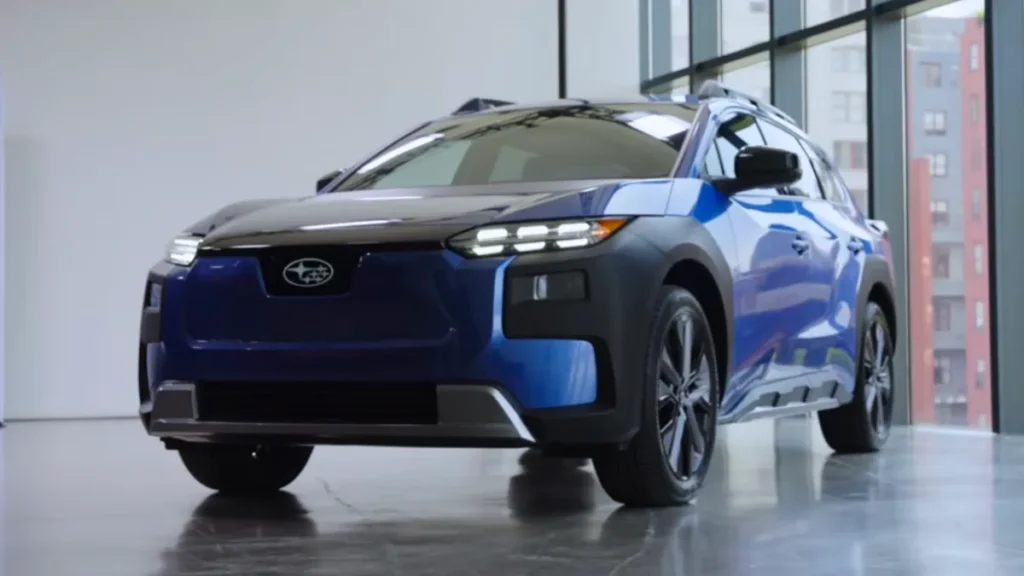
The Trailseeker shares development roots with a Toyota counterpart often referred to as the Woodland variant. But on the road—and in positioning—the differences are more nuanced than many expect.
Styling
The Subaru leans into rugged wagon cues: squared cladding, subtle roof rail integration, and a slightly taller stance. The Toyota counterpart adopts a smoother, more crossover-oriented look.
Buyers choosing based on aesthetics will likely see the Subaru as more outdoors-focused, the Toyota as more urban-modern.
Pricing Positioning
Subaru’s strategy is value-driven. The Trailseeker lands slightly lower in base pricing while including AWD as standard. Toyota may package certain features differently across trims, potentially pushing upper configurations higher.
Off-Road Modes
Subaru integrates terrain-focused drive modes tuned around its symmetrical AWD philosophy. Snow and dirt settings feel consistent with what longtime Subaru owners expect. Toyota offers similar traction systems, but calibration differs slightly—Subaru’s tuning tends to favor predictability over aggressiveness.
Brand Identity
This may be the deciding factor.
Subaru buyers are often repeat customers—Outback and Forester owners moving into electric territory. Toyota buyers may prioritize efficiency and resale value. The emotional pull differs, even if the underlying hardware shares similarities.
Real-World Driving Impressions
On paper, numbers matter. In practice, feel matters more.
The Trailseeker delivers a quiet cabin that immediately stands out at highway speeds. Wind noise is well managed, and road noise is subdued thanks to solid insulation and the absence of engine vibration.
Ride quality is comfortably tuned. It’s not sporty or overly firm—just composed. Broken pavement, expansion joints, and uneven surfaces are absorbed without harshness. For daily commuting and long interstate drives, that softer calibration works in its favor.
Acceleration is strong and immediate. With 375 horsepower on tap, merging onto highways requires no planning. The torque delivery is smooth, never abrupt, and it feels confidently quick rather than aggressively tuned.
Compared to Subaru’s smaller electric offering, the Trailseeker provides noticeably better long-distance comfort. The longer wheelbase, more relaxed suspension, and improved seat cushioning make extended road trips less fatiguing.
This is an EV designed for real American distances—not just city errands.
Pros & Cons
Pros
- Strong, quick acceleration
- Comfortable, well-damped ride
- Wagon-like practicality with generous cargo space
- Competitive pricing for an AWD electric crossover
Cons
- Shares similarities with its Toyota twin
- Driver display layout feels unconventional at first glance
- No dedicated skid plates for serious off-road use
No vehicle is perfect. The Trailseeker’s strengths lie in balance rather than extremism.
Who Should Buy the Trailseeker?
The Trailseeker isn’t trying to convert hardcore performance enthusiasts. It’s targeting a very specific buyer—and doing so intelligently.
This EV makes sense for:
- Drivers who want wagon practicality in an electric format
- Outdoor-focused buyers who value AWD and ground clearance
- Longtime Outback owners ready to transition into EV ownership
- Families needing cargo flexibility without moving to a full-size SUV
For Subaru loyalists hesitant about going electric, the Trailseeker feels like a familiar step forward rather than a radical departure.
And in 2026, that familiarity—combined with real-world range, charging access, and pricing discipline—may be exactly what the market is looking for.
Final Verdict
The 2026 Subaru Trailseeker arrives at a critical moment for the electric vehicle market. By 2026, EV buyers are no longer just early adopters—they expect practicality, range, and real capability. Subaru seems to understand that.
Instead of chasing extreme performance or futuristic design, the Trailseeker focuses on what Subaru drivers actually want: all-weather confidence, real cargo space, and road-trip comfort. In many ways, it feels like the logical electric evolution of the beloved Subaru Outback.
With around 280 miles of range, 375 horsepower, NACS charging support, and 3,500 pounds of towing capacity, the Trailseeker positions itself as a compelling option for buyers who want an EV that can genuinely replace a traditional adventure vehicle.
More importantly, it expands Subaru’s electric strategy beyond the Subaru Solterra, giving the brand a more versatile and lifestyle-oriented EV.
In the rapidly evolving EV market of 2026, the Trailseeker may not be the flashiest electric vehicle—but it could easily become one of the most practical electric adventure vehicles available. For longtime Subaru fans waiting for an EV that still feels like a Subaru, this might finally be it.
FAQ
The Trailseeker produces about 375 horsepower from dual electric motors and accelerates from 0–60 mph in roughly 4.4 seconds, making it one of the quickest Subaru EVs.
The Trailseeker uses a 74.7-kWh battery and delivers an estimated range of up to 280 miles (444 km) on a full charge.
Yes. The Trailseeker features the North American Charging Standard (NACS) used by Tesla, allowing access to many Tesla Supercharger Network stations across North America.
The Trailseeker can tow up to 3,500 pounds, making it suitable for small trailers, camping gear, and outdoor equipment.
Both models share similar EV technology, but the Trailseeker emphasizes Subaru’s AWD capability and rugged styling, while the Toyota focuses more on mainstream EV design. The choice often comes down to brand preference.