










Last Updated (August 16, 2026): This article has been fully revised and updated to reflect the exact technical specifications of the LEGO® Technic Bugatti Bolide set.
Table of Contents
An In-Depth Look at the LEGO® Bugatti Bolide (42151)
When Bugatti unleashed the track-only Bugatti Bolide hypercar, it redefined extreme power-to-weight performance. Translating that raw quad-turbocharged energy into a mid-range, accessible kit was a challenge, but the LEGO® Technic Bugatti Bolide (Set #42151) delivers in spades. Released in 2023, this 905-piece set bridges the gap between basic builds and massive 1:8 scale supercar flagships.
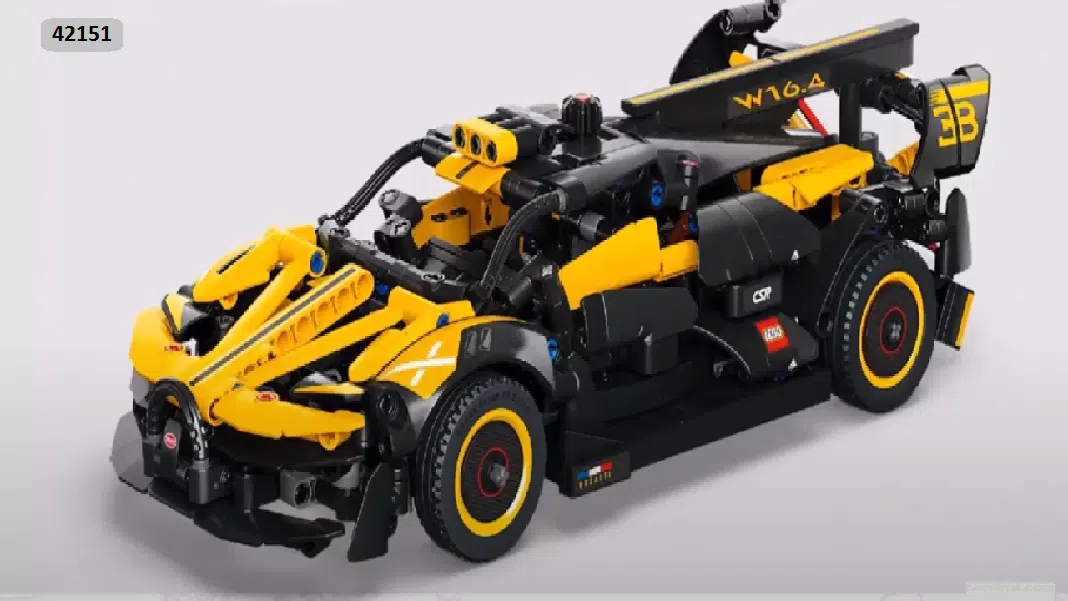
Targeted at builders aged 9 and up, the set offers an engaging mechanical assembly packed with moving piston architecture, functional steering, and scissor doors. Whether you are an automotive enthusiast curious about Technic gearwork or a seasoned collector looking for a desk-friendly display model, this guide covers everything you need to construct the Bolide cleanly without binding gears or misaligned bodywork.
Before You Begin: Prep Your Workspace
- Clear a Dedicated Work Surface: The completed Bugatti Bolide measures over 3 in. (8 cm) high, 12 in. (31 cm) long, and 5 in. (13 cm) wide. Give yourself a flat table with plenty of light so dark blue, grey, and black pins don’t get lost in the shadows.
- Sort by Color & Component Type: The pieces arrive in numbered bags (Bags 1 through 3), but sorting small Technic pins, axles, and liftarms into small trays ahead of time saves significant search time.
- Check Pin Clearance: Technic assemblies rely on friction. Pressing pins in too tightly against gears will stop the engine pistons from firing smoothly once fully assembled. Keep half a millimeter of wiggle room where rotation is required.
Step-by-Step Build Breakdown
Stage 1: Chassis, Rear Axle & W16 Engine Core (Bags 1)
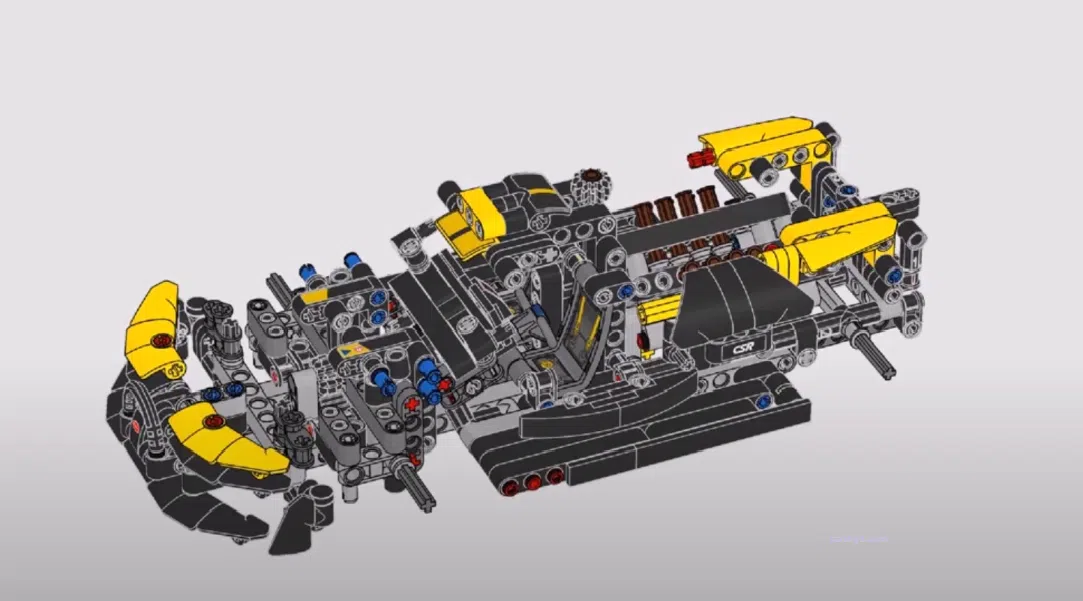
Steps 1–90: Construction starts from the ground up, linking the rear axle framework to the central drive shaft. Pay close attention to the orientation of the small yellow bevel gears that transfer motion from the rear wheels up to the engine crank. Installing a gear backward here will mean stripping the chassis down later to fix engine drive issues.
Steps 91–140: You will assemble the miniature W16 engine block. The tiny yellow pistons connect directly to miniature crankshaft pieces. Test the mechanism manually by turning the rear axle gear with your thumb—ensure all pistons travel up and down freely without catching on the cylinder walls.
Stage 2: Front Steering Mechanism & Cockpit Structural Framework (Bags 2)
Steps 141–200: The focus moves to the front suspension geometry and steering rack. A hand-of-god steering wheel gear is integrated onto the roof, connected via gear linkages to the front wheels. Align the front steering rack completely straight before attaching the hand-of-god gear to avoid offset wheel alignment.
Steps 201–230: Building out the cockpit frame, steering wheel detail, and signature X-shaped interior brace support that mirrors the real hypercar’s carbon-fiber monocoque rigidity.
Stage 3: Aero Bodywork, Scissor Doors & Wheel Trim (Bags 3)
Steps 231–260: The distinctive French racing blue and black aerodynamic panels are mounted using angled Technic connectors. The rear wing, diffusers, and iconic X-shaped taillight assembly come together quickly here.
Steps 261–280: Final assembly involves constructing the signature functional scissor doors using hinged Technic arms, snapping on the low-profile rubber tires, and applying sticker accents across the side air intakes and front horseshoe grille.
Troubleshooting Common Technic Snags
Technic builds demand precision. If your model isn’t operating as expected, double-check these known assembly bottlenecks or consult the official LEGO Building Instructions portal:
- Pistons Sticking or Not Moving (Engine Block Assembly): If the pistons don’t turn when rolling the car, check the central drive axle. Ensure the black friction pins aren’t squeezed too tightly against the drive gears along the chassis floor.
- Front Wheels Out of Sync with Roof Gear: If turning the roof dial turns the wheels left when turning right, or leaves the wheels crooked, pop off the top gear in Step 158, manually center the front wheels, and re-engage the gear teeth squarely.
- Scissor Doors Drop or Loose Hinges: The door mechanisms use friction pin connectors to stay upright. If a door sags, replace the smooth connector pin with a black ribbed friction pin as indicated in the instruction diagrams.
Pro Tips for a Flawless Assembly
- Use Axle Gauge 1:1 Scales: Technic instruction pages feature 1:1 scale diagrams along the margins for axles and beam lengths. Always lay your physical piece directly over the diagram to ensure you aren’t substituting a 5-length axle for a 6-length axle.
- Apply Stickers with Tweezers: The Bolide relies on precise livery stickers to achieve its race-car aesthetic. Using fine tweezers gives you maximum control to position sponsor logos and headlight detailing straight on the curved panels.
- Use the LEGO® Builder App for 3D Rotations: If an angle in the paper booklet looks ambiguous, download the digital 3D instruction manual on the LEGO® Builder App. Rotating the digital assembly 360 degrees eliminates all placement guesswork.
Standout Features & Mechanical Highlights
- Functional Engine Piston Movement: Rolling the model directly engages the rear differential, driving the bank of pistons in the exposed engine bay.
- Operational Scissor Doors: Captures Bugatti’s track-focused ingress design with smooth-hinged, upward-opening door paneling.
- Roof-Mounted Steering Dial: Subtle “hand-of-god” gear positioning on the roof allows full steering control without reaching into the cockpit frame.
- Aggressive Aerodynamic Detailing: Includes the rear fin, quad exhaust layout, central air scoop, and custom wheel covers tailored to mimic the 1,825-horsepower track beast.
Final Verdict
The LEGO® Technic Bugatti Bolide (#42151) delivers incredible value at its price point ($49.99 MSRP). Packing functional gearwork, a working engine block, and sharp aerodynamics into a 905-piece build, it strikes the ideal balance between mechanical complexity and desk-friendly display appeal. Whether you’re building it for display or studying Technic gear systems, it’s a stellar addition to any automotive or LEGO collection.



Frequently Asked Questions
1. What is the piece count for the LEGO® Technic Bugatti Bolide?
The set (Set #42151 yellow / #42162 blue) consists of exactly 905 pieces.
2. What are the dimensions of the completed LEGO® Bugatti Bolide?
Once assembled, the car measures over 3 inches (8 cm) high, 12 inches (31 cm) long, and 5 inches (13 cm) wide.
3. What age group is this Technic set intended for?
LEGO® recommends this set for builders aged 9 and up, making it a great entry-level option for kids and adults new to Technic mechanisms.
4. How long does it typically take to complete the build?
Most intermediate builders finish the set in 2.5 to 4 hours, depending on sorting efficiency and experience with Technic gear assemblies.
5. Does the set include a motor or RC functions?
No, set 42151 is a manual display model. However, it features manual functions like roof steering, opening scissor doors, and a gear-driven piston engine.
6. What is the difference between LEGO® sets 42151 and 42162?
Both sets share identical internal mechanical designs and piece counts (905 pcs). Set #42151 features the yellow/black livery, while #42162 features the blue/black livery.
7. Are the engine pistons driven by the wheels?
Yes, the W16 engine pistons connect via internal gearing directly to the rear wheels. Rolling the car across a surface makes the pistons pump up and down.
8. Does this set come with a display stand or information plaque?
No, standalone display stands and printed specification plaques are reserved for LEGO’s larger 1:8 scale Ultimate Collector Series sets (like the Chiron or Daytona SP3).