


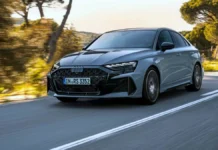



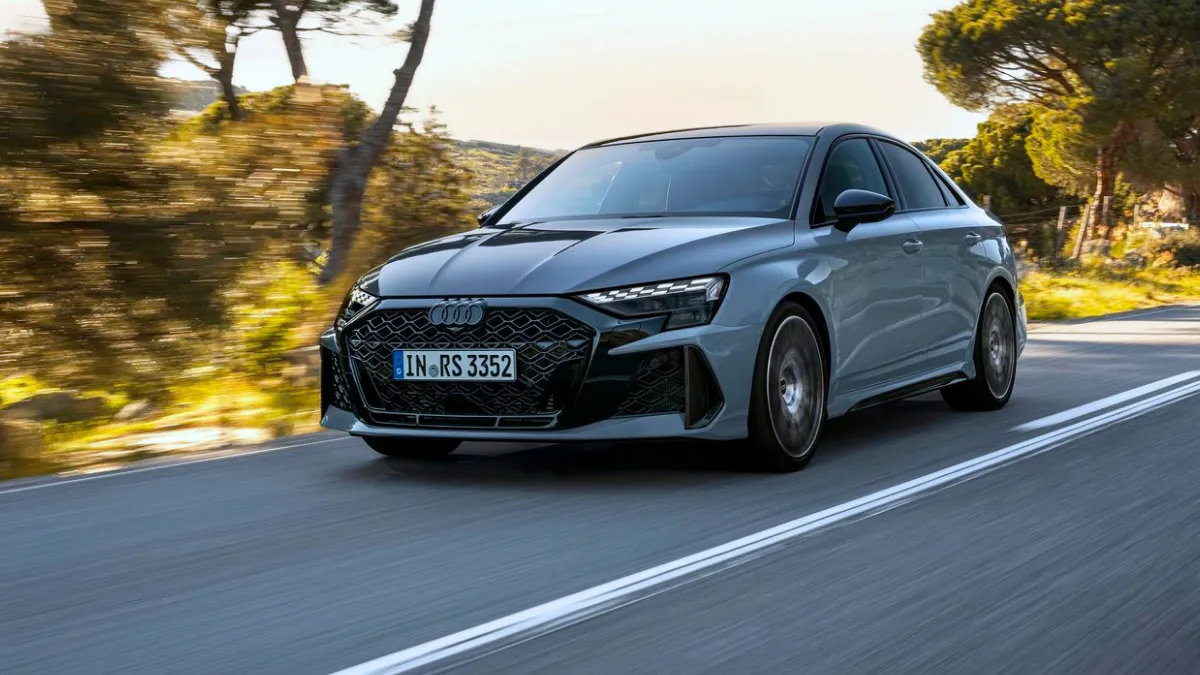
The numbers still look almost absurd when you put them on paper. A compact luxury sedan weighing roughly 3,600 pounds, powered by a turbocharged five-cylinder engine, capable of embarrassing sports cars that cost twice as much. Four years after the current generation arrived, the 2026 Audi RS3 continues to dominate conversations about real-world speed, track capability, and everyday usability.
If you’re researching performance figures, it’s worth starting with our complete 2026 Audi RS3 Review: Specs, Price, and Performance, where we cover pricing, design changes, technology, and ownership considerations. This article focuses exclusively on what happens when the road opens up, the launch control engages, and the stopwatch starts running.
The surprising part? The RS3 may actually be quicker today than Audi officially admits.
Contents
The Real-World 0-60 MPH Sprint: Faster Than Advertised?
Audi has built a reputation for publishing conservative acceleration figures, and the RS3 remains one of the best examples. Officially, Audi quotes a 0-60 mph time of 3.6 seconds. In reality, independent testing has repeatedly shown the car outperforming factory estimates under ideal conditions.
| Metric | 2026 Audi RS3 Performance Specs |
|---|---|
| Horsepower | 394 hp |
| Torque | 369 lb-ft |
| Engine | 2.5L Turbocharged Inline-Five |
| Transmission | 7-Speed S Tronic Dual-Clutch |
| Drivetrain | Quattro AWD with RS Torque Splitter |
| 0-60 MPH (Official) | 3.6 seconds |
| 0-60 MPH (Real World) | 3.3–3.6 seconds |
| Quarter Mile | 11.5–11.8 seconds |
| Top Speed | 155 mph (Standard) / 180 mph (Optional) |
The reason is simple: launch control. Audi’s launch calibration remains among the most aggressive in the industry. Unlike many performance cars that struggle to transfer power efficiently during the first 30 feet, the RS3 simply hooks and goes. The Quattro system loads all four tires simultaneously while the dual-clutch transmission pre-selects the next gear before the driver even realizes the first shift occurred.
The result feels almost violent. Floor the throttle, release the brake, and the car doesn’t hesitate or spin. It lunges forward with the sort of brutality typically associated with exotic machinery.
What makes the experience unique is the five-cylinder soundtrack. While most modern turbocharged four-cylinders sound efficient, the RS3’s firing order creates an unmistakable warbling exhaust note that resembles a miniature V10. For a complete technical breakdown of the firing order, tuning potential, and block construction, check out our 2026 Audi RS3 Engine Deep Dive: The Turbo Five. The engine pulls hard from low rpm, then continues charging toward redline with an urgency that’s becoming increasingly rare.
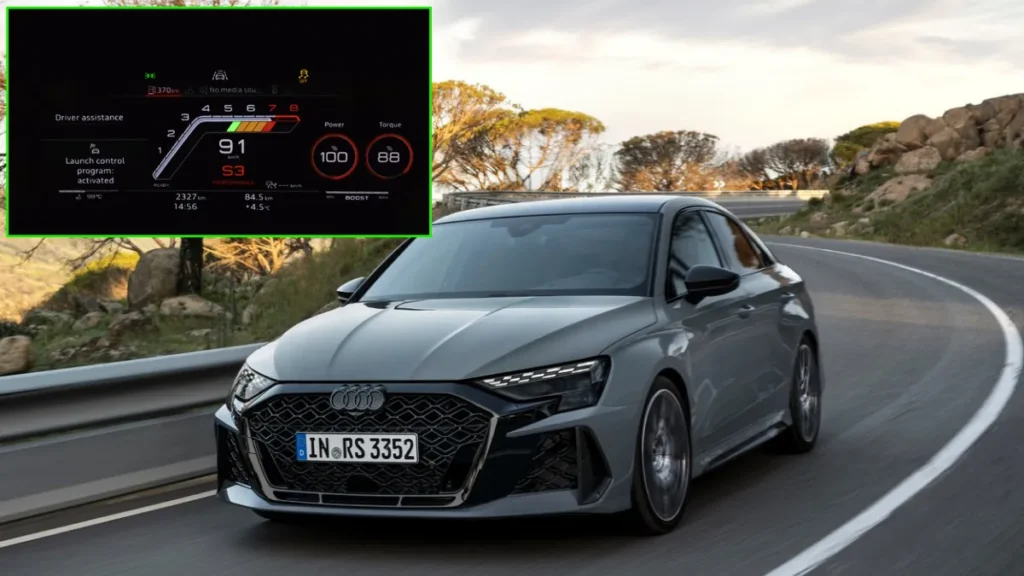
Why the RS3 Launches So Hard
Several engineering factors combine to create its stoplight-king reputation:
- Preloaded dual-clutch transmission
- Rear-biased Quattro calibration
- Wide front tire setup
- Rapid turbocharger response
- Sophisticated traction management software
Audi’s software engineers deserve almost as much credit as the hardware itself. Modern RS models constantly monitor wheel speed, steering angle, throttle position, yaw rate, and suspension movement. The computer makes hundreds of corrections per second, maximizing available grip without the driver noticing. You can access the full technical breakdowns via the official Audi MediaCenter documentation.
This is one reason why the RS3 consistently outruns rear-wheel-drive competitors in imperfect conditions. A dry drag strip is one thing. A cold backroad on a 45-degree morning is another. That’s where the RS3 earns its reputation.
Nürburgring Lap Times and Technical Handling Dynamics
Straight-line speed gets attention. Nürburgring lap times earn respect. When Audi engineers updated the latest-generation RS3, they weren’t chasing horsepower headlines. Their primary mission was solving the one criticism enthusiasts had repeated for decades: Audi understeer.
For years, fast Audis were devastatingly effective but rarely playful. Push hard into a corner and the front tires would eventually surrender before the rear became involved. The RS3 changed that narrative entirely.
The Nürburgring Benchmark
The RS3 became one of the fastest compact performance cars ever recorded around the Nürburgring Nordschleife. Considering the circuit stretches over 12.9 miles and contains more than 150 corners, that achievement carries serious weight. Unlike many manufacturer lap records that rely primarily on raw power, the RS3’s pace comes from mechanical sophistication. The biggest game-changer is the RS Torque Splitter.
How the RS Torque Splitter Works
Traditional differentials distribute torque across an axle. Audi’s RS Torque Splitter goes much further. Instead of merely balancing power left and right, it can actively overdrive the outside rear wheel during cornering. According to published papers on vehicle dynamics from the Society of Automotive Engineers (SAE), this active torque vectoring creates a yaw moment that naturally rotates the chassis toward the apex.
| Corner Phase | RS Torque Splitter Action |
|---|---|
| Turn-In | Reduces front axle workload |
| Mid-Corner | Sends more torque rearward |
| Apex | Overdrives outside rear wheel |
| Exit | Rotates vehicle naturally |
| Full Throttle | Maximizes traction |
This fundamentally changes the car’s behavior. Rather than pushing wide, the RS3 rotates into the corner. The nose feels lighter. The steering responds faster. The chassis becomes far more eager to change direction. Enthusiasts familiar with older Audi RS models often notice the difference immediately. The car no longer feels like it’s fighting physics.
Suspension Tuning and Tire Strategy
One of the most overlooked reasons behind the RS3 Nürburgring performance is suspension calibration. Audi engineers revised damping software, spring rates, and electronic stability programming to complement the torque splitter. The adaptive dampers constantly alter compression and rebound rates based on road conditions. On a smooth racetrack, body movement remains tightly controlled. On rough pavement, the system allows enough compliance to keep all four tires planted.
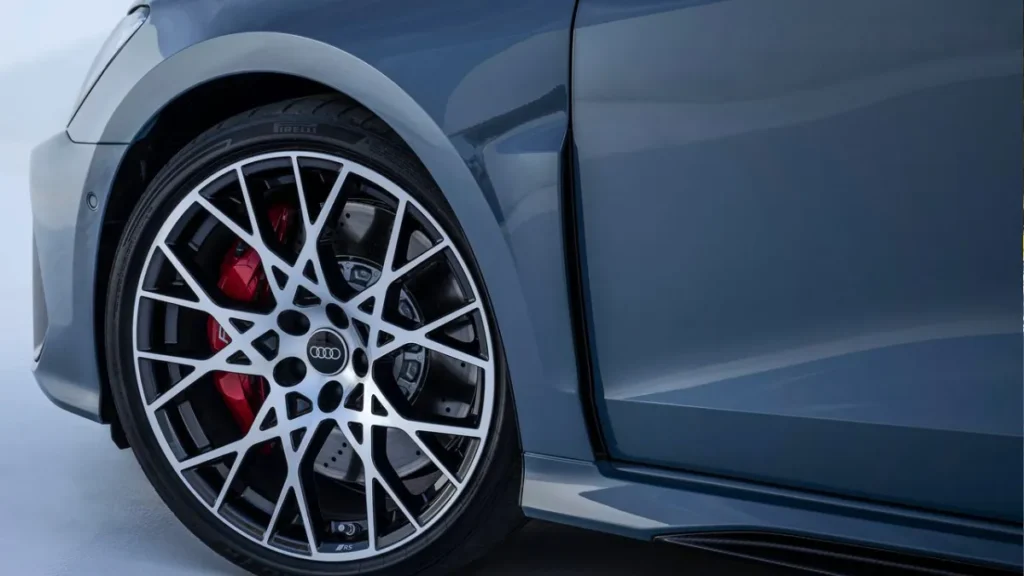
Another key improvement comes from tire strategy. Audi intentionally fitted wider front tires than rear tires on certain RS3 configurations. That sounds backwards to traditional performance-car thinking, but the objective is clear: increase front-end grip, reduce understeer, and sharpen turn-in response. Combined with the torque splitter, the setup transforms how the car attacks corners.
Top Speed Limits and Optional Performance Packages
Acceleration figures dominate online discussions, but top speed tells a different story about a vehicle’s engineering capability. Like many German performance cars, the RS3 arrives electronically limited to 155 mph. That figure isn’t related to engine output; the five-cylinder has considerably more to give. Instead, the limitation stems from tire certification, durability standards, and manufacturer risk management.
Audi offers optional packages that increase the maximum speed capability to approximately 180 mph. This upgrade involves more than simply changing software parameters. Additional testing validates cooling performance, tire capability, brake endurance, and high-speed stability.
This is where the RS3’s engineering depth becomes obvious. Many compact performance sedans begin feeling nervous as velocity climbs. The Audi remains remarkably composed due to its long wheelbase stability, sophisticated aerodynamic management, and active suspension control. The five-cylinder never feels strained; instead, it delivers a relentless surge that highlights Audi’s historic five-cylinder motorsport heritage developed over decades of rally racing.
Why the RS3 Remains the Compact King
The performance landscape has changed dramatically. Electric sedans now produce supercar acceleration, and hybrid systems dominate headline numbers. Yet the RS3 occupies a unique space. It combines explosive launches, legitimate Nürburgring credibility, everyday practicality, and one of the most charismatic engines currently available in a production vehicle.
Most importantly, it feels engineered by enthusiasts rather than algorithms. For buyers wanting the full ownership picture, including specifications, interior analysis, and pricing details, return to our complete 2026 Audi RS3 Review Hub. If you are ready to see how this track weapon handles the morning commute, continue to our next cluster article covering the vehicle as a daily driver.