



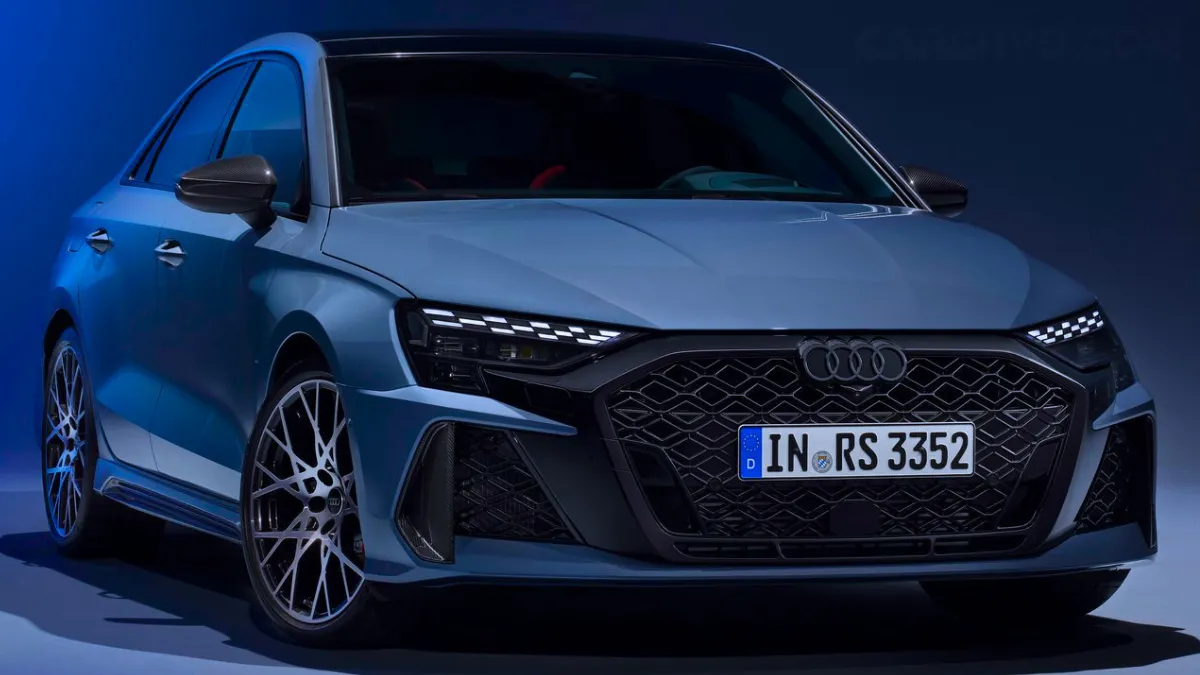
The RS3 has always punched above its weight on looks. But the 2026 refresh? It doesn’t just punch — it throws combinations. Before we get into every crease, flare, and carbon fiber flourish, know that everything you see here feeds into the bigger picture over at our comprehensive 2026 Audi RS3 Review: Specs, Price, and Performance, where the design story connects directly with the powertrain and market value equation. Now let’s talk sheet metal.
Contents
The Front End Got Serious
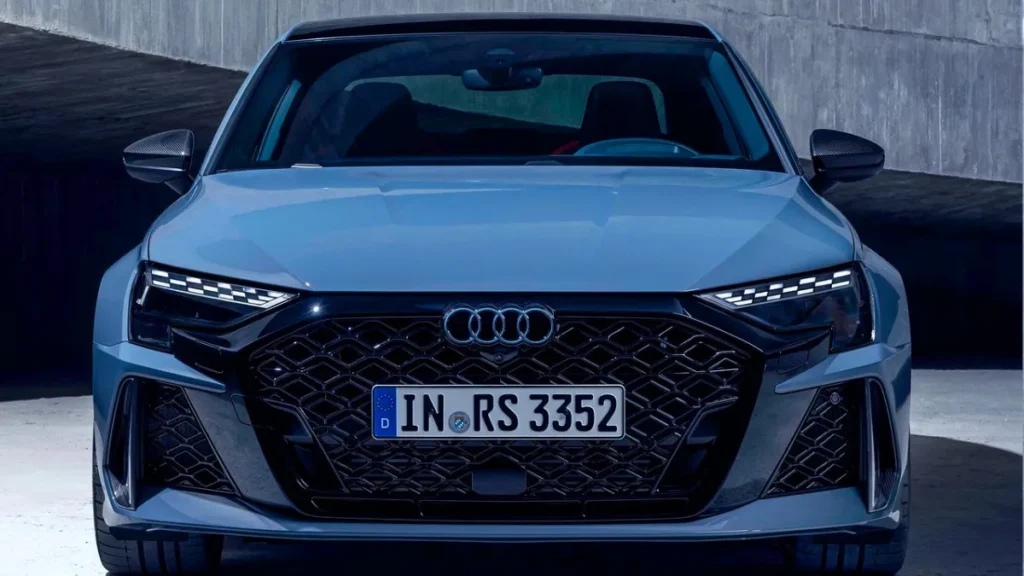
The pre-facelift RS3’s nose was aggressive, sure — but the 2026 version has a focused aggression that the previous car was reaching for and never quite landed. The hexagonal Singleframe grille is wider, flatter, and surrounded by a bolder frame that visually anchors the entire front fascia. And that rhombus-pattern mesh inside? It’s lifted straight from Audi Sport’s motorsport design language without apology.
What makes it work is the context around the grille. Those two large functional side air intakes aren’t just styling props — they’re fed by vertical black blades that give the RS3’s mouth a genuinely menacing expression. Then there are the three openings above the front splitter. Audi says those reference the legendary Audi Sport quattro S1 Pikes Peak car. Whether or not you get the historical nod every time you walk up to your car, those openings do something important: they make the front look purposeful rather than decorative.
Leaning heavily into these corporate design choices, the official Audi USA Media announcements confirm that the full-width front splitter is entirely new, changing the car’s visual proportions dramatically. By stretching edge to edge, it drops the center of gravity. The RS3 looks lower than it did before, sitting roughly one inch lower than a standard A3 production model.
Then there’s the optional Carbon Package. Genuine exposed carbon fiber on the front fascia — not carbon-look wrap, not printed film — actual woven carbon. Combine that with the anthracite-finished Audi rings and the new gloss-black trim detailing, and you’ve got a front end that would look at home on a high-end supercar costing twice the price.
Headlights That Actually Communicate
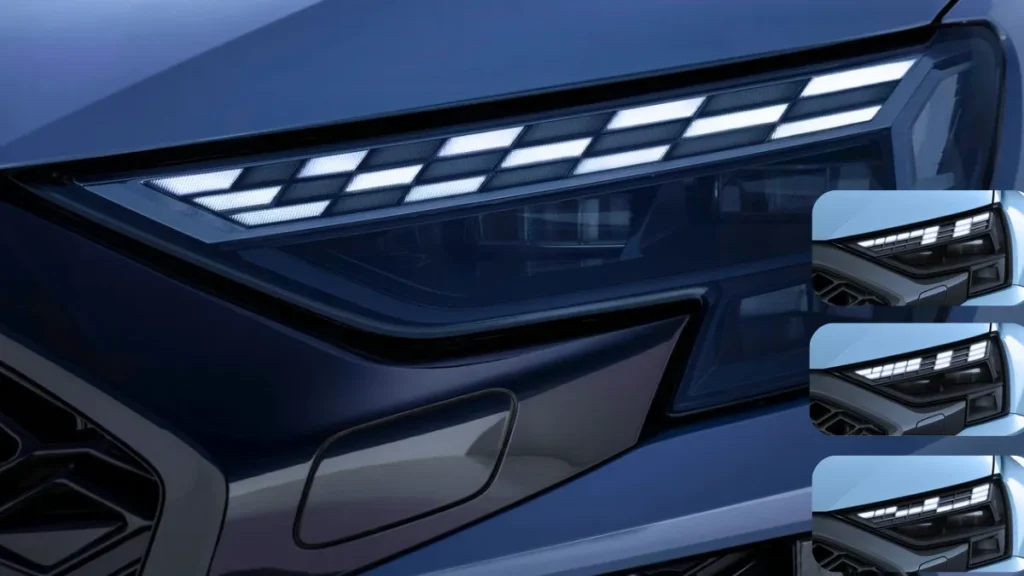
The new Matrix Design LED headlights are a genuine leap. The daytime running light signature is inspired by a checkered racing flag — 24 individual elements arranged to create that distinctive graphic. You can select between multiple DRL designs through the MMI system, which sounds gimmicky until you realize how sharply it separates the RS3 from every generic sport sedan at a stoplight.
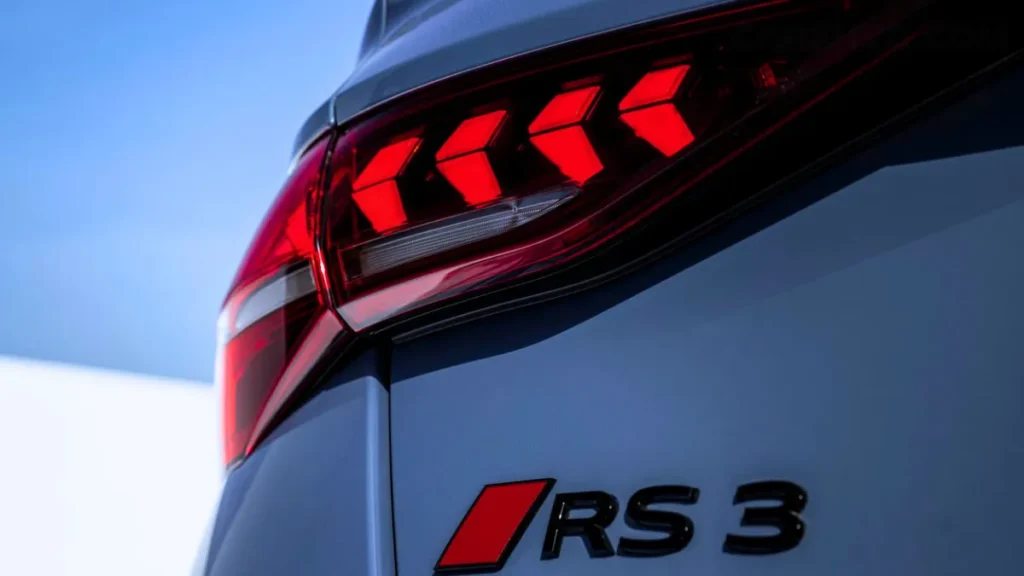
Dynamic turn signals are integrated directly into the headlight housing. No separate indicator strip — the signal animation flows through the headlight itself. At the rear, you get sequential arrow-shaped taillights with coming-home and leaving-home sequences that animate from inside outward. Small detail. Big impression.
Stance: Why the RS3 Looks the Way It Looks
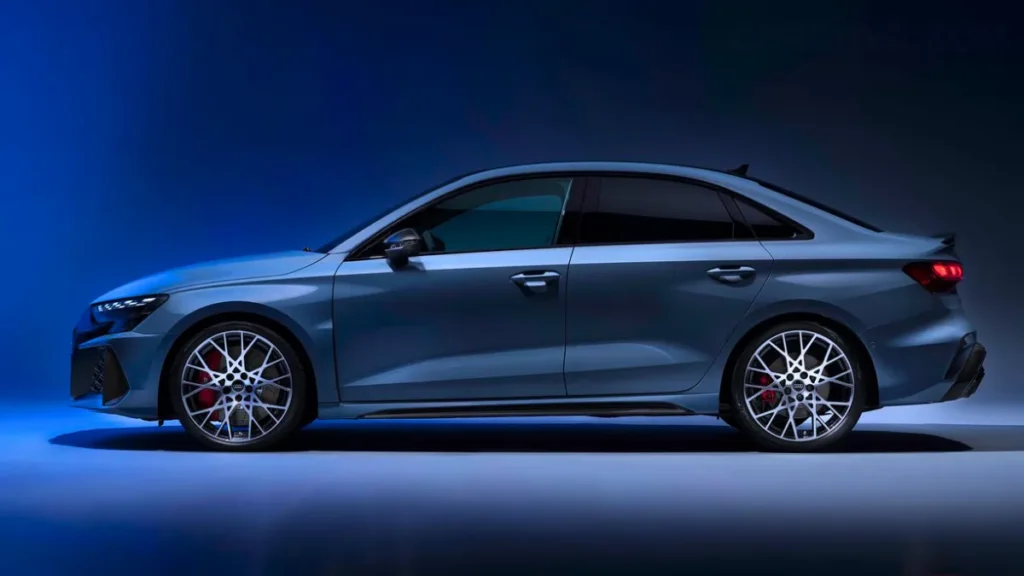
The numbers behind the stance are worth knowing:
| Dimension | Technical Detail |
|---|---|
| Width vs. standard A3 | ~1.4 inches wider |
| Ride height vs. standard A3 | ~1 inch lower (~10mm lower than S3) |
| Wheelbase | 103.9 inches |
| Overall length | 178.5 inches |
| Front tire width | 265/30 R19 |
| Rear tire width | 245/30 R19 |
That wider front tire spec — 265 up front versus 245 at the rear — is unusual. Most performance cars run equal or narrower fronts. Audi’s choice here isn’t accidental: the torque-vectoring rear differential on the RS3 can send up to 100% of drive to a single rear wheel, so the rear doesn’t need massive rubber to put power down the way a conventional AWD car would. The wider fronts generate more cornering grip and give the front end that planted, fender-filling look that makes the RS3 read as something far more serious than a compact sedan.
Pronounced fender flares make sure you notice every millimeter of that extra width. The side profile is muscular without being bloated — the flares flow into the body lines naturally rather than looking bolted on. In a class where “aggressive” often means “too much”, the RS3 manages to look wide and purposeful rather than exaggerated.
The Rear: The Biggest Glow-Up
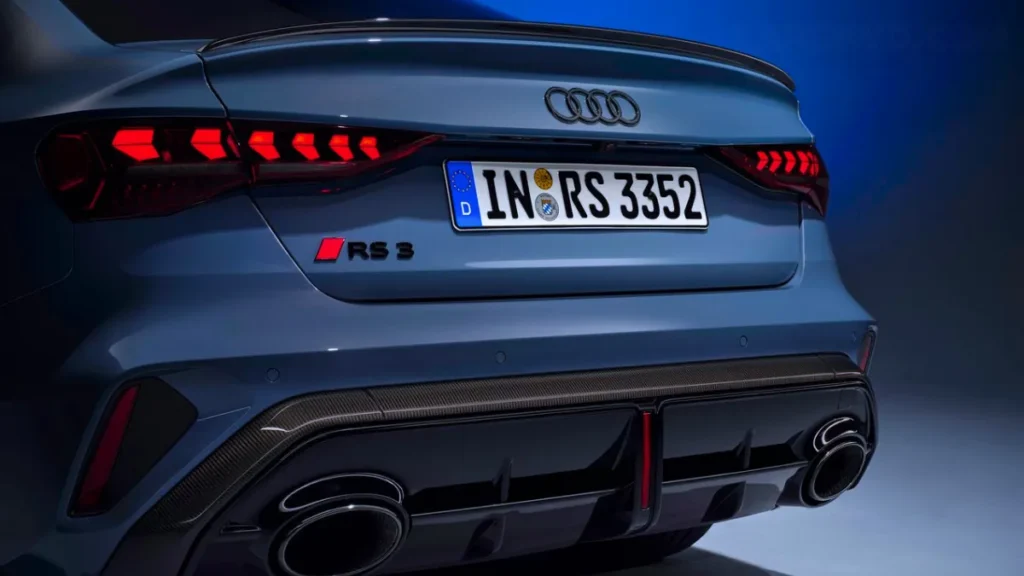
The rear of the pre-facelift RS3 had a problem: fake vents. Plastic vent-shaped details that did nothing. The 2026 car deletes them entirely, and the cleaner, more honest rear fascia is one of the best visual decisions Audi Sport made in this refresh cycle.
The large functional RS-specific diffuser now dominates the lower rear bumper. It’s genuinely functional — the underfloor geometry actually manages airflow. A central red reflector integrates into the diffuser without looking like an afterthought. And the signature oval exhaust outlets? They appear larger because of the surrounding black trim treatment. It’s a simple visual trick, but it makes the exhaust presence match the sound.
Vertical rear reflectors mirror the design language established at the front, giving the car a coherent graphic identity front to back. Full LED taillights with the dynamic arrow animation tie it together.
With the Carbon Package, the rear diffuser picks up exposed carbon fiber blading and the rear spoiler grows into genuine aero hardware. The contrast between the Ascari Blue or Kyalami Green paint and the carbon fiber weave is perfect — this is one of those rare spec combinations where you don’t need to see it in person to know it works.
The Color Story
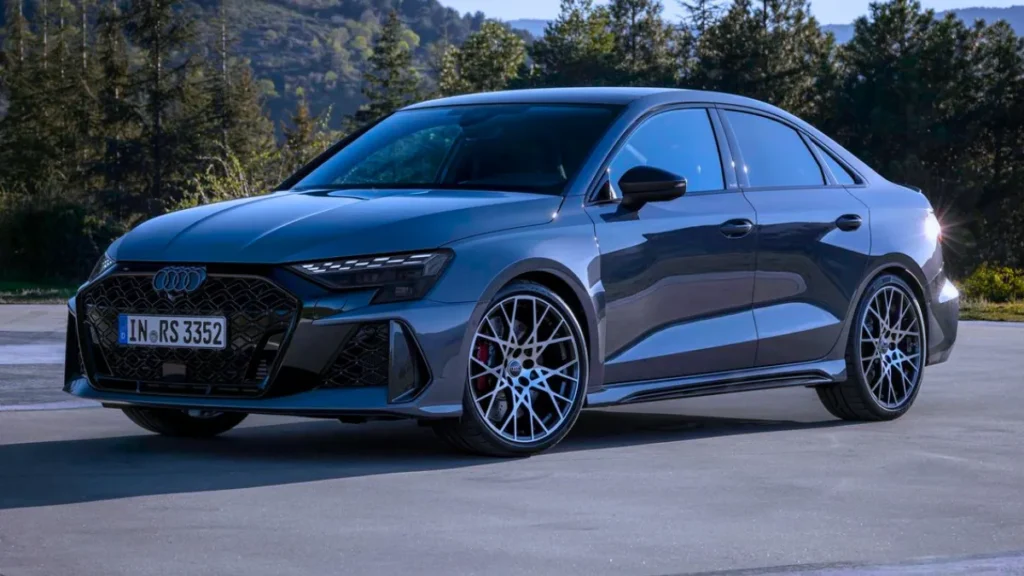
Audi has always done muted, sophisticated colors well — Nardo Gray built an entire cult following. The 2026 RS3 expands the palette in interesting directions:
| Color Option | Paint Type | Design Notes |
|---|---|---|
| Kyalami Green | RS-specific solid | Bold, high-saturation, motorsport-coded |
| Kemora Gray | RS-specific metallic | Sophisticated daily-driver option |
| Ascari Blue Metallic | New metallic coat | Heavy metallic flake, shifts dramatically in sunlight |
| Progressive Red Metallic | New metallic coat | Deep metallic, mature red hue |
| Daytona Gray Matte | New matte premium | Matte finish — first time offered on standard RS3 |
Ascari Blue deserves specific attention. It’s not the cobalt or electric blue that other sport compacts lean on for easy wow factor. It’s deeper and more complex — in direct sunlight the metallic flake creates an almost aquatic shimmer, while in shade it reads as a serious, almost dark hue. The color rewards attention in a way that a simple solid paint never does.
Daytona Gray Matte is the sleeper pick. Matte finishes demand commitment — you’re giving up the easy metallic pop in exchange for something that looks like a concept car that accidentally got licensed for public roads. For the buyer who wants the RS3 to look like it rolled off the circuit without the loud presence of Kyalami Green, this is the one.
Kyalami Green, for its part, is the extrovert in the lineup. Motorsport green with serious saturation — it references Audi’s historic racing liveries and makes zero apologies about it. Having seen it in person, it cements why this platform continues to break compact class records on the official Nürburgring Nordschleife racing circuit.
The Carbon Package: Is It Worth It?
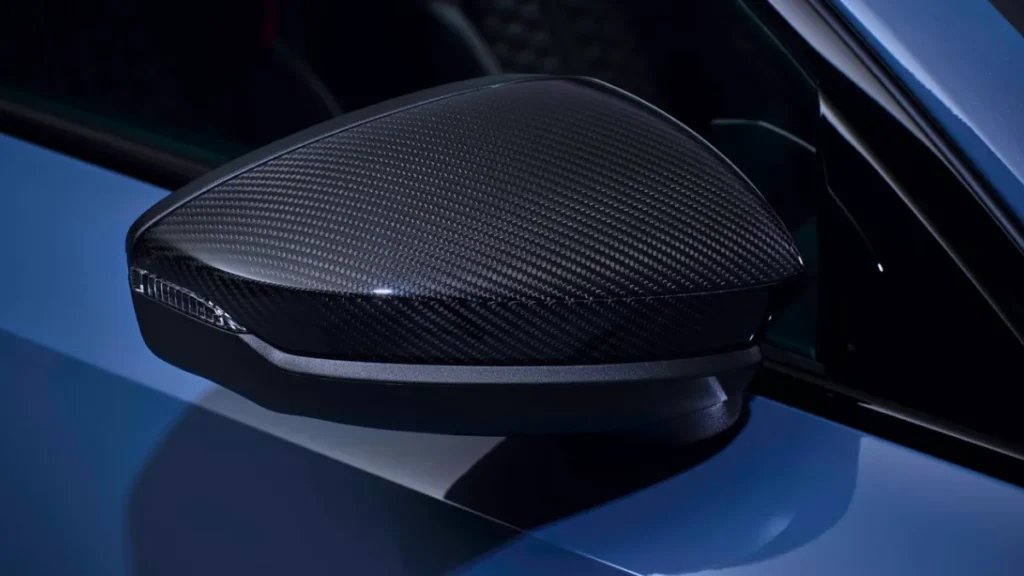
The optional Carbon Package touches nearly every external surface that benefits from the treatment:
- Carbon fiber front air-intake trim
- Carbon fiber mirror caps
- Carbon fiber side skirts
- Carbon fiber blade above the rear diffuser
- Exposed carbon fiber rear spoiler
This isn’t a carbon look package. These are genuine composite pieces with exposed weave, which means you’re getting real weight reduction alongside the visual upgrade. According to aerospace and material standards published by the Society of Automotive Engineers (SAE), structural carbon layouts offer massive torsional rigidity changes while cutting unsprung or hanging weight. The rear spoiler isn’t just decorative — it generates measurable downforce at track speeds.
The visual argument for the Carbon Package is simple: gloss black trim is everywhere on performance cars. Carbon fiber weave is still rare enough to read as special. On a light color like Ascari Blue, the contrast is dramatic. On Kemora Gray or Daytona Gray Matte, it’s more cohesive — the carbon weave and matte finish share a similar graphic texture that creates an almost monochromatic but deeply layered look.
Wheel Options and Track Stance
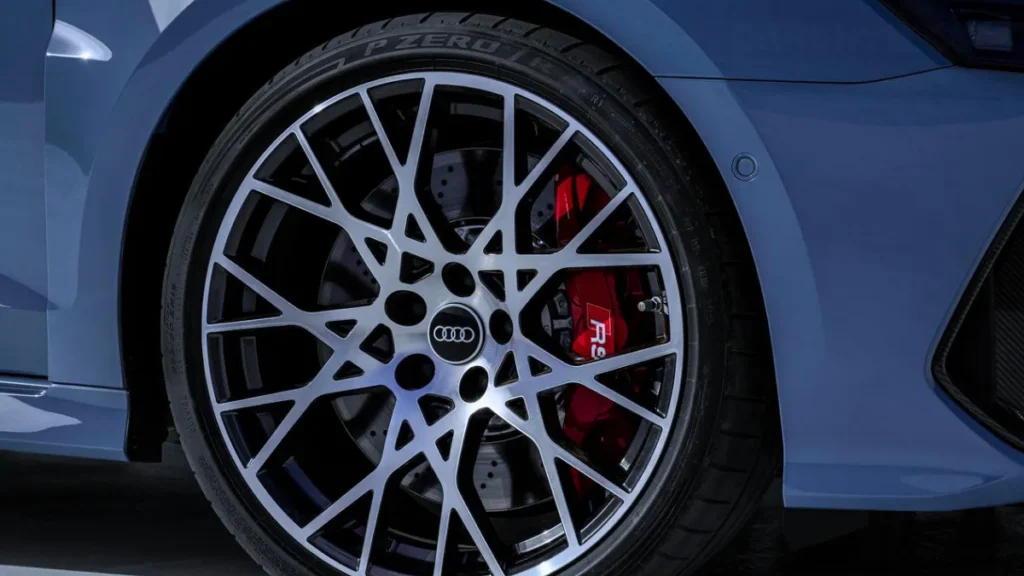
Standard fitment includes 19-inch cast aluminum wheels in a 5-Y-spoke design with a clean matte black finish. It’s handsome, no complaints, and works with every color in the catalog.
However, the motorsport wheels from the Dynamic Plus Package are the upgrade worth having. The 10-cross-spoke design is lifted directly from the exclusive RS3 Performance Edition. Available in matte dark gray or gloss black bi-color, they fill out the widebody fender flares more aggressively than the standard 5-Y-spokes and change the character of the side profile considerably.
How It All Adds Up
Every styling decision in this refresh points in the same direction: lower, wider, more aggressive, less compromised. The fake vents are gone. The headlight signature is sharper. The front splitter is real. The colors are bolder. The Carbon Package makes it look like a baby supercar that someone fitted with back seats.
For the complete picture on what drives this design — and whether the performance justifies every dollar of the premium MSRP — head over to the full 2026 Audi RS3 Review Hub. The exterior styling is the promise; the mechanical hardware underneath keeps it.