




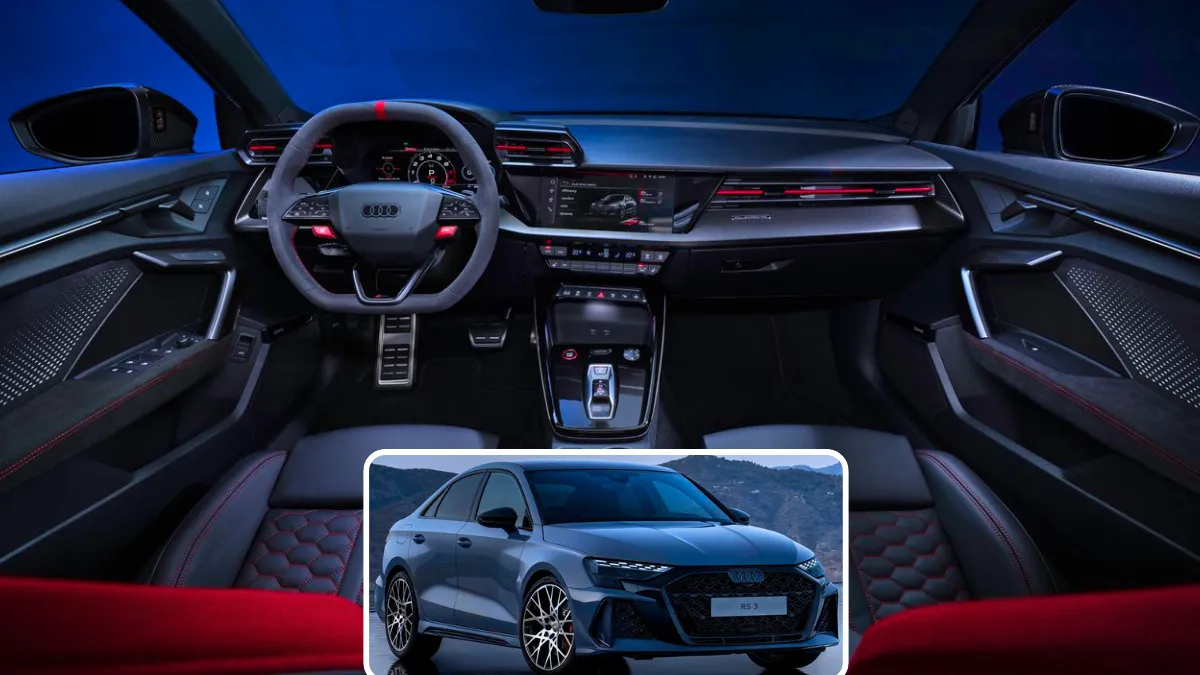
The 2026 Audi RS3 makes its case at the stoplight the moment you drop into the driver’s seat. Before you’ve turned a wheel, before the 2.5-liter five-cylinder fires its unmistakable warble, the cockpit is already doing most of the heavy lifting — setting the mood, calibrating your aggression, telling you exactly what kind of machine you’re strapped into. That’s not an accident. Audi didn’t reinvent the RS3 interior for 2026, but they sharpened what mattered most, and the result is a cabin that still punches above its class in ways that matter to serious drivers.
If you’ve been living inside the full performance picture — power figures, torque curves, the torque-vectoring rear differential — the 2026 Audi RS3 Review: Specs, Price, and Performance spec sheet is already burned into your memory. What that sheet doesn’t tell you is how the interior actually feels to operate at 9/10ths on a mountain road. That’s what this review is for.
Contents
The RS Sport Seats
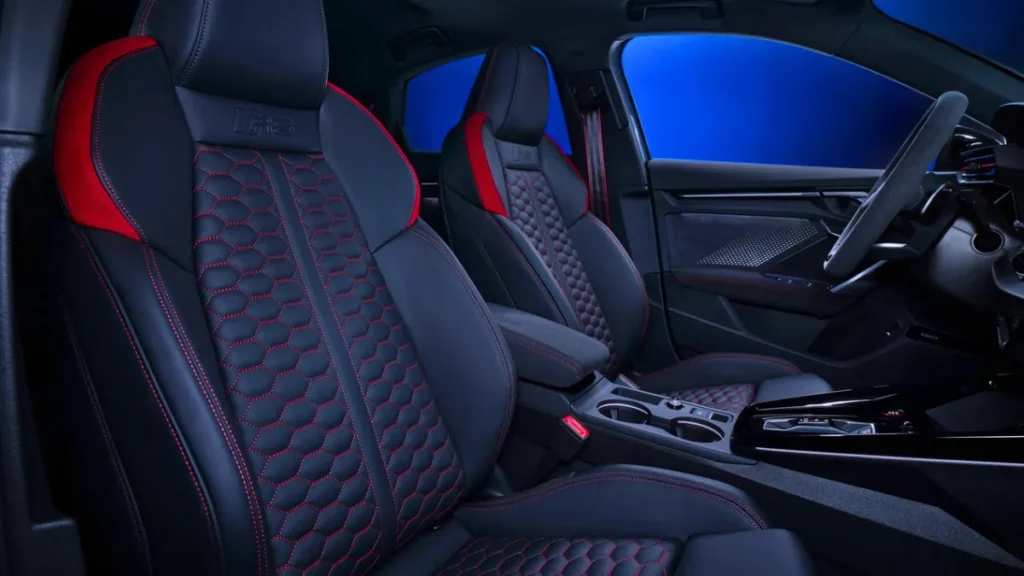
Let’s start here because this is where it counts. Audi’s RS sport seats have always been a calling card, and the 2026 iteration doesn’t disappoint. The diamond-quilted stitching is more than cosmetic theater — it’s tactile feedback that tells your body “this is RS territory.” Available in red or green contrast stitching over a black base, the seats look properly purposeful rather than try-hard.
Functionally, the 12-way power adjustment gives you the granular positioning that long canyon-carving sessions demand. The adjustable thigh support extender is the unsung hero here — most competitors at this price point either skip it entirely or bury it in a submenu. Heated fronts are standard. Driver memory? Standard. What’s not standard, and this is a legitimate miss: no ventilated seats. On a performance car that flirts with the $70,000 mark once fully optioned, and will see summer track days alike, that omission stings. It’s the kind of thing that makes you wonder who signed off on the options list.
The side bolsters are substantial without being punishing on daily driver duty — a balance Audi has refined over multiple RS generations. Lateral support during hard cornering is genuinely impressive; you’re planted, not floating. Authority metrics from Car and Driver testing logs have long cited RS seat support as among the best in the compact performance segment, and the 2026 seats do nothing to challenge that reputation.
The New RS Steering Wheel
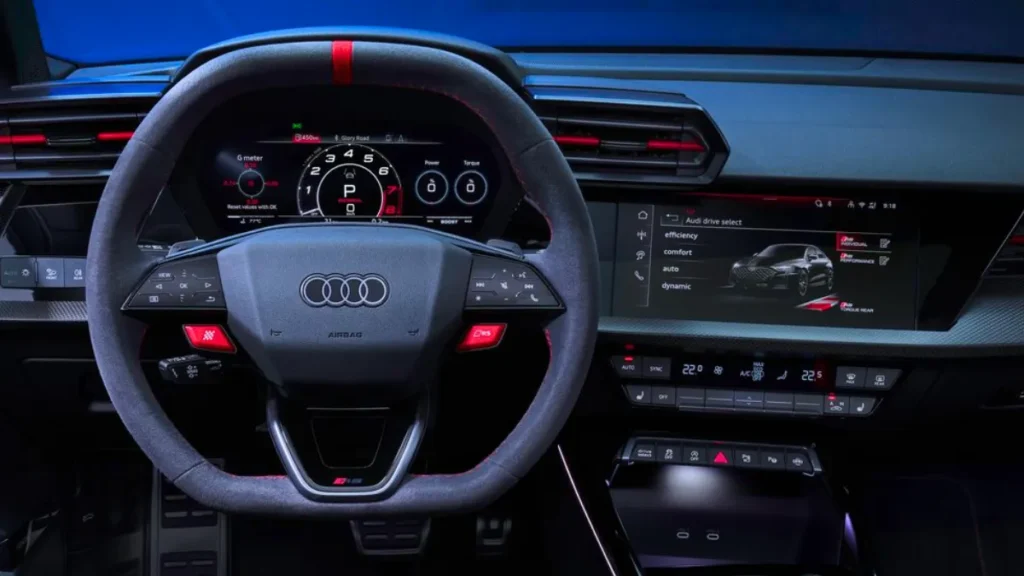
This is where Audi made the most meaningful single-component upgrade for the model year. The outgoing RS3 wheel was functional, but the 2026 unit is something else entirely — flat-top, flat-bottom, wrapped in perforated leather with a grip that actually communicates road texture back through your palms. The new sleek Audi rings center the design cleanly.
More importantly, Audi integrated RS drive mode controls directly into the wheel. There’s a dedicated checkered-flag button that drops you straight into RS Performance mode — no menu diving, no touchscreen taps at the wrong moment. Individual mode is one press away. When you’re about to start a hot lap or threading through a technical backroad, having that mode access under your thumb is a vital functional tool.
The gripes? Touch-sensitive controls handle secondary functions. They look razor-modern and they work reliably, but muscle memory is a real thing, and physical buttons would be faster in the heat of a high-speed moment. It’s a design-over-function concession that’s become industry-wide, but worth noting. Manual tilt and telescoping adjustment remains standard, offering wide parameters for taller drivers.
Audi Virtual Cockpit
The 12.3-inch Audi Virtual Cockpit remains the centerpiece of the instrument cluster, and the 2026 software update gives it a meaningful refresh. The central tachometer display is the headliner — it fills the main pod with a large, readable rev counter that shifts from white to amber to red as the 2.5-liter screams toward its limiter. For a driver-focused machine, having the tach front and center is correct prioritization.
RS-specific performance screens let you pull up torque split between the front and rear axles, g-force readouts, a lap timer, and throttle/brake application traces — the kind of telemetry that used to require a separate data logger. Navigation can render directly in the cluster, keeping the central screen clear. Multiple display themes let you dial the aesthetic from clean road-car to full-aggression performance mode.
The Full Interior Tech Stack
| Feature | 2026 Specification Details | Silo Verdict |
|---|---|---|
| Digital Cluster | 12.3-in Audi Virtual Cockpit, updated RS graphics, central tach layout | Class Leader |
| Infotainment Screen | 10.1-in touchscreen, haptic feedback, updated UI | Feeling Dated |
| CarPlay / Android Auto | Wireless integration across both platforms | Standard Now |
| Wireless Charging | Integrated center console secure tray | Well Placed |
| Head-Up Display | Standard equipment (previously optional package) | Upgrade Win |
| Audio System | Sonos premium system tuning | Balanced Output |
| RS Steering Wheel | Flat-top/bottom, perf mode buttons, perforated leather | Major Upgrade |
| Climate Controls | Physical dual-zone tactile buttons | Driver-Friendly |
| RS Seat Adjustment | 12-way power, thigh extender, driver memory, heated standard | Benchmark |
| Ventilated Seats | Not available from factory | Major Omission |
Materials, Trim, and the Carbon Fiber Question
The dashboard uses genuine carbon-fiber trim — not carbon-look film, not a printed pattern. It’s the real thing, and in the right light, the weave catches the eye exactly the way it should in a car wearing RS badges. The Quattro badge integrated into the dash is a subtle but meaningful touch; it ties the interior narrative back to the all-wheel-drive system that makes the RS3 so devastatingly effective in real-world conditions.
Upper door panels use soft-touch materials with Alcantara suede inserts and illuminated diamond patterns. The leather-wrapped armrests carry contrast stitching that matches the seat selection. One-touch auto windows are fitted on all four doors — a small thing that tells you the premium attention to detail was real.
“The Alcantara headliner and suede door inserts are excellent premium moves. The fingerprint-prone piano-black center stack trim is not. Audi knows cabins, so this feels like an architecture budget trade-off.”
Here’s where it gets honest: below the beltline, hard plastics dominate, particularly in the rear. There’s a gap between what you feel on the surfaces your hands and elbows touch constantly versus what your knees are resting against in the back seat. The piano-black trim in the center console area is excessive — every fingerprint shows up immediately, requiring constant micro-fiber maintenance.
Infotainment and Audio Performance
The 10.1-inch central touchscreen runs updated software with haptic feedback, and the interface logic has improved over the previous model years. Wireless Apple CarPlay and Android Auto work seamlessly. The wireless charging tray in the center console is positioned correctly — deep enough that modern smartphones don’t slide out under heavy cornering lateral loads.
But context matters. When competition platforms deploy wide dual-screen glass panels, Audi’s 10.1-inch unit feels a bit small. It’s not bad — the menus are logical, the haptic feedback is responsive — but the screen real estate issue is real. Thankfully, physical climate controls remain, which is the correct and sane choice, allowing you to keep your eyes locked on the road ahead.
The Sonos premium audio system delivers solid sound reproduction throughout the cabin. While brand purists note a shift from the historical Bang & Olufsen partnership setups, the acoustic staging remains highly competitive for the segment. You can cross-reference complete premium infotainment trends via the SAE International automotive electronics registries.
Rear Seat Reality Check & Daily Usability
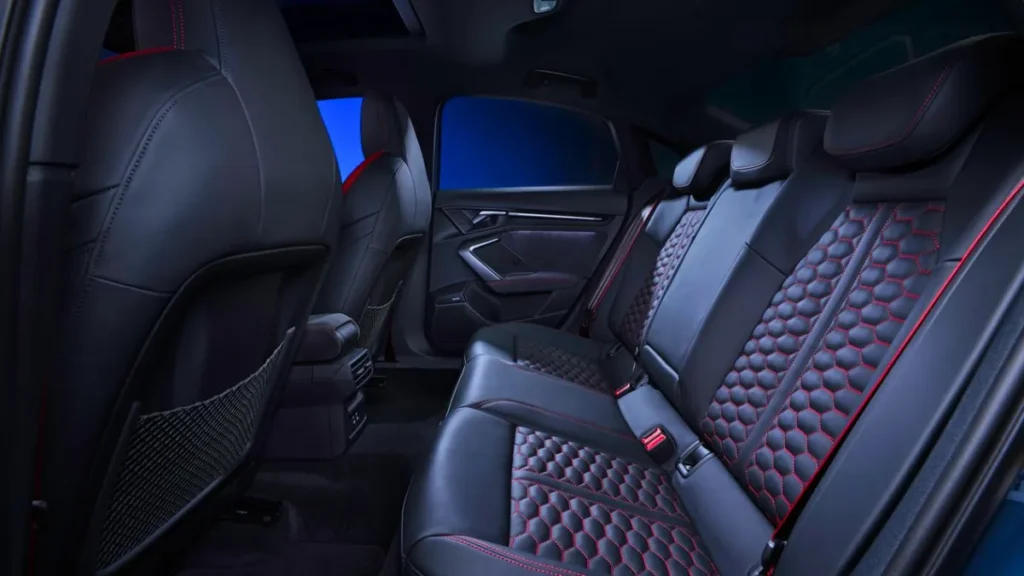
Approximately 35 inches of rear legroom means this is a true compact sport sedan layout. Once you account for the thick front seat backs and the pronounced rear floor tunnel required by the Quattro all-wheel-drive hardware, the actual perceived space shrinks noticeably. Average-sized adults fit fine for short trips, but long-haul passengers will feel the pinch. Two USB-C ports in the rear, a fold-down armrest with cupholders, and rear air vents show that Audi didn’t completely abandon the back-seat occupants.
The standard panoramic glass sunroof adds genuine light and airiness to what is otherwise a fairly intimate, driver-focused cabin. The tilt-and-vent functionality and retractable sunshade are well-executed, and the built-in wind deflector keeps buffeting manageable at highway speed with the panel cracked. For historical comparisons on how this model’s daily usability stack matches its predecessors, check out the MotorTrend Audi RS3 platform index.
The Honest Verdict
The 2026 Audi RS3 cockpit is the product of an interior architecture that was exceptional at launch and has received highly targeted upgrades rather than a ground-up rethink. The RS sport seats and the new steering wheel are legitimately great — the kind of components you interact with every single drive and feel immediately good about. The Virtual Cockpit remains a benchmark digital instrument display. The carbon-fiber trim is real and earns its keep aesthetically.
But the 10.1-inch screen, the absent ventilated seats, and the rear cabin plastics are the friction points you’ll feel more sharply as the competition moves forward. This is Audi RS technology at its best for driver-facing hardware, and a mild preservation for everything else. For buyers wanting the full ownership picture, return to our complete 2026 Audi RS3 Review Hub.
Want to learn more about modern automotive tech?
Check our in-depth breakdown of infotainment, safety features, and driver assistance in our Car Technology Guide.