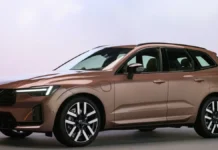




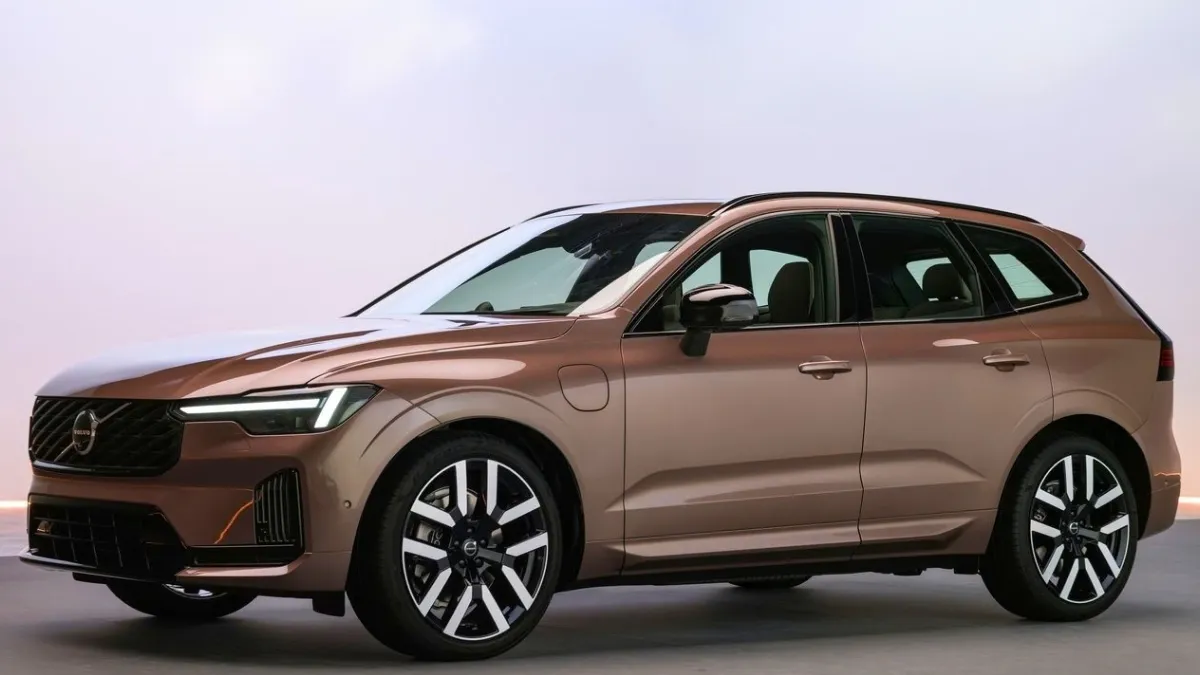
Volvo just handed its best-selling SUV a serious tech transplant, and the changes go deeper than a new grille. If you’re cross-shopping the 2026 Volvo XC60 against a BMW X3, Audi Q5, or Mercedes GLC, you need real numbers, not marketing fluff. Let’s get into them.
This midsize luxury SUV has topped Volvo’s global sales charts since 2017. Nine years is a long run for any platform. Instead of an all-new generation, Volvo chose a mid-cycle refresh — new screen, new chip, new materials, same excellent bones underneath.
Here’s everything that changed, what it costs, and whether it beats the German competition.
Contents
XC60 Price and Trim Levels
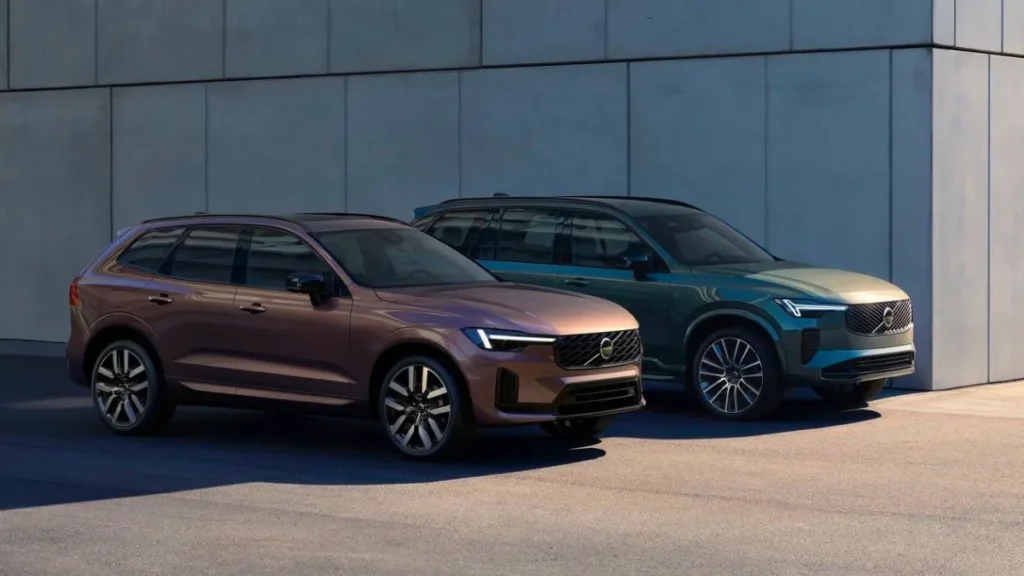
The 2026 Volvo XC60 starts around $49,700 for the B5 Core and climbs to roughly $79,800 for the range-topping T8 Polestar Engineered. The lineup splits into two families: mild-hybrid B5 trims and plug-in hybrid T8 trims, each offered in Core, Plus, and Ultra grades, plus a Black Edition package.
That’s the quick answer. Now let’s break down every trim, because the jumps between them matter more than most buyers realize.
Volvo organizes the 2026 XC60 into B5 Core, B5 Plus, B5 Ultra, and B5 Ultra Black Edition trims on the mild-hybrid side, with T8 Core, T8 Plus, T8 Ultra, T8 Ultra Black Edition, and T8 Polestar Engineered on the plug-in hybrid side.
| Trim | Powertrain | Starting MSRP* |
|---|---|---|
| B5 Core | Mild hybrid | $49,700 |
| B5 Plus | Mild hybrid | $54,300 |
| B5 Ultra | Mild hybrid | $59,650 |
| B5 Ultra Black Edition | Mild hybrid | $60,800 |
| T8 Core | Plug-in hybrid | $61,150 |
| T8 Plus | Plug-in hybrid | $65,600 |
| T8 Ultra | Plug-in hybrid | $70,950 |
| T8 Ultra Black Edition | Plug-in hybrid | $72,050 |
| T8 Polestar Engineered | Plug-in hybrid | $79,800 |
*Prices exclude destination charge, which runs close to $1,295 on this model.
A few things jump out here. First, the gap between the cheapest B5 and the cheapest T8 is over $11,000. That’s a big number to swallow just for a plug. Second, once you’re in T8 territory, moving from Core to Ultra only adds about $10,000 — reasonable, given the equipment you pick up along the way.
B5 Plus is the volume seller. It hits the sweet spot: enough standard tech, a reasonable price, and you’re not stuck with the base car’s shorter feature list.
If you want the plug-in hybrid without paying luxury-flagship money, T8 Core is your entry point. You get the full 455-horsepower powertrain without the Ultra trim’s extra chrome and leather.
What’s Included at Each Trim Level?
- Core: LED headlights, Pilot Assist, 19-inch wheels, Nordico upholstery, the new 11.2-inch touchscreen
- Plus: Adds Blind Spot Information System with steer assist, panoramic sunroof, power tailgate, upgraded audio
- Ultra: Adds head-up display, 20-inch wheels, Nappa leather, Bowers & Wilkins premium sound, adaptive air suspension option
- Black Edition: Gloss-black exterior trim, darkened badging, unique wheel finish
- Polestar Engineered (T8 only): Öhlins dampers, 21-inch wheels, gold accents, sport seats, 15-speaker Bowers & Wilkins system
Engine and Performance
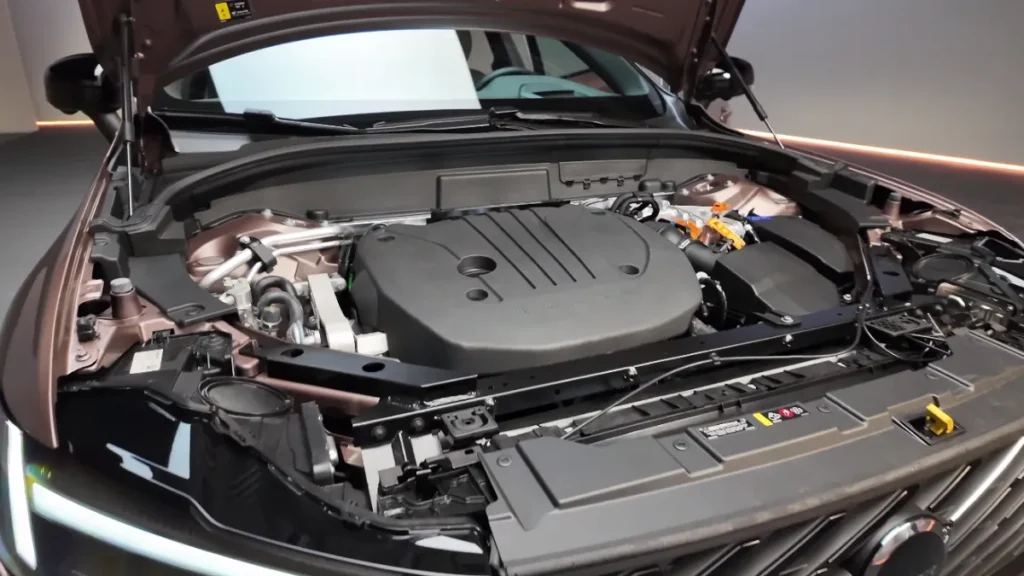
Two powertrain families cover the entire lineup. Neither is new for 2026 — Volvo carried the mechanicals over and focused its money elsewhere.
The base engine is a turbocharged 2.0-liter four-cylinder producing 247 horsepower and 266 pound-feet of torque, paired to an eight-speed automatic and standard all-wheel drive. This is the B5.
It’s a mild hybrid, not a plug-in. There’s no EV mode, no charge port, just a small electric assist that helps with stop-start smoothness and light torque fill. B5 models run zero to 60 mph in about 6.5 seconds, and fuel economy lands at 23 mpg city and 30 mpg highway.
That’s respectable for a 4,100-plus-pound AWD SUV, but nothing you’d call quick.
Step up to the T8, and the story changes completely. That’s where this SUV gets genuinely interesting — and it deserves its own section.
XC60 T8 Plug-In Hybrid
The T8 is the performance flagship and the tech showcase in one package. It pairs the same turbocharged 2.0-liter with an electric motor and a plug-in battery, and the combined output is substantial.
Total system output reaches 455 horsepower and 523 pound-feet of torque. That’s more torque than most V8s produce, delivered instantly, through all four wheels.
The result: T8 models sprint from zero to 60 mph in around 4.5 seconds. That’s supercar-adjacent territory for a five-seat family SUV with a moonroof and heated cupholders.
How does Volvo get there? The gas engine handles the front axle through the transmission, while the electric motor drives the rear axle independently. There’s no mechanical connection between them — it’s a through-the-road hybrid system, and it’s part of why the T8 feels so seamless switching between power sources.
T8 Polestar Engineered: The Enthusiast Pick
If you want the sportiest XC60 money can buy, this is it. Öhlins adjustable dampers replace the standard suspension. Unique 21-inch wheels fill the arches. The brakes get bigger. Everything else stays mechanically identical to a regular T8, but the chassis tuning transforms how the car feels on a twisty road.
It’s still front-heavy and it’s still tall. This isn’t a sports car. But it’s noticeably tighter than a standard T8 Ultra, and if handling matters to you more than ride comfort, it’s worth the premium.
Is the T8 Worth the Extra Money Over the B5?
Depends entirely on your driving habits. If you commute under 35 miles a day and can plug in at home or work, the T8 can run almost entirely on electricity for daily errands — turning your fuel bill into a rounding error. If you’re doing 200-mile highway days regularly, the B5’s lower purchase price probably makes more financial sense, since the T8’s weight penalty hurts efficiency once the battery’s depleted.
Electric Range and Charging
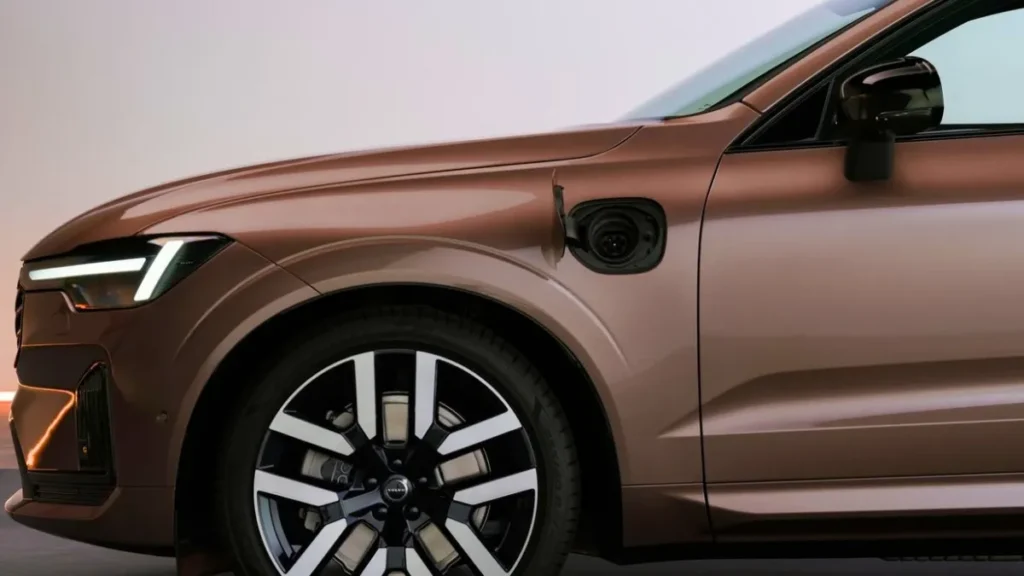
Volvo built the T8 around an 18.8-kilowatt-hour battery pack, which is a meaningful step up from earlier XC60 hybrids.
Electric range tops out at 35 miles on a full charge, rated by the EPA at 28 mpg combined once the gas engine kicks in, or 63 MPGe running on electricity alone. That range figure covers most Americans’ daily commute without burning a drop of gasoline.
Charging specs:
- Level 1 (120V household outlet): Roughly 8-10 hours for a full charge
- Level 2 (240V home charger): Around 3.5 hours to fill the 18.8-kWh pack
- No DC fast charging — this is standard for PHEVs, since the battery is too small to justify fast-charge hardware
That means you plan around overnight charging, not public fast-charge stops. Treat it like charging a phone before bed, and you’ll wake up with a full electric range every morning.
How Far Can the T8 Actually Go on Electricity Alone?
In ideal conditions — mild weather, gentle throttle, mostly city and suburban roads — 35 miles is achievable. Cold weather, highway speeds, and aggressive acceleration will eat into that number fast, the same way it does with any EV or PHEV. Budget for 25-30 real-world miles in winter if you live somewhere that actually gets cold.
Interior and Cargo Space
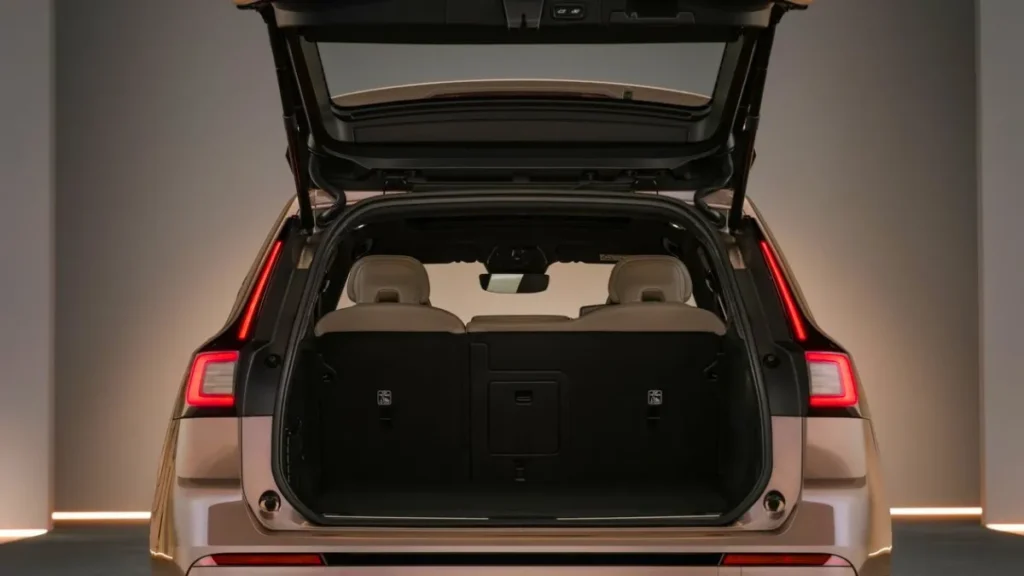
Volvo’s interior philosophy hasn’t changed: clean lines, minimal buttons, Scandinavian restraint. What’s new for 2026 is the materials and the tech layered on top of that foundation.
New for this model year: Quilted Nordico upholstery and a Navy Herringbone Weave fabric option, plus an upgraded wireless phone charger and redesigned cupholders. Small stuff individually, but it adds up inside a cabin that already felt premium.
Volvo also added laminated windows for quieter road noise and an optional air suspension on higher trims, along with a cabin air purification system. If you’ve ever driven through wildfire smoke or heavy city traffic, that last feature earns its keep.
Cargo numbers hold steady from the outgoing model:
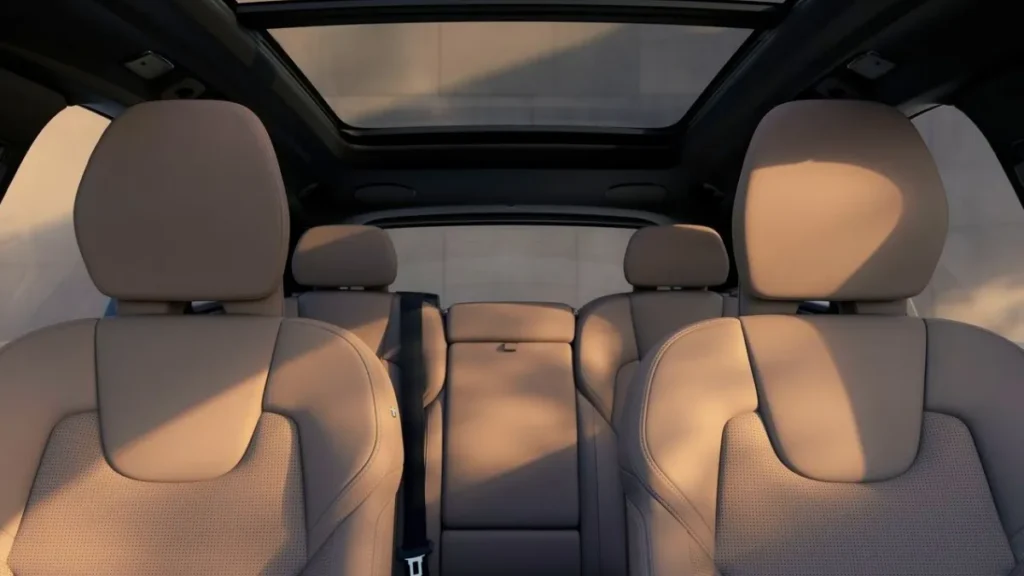
- Behind the rear seats: 21.6 cubic feet, enough for three or four full-size suitcases loaded on their sides
- Rear seats folded: 63.3 cubic feet maximum
- Pass-through: A center pass-through lets you load long items like skis while still seating passengers on both sides
That’s competitive with the segment, though not class-leading. If cargo capacity is your top priority, a three-row Volvo or a boxier competitor will out-haul it.
Does the T8’s Battery Eat Into Cargo Space?
No. Volvo tucks the battery pack under the floor and rear seats, so cargo volume is identical between B5 and T8 models. That’s a genuine advantage over some rivals whose PHEV batteries steal trunk space.
Technology and Infotainment
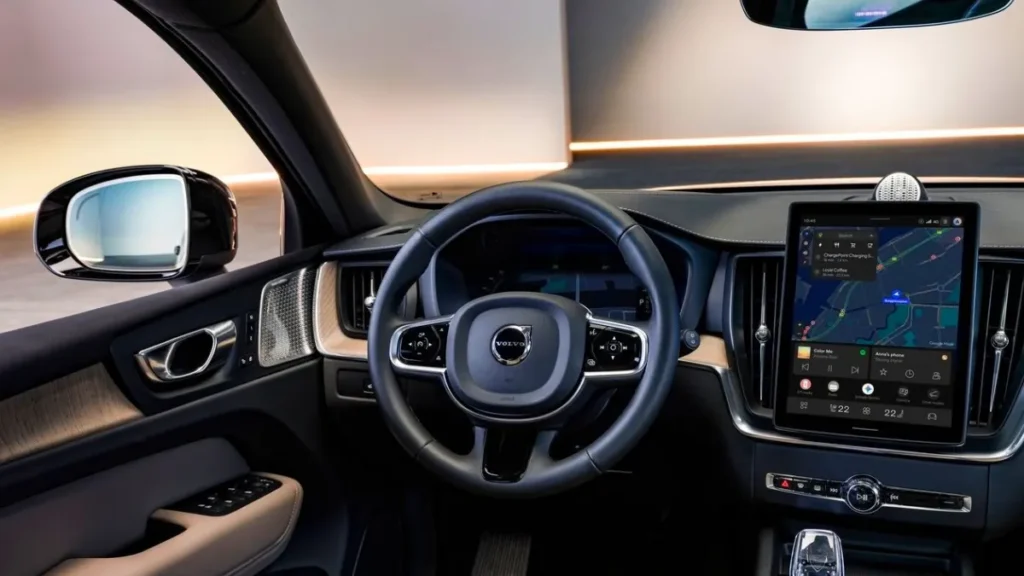
This is the headline change for 2026, and it’s a substantial one. Volvo didn’t just tweak the software — it swapped the hardware underneath it.
The touchscreen grew from 9.0 inches to 11.2 inches, and it now runs on Qualcomm’s Snapdragon Cockpit Platform, which Volvo claims doubles overall processing speed and delivers graphics generation up to ten times faster than the outgoing system.
If you’ve used the older XC60’s infotainment and found it sluggish, that complaint should be gone. Menu transitions, map rendering, and app loading all benefit directly from that chip upgrade.
Google Built-in comes standard, giving you:
- Google Maps for native navigation
- Google Assistant (with Gemini AI voice control on updated units) for hands-free commands
- Google Play Store for downloading apps directly to the car
- Wireless Apple CarPlay and Android Auto as alternatives, if you’d rather use your phone’s ecosystem
Volvo isn’t limiting this upgrade to new buyers, either. The company plans to push the refreshed interface out via over-the-air updates to roughly 2.5 million existing Volvos built as far back as 2020. That’s an unusually generous move — most automakers reserve their best software for the newest hardware only.
Is Google Built-In Different From Apple CarPlay?
Yes, and it’s an important distinction. Google Built-in runs natively inside the car’s own operating system — it doesn’t need your phone connected or nearby. Apple CarPlay and Android Auto mirror your phone’s interface instead. You get both options in the 2026 XC60, so you can pick whichever ecosystem you prefer, or switch between them depending on the trip.
2026 Volvo XC60 Safety Features
Volvo built its entire brand identity on safety, and the 2026 XC60 doesn’t cut corners here. Standard equipment across the lineup includes:
- City Safety collision avoidance with automatic braking
- Blind-Spot Alert with Auto Brake
- Collision Warning System
- Lane Departure Warning System
- Pedestrian Detection System
- Driver Knee Airbag, Front Head Curtain Airbag, Rear Head Curtain Airbag, and Front and Rear Side Airbags
- Rear Parking Sensors and Rear View Camera
Starting at Plus trim, you add Volvo’s fuller driver-assistance suite, including Pilot Assist, the semi-autonomous highway assist system that manages steering, acceleration, and braking within a lane.
The pilot Assist has a real weakness: the steering wheel doesn’t reliably detect hands-on contact, so you’ll trigger nagging alerts unless you regularly nudge the wheel even when you’re already holding it. It’s a known annoyance, not a dealbreaker, but competitors like BMW’s Driving Assistant Professional handle this more gracefully.
Does the 2026 XC60 Have a Good Crash Safety Rating?
Volvo’s platform has historically scored well in independent crash testing, and the structural underpinnings haven’t changed for this refresh. Check the latest IIHS and NHTSA ratings directly before you buy, since agencies re-test periodically and results can shift with even minor running changes.
2026 XC60 Dimensions and Towing
Numbers matter when you’re figuring out if this thing fits your garage or your trailer.
Specs
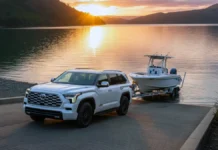
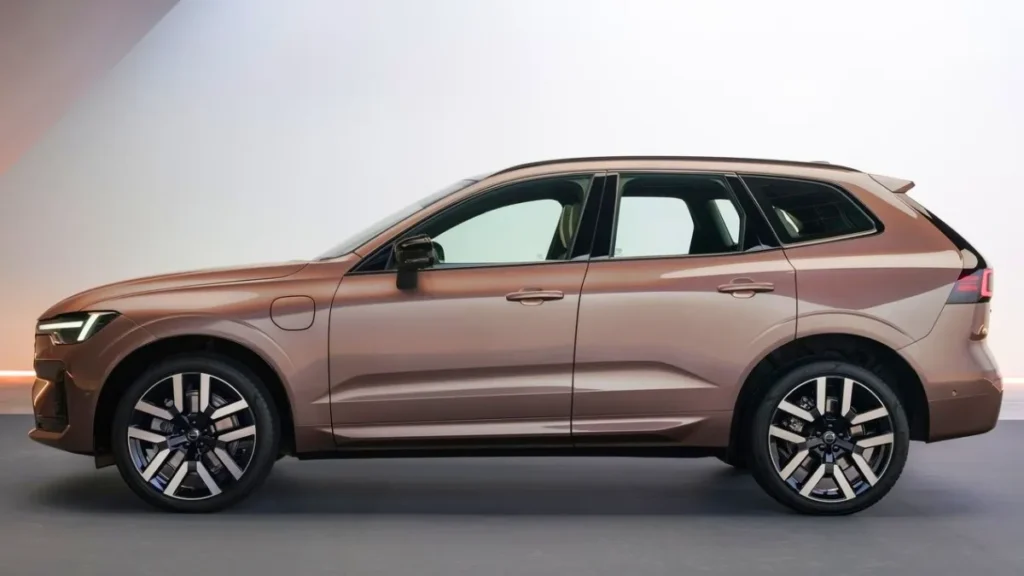
That towing number applies across both B5 and T8 models, according to Kelley Blue Book’s listed specifications. It’s enough for a small camper, a couple of jet skis, or a utility trailer — not enough for a boat much bigger than 20 feet.
The 8.5-inch ground clearance is solid for pavement and light gravel, but this isn’t an off-roader. Keep it on maintained roads and trails.
Volvo XC60 vs BMW X3, Audi Q5 and Mercedes GLC
You’re not cross-shopping the XC60 in a vacuum. Here’s how the T8 stacks up against its closest plug-in hybrid rivals.
| Model | Combined Output | Electric Range | Starting Price (PHEV) |
|---|---|---|---|
| Volvo XC60 T8 | 455 hp / 523 lb-ft | 35 miles | ~$61,150 |
| BMW X3 xDrive30e | ~295 hp / ~332 lb-ft | Roughly 54 miles WLTP* | Low-to-mid $50,000s |
| Audi Q5e Hybrid | 362 horsepower | Segment-competitive | Mid $50,000s |
| Mercedes GLC 350e | 313 horsepower combined, 406 lb-ft | 54 miles EPA-rated | $61,050 |
*BMW’s WLTP figures typically overstate real-world EPA range; expect meaningfully less in U.S. testing conditions.
The takeaway: Volvo wins on raw power and torque by a wide margin. Nothing here comes close to the T8’s 455 horsepower. But Mercedes and BMW both claim longer EPA-style electric-only range, which matters more if your goal is minimizing gas station visits rather than winning stoplight drag races.
If you want the fastest, most powerful plug-in hybrid in this class, the XC60 T8 is the clear pick. If maximum electric-only range is your priority, the GLC 350e’s 54-mile rating deserves a serious look.
Where Volvo pulls ahead again: infotainment. The new Snapdragon-powered, Google Built-in system is genuinely faster and more intuitive than BMW’s iDrive 8 or Mercedes’ MBUX in day-to-day use, based on the hardware specs alone.
Pros, Cons and Buying Advice
Let’s cut through the spec sheet and talk about who should actually buy this thing.
Pros
- T8’s 455 hp and 523 lb-ft crush every competitor in this comparison
- New 11.2-inch screen and Snapdragon chip fix the old system’s biggest weakness
- Google Built-in works without a phone tethered to the car
- Quiet, well-built cabin with genuinely premium materials
- 35-mile electric range covers most daily commutes gas-free
- Existing 2020-and-newer Volvos get the software update too, via OTA
Cons
- Pilot Assist’s hands-on detection is finicky and annoying on long drives
- $11,000+ premium to jump from B5 to T8 is steep
- Rivals from BMW and Mercedes offer longer electric-only range
- Cargo space is competitive, not class-leading
- No DC fast charging on the T8’s battery pack
- Exterior design changes are subtle — don’t expect it to look dramatically different from your neighbor’s 2022 model
Who should buy the B5? Anyone who wants Volvo’s safety reputation and interior quality without the plug-in premium, and who doesn’t have reliable access to home charging anyway. There’s no point paying for a battery you can’t use.
Who should buy the T8? Commuters with a home charger and a predictable daily route under 35 miles. You’ll genuinely run on electricity most days and only dip into the gas tank for road trips.
Who should skip it entirely? Buyers who need serious off-road capability, more than five seats, or maximum electric range above all else — the Mercedes GLC 350e’s 54-mile rating will serve that last group better.
FAQ
The T8 plug-in hybrid produces 455 horsepower and 523 pound-feet of torque combined, making it the most powerful engine option in the XC60 lineup.
The T8 plug-in hybrid delivers up to 35 miles of electric-only range on a full charge, powered by an 18.8-kWh battery pack.
Yes. Google Built-in comes standard, including Google Maps, Google Assistant with Gemini AI, and the Google Play Store, running on the new Snapdragon Cockpit Platform.
Pricing starts around $49,700 for the B5 Core and reaches roughly $79,800 for the T8 Polestar Engineered, before destination charges.
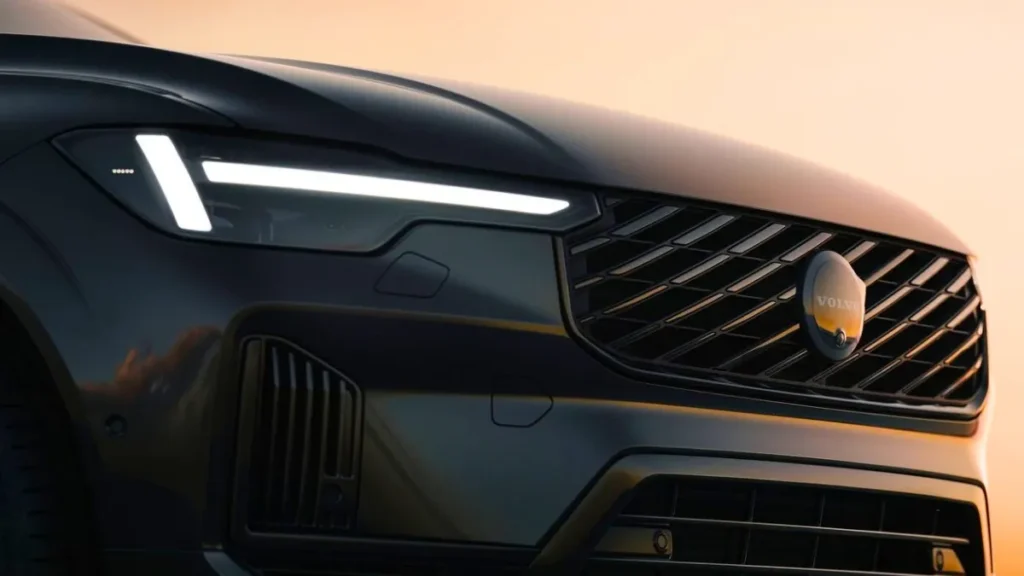
The biggest changes are a larger 11.2-inch touchscreen, a faster Snapdragon chip, new interior materials, an XC90-inspired front grille, darker taillights, and new paint and wheel options. Powertrains carry over unchanged.
Both B5 and T8 models are rated to tow up to 3,500 pounds.