




Contents
- Overview
- What’s New for 2025–2026
- Design & Exterior Features
- Powertrain, Engine Specs & Performance
- Interior Space, Tech & Comfort
- Fuel Economy & Real-World MPG
- Safety Ratings & Driver Assist Tech
- Pricing, Trims & Buyer’s Value
- Kona N Line vs. Competitors
- Maintenance, Warranty & Ownership Costs
- Expert Verdict: Is It Worth It?
- Pros and Cons
- Frequently Asked Questions
Overview
The 2025–2026 Hyundai Kona N Line bridges the gap between basic commuter crossovers and dedicated high-performance vehicles. Redesigned to offer a larger footprint, upgraded cabin technology, and a refined powertrain, the second-generation Kona N Line caters to buyers seeking aggressive styling and agile handling in a subcompact package.
Unlike the track-focused former Kona N, the N Line emphasizes everyday usable performance. It features a turbocharged engine paired with an 8-speed automatic transmission, replacing the older dual-clutch setup for smoother power delivery in stop-and-go traffic. With updated infotainment hardware and expanded interior cargo volume, it remains a competitive entry in the small SUV segment.
Buyers looking for more models in this segment can also explore our Electric Cars guide and Cars Reviews hub.
Specifications
What’s New for 2025–2026
Following its complete generation overhaul, the 2025 and 2026 model years refine the Kona N Line formula through targeted option repackaging and software enhancements. If you’re comparing Hyundai’s newest models, don’t miss our complete Hyundai buying guides and latest vehicle reviews. Hyundai’s official updates focus on improving cabin ergonomics and streamlining option groups across trims.
- Transmission Refinement: Continued implementation of the 8-speed automatic, eliminating the low-speed hesitation associated with previous dual-clutch transmissions.
- Enhanced Digital Key 2 Touch: Smartphone-based key access upgraded for broader compatibility with iOS and Android devices.
- Standard Feature Expansion: Auto-dimming rearview mirror and wireless charging pad now standardized across all N Line packages.
- AWD Availability: Broader regional distribution of HTRAC AWD models with specialized Snow drive modes.
Design & Exterior Features
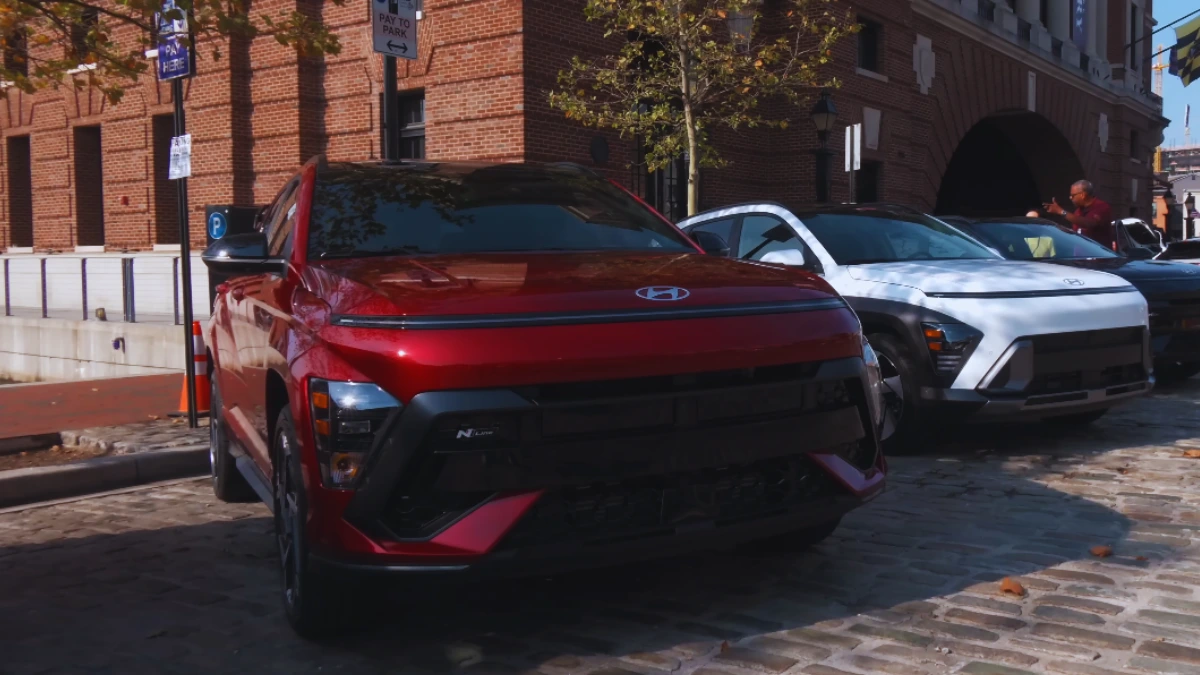
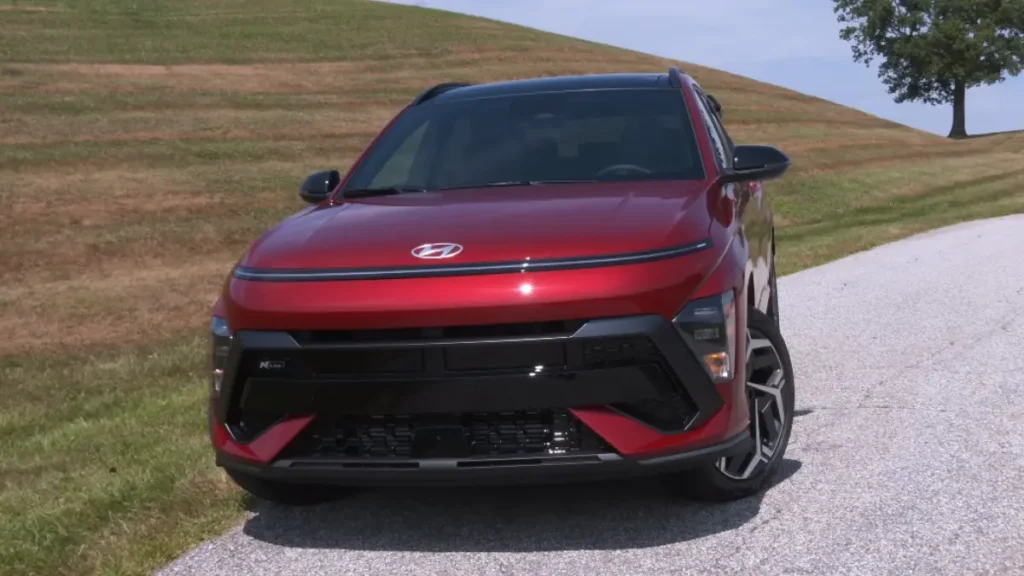
The exterior architecture of the Kona N Line differentiates itself significantly from lower trims like the SE and SEL. Hyundai designed the second-generation Kona around an EV-first platform, resulting in a futuristic front end highlighted by a continuous “Seamless Horizon” LED light bar.
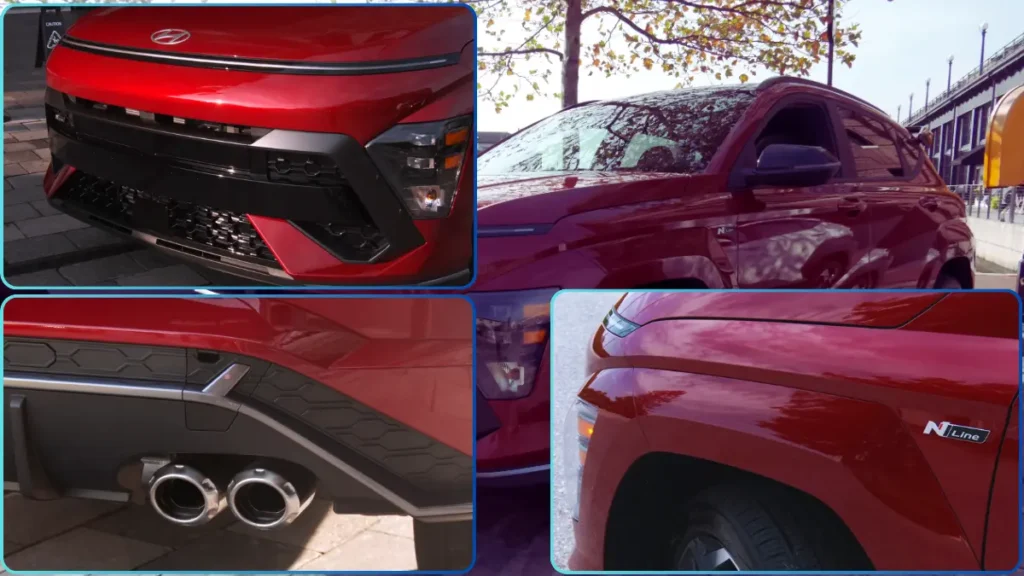
- N Line Body Kit: Dedicated front bumper fascia featuring aggressive mesh intake openings and body-colored wheel arch cladding rather than black plastic trim.
- Wheels and Tires: Standard 19-inch N Line exclusive alloy wheels fitted with 235/45 R19 all-season performance tires.
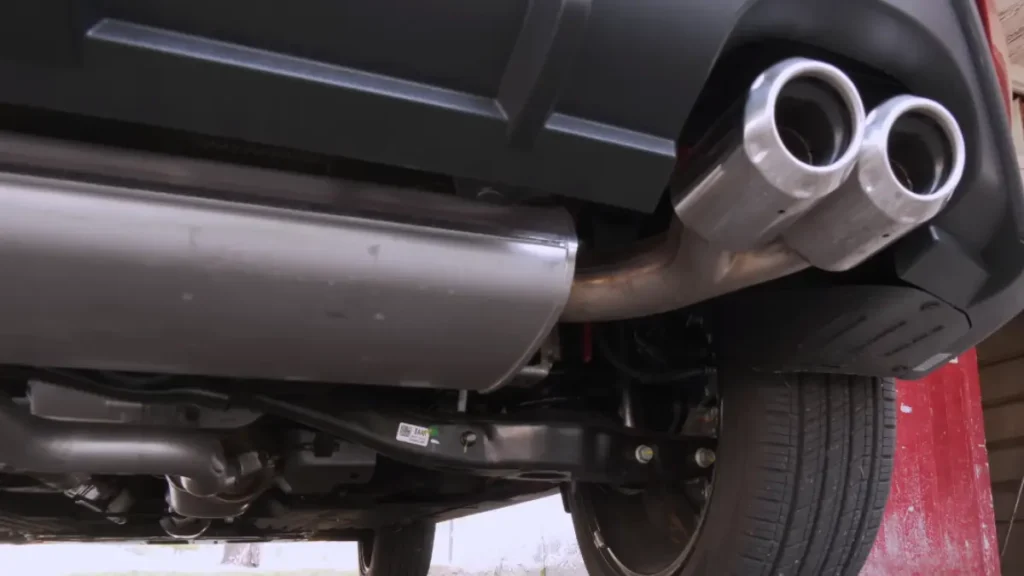
- Rear Styling: Wing-type rear spoiler, functional rear lower diffuser, and exposed dual chrome exhaust outlets.
- Gloss Black Accents: Heated gloss-black side mirrors and optional black-painted roof package for two-tone contrast.
Powertrain, Engine Specs & Performance
Powering the 2025–2026 Kona N Line is Hyundai’s revised 1.6-liter Smartstream turbocharged inline-4 engine. Output is rated at 190 horsepower and 195 lb-ft of torque. Curious how this engine compares with electrified alternatives? Read our guide to Hybrid SUVs and Electric SUVs. Torque comes on early at 1,700 rpm, delivering responsive low-end acceleration for urban driving environments.
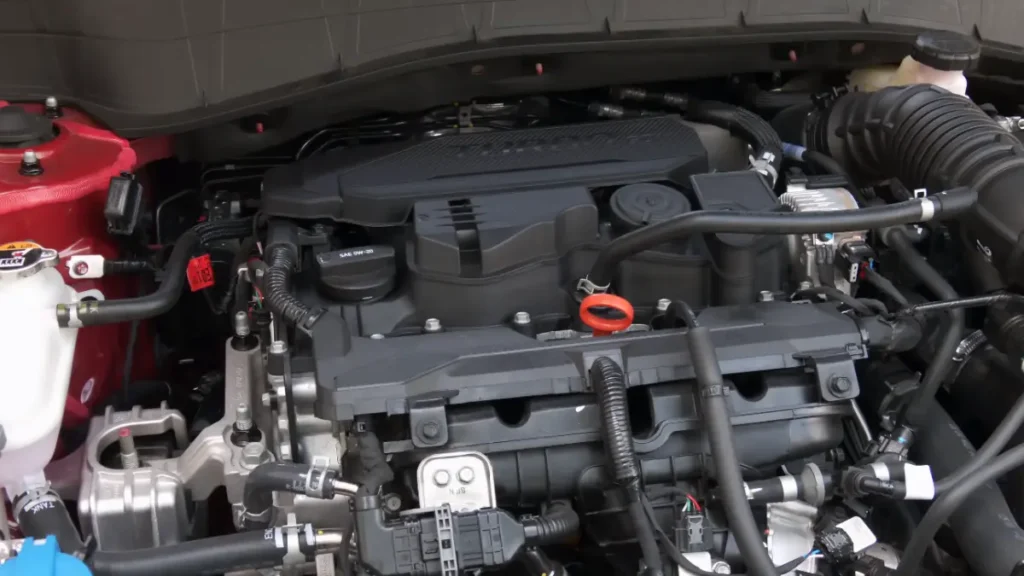
Engine & Transmission Specifications
The previous 7-speed dual-clutch transmission has been replaced with a traditional 8-speed torque-converter automatic. While downshifts are slightly less aggressive than the old DCT, the 8-speed offers significantly smoother linear engagement from a dead stop and improved high-speed cruising refinement.
- Drive Modes: Normal, Sport, and Eco modes adjust throttle mapping, shift points, and steering weight.
- HTRAC AWD System: Optional electro-mechanical AWD system continuously distributes torque between front and rear axles based on traction conditions.
Real-World 0–60 mph & Handling Dynamics
Independent testing by automotive publications like Car and Driver indicates a 0–60 mph time of 7.3 seconds for AWD-equipped models. Steering response is moderately firm in Sport mode, though feedback remains typical for electrically assisted racks in this segment.
Suspension architecture differs depending on drivetrain selection:
- FWD Models: Coupled torsion beam axle rear suspension.
- AWD Models: Independent multi-link rear suspension, providing improved body control over irregular pavement.
Interior Space, Tech & Comfort
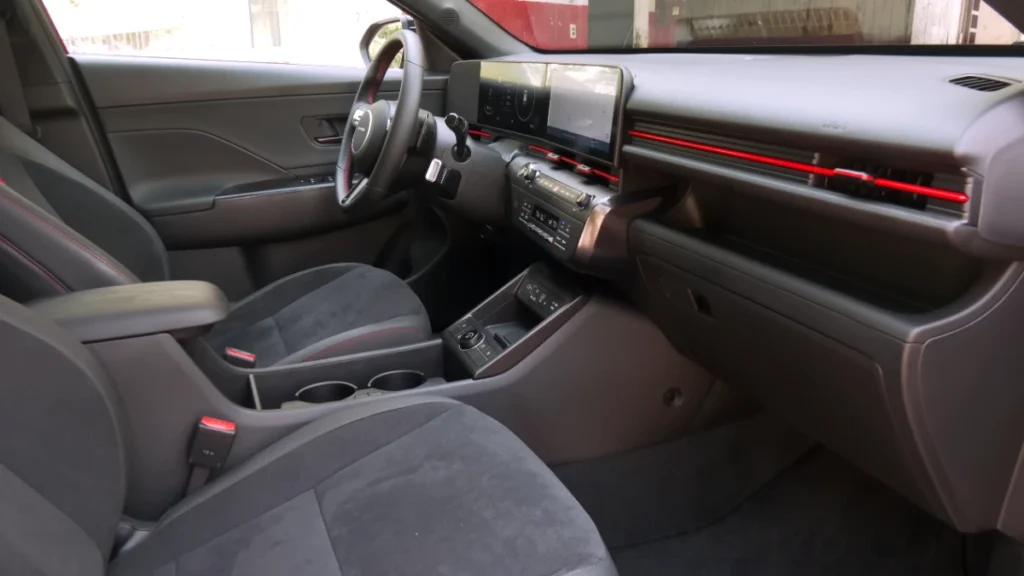
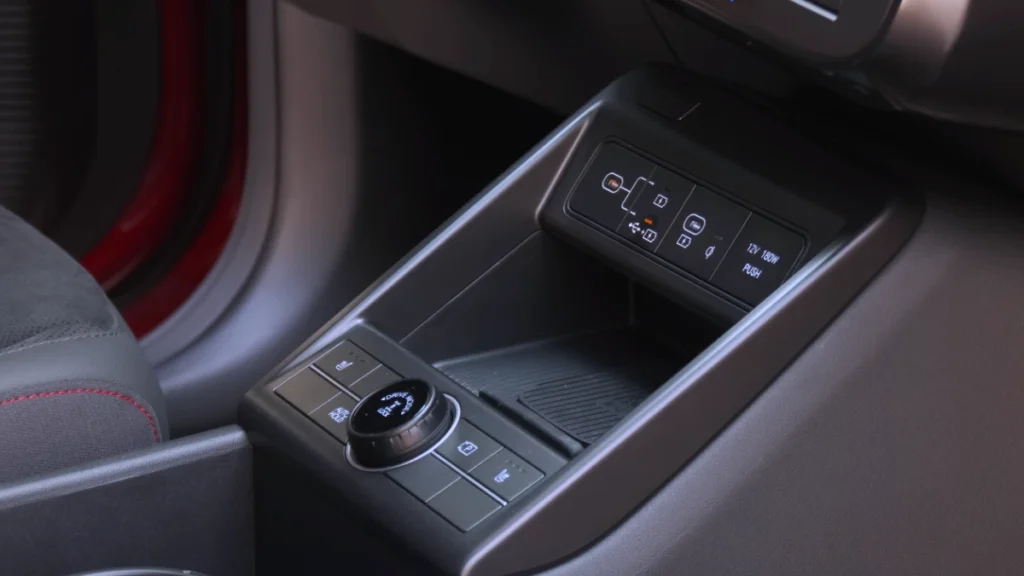
The cabin of the second-generation Kona represents a major step forward in space utilization and material selection. Shift-by-wire controls mounted on the steering column clear up substantial storage space in the center console.
Cockpit Technology & Infotainment
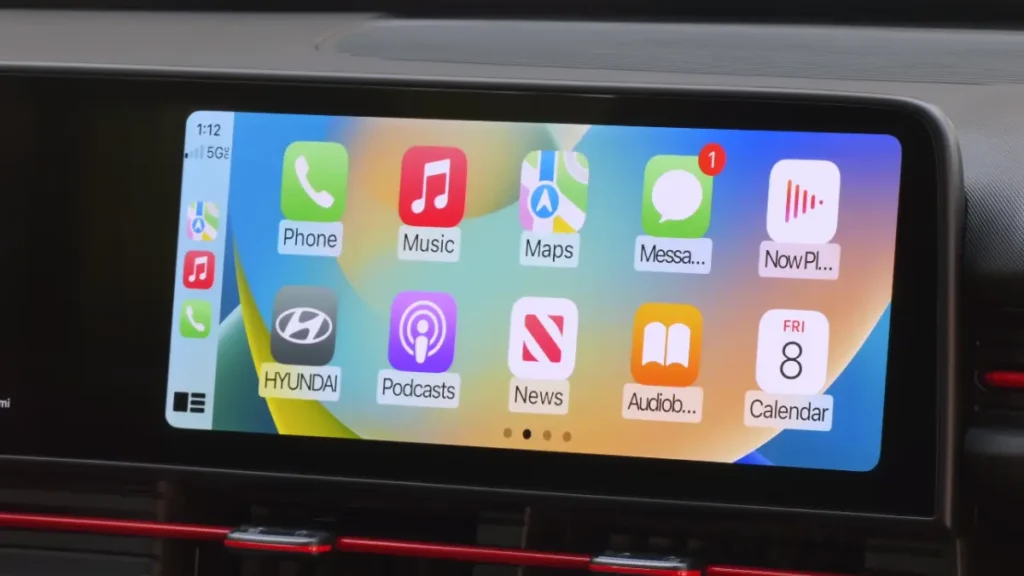
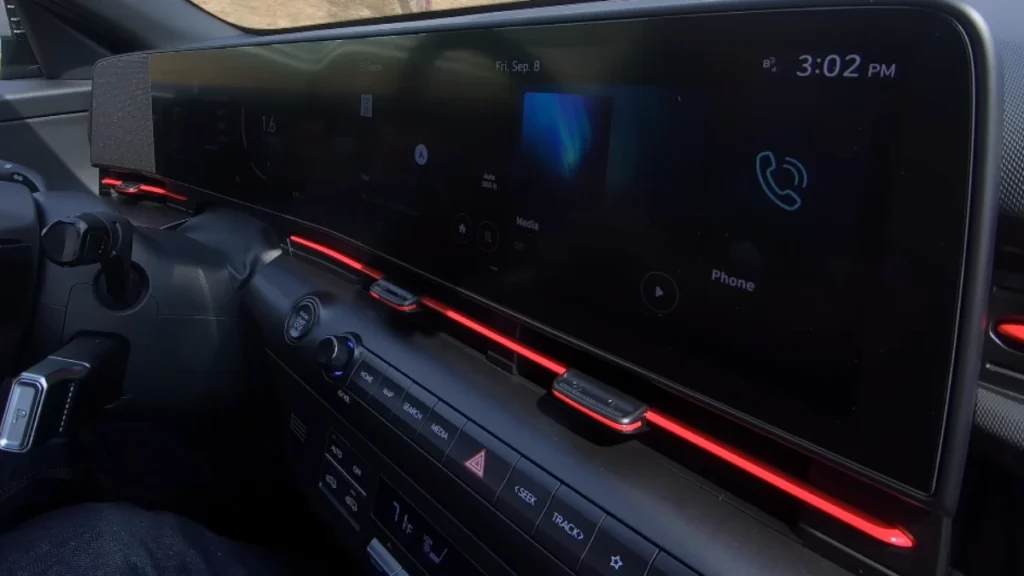
The focal point of the dashboard is the dual 12.3-inch panoramic display system housing the digital instrument cluster and central infotainment screen under a single glass pane.
- N Line Interior Details: Sport seats trimmed in N Line leatherette and suede inserts, red contrast stitching, aluminum sport pedals, and an N-branded leather-wrapped steering wheel.
- Connectivity: Standard wireless Apple CarPlay and Android Auto integration across all 12.3-inch display units. Over-the-Air (OTA) software update capability is integrated.
- Audio Options: Bose Premium 8-speaker sound system standard on higher option packages.
Cargo Capacity & Passenger Room
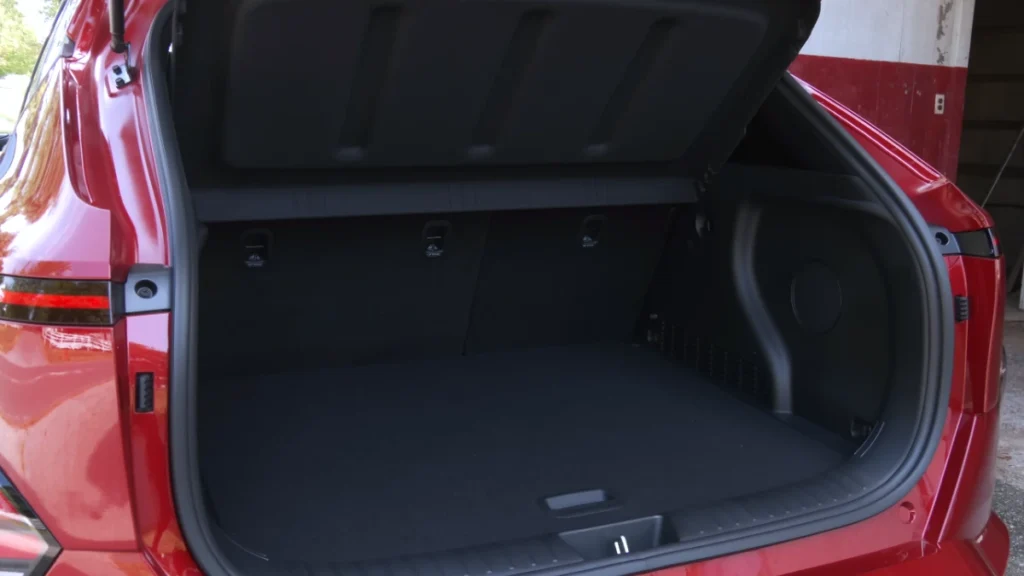
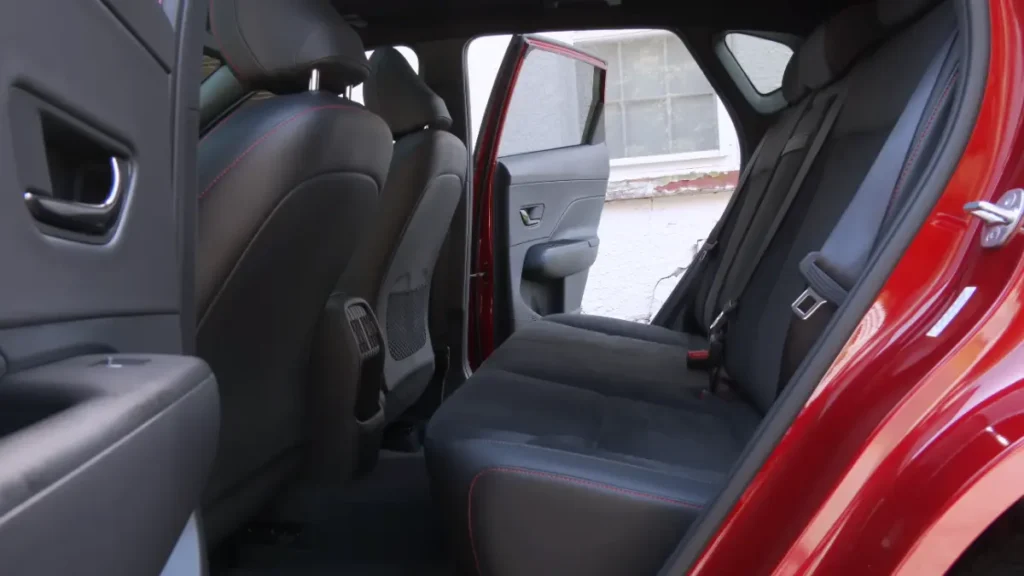
Thanks to a 2.4-inch wheelbase expansion over the previous generation, rear-seat legroom increases significantly to 38.2 inches, addressing one of the main limitations of the original Kona.
| Dimension | 2025–2026 Kona N Line |
|---|---|
| Rear Legroom | 38.2 in |
| Headroom (Front/Rear) | 39.9 in / 38.3 in |
| Cargo Volume (Seats Up) | 25.5 cu ft |
| Cargo Volume (Seats Folded) | 63.7 cu ft |
Fuel Economy & Real-World MPG
Despite the bump in horsepower over standard Kona trims, the 1.6-liter turbocharged engine maintains reasonable fuel economy figures. If fuel efficiency is your priority, see our complete Hybrid Cars guide and our real-world MPG comparisons. According to official EPA ratings, fuel efficiency varies slightly depending on whether you choose front-wheel drive or all-wheel drive.
| Drivetrain | City MPG | Highway MPG | Combined MPG |
|---|---|---|---|
| Kona N Line FWD | 26 mpg | 32 mpg | 28 mpg |
| Kona N Line HTRAC AWD | 24 mpg | 29 mpg | 26 mpg |
In real-world 75-mph highway testing conducted by automotive media, the AWD N Line achieved up to 31 mpg, outperforming its official EPA highway rating. The addition of an 8-speed automatic transmission helps maintain lower engine RPMs at highway speeds compared to the outgoing generation.
Safety Ratings & Driver Assist Tech
The 2025–2026 Hyundai Kona is built around an expanded high-strength steel chassis. Standard across the N Line suite is Hyundai SmartSense, a comprehensive package of active driver-assist safety technologies.
- Forward Collision-Avoidance Assist (FCA): Includes pedestrian, cyclist, and junction-turning detection.
- Blind-Spot Collision-Avoidance Assist (BCA): Actively monitors rear blind zones and can apply corrective braking if necessary.
- Highway Driving Assist (HDA 1): Combines adaptive cruise control with lane-centering assistance for reduced driver fatigue on highways.
- Surround & Blind-Spot View Monitors: Optional multi-camera views displayed directly inside the digital instrument cluster.
Safety evaluations from the Insurance Institute for Highway Safety (IIHS) rank the second-generation Kona favorably, earning top ratings in crashworthiness tests.
Pricing, Trims & Buyer’s Value
Positioned near the top of the Kona hierarchy, the N Line offers high equipment density without forcing buyers to step up to top-tier luxury trims.
Kona N Line S
$31,045 Estimated Starting MSRP
Includes a 190-hp 1.6L turbocharged engine, 19-inch alloy wheels, N Line sport seats, dual 12.3-inch displays, wireless Apple CarPlay and Android Auto, and distinctive N Line styling.
Kona N Line
$32,595 Estimated MSRP
Adds a power sunroof, Bose 8-speaker premium audio system, wireless smartphone charging, additional interior upgrades, and enhanced convenience features.
HTRAC AWD Package
+$1,500 Optional Upgrade
Adds Hyundai’s HTRAC all-wheel drive system, a multi-link rear suspension for improved handling, Snow Mode, and greater confidence in adverse weather conditions.
Kona N Line vs. Competitors
The subcompact crossover segment is highly competitive. Here is how the 2025–2026 Kona N Line compares to key rivals in power, space, and overall value:
| Model | Horsepower | 0–60 mph | Max Cargo Volume | Starting MSRP |
|---|---|---|---|---|
| Hyundai Kona N Line | 190 hp | 7.3 sec | 63.7 cu ft | ~$32,595 |
| Mazda CX-30 Turbo | 227 hp (87 Oct) | 5.8 sec | 45.2 cu ft | ~$33,800 |
| Kia Seltos SX Turbo | 195 hp | 7.3 sec | 62.8 cu ft | ~$31,090 |
| Subaru Crosstrek Sport | 182 hp | 8.1 sec | 54.9 cu ft | ~$29,500 |
While the Mazda CX-30 Turbo offers more raw power, the Kona N Line provides superior cargo space and modern interior displays. Compared to its platform-sibling, the Kia Seltos SX, the Kona delivers a more futuristic exterior design and standard dual 12.3-inch screens.
Maintenance, Warranty & Ownership Costs
Hyundai continues to provide industry-leading warranty coverage, which serves as a key selling point for long-term ownership:
- Powertrain Warranty: 10 Years / 100,000 Miles.
- New Vehicle Limited Warranty: 5 Years / 60,000 Miles.
- Complimentary Maintenance: 3 Years / 36,000 Miles covering basic oil changes and tire rotations.
Expert Verdict: Is It Worth It?
The 2025–2026 Hyundai Kona N Line strikes a solid balance for drivers who want sporty styling and modern interior electronics without committing to a stiff, track-focused ride. The shift to an 8-speed automatic transmission remedies the low-speed jerkiness of previous models, making it a much more pleasant daily driver.
With its expanded rear legroom and generous cargo area, it remedies the primary weaknesses of the first-generation model. For buyers seeking subcompact convenience with extra pass-through power and distinctive looks, the Kona N Line remains one of the most complete choices in its price range.
Pros and Cons
Pros
- Responsive 190-hp 1.6L turbo engine.
- Significantly larger cabin and cargo capacity than predecessor.
- Dual 12.3-inch screens with wireless phone integration.
- Smoother power delivery via the 8-speed automatic transmission.
- Strong warranty and 3 years complimentary maintenance.
Cons
- Firm ride quality on 19-inch wheels over sharp bumps.
- Polarizing futuristic exterior styling may not appeal to everyone.
- AWD models lose 2–3 MPG combined compared to FWD.
Frequently Asked Questions
Is the Hyundai Kona N Line all-wheel drive?
Front-wheel drive (FWD) is standard, but Hyundai’s HTRAC All-Wheel Drive (AWD) is available as an option across all N Line configurations.
What is the difference between Kona N and Kona N Line?
The full Kona N (first-generation only) was a 276-hp high-performance track crossover. The N Line is a sporty appearance and performance package featuring a 190-hp turbo engine tuned for comfortable daily driving.
Does the 2025–2026 Kona N Line have wireless Apple CarPlay?
Yes, wireless Apple CarPlay and Android Auto are standard across all 12.3-inch touchscreen models.
What engine does the Kona N Line use?
It features a 1.6-liter Smartstream Turbocharged 4-cylinder engine producing 190 horsepower and 195 lb-ft of torque, mated to an 8-speed automatic transmission.