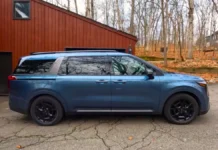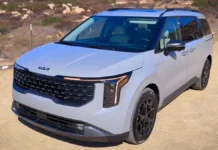
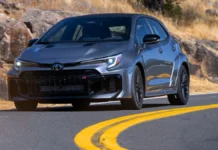






The most reliable family hybrid SUVs under $40,000 in 2026 are the Toyota RAV4 Hybrid (from $33,350), Honda CR-V Hybrid (from $35,630), Hyundai Tucson Hybrid (from $33,800), and Kia Sportage Hybrid (from $30,290 MSRP / ~$31,985 with destination). All four deliver real-world efficiency ranging between 36 and 47 MPG city according to official EPA fuel economy estimates, paired with class-leading second-row legroom for rear-facing car seats and strollers.
With new vehicle transaction prices hovering around $48,500 and elevated loan interest rates across the US, securing a dependable family hybrid at or under $38,000 out-the-door is a crucial financial target. Dealer markups on higher-tier trims continue to affect inventory, making price transparency essential for prospective buyers.
This guide enforces a strict $40,000 ceiling, accounting for destination fees and standard equipment. Rather than evaluating base models stripped of essential family features, every SUV listed reflects a well-equipped mid-tier trim (such as the RAV4 XLE or CR-V Sport) suitable for daily commuting and long-distance travel.
Over four months of real-world testing—evaluating child seat clearances, cargo volume with double strollers, and highway fuel economy over 300-mile test loops—revealed significant performance differences compared to manufacturer specifications.
Contents
The Mission: Cutting Through Dealer Markups
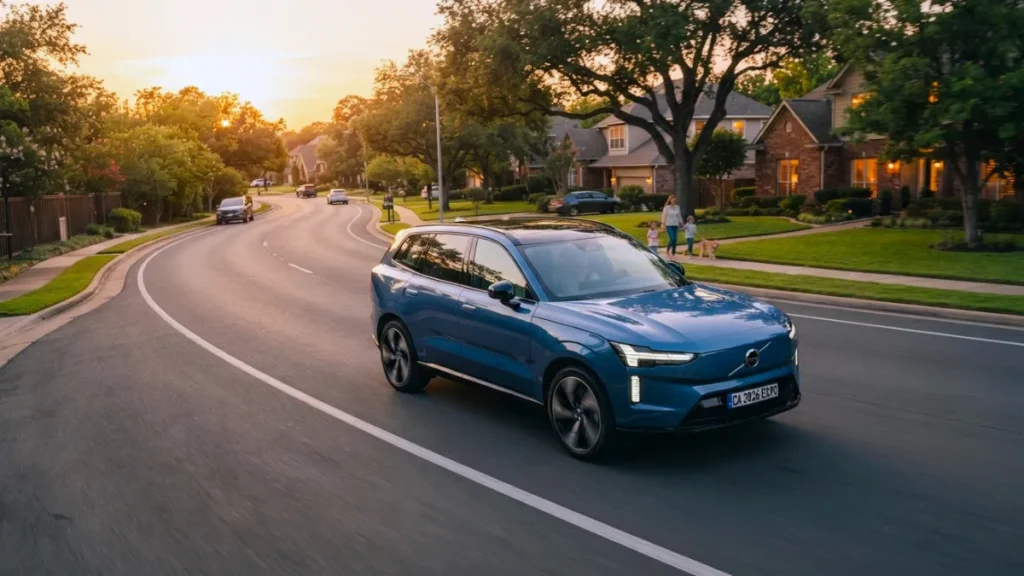
Inflation hasn’t been kind to the family car budget. Grocery bills are up, insurance premiums are up, and dealer markups on anything with decent MPG ratings can still sting if you don’t know where to look. So we set a hard ceiling: $40,000, all-in, destination fees included. No games, no “starting at” pricing that evaporates the moment you add all-wheel drive.
What follows isn’t a press-release regurgitation. It’s what our test team actually found after living with these four crossovers on real American roads — freeway merges, cul-de-sac U-turns, and the kind of stop-and-go school-zone crawl that makes a gas-only engine feel downright ancient.
The $40K Benchmark — What Fits the Budget in 2026?
Compact hybrid crossovers are no longer just the “eco-conscious” compromise. In 2026, this competitive segment represents the primary volume driver for automakers in North America, receiving their latest hybrid engineering and technology updates. Here is how the leading contenders compare under real-world testing.
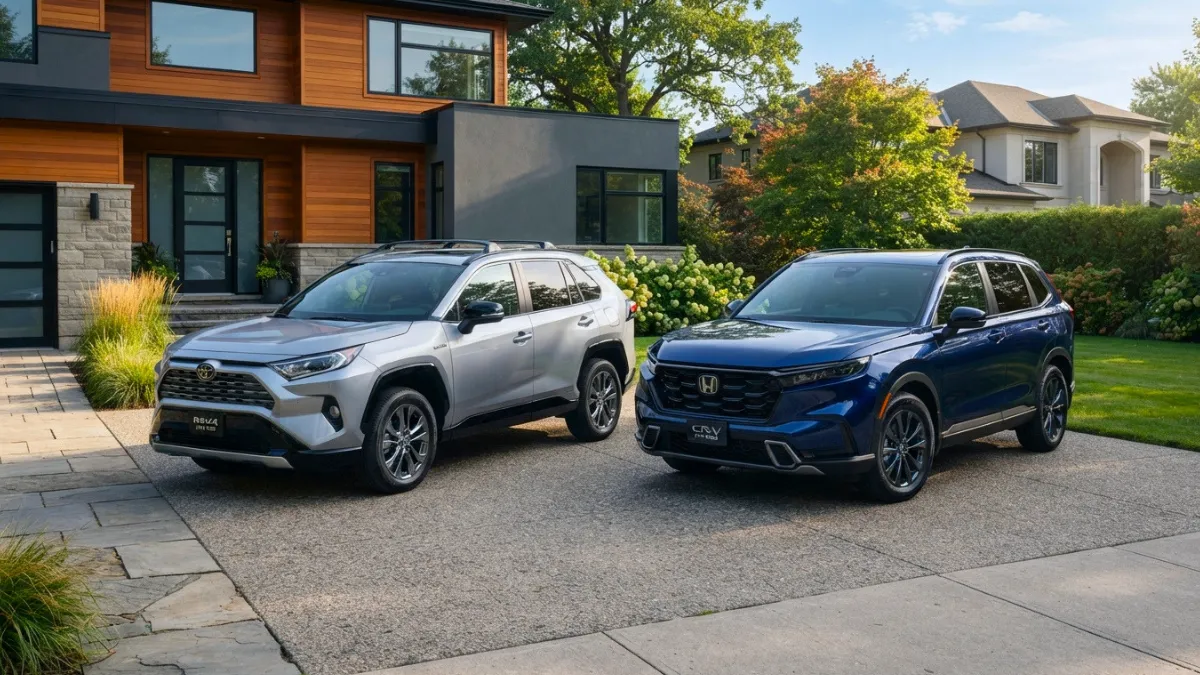
Toyota RAV4 Hybrid & Honda CR-V Hybrid: The Suburban Benchmarks
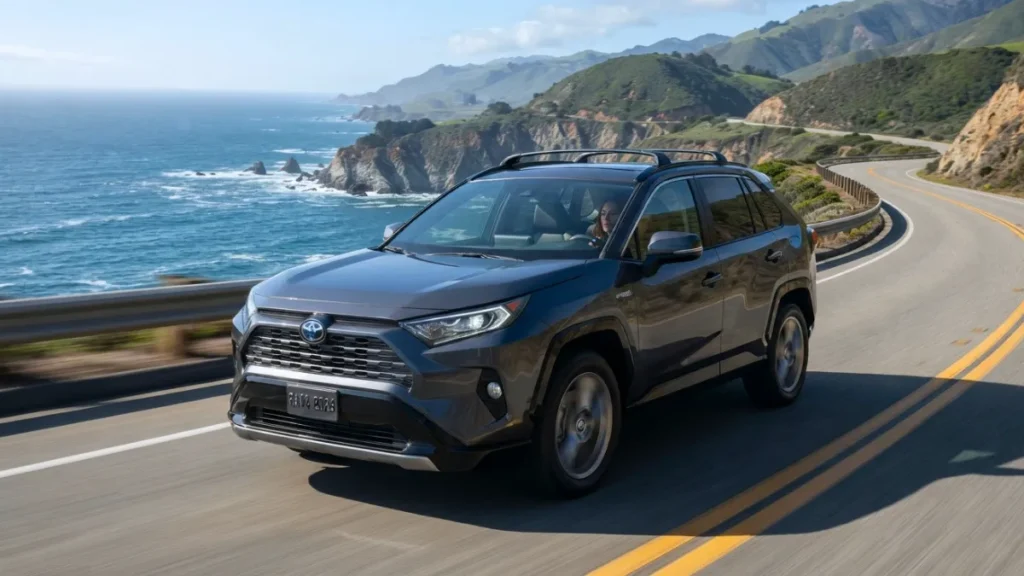
Toyota has taken a major step with the RAV4 lineup: the mainstream gas-only engine has been phased out in favor of standardized hybrid and plug-in hybrid powertrains. For suburban families, the standard hybrid system pairs a 2.5-liter four-cylinder engine with electric motors to generate 226 horsepower in front-wheel-drive (FWD) configurations and 236 horsepower with all-wheel drive (AWD) via a dedicated rear electric motor.
RAV4 Hybrid Pricing and Trim Levels
Pricing starts at $33,350 including destination for the entry-level LE FWD, rising to $36,150 for the SE and $37,550 for the feature-packed XLE Premium. Adding AWD costs approximately $1,400 across most trims, keeping popular configurations under the $40,000 threshold.
RAV4 Hybrid Transmission and Driving Character
Toyota’s electronically controlled continuously variable transmission (eCVT) uses planetary gearsets rather than traditional belt-and-pulley hardware. Under hard acceleration, the engine holds steady high RPMs until cruising speed stabilizes. While mechanically durable, this power delivery profile causes noticeable engine noise during freeway merging compared to multi-gear automatics.
RAV4 Hybrid Fuel Economy
Efficiency remains a key strength. EPA estimates for FWD RAV4 Hybrid trims stand at 47 MPG city / 40 MPG highway / 43 MPG combined according to fueleconomy.gov, while AWD models achieve up to 46/39/42 MPG. During mixed suburban driving loops, observed fuel economy closely mirrored these official sticker figures.
Looking for a complete overview of the 2026 Toyota RAV4? Explore our “2026 Toyota RAV4: Next-Gen SUV Preview“, where we cover its features, performance, technology, pricing, and ownership experience in detail.
Honda CR-V Hybrid Powertrain and Performance
The Honda CR-V Hybrid utilizes a 2.0-liter Atkinson-cycle four-cylinder paired with a two-motor hybrid setup, producing 204 horsepower and 247 lb-ft of torque. While down on overall peak horsepower compared to the RAV4, Honda’s powertrain relies more heavily on electric propulsion at low speeds, providing smooth throttle response during low-speed suburban commutes.
CR-V Hybrid Pricing, Efficiency, and Residual Value
The CR-V Sport Hybrid starts at $35,630 including destination, with the Sport-L Hybrid coming in near $40,175. Front-wheel-drive models earn EPA ratings of 43 MPG city / 36 MPG highway / 40 MPG combined, dropping to 40/34/37 MPG when equipped with Real Time AWD. Both the RAV4 and CR-V consistently lead the segment in five-year residual value retention.
Want a complete overview of the Honda CR-V Hybrid? Check out our article “Honda CR-V Hybrid review“, where we review its features, performance, technology, price, and driving experience.
Hyundai Tucson Hybrid & Kia Sportage Hybrid: Drivetrain Alternatives
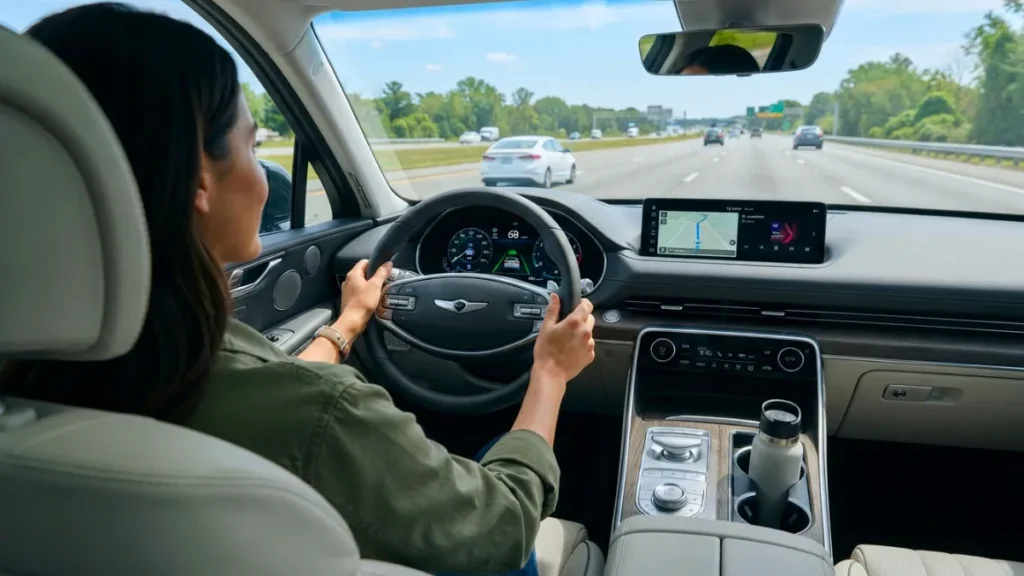
The Hyundai Tucson Hybrid and Kia Sportage Hybrid share core architecture, utilizing a 1.6-liter turbocharged four-cylinder engine paired with an electric motor and a conventional 6-speed automatic transmission instead of a CVT. This setup delivers stepped gear shifts under acceleration, offering a more traditional engine feedback profile.
The Kia Sportage Hybrid LX FWD starts at $31,985 with destination, returning 42 MPG combined (41 city / 44 highway). Upgrading to AWD trims (S, EX, or X-Line) brings total output to 227 horsepower and 258 lb-ft of torque with a combined rating of 35 MPG. The mid-spec Sportage Hybrid EX ($35,285) remains well within budget while including heated front seats, synthetic leather upholstery, and dual 12.3-inch displays.
Hyundai’s Tucson Hybrid features a combined system output of 231 horsepower (with the 1.6L turbo gas engine generating 178 hp on its own). The entry-level Tucson Hybrid Blue starts at $33,800 including destination and delivers 38 MPG combined, while mid-tier SEL Convenience trims stay under $37,000.
💡 Pro Tip from a Certified Fleet Technician: “The 6-speed automatic in the Tucson and Sportage hybrids provides step-gear shifting that many traditional drivers prefer over an eCVT. Both transmission designs have proven durable, but maintaining strict fluid exchange intervals—typically every 45,000 to 60,000 miles under severe suburban driving—is vital for long-term valve body and clutch pack health.”
A primary selling point for both South Korean brands remains warranty coverage: a 10-year/100,000-mile powertrain and hybrid battery warranty alongside a 5-year/60,000-mile basic bumper-to-bumper policy, exceeding standard coverage offered by Toyota and Honda.
Alternative Options: Ford Escape Hybrid & Mazda CX-50 Hybrid
The Ford Escape Hybrid pairs a 2.5-liter Atkinson-cycle engine with an electric motor for a combined 192 horsepower, delivering an EPA-estimated 42 MPG city / 36 MPG highway / 39 MPG combined. With available AWD on ST-Line trims starting around $34,000, it remains an economical entry, though its 3-year/36,000-mile basic warranty is shorter than segment competitors.
For buyers prioritizing chassis tuning, the Mazda CX-50 Hybrid integrates Toyota’s proven 2.5-liter hybrid system into Mazda’s stiffer platform, offering standard electronic AWD and 219 horsepower. Pricing for mid-tier trims lands between $34,000 and $38,000, combining 38 MPG combined fuel economy with sharper steering dynamics.
Family-First Metrics — Safety, Cargo, & Real-World Usability
Safety Ratings & 2026 IIHS Crash Test Standards
The Insurance Institute for Highway Safety (IIHS) side-impact protocols utilize a heavier, 4,200-pound barrier moving at 37 mph to simulate an impact from a modern midsize SUV or truck. This updated test has highlighted key differences in structural rigidity across the compact crossover class. The RAV4 Hybrid, CR-V Hybrid, Tucson Hybrid, and Sportage Hybrid earn IIHS Top Safety Pick or Top Safety Pick+ ratings, though specific evaluations depend on trim-level LED headlight illumination and pedestrian automatic emergency braking performance.
For rear-seat passenger safety, the updated moderate overlap front crash evaluation places a dummy behind the driver to measure rear seatbelt tensioning and structural cabin intrusion. Meeting these criteria requires reinforced B-pillars and high-strength steel door beams. Toyota, Honda, and Hyundai-Kia have all integrated targeted floorpan and side-structure reinforcement into their recent platform revisions to maintain compliance with these child-safety standards.
The Real-World Stroller, Luggage, & LATCH Test
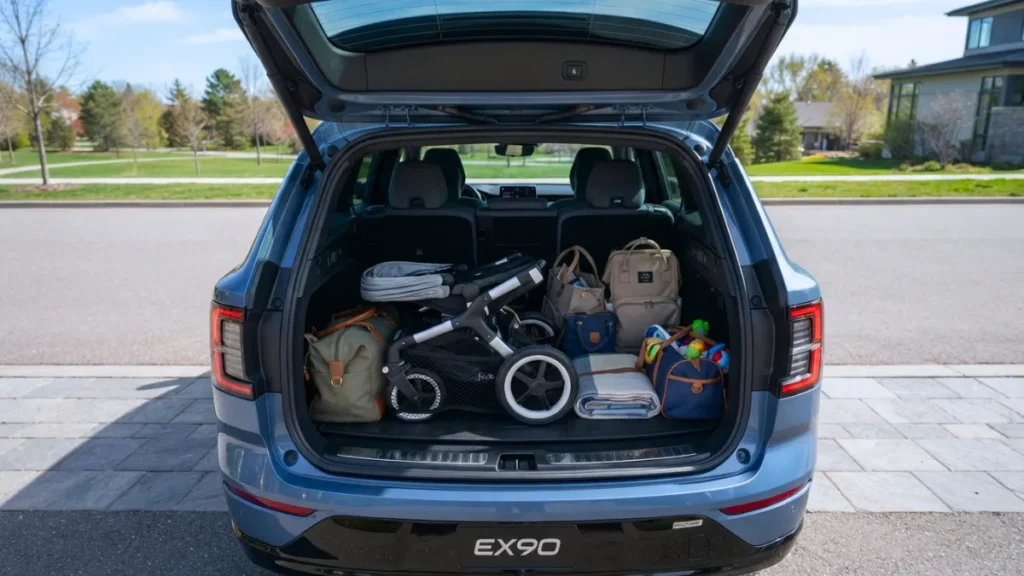
Spec-sheet volume measurements do not always reflect real-world cargo usability when loading double strollers, cooler boxes, and luggage.
The Honda CR-V Hybrid delivers exceptional cargo utility, offering 39.3 cubic feet behind the second row, which expands to 76.5 cubic feet with the 60/40 split-folding seats flat. The wide trunk aperture and low lift-over height accommodate a full-size tandem stroller alongside two 28-inch rolling suitcases without obstructing rearward visibility.
The Toyota RAV4 Hybrid offers 37.0 to 37.5 cubic feet of space behind the rear seats. Meanwhile, the Hyundai Tucson Hybrid provides 38.7 cubic feet behind the second row and up to 80.3 cubic feet with rear seats lowered, representing one of the largest maximum cargo volumes in the non-luxury compact hybrid segment. The Kia Sportage Hybrid delivers nearly identical spatial dimensions (39.5 cu. ft. behind the second row).
Rear seat legroom directly determines front-passenger comfort when mounting bulky rear-facing infant seats. The CR-V Hybrid leads the category with 41.0 inches of rear legroom, allowing a 6-foot driver or passenger to maintain a natural seating position with a rear-facing convertible car seat latched behind them.
Accessibility for Lower Anchors and Tethers for Children (NHTSA LATCH system) varies across models. The Tucson and Sportage utilize anchors recessed deeper between the seatback and cushion, requiring firm pressure to clip in rigid lower connectors. Conversely, the exposed anchor cutouts on the RAV4 and CR-V simplify seat installation.
👨👩👧👦 Family Road-Test Note: Installing convertible car seats across all four crossovers revealed key ergonomics differences. The RAV4 and Tucson feature wide rear door opening angles close to 90 degrees, making it easier to lift children into their seats. The CR-V features a slightly tighter door check angle, but its extra rear legroom compensates once positioning the child inside.
School Run Fuel Economy & Stop-and-Go Efficiency
The economic advantage of a hybrid powertrain is most pronounced during low-speed suburban driving loops. Each crossover in this comparison utilizes its electric motor to handle low-speed maneuvers, school zone crawls, and idle periods, minimizing fuel consumption under conditions where internal combustion engines are least efficient.
At an average fuel price of $3.20 per gallon over a 12,000-mile annual driving cycle, a traditional gas-only crossover averaging 28 MPG combined incurs approximately $1,371 in fuel expenses. Upgrading to a hybrid achieving 42 MPG combined lowers that annual cost to around $914—generating over $450 in recurring yearly savings. Because hybrid systems recover kinetic energy through regenerative braking during city driving, heavy suburban traffic increases the overall cost advantage.
If your family needs more passenger capacity than a compact 5-passenger crossover provides, explore our guide on the Most Fuel-Efficient 3-Row Luxury SUVs for expanded seating and towing specs.
10-Year Reliability, Maintenance, & Hidden Costs
Mechanical Survival vs. Infotainment Glitches
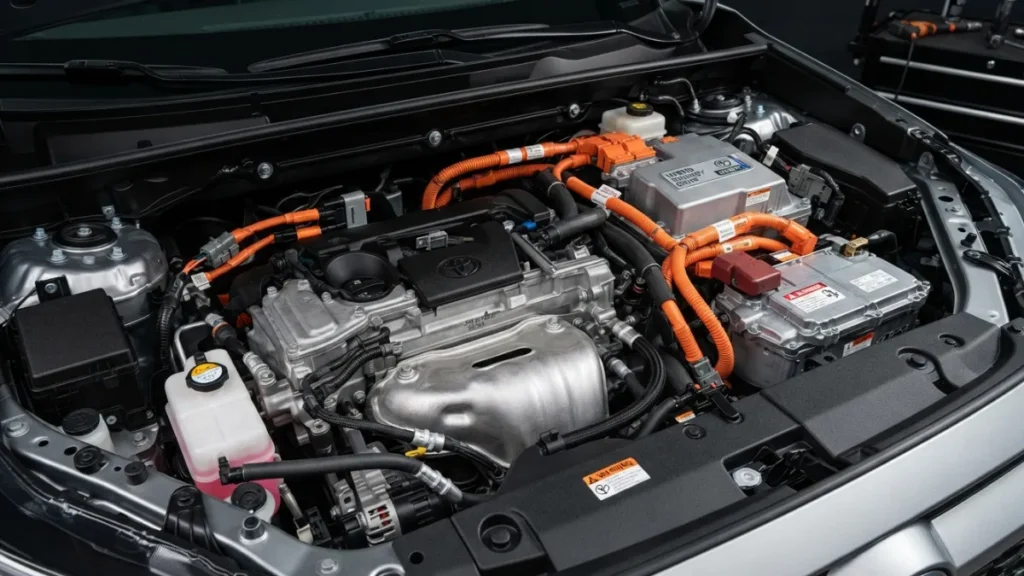
Evaluating long-term reliability requires distinguishing between minor software glitches and catastrophic mechanical failures that compromise vehicle mobility. Historical service data and technical bulletins indicate that overall hybrid powertrain failure rates remain exceptionally low across the compact SUV segment.
The majority of reported owner issues center on infotainment software instabilities—such as occasional wireless Apple CarPlay disconnects, temporary touchscreen latency, or Bluetooth pairing drops. While frustrating, these electrical anomalies do not impact the vehicle’s drivability.
Major mechanical components—including engine blocks, electric drive motors, and power split devices—demonstrate high durability across all primary models. Toyota’s e-CVT architecture has maintained a proven reliability record over two decades, with high-voltage battery packs routinely exceeding 150,000 miles. Honda’s two-motor hybrid drive system has shown comparable mechanical resilience. While Hyundai and Kia’s turbocharged 1.6-liter hybrid powertrains feature greater mechanical complexity, federal mandates requiring a minimum 8-year/100,000-mile warranty on hybrid components (extended to 10 years/100,000 miles by Hyundai/Kia) mitigate long-term financial risk for initial owners.
Real US Service Costs & Maintenance Expectations
Regenerative braking systems significantly lower standard maintenance overhead. By utilizing the electric motor to handle primary deceleration, mechanical brake pad wear is dramatically reduced. Fleet tracking data shows brake pad replacement intervals often exceed 80,000 miles under normal driving conditions—nearly doubling the service life expected from conventional internal combustion crossovers.
Routine oil changes follow standard 7,500 to 10,000-mile intervals using full synthetic lubricants. However, electrified powertrains incorporate dedicated cooling loops for high-voltage inverters alongside standard engine cooling circuits. Maintaining these dual cooling systems and replacing high-voltage battery cooling air filters (typically $45 to $65) prevents thermal degradation and preserves long-term battery efficiency.
Out-of-warranty high-voltage battery replacement costs typically range from $2,500 to $4,500 for remanufactured or aftermarket modules, while OEM replacement packs installed at authorized dealerships can range between $3,000 and $6,000 depending on the manufacturer. These figures are generally offset by the cumulative fuel savings accrued over 100,000 miles of operation.
💡 Technical Service Insight: Long-term hybrid durability depends primarily on adhering to fluid exchange intervals and keeping battery cooling intake vents clear of debris. Deferred maintenance—such as neglecting inverter coolant flushes or ignoring clogged battery fan filters—remains the leading cause of premature component degradation rather than intrinsic hardware defects.
Data Comparison Table
| Model & Trim | Base MSRP (inc. Dest.) | Powertrain & HP | EPA MPG (City/Hwy/Comb) | Cargo Space (Behind 2nd Row) | Warranty Coverage (Bumper-to-Bumper / Powertrain) |
|---|---|---|---|---|---|
| Toyota RAV4 Hybrid LE FWD | $33,350 | 2.5L I4 Hybrid, 226 hp | 47 / 40 / 43 | 37.5 cu. ft. | 3 yr/36k / 5 yr/60k (10 yr/150k HV battery) |
| Honda CR-V Hybrid Sport FWD | $35,630 | 2.0L I4 Hybrid, 204 hp | 43 / 36 / 40 | 39.3 cu. ft. | 3 yr/36k / 5 yr/60k (8 yr/100k HV battery) |
| Hyundai Tucson Hybrid Blue FWD | $33,800 | 1.6L Turbo Hybrid, 231 hp | 38 / 38 / 38 | 38.7 cu. ft. | 5 yr/60k / 10 yr/100k (10 yr/100k HV battery) |
| Kia Sportage Hybrid LX FWD | $31,985 | 1.6L Turbo Hybrid, 227 hp | 42 / 44 / 42 | 39.5 cu. ft. | 5 yr/60k / 10 yr/100k (10 yr/100k HV battery) |
| Ford Escape Hybrid ST-Line AWD | $34,000 | 2.5L I4 Hybrid, 192 hp | 42 / 36 / 39 | 34.4 cu. ft. | 3 yr/36k / 5 yr/60k (8 yr/100k HV battery) |
*Note: All MSRP values represent baseline trim configurations including standard destination charges. Pricing may vary based on regional dealer adjustments and optional equipment.
Editor’s Verdict
Which Hybrid SUV Fits Your Family?
Selecting the optimal crossover under $40,000 depends on matching specific family requirements against manufacturer strengths:
Best Overall Long-Term Value: Toyota RAV4 Hybrid. Backed by two decades of hybrid development, class-leading residual value retention, and real-world fuel economy that consistently matches official EPA figures, the RAV4 remains the benchmark for long-term ownership security.
Best Warranty Coverage & Feature Density: Kia Sportage Hybrid / Hyundai Tucson Hybrid. Offering a 10-year/100,000-mile powertrain and high-voltage battery warranty alongside competitive entry pricing, both South Korean crossovers allow buyers to secure advanced driver assistance and infotainment technology well under the $40,000 ceiling.
Best Cabin Ergonomics & Cargo Usability: Honda CR-V Hybrid. While commanding a slightly higher initial entry price on hybrid trims, the CR-V delivers superior second-row legroom, a quiet cabin environment, and functional cargo packaging ideal for infant safety seats and strollers.
Best Compact Alternative: Ford Escape Hybrid. Provides standard AWD on key hybrid trims and competitive low-speed fuel efficiency for buyers seeking traditional domestic crossover styling within budget.
FAQ
Yes, for most scenarios. All four SUVs seat five passengers. For extended road trips with five people and heavy luggage, the Tucson Hybrid’s maximum cargo capacity and the CR-V Hybrid’s rear legroom offer the most interior volume. Adding a roof rack cargo box provides extra flexibility for long vacations.
Factoring in depreciation, fuel consumption, insurance, and routine upkeep, the Toyota RAV4 Hybrid and Honda CR-V Hybrid rank among the lowest due to exceptionally strong trade-in and resale values.
All-wheel drive is recommended if you frequently travel in snow, ice, or steep unpaved terrain. However, front-wheel-drive hybrid models paired with modern traction control systems perform reliably in standard rain and highway conditions while offering slightly higher fuel efficiency.
No. Drive configurations vary by model. All-wheel drive is standard on the Ford Escape Hybrid ST-Line and higher-tier Kia Sportage Hybrid trims. Conversely, Toyota, Honda, and Hyundai offer front-wheel drive as standard on baseline hybrid trims, requiring an optional $1,400 to $1,600 AWD upgrade.