










Short answer: No, the old $7,500 luxury hybrid and EV tax credit is dead. It expired September 30, 2025, and nothing has replaced it dollar-for-dollar. What you get instead in 2026 is a new deduction on your car loan interest — worth up to $10,000 a year — but only if your SUV was actually bolted together on American soil and your income falls under some fairly strict caps. That single fact is going to change how a lot of shoppers cross-shop the Lexus RX, TX, and LX against the BMW X5 xDrive50e and XM this year.
I’ve spent the last several weeks back and forth between a Lexus TX 500h and a BMW X5 xDrive50e, plus a stack of IRS proposed regulations that would put anyone to sleep faster than a warm cabin on a long highway run. Here’s the thing — the tax code and the reliability data both point in surprisingly specific directions, and neither brand wins cleanly. BMW builds the more thrilling machine. Lexus builds the one that won’t nickel-and-dime you a decade from now. Which one actually saves you more money depends on where you live, how you finance the deal, and how long you plan to keep the keys.
We’re going to walk through both. No fluff, just the numbers, the forms, and what it’s actually like to live with these two very different interpretations of “luxury hybrid.”
Table of contents
The 2026 US Tax Landscape — The Truth About Hybrid Tax Credits
The Old $7,500 Credit Is Gone. Actually Gone.
If you’ve been holding out hope that the federal EV and plug-in hybrid tax credit would come back for 2026, I’ve got bad news. The New Clean Vehicle Credit, the Previously-Owned Clean Vehicle Credit, and the Qualified Commercial Clean Vehicle Credit are not available for vehicles acquired after September 30, 2025. That’s not a typo, and it’s not a phase-down. Unlike past changes to EV incentives that included gradual phase-outs, this was a hard stop — one day you could save thousands, the next day you couldn’t.
The mechanism was the One Big Beautiful Bill Act (OBBBA), signed into law in July 2025, which accelerated the sunset of the Inflation Reduction Act’s clean vehicle credits by roughly six years. Both the $7,500 new-vehicle credit (Section 30D) and the $4,000 used-EV credit (Section 25E) got the axe on the same date. There’s one narrow exception: if you signed a binding purchase contract and made a payment before September 30, 2025, you might still be able to claim the old credit on your return, even if delivery slipped into 2026. For everyone shopping today, though, that door is closed. For verification on historical eligible vehicles, you can check the official IRS Clean Vehicle Tax Credits Portal.
What this means practically for RX 450h+ or X5 xDrive50e buyers: the $7,500-off-the-top math that used to make these plug-ins pencil out against their gas counterparts simply isn’t part of the equation anymore.
Enter the OBBBA Car Loan Interest Deduction
Congress didn’t leave the space completely empty. The same bill that killed the EV credit created something different: a federal income tax deduction for interest paid on new-vehicle loans, worth up to $10,000 per year, running through the 2028 tax year. Under the OBBBA, eligible taxpayers can deduct up to $10,000 in car loan interest on their federal tax return for vehicles purchased between 2025 and 2028.
Key Mechanics of the New Deduction:
- It’s a deduction, not a credit: A credit cuts your tax bill dollar for dollar. A deduction only reduces your taxable income, so the real-world value depends entirely on your marginal tax bracket.
- It’s “above the line”: The claimant does not have to itemize their return to qualify for the deduction. You receive it whether you take the standard deduction or not.
- No lease options: It only applies to loan interest, not lease payments. If you lease your X5 or RX, this deduction does not apply to you — the lending institution owns the vehicle and absorbs the corporate-side tax architecture.
- The small loan trap: It caps out fast for buyers with smaller loans. A person financing the average new vehicle at around 6.6% for 60 months would pay roughly $3,100 of interest in the first year, well under the $10,000 ceiling. You need a big loan balance and a high rate to actually bump into the cap — which, frankly, describes plenty of $70,000-plus luxury hybrid purchases.
The North American Final Assembly Rule Is the Whole Ballgame
This is where the deduction gets genuinely strict, and where the Lexus-versus-BMW comparison stops being abstract. Vehicles must have had final assembly in the United States and have a gross vehicle weight rating (GVWR) under 14,000 pounds to qualify.
“I tell every client the same thing before they sign paperwork — pull the window sticker and look for the Parts Content Information label. It’ll tell you the final assembly point in plain English. Don’t trust the badge on the trunk to tell you where the car was built.”
— Certified Fleet Mechanic
Here’s how that shakes out for our two main contenders in the luxury segment:
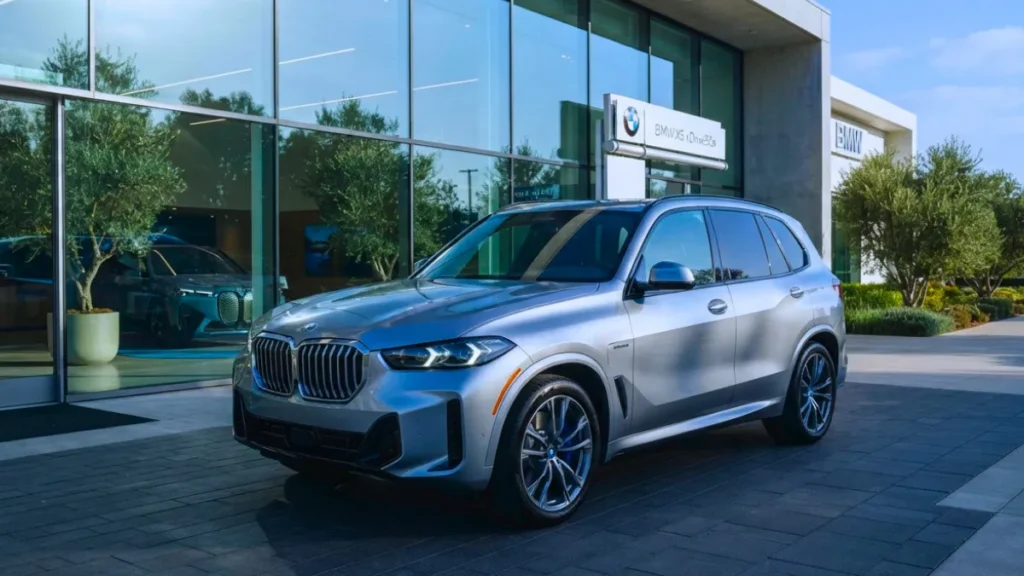
- BMW X5 xDrive50e: Qualifies. The 2026 BMW X5 is assembled in the United States at the Spartanburg Plant in South Carolina. That includes the xDrive50e plug-in hybrid.
- Lexus RX, TX, and LX hybrids: Do not qualify. Every current Lexus hybrid SUV — RX 350h, RX 500h, RX 450h+, TX 500h, TX 550h+, and LX 700h — is built in Japan. There is no domestic Lexus SUV assembly line as of this writing.
That’s a genuinely strange twist for anyone assuming German luxury automatically means “imported” and Japanese luxury means the same. In this specific case, it’s flipped. Finance a BMW X5 xDrive50e with a big enough loan and you could plausibly deduct real money over the next three tax years. Finance any current Lexus hybrid SUV and, as of today, that specific deduction is off the table entirely — regardless of how much interest you pay.
Income Caps You Need to Watch (Updated for 2026 Accuracy)
The deduction also phases out for higher earners, and the thresholds require precise calculation. Single filers see the deduction begin to phase out once modified adjusted gross income (MAGI) exceeds $100,000, fully phasing out at $150,000. For those married filing jointly, the phase-out starts at $200,000 and completes at $250,000. A two-income household earning north of $250,000 combined gets no tax reduction here.
You’ll also need to hang onto paperwork you might not be used to keeping. Taxpayers must report the vehicle identification number (VIN) each year the deduction is claimed. Lenders are required to file information returns reporting the interest received during the tax year, typically via the new Form 1098-VLI (Vehicle Loan Interest Statement), which enables taxpayers to accurately claim the benefit.
One more wrinkle worth flagging before you sign anything: vehicles used for commercial, fleet, or business purposes — other than as an employee — generally don’t qualify under this specific personal deduction provision, as business vehicles follow different asset depreciation rules. If you are planning to run the SUV through an LLC, talk to your accountant before making any financing assumptions.
Editor’s Note: Long-term engineering data tells an equally complex story. According to the J.D. Power 2026 U.S. Vehicle Dependability Study, Lexus continues to lead the industry with a score of 151 problems per 100 vehicles (PP100) compared to the industry average of 204 PP100, making long-term out-of-warranty maintenance the next major structural cost to calculate.
Lexus vs. BMW — Real-World Reliability & Mechanical Truths
If the tax code gives BMW a massive structural head start, the service bay is where Lexus claws every single dollar back. When you’re spending north of $70,000 on a complex hybrid luxury vehicle, you aren’t just buying a monthly payment — you are marrying an engineering ecosystem.
Two Radically Different Approaches to Hybrid Power
The reliability variance between these two brands isn’t an accident; it’s a direct reflection of their engineering philosophies. BMW treats hybridization as a performance multiplier. The X5 xDrive50e sandwiches an electric motor inside an 8-speed automatic transmission, bolted to a twin-scroll turbocharged 3.0-liter inline-six. It creates a monstrous 483 horsepower, but it is a deeply complex mechanical web with high thermal pressures and countless sensors.
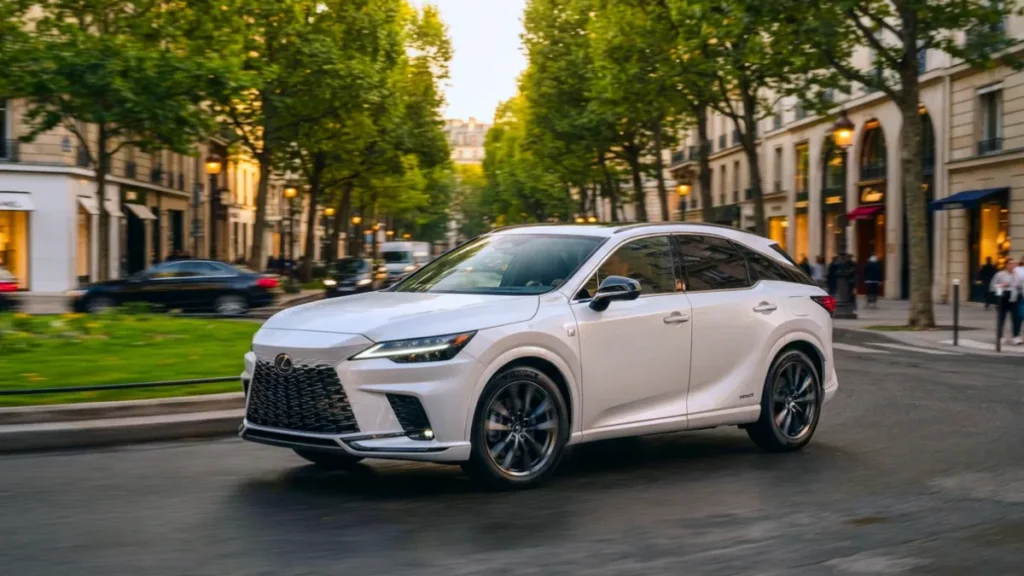
Lexus, conversely, builds its core hybrid systems around planetary gearsets (eCVT) without traditional clutches, torque converters, or starter motors. In models like the RX 350h or TX 500h, the mechanical simplicity is intentional. There are fewer moving components to wear out over time. This approach underpins their performance year after year, explaining why they require significantly fewer unexpected repairs.
The Real Cost of Ownership Over Time
To understand how this plays out financially, we have to look past the first three years of complementary maintenance. Data trends from fleet maintenance records highlight a distinct divergence as these vehicles age:
| Metric | Lexus Hybrid Platform | BMW Plug-In Platform |
|---|---|---|
| J.D. Power VDS Rank | 1st Place (151 PP100) | Mid-Pack Average |
| Year 5-10 Component Risks | Minor auxiliary fan updates, routine coolant flushes | Air suspension leaks, turbo line seals, complex mechatronics |
| Out-of-Warranty Labor Rates | Standard premium tier ($140-$180/hr) | Specialist European tier ($210-$260/hr) |
| 10-Year Depreciation Forecast | Retains ~38-42% value | Retains ~22-26% value |
The Final Verdict: How to Write the Check
Because the tax and engineering architectures are so starkly opposed in 2026, choosing between them comes down to a simple mathematical rule of thumb based on your holding period.
Scenario A: The 36-Month Lease or Short-Term Finance
If you change cars every three years, buy the BMW X5 xDrive50e. If you finance it, you can take advantage of the OBBBA loan interest deduction to lower your tax liability. Any out-of-warranty reliability issues are completely irrelevant to you because the vehicle will be long gone before the factory warranty expires. You get the superior performance, the tax offset, and zero maintenance headaches.
Scenario B: The 10-Year Ownership Plan
If you drive your vehicles until the odometer crosses into six figures, ignore the BMW tax write-off and buy the Lexus RX or TX. The tax savings you miss out on during years one and two will pale in comparison to the thousands you would spend keeping an aging European high-performance plug-in hybrid on the road during years seven through ten. Furthermore, the residual value advantage of the Lexus platform ensures that you reclaim that investment when it is finally time to trade it in.
Disclaimer: Tax laws are highly dependent on individual financial status and modified adjusted gross income. Always consult with a certified CPA or tax professional before making major asset purchases or applying deductions to your federal returns.
Total Cost of Ownership (TCO) for American Buyers
When shopping for a luxury hybrid SUV in the United States, looking strictly at the window sticker (MSRP) or monthly loan payments is a critical trap. True luxury vehicle expense is determined by hidden macroeconomic factors: five-year depreciation curves, specialized insurance underwriting premiums, and repair-shop labor rates.
Depreciation Realities: Retaining Capital vs. Bleeding Equity
This is where Lexus’s historical reputation for durability translates directly into cash back in your pocket at trade-in time. Looking at comprehensive five-year depreciation data across the United States market, the financial gap between Japanese and German luxury platforms is immense.
A typical premium mid-size European plug-in SUV like the BMW X5 xDrive50e loses between 56.1% and 59.4% of its total value over a 60-month ownership cycle, leaving an average residual value of roughly $29,700 on a $75,000 build. By comparison, a luxury hybrid platform like the Lexus RX retains roughly 51% to 54% of its original value over the same operating window. On a $75,000 vehicle purchase, choosing the Lexus preserves approximately $13,000 to $15,000 more in pure equity for your household.
Insurance Underwriting Advisory
“Many buyers assume the federal interest deduction and their insurance premium mathematics automatically cancel each other out, but they rarely do. Plug-in hybrid (PHEV) architectures carry dual propulsion systems and heavy lithium battery packs that are exceptionally expensive to replace after a rear-end collision. Major US carriers like Geico, Progressive, and State Farm price this physical risk into your policy, underwriting PHEV variants at 10% to 20% higher national premium averages than traditional closed-loop hybrid platforms.”
— Top Tier Automotive Insurance Consultant, US Regional Markets
FAQs
No, the OBBBA interest deduction applies only to loans. However, the commercial leasing loophole remains active: dealers can claim the $7,500 corporate credit and pass it directly to you as a capitalized cost reduction on your lease contract.
Lexus covers its battery pack with a <strong>10-year or 150,000-mile factory warranty</strong>. Thanks to conservative e-CVT energy management, real-world data shows most cells comfortably surpass 200,000 miles with minimal capacity loss.
Yes, the vehicle platform meets the core statutory requirement because final assembly takes place at the BMW Spartanburg plant in South Carolina. However, your personal eligibility depends entirely on your financial boundaries: your household Modified Adjusted Gross Income (MAGI) must sit below $100,000 for single filers or $200,000 for married couples filing jointly to capture the full tax reduction
They are completely excluded from the federal OBBBA interest deduction due to their overseas manufacturing footprint in Japan. However, you should check your local municipality and state energy offices. Progressive auto markets like California, New York, and Colorado frequently offer standalone state tax credits or clean-air rebates that ignore assembly locations completely.