





Updated on June 3, 2026: This article was reviewed and updated with the latest available information.
The premium automotive landscape has witnessed a dramatic shift over the last few years, driven by an elite class of vehicles that refuse to compromise. For American drivers who demand the blistering acceleration of a track-focused supercar alongside the commanding road presence and family-friendly utility of a full-size sport utility vehicle, the options were once highly limited. Enter the engineering marvel from Ingolstadt: the Audi RS Q8. This is not merely a restyled family hauler with a loud exhaust system; it is a meticulously calibrated asphalt weapon that bridges the gap between everyday suburban usability and breathtaking track performance.
As the ultimate expression of Audi Sport’s engineering prowess, this flagship model takes the foundational architecture of a premium coupe-SUV and injects it with race-proven mechanical components. Operating in a highly competitive segment, it caters to a very specific demographic in the United States—discerning buyers who value subtle luxury, brutal mechanical power, and distinctive styling. In this comprehensive guide, we will analyze the technical updates, real-world performance metrics, interior refinements, and dynamic capabilities that allow this high-performance machine to challenge the world’s most established exotic SUVs on American soil.
Table of contents
Overview of the Audi RS Q8
What Makes the RS Q8 Stand Out?
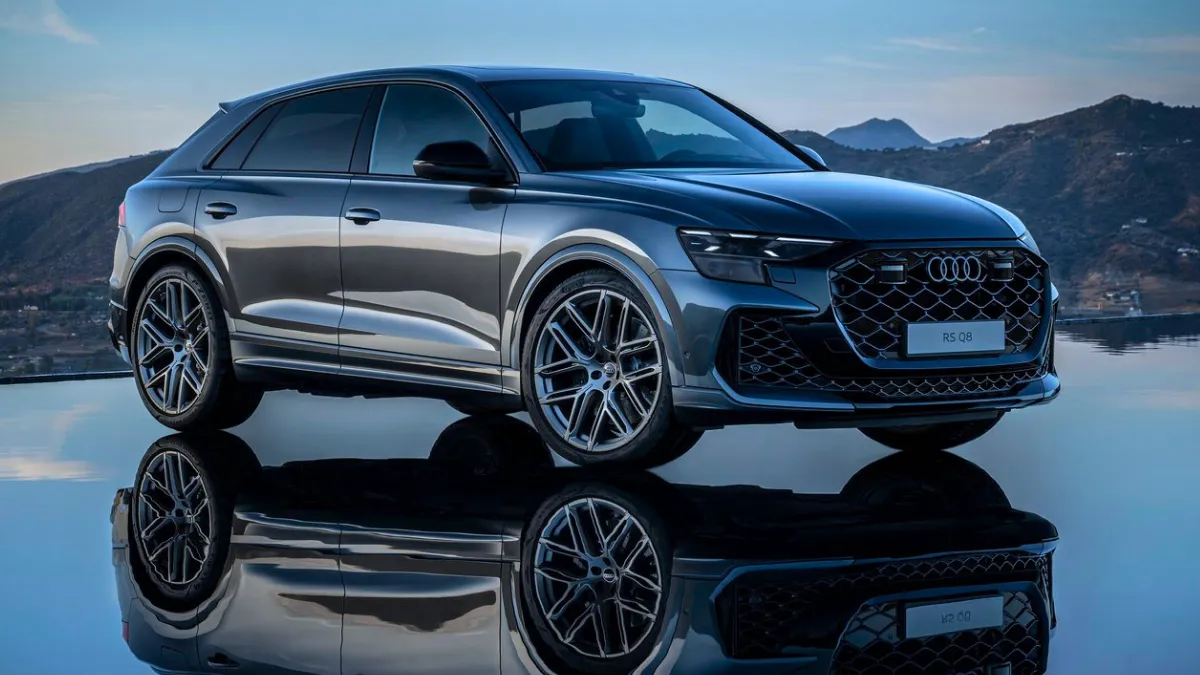
Commanding visual presence is the initial hook, but the true brilliance of the Audi RS Q8 lies within its multi-faceted mechanical identity. At first glance, its aggressive proportions, massive wheel arches, and imposing Singleframe grille broadcast clear performance intentions. However, unlike dedicated sports cars that require agonizing compromises in ride comfort or cargo capacity, this vehicle transitions seamlessly from an aggressive track runner to a quiet, refined long-distance cruiser at the push of a steering-wheel-mounted button.
- Elite Powertrain Architecture: At the core of its mechanical supremacy is a shared corporate bloodline. The RS Q8 utilizes a highly sophisticated 4.0-liter twin-turbocharged V8 engine. In its latest high-performance configurations optimized for the North American market, this mill produces a baseline of 591 horsepower, while the newly introduced top-tier Performance trim pushes that figure to an astonishing 631 horsepower and 590 lb-ft of linear torque. This shared core layout is highly praised by industry experts at Car and Driver for its relentless power delivery across the entire rev range.
- Motorsport-Derived Visual Design: The exterior silhouette cleverly masks its spacious five-passenger cabin with a swept-back, fastback roofline. Aggressive front air intakes, oval RS-specific dual exhaust tips, and a functional rear diffuser work together to manage airflow while providing a distinct visual signature that sets it apart from standard luxury crossovers.
- Intelligent Dynamic Systems: True performance is nothing without precise control. The integration of standard all-wheel steering, an electromechanical active roll stabilization system, and a sport-tuned adaptive air suspension allows this substantial vehicle to corner with the agility of a much smaller sports sedan, completely redefining expectations for large-platform dynamics.
Target Audience and Market Position
The premium automotive market in the United States places a unique premium on versatility. The typical American buyer looking at this price point isn’t merely shopping for transportation; they are investing in an all-weather, multi-purpose status symbol capable of handling diverse duties. This vehicle serves as a bridge between absolute automotive enthusiasts who refuse to abandon mechanical performance and families requiring a safe, practical platform for daily cross-state travel.
- Demographics and Consumer Profile: The target audience consists of affluent driving enthusiasts, corporate professionals, and active luxury buyers who need a vehicle capable of navigating snowy alpine passes, handling daily highway commutes in complete isolated luxury, or taking on a local road course during weekend track events.
- Competitive Landscape Realities: Positioned at the apex of the market, it goes head-to-head with heavy hitters like the BMW X6 M, Mercedes-AMG GLE 63 S Coupe, and its own corporate cousin, the Porsche Cayenne Turbo GT. While its rivals often lean into overly stiff track setups or polarizing exterior designs, the Audi maintains a distinct advantage by offering a more balanced, understated luxury aesthetic, superior ride compliance, and a highly competitive price-to-performance ratio in the global luxury SUV segment.
Performance Specifications of the Audi RS Q8
Engine and Powertrain
To truly understand the mechanical capability of this vehicle, one must analyze the components engineered beneath its sculpted aluminum hood. The engineering team at Audi Sport developed a powertrain that combines brutal internal combustion force with modern efficiency strategies, ensuring it meets strict emissions targets while satisfying the American appetite for pure, unadulterated acceleration.
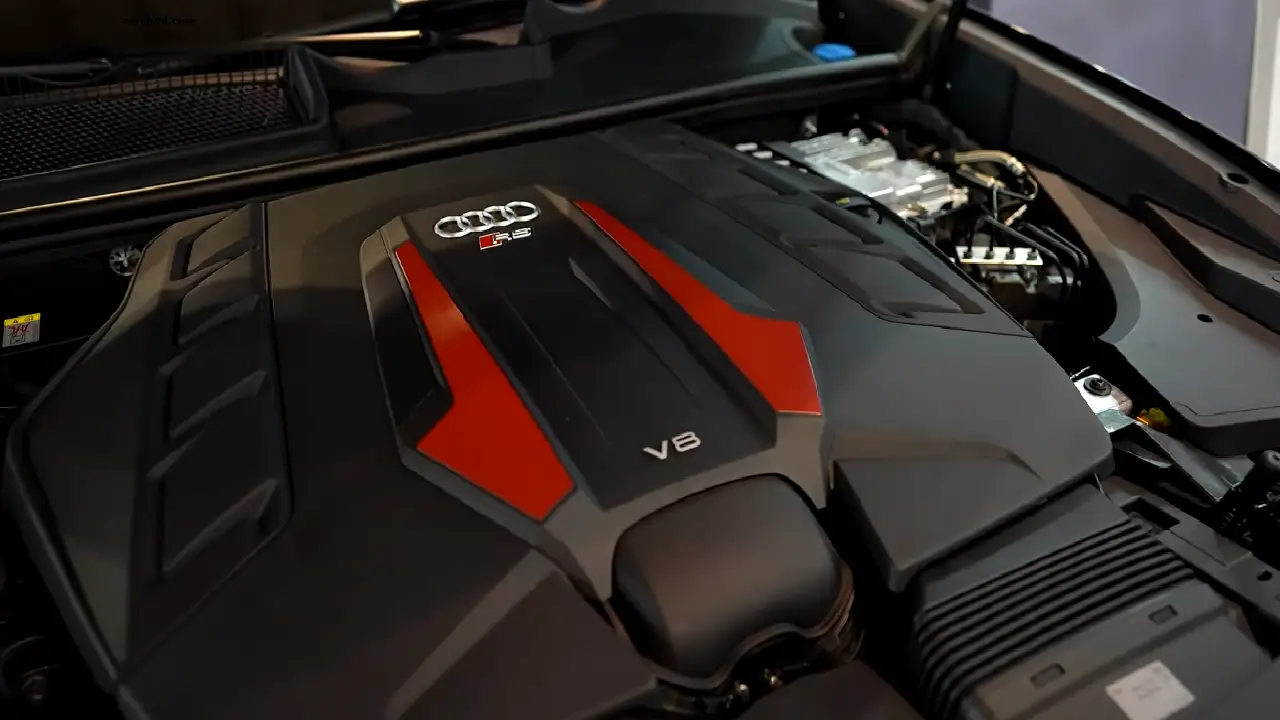
- Advanced Biturbo V8 Mechanics: The 4.0-liter engine features two twin-scroll turbochargers nestled safely within the “V” of the cylinder banks, drastically shortening the exhaust gas path and virtually eliminating turbo lag. In standard configuration, it pumps out 591 horsepower, but the ultimate Performance variant extracts a fierce 631 horsepower. Power is managed via a heavy-duty 8-speed Tiptronic automatic transmission that has been calibrated specifically for rapid downshifts and aggressive launch control starts.
- Legendary Quattro Integration: Power is directed to the tarmac via a permanent quattro® all-wheel-drive system. Under normal driving conditions, the mechanical center differential splits torque 40:60 between the front and rear axles to maintain a traditional rear-wheel-drive handling bias. When traction loss occurs, the system instantaneously redirects up to 70% of available power to the front wheels or up to 85% to the rear axle, providing unmatched corner-exit traction.
- 48-Volt Mild-Hybrid System (MHEV): A standard 48-volt electrical subsystem acts as a mechanical efficiency assistant. Utilizing a belt alternator-starter connected directly to the crankshaft, the system can recover energy during deceleration, store it in a compact lithium-ion battery, and allow the vehicle to coast silently with the engine completely deactivated under specific highway conditions, reducing unnecessary fuel consumption.
Acceleration and Handling
On paper, the vehicle’s substantial curb weight of nearly 5,500 pounds might suggest a lumbering driving experience. However, when put into practice on challenging roads, the complex electronic chassis systems work together to effectively defy the laws of physics, delivering a level of handling agility that rivals dedicated sports cars.
- Supercar-Level Acceleration: Engaging the built-in launch control system causes the revs to hold steady before releasing the full force of the biturbo V8. The standard model reaches 60 mph from a standstill in an official 3.7 seconds, while independent testing conducted by automotive experts at MotorTrend has shown the 631-hp Performance model dropping that sprint time to a blistering 3.4 seconds. Top speed is electronically governed at 155 mph but can be raised to an unrestricted 190 mph when equipped with the optional carbon-ceramic braking package.
- Chassis Dynamics and Steering Precision: Standard all-wheel steering drastically alters the driving experience. At low speeds, the rear wheels turn up to 5 degrees in the opposite direction of the front wheels, reducing the turning circle to that of a compact car. At high highway speeds, they turn in unison with the front wheels, providing rock-solid lane-change stability. The electromechanical active roll stabilization (eAWS) utilizes electric motors on the anti-roll bars to instantly counteract body lean during aggressive cornering, keeping the chassis perfectly flat through tight bends.
- RS-Specific Adaptive Air Suspension: The standard air suspension setup continuously adjusts dampening parameters based on road surfaces and driver behavior. It offers a wide ride-height variability of up to 3.5 inches, automatically lowering the body at high speeds to improve aerodynamic efficiency or lifting it to clear obstacles when navigating rough terrain. Drivers can fine-tune these parameters using the Audi Drive Select system, which features customizable RS1 and RS2 modes directly accessible via the steering wheel.
Head-to-Head: BMW X6 M Competition vs. Audi RS Q8 Performance
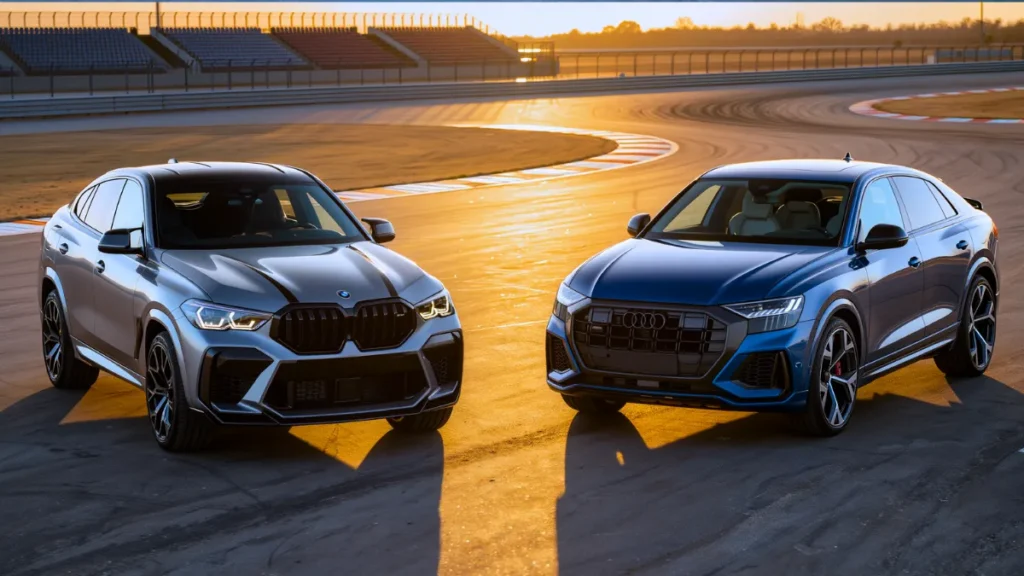
In the ultra-competitive American luxury segment, buyers rarely look at the Audi RS Q8 Performance in a vacuum. Its most direct and ruthless rival is arguably the mechanical powerhouse from Munich: the BMW X6 M Competition. Both vehicles utilize specialized twin-turbocharged V8 powerplants, heavy-duty rear-biased all-wheel-drive systems, and advanced active anti-roll technology to bend the laws of physics. However, their execution reveals two fundamentally different engineering philosophies that alter how they perform on public roads and track surfaces alike.
The BMW X6 M Competition takes a distinctly uncompromising approach to performance. Its 4.4-liter twin-turbo V8 features a cross-bank exhaust manifold and a 48-volt mild-hybrid setup integrated into the transmission, delivering a ferocious 617 horsepower and instantaneous throttle response. The chassis tuning from BMW’s M Division is stiff, aggressive, and highly communicative. It rewards track enthusiasts with razor-sharp turn-in and predictable power slides, but this setup can feel harsh and fatiguing on broken pavement or during long-distance interstate commutes across the United States.
By contrast, the Audi RS Q8 Performance offers a more balanced dual personality. Thanks to its output increase to 631 horsepower, the Audi actually outpaces the BMW on paper and matches its 0-60 mph sprint with ease. What sets the Ingolstadt contender apart is its everyday ride quality. Where the BMW relies on a traditional steel-sprung suspension with adaptive dampers, the Audi utilizes a multi-chamber RS-specific adaptive air suspension. This mechanical layout allows the RS Q8 Performance to isolate passengers from highway road imperfections with the refinement of a premium flagship sedan, while instantly stiffening up to flatten corners when dynamic modes are engaged.
Practicality also tips the scales in Audi’s favor. The fastback, heavily sloped roofline of the BMW X6 M heavily compromises rear headroom for taller adults and reduces maximum cargo capacity. The Audi features a more upright, muscular stance that preserves valuable cabin space and includes a sliding rear bench to maximize daily utility. For a deep-dive mechanical breakdown, real-world drag race results, and a complete interior match-up between these two titans, make sure to read our comprehensive comparison of the BMW X6 M Competition vs Audi RS Q8 Performance to discover which super-SUV deserves a spot in your garage.
Exterior Design and Features
Striking Aesthetics
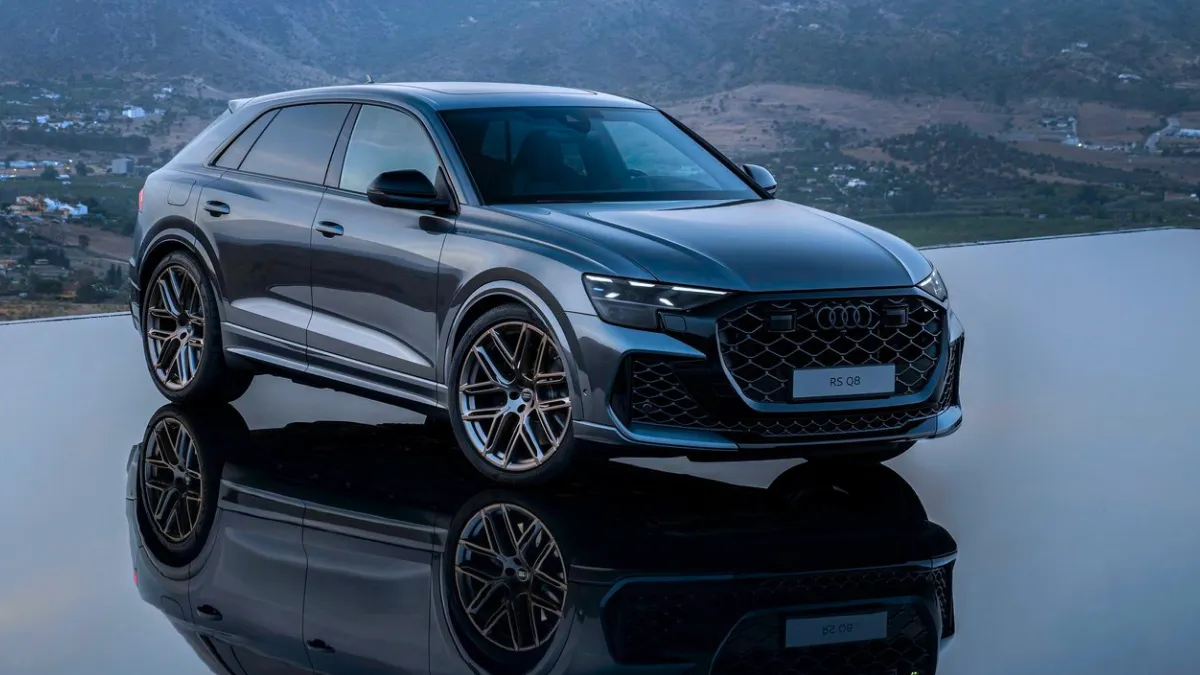
Designers at Audi Sport have created a visual presence that looks muscular and purposeful without crossing the line into overly gaudy styling. The exterior design emphasizes width and athletic proportions, establishing a clear visual distance from the standard, non-RS variants found in parking lots across America.
- Front Fascia Architecture: The front end is dominated by a widened, gloss-black Singleframe grille featuring a unique RS honeycomb structure. Massive, functional side air intakes feed cool air directly to the auxiliary radiators and high-performance braking components. Standard HD Matrix-design LED headlights provide exceptional nighttime illumination and display intricate, animated light sequences when locking or unlocking the vehicle.
- Profile and Aerodynamic Management: The side profile features aggressively flared wheel arches that widen the body by 0.4 inches in the front and 0.2 inches in the rear, accommodating a significantly wider track. The roofline slopes gracefully toward the rear, ending in a functional roof spoiler that generates usable downforce at high highway speeds. Extended side sills and standard aluminum or optional carbon-fiber exterior mirror housings complete the premium athletic look.
Wheel and Tire Options
The rolling stock of this vehicle represents one of the largest factory wheel-and-tire combinations ever fitted to a production passenger car, a design element that directly serves both visual presence and mechanical cornering grip.
- Massive Factory Alloy Choices: Standard models come equipped with imposing 22-inch 10-spoke star-design alloy wheels. Buyers looking to maximize the vehicle’s aggressive stance can opt for factory 23-inch 5-Y-spoke rotor-design forged aluminum wheels, which are available in various finishes including matte titanium, diamond-turned silver, or high-gloss black.
- Braking Hardware Configurations: Hidden behind those massive wheels is an equally impressive braking system. Standard configurations include massive ventilated steel brake rotors clamped by 10-piston aluminum calipers at the front axle. For demanding track environments, an optional carbon-ceramic braking system swaps in lighter, fade-free ceramic discs. This upgrade sheds a massive 75 pounds of unsprung weight, significantly improving steering response and overall handling agility.
Interior Luxury and Technology
Comfort and Space
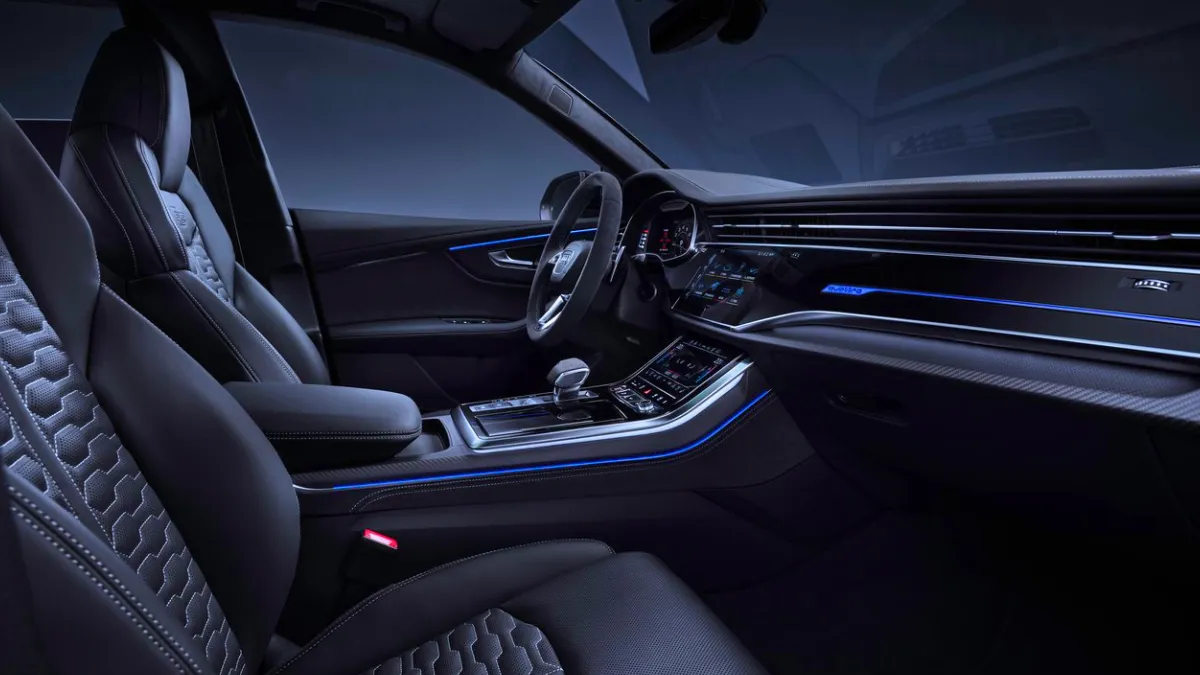
While the performance figures rival exotic track cars, opening the heavy, insulated doors reveals an interior environment built for ultimate long-distance luxury. Audi has combined premium materials with an ergonomic design to create a driver-focused cockpit that remains thoroughly practical for everyday life.
- Premium Seating and Material Selections: Front passengers are accommodated in heated and ventilated 18-way power-adjustable RS sport seats wrapped in premium Valcona leather, complete with distinct honeycomb stitching and power lumbar support. The entire cabin features premium appointments, including Alcantara door inserts, a leather-wrapped dashboard, and trim customizable in matte carbon fiber, brushed aluminum, or rich natural wood inserts.
- American Family Practicality Metrics: Unlike coupe-SUVs with heavily compromised rear packaging, the vehicle maintains a highly usable second row. The rear bench can slide forward or backward up to 3.9 inches to prioritize either passenger legroom or rear storage needs. Behind the second row, the cargo area offers a spacious 30.5 cubic feet of storage capacity, which expands to a substantial 60.7 cubic feet with the 40/20/40 split rear seats folded flat. This provides plenty of space for golf clubs, premium luggage, or family road trip gear.
Infotainment and Connectivity
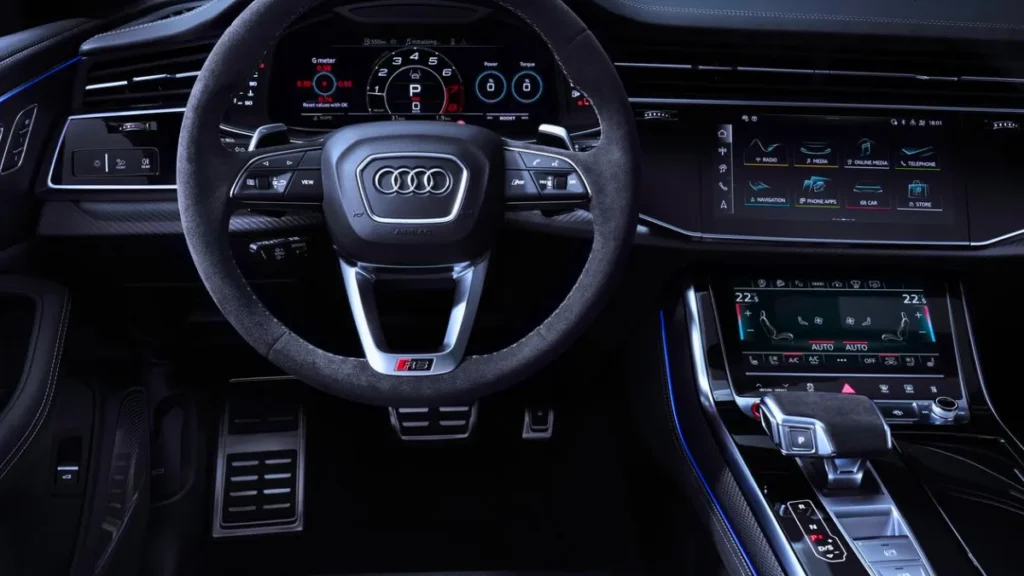
The interior design language relies heavily on a sleek, integrated glass-look digital dashboard architecture. By minimizing physical buttons, Audi provides a clean aesthetic that puts vehicle monitoring and entertainment systems within easy reach of the driver.
- Dual-Screen MMI Touch Response: The center console features two high-resolution haptic feedback touchscreens. The upper 10.1-inch display manages navigation, vehicle settings, and media, while the lower 8.6-inch screen handles climate control functions, handwriting text input, and comfort shortcuts. Both screens provide clear acoustic and tactile feedback, making them easy to operate while keeping your eyes on the road.
- Audi Virtual Cockpit Plus: The traditional analog gauge cluster is replaced by a customizable 12.3-inch high-resolution digital display. This RS-specific version features unique performance screens, including real-time power and torque outputs, g-force meters, lap timers, tire pressure metrics, and full-color 3D Google Maps navigation layouts directly in the driver’s line of sight.
- Concert-Quality Audio Options: For buyers who appreciate premium audio performance, the standard sound setup can be upgraded to an audiophile-grade Bang & Olufsen® 3D Advanced Sound System. This premium option features 23 speakers powered by a 1,920-watt BeoCore amplifier. It includes motorized acoustic lenses that automatically rise from the dashboard upon starting the vehicle, delivering a pristine, immersive listening experience that combats cabin noise.
Safety and Driver Assistance Features
Advanced Safety Technologies
Deploying world-class speed requires an equally advanced safety shield. The vehicle incorporates an extensive suite of active and passive safety measures, utilizing an intricate network of radar sensors, long-range cameras, and ultrasonic transmitters to continuously scan the surrounding environment for potential hazards.
- Comprehensive Driver Assistance: Standard safety equipment includes Audi pre sense® front and rear, which can automatically initiate emergency braking if an imminent collision is detected. Adaptive cruise assist combines stop-and-go highway functionality with lane centering, greatly reducing driver fatigue during stop-and-go highway traffic. Additional standard safety systems include blind-spot monitoring, rear cross-traffic alert, and a clear 360-degree top-view camera system for easy parking maneuvers.
- Structural Crash Ratings Excellence: Built on the high-strength evolutionary MLB Evo platform, the underlying vehicle architecture has earned top structural scores. It consistently receives a 5-star overall safety rating from the National Highway Traffic Safety Administration (NHTSA) and Top Safety Pick honors from the Insurance Institute for Highway Safety (IIHS), ensuring complete peace of mind for family duties.
Driver Assistance Systems
For long journeys across American highways, optional high-tech packages add sophisticated sensor layers that enhance convenience and visibility during challenging weather or driving conditions.
- Night Vision Assist Integration: This optional system utilizes an infrared thermal imaging camera mounted within the front grille. It scans the dark roadway ahead, identifying pedestrians or large animals up to 300 feet before they become visible in the headlights, highlighting them in yellow or red directly on the Virtual Cockpit screen.
- Intersection Assist and Traffic Sign Recognition: Intersection assist monitors cross-traffic when pulling out of tight intersections or blind parking lots, applying brief brake interventions if a cross-traffic collision risk is detected. Meanwhile, the integrated camera-based sign recognition system reads local speed limits and updates the heads-up display in real time. For a deeper understanding of these features, feel free to read our comprehensive car safety features guide or explore our detailed article on advanced driver assistance systems.
Pricing and Value Proposition
Pricing Overview
Entering the ultra-high-performance SUV segment requires a significant financial investment. For the current model year on the American market, Audi has repositioned its high-performance SUV lineup, offering a dramatic increase in performance and standard mechanical features that directly justify its premium price tag.
- MSRP Realities for the US Market: The standard Audi RS Q8 starts at an MSRP of approximately **$126,000**, while the ultimate, track-honed **RS Q8 Performance** model commands a starting price of **$136,200**. These baseline figures exclude destination charges, local taxes, options, and dealer markups. For accurate current pricing and available options, consult the official Audi USA configurator.
- Optional Package Configurations: Buyers can personalize their vehicle with premium add-ons. The Carbon Optic Package adds carbon-fiber exterior mirrors, front spoiler accents, and rear mask details. The Black Optic Package swaps chrome badging for a stealthier look, while the Luxury Package adds a premium Dinamica headliner and front massage seats.
Cost of Ownership
Operating a complex biturbo V8 vehicle involves financial considerations that extend well past the initial dealership purchase price. Buyers must budget for real-world fuel consumption and long-term maintenance costs typical of the exotic automotive class.
- Real-World Fuel Economy Metrics: Unsurprisingly, a high-output 631-hp engine requires plenty of premium fuel. According to official estimates verified by the EPA Fuel Economy database, the vehicle is rated at **13 mpg in the city, 19 mpg on the highway, and 15 mpg combined**. Aggressive driving habits or frequent use of launch control will drop those figures into the single digits.
- Long-Term Value Retention: Historically, limited-production Audi Sport models hold their value better than standard luxury crossovers. Its shared platform components with elite vehicles like the Lamborghini Urus provide a strong long-term appeal on the secondary market, helping it maintain a solid resale profile within the competitive luxury SUV market.
| Performance Specs | Audi RS Q8 (Standard) | Audi RS Q8 Performance |
| Engine Architecture | 4.0L Twin-Turbo V8 | 4.0L Twin-Turbo V8 |
| Horsepower Output | 591 hp | 631 hp |
| Peak Torque | 590 lb-ft | 590 lb-ft |
| 0-60 mph Sprint | 3.7 Seconds | 3.4 Seconds |
| Starting MSRP (US) | $125,800 | $136,200 |
| EPA Fuel Economy | 13 / 19 / 15 mpg | 13 / 19 / 15 mpg |
| Max Cargo Capacity | 60.7 Cubic Feet | 60.7 Cubic Feet |
Final Thought
The Audi RS Q8 stands as a triumph of modern automotive engineering, providing an incredible blend of dual identities. It is a vehicle that masterfully satisfies conflicting requirements, offering supercar-level acceleration and track-focused handling dynamics without sacrificing the everyday family utility, all-weather capability, and isolated luxury comfort that American buyers expect from a premium sport utility vehicle.
While the initial purchase price and real-world fuel costs are undeniably substantial, the vehicle justifies its position at the apex of the market by undercutting the pricing of its exotic platform competitors while matching their mechanical performance. For drivers seeking an ultimate all-in-one vehicle that makes a bold statement on American roads, this high-performance machine remains an unmatched choice. Schedule an appointment at your local premier Audi dealership to experience this mechanical masterpiece firsthand.
FAQ Section
1- What is the starting price of the Audi RS Q8 in the US?
- The standard variant starts at approximately $126,000, while the higher-output Performance model commands a starting MSRP of $136,200, before options and destination fees.
2- What is the real 0-60 mph time for the Audi RS Q8 Performance?
- While the standard 591-hp model completes the sprint in 3.7 seconds, the 631-hp Performance model achieves a blistering 0-60 mph time of just 3.4 seconds in official track tests.
3- What are the main rivals in the North American market?
- Key premium competitors include the BMW X6 M Competition, Mercedes-AMG GLE 63 S Coupe, and the Porsche Cayenne Turbo GT.
4- What standard safety systems are equipped on the vehicle?
- It features standard adaptive cruise assist, Audi pre sense front/rear, lane centering, a 360-degree camera system, and optional night vision thermal imaging.
5- What is the fuel economy rating from the EPA?
- The EPA estimates real-world fuel economy at 13 mpg in the city, 19 mpg on the highway, and 15 mpg combined. Premium fuel is strictly required.