





The 2026 Audi RS3 is a 394-horsepower compact sedan powered by a legendary turbocharged 2.5-liter inline-five, priced from $66,100. It rockets from 0–60 mph in approximately 3.3–3.6 seconds, pairs standard quattro AWD with an RS torque splitter for genuine track-day handling, and wraps it all in a sharpened aggressive exterior. It’s the most complete version of Audi’s compact super sedan yet—daily drivable, track-ready, and genuinely thrilling.
There’s a specific moment in every great performance car where you stop thinking about spreadsheets, commutes, and mortgage rates. For me, it happened somewhere between the on-ramp and the first sweeping left-hander, right around the time the RS3’s five-cylinder hit its power band and the exhaust did that crackling, off-beat warble that sounds like nothing else on the road. Not a V8 rumble. Not a buzzy four-cylinder shriek. Something rawer and more mechanical—a sound that’s been turning heads at gas stations since the original quattro Sport of the 1980s.
That’s the RS3’s superpower. On paper, it’s a compact luxury sedan with a starting sticker of $66,100. In practice, it drives like something that costs twice as much and doesn’t give a damn about its size.
Our test team spent several weeks living with the 2026 RS3 across everything from bumper-to-bumper freeway traffic to back-road blasts and a couple of track sessions. Here’s the full story.
IN THIS ARTICLE
- The Heart of the Beast: The Legendary Turbo Five Engine
- Performance Metrics: 0–60, Top Speed, and Track Capabilities
- Exterior Styling: A Baby Supercar Design
- Performance Cabin: Carbon Fiber Meets High Tech
- Audi RS3 vs. The Competition: BMW M2, AMG, and American Muscle
- Pricing, Ownership, and US Market Value
- Final Verdict
- Frequently Asked Questions
The Heart of the Beast: The Legendary Turbo Five Engine

Learn more on AUDI RS3 5-CYLINDER ENGINE DEEP DIVE
Let’s start where every RS3 conversation should start: that engine.
The 2.5-liter turbocharged inline-five is one of the last of a nearly extinct breed. Five-cylinder configurations have largely been swallowed by the industry’s march toward efficiency-optimized fours and performance-on-demand sixes. Audi kept the faith, and every time you fire up the RS3, you understand why.
The technical fundamentals: it’s a 2,480cc TFSI unit producing 394 horsepower and 369 lb-ft of torque in U.S. specification, fed through a seven-speed S tronic dual-clutch transmission. Boost builds quickly—you don’t wait for a big turbo to spin up. From around 1,700 rpm, the power delivery is linear and relentless, and it stays that way past 6,500 rpm in a way that defies the typical turbo four-cylinder cliff where power drops off abruptly near redline.
Why Five Cylinders?
The five-cylinder’s character comes entirely from its firing order. Unlike a four-cylinder’s evenly spaced 1-2-3-4 combustion sequence or a six’s silky overlap, the five-pot fires at uneven intervals—creating that loping, syncopated exhaust note. It’s not just an interesting noise. That uneven pulse translates into a combustion feel that has texture to it, almost like the engine is breathing with a rhythm you can sense through the firewall and the seat.
Audi’s engineers fiddled with the exhaust software for 2026, opening the flaps earlier and at lower RPMs to let that note breathe more freely. The result? In Dynamic or RS Performance mode, startup produces a genuine theatrical moment. On cold mornings, there’s a low, growling idle that sounds almost Scandinavian—something between a rally car and a well-fed predator.
Power Delivery: Punchy But Manageable
One thing that catches new RS3 drivers off guard: the response is fast, but it’s not snappy in an anxious way. The dual-clutch transmission shifts in under 100 milliseconds in its most aggressive mode, but Audi has calibrated the torque delivery so there’s no violent lurch on launch. Instead, you get a strong, progressive surge that pins you into those bolstered sport seats and just… keeps going.
Tapping the shift paddles behind the flat-bottom steering wheel adds to the sensation. They’re firm, with a satisfying mechanical click—not the vague, soft paddles you find on lesser sport sedans. In manual mode, the transmission holds gears right to the limiter, which is exactly what you want on a track but demands some attention on the highway when you’ve forgotten you’re not in auto.
Fuel Economy (Yes, Really)
Here’s where things trip up slightly. The RS3 returns an EPA-rated 20 mpg city / 29 mpg highway / 23 mpg combined. That’s not punishment-level consumption, but you should budget for premium. During our mixed driving weeks, which included spirited back-road runs and a highway trip, we averaged around 24 mpg. Not bad for what is, categorically speaking, a sports car wearing a sedan suit.
The Carbon Engine Cover
The optional Dynamic Plus package ($5,600) adds carbon-ceramic front brakes and a carbon fiber engine cover. It’s a subtle flex visible only when you pop the hood—but RS3 people know, and RS3 people notice.
Performance Metrics: 0–60, Top Speed, and Track Capabilities

MORE ON AUDI RS3 0-60 AND TRACK PERFORMANCE
Numbers first. The 2026 RS3 covers the 0–60 sprint in 3.3–3.6 seconds depending on conditions, launch control activation, and the transmission’s warm-up state. Audi’s official figure is 3.6 seconds (conservative), but multiple independent tests—and our own seat-of-the-pants experience—suggest 3.3 is very much achievable. Top speed is electronically limited to 155 mph, or 180 mph on the RS Performance trim spec with the limiter removed.
Those numbers put it in direct competition with cars costing significantly more. Let that sink in for a moment.
The Quattro Torque Splitter: The Real Game Changer
If the engine is the RS3’s soul, the RS torque splitter is its brain. Standard quattro AWD has always made the RS3 devastatingly traction-competent, but previous generations could feel front-heavy in fast corners—you’d push through with AWD grip rather than actually rotating the car.
The torque splitter changes that relationship entirely. It’s an electronically controlled rear differential that can vector torque between individual rear wheels, not just front-to-rear. In practice, this means the RS3 can push torque to the outside rear wheel in a corner, creating a yaw moment that turns the car into the bend rather than simply dragging it through.
The result is a front-engined, AWD sedan that can actually be adjusted mid-corner with the throttle. In RS Performance mode, the car feels genuinely rear-biased—more playful, more communicative. Nudge the throttle mid-corner and the rear rotates willingly without drama. It’s not trying to kill you; it’s inviting you to be more precise.
The system also gains brake torque vectoring for 2026, which applies slight braking pressure to the inside rear wheel on corner entry to reduce understeer. On tighter hairpins and switchbacks, this is noticeable and welcome—the front end tucks in where older RS3 models would have needed more coaxing.
Suspension and Steering
The RS3 rides on adaptive RS sport suspension set 10mm lower than the standard A3. At full softness (Comfort mode), the ride is firm but manageable for daily use—potholed urban roads will let you know you’re not in a luxury barge, but it’s not punishing. In Dynamic mode, it’s properly stiff and track-biased. The progressive steering rack quickens perceptibly as you add lock, which makes parking lot maneuvers feel effortless but gives you sharper responses when the road opens up.
Drive Select Modes
| Mode | Character |
|---|---|
| Comfort | Softened dampers, relaxed throttle, fuel-efficient shifts |
| Auto | Adaptive, adjusts based on driving inputs |
| Dynamic | Firm, sharp, exhaust open |
| RS Performance | Maximum aggression, torque splitter active |
| RS Torque Rear | Rear-biased torque distribution, near-drift territory |
| RS Individual | Fully customizable per-parameter settings |
RS Torque Rear mode is the party trick. With traction control loosened, the RS3 can be steered with the throttle in a way that compact sedans simply don’t do. It won’t out-slide a proper RWD sports car, but it has a genuine playfulness that’s addictive on a track day.
Braking
Standard brakes are steel-disc four-piston units up front. They’re strong and consistent under repeated hard use. The optional $5,600 Dynamic Plus package upgrades these to carbon-ceramic front rotors—lighter, more fade-resistant, and excellent for track use. similar to systems used in Porsche GT performance models. Unless you’re planning regular track days or autocross events, the standard stoppers handle most enthusiast duties without issue.
Exterior Styling: A Baby Supercar Design

Learn more about 2026 AUDI RS3 DESIGN AND COLOR OPTIONS
The 2026 RS3 is not subtle. It’s not trying to be.
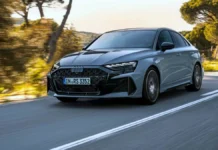
At 178.8 inches long with a front track that’s 1.3 inches wider than the standard A3’s, it has a widened, planted stance that hints at what’s happening underneath. The flared front fenders are functional, housing larger wheels and air outlets that feed the brakes. The massive honeycomb Singleframe grille dominates the front fascia, flanked by large air intakes that actually direct airflow rather than just looking aggressive.
The Lighting Package
This is where the RS3 does something genuinely interesting. The updated Matrix LED headlights for 2026 aren’t just adaptive—they’re customizable. Through the MMI system, drivers can select between four different daytime running light signatures: different lighting “faces” that range from crisp and linear to more aggressive broken-arc designs. It’s a feature that sounds gimmicky until you realize how much it transforms the car’s personality at night or in low light.
At the rear, the LED taillights feature dynamic turn signals that sweep outward, plus a checkered-flag animation on startup that’s been the source of more than a few parking lot conversations during our test period. Is it a little theatrical? Sure. Is it charming? Absolutely.
Wheels and Stance
Standard fitment is 19-inch 5-Y-spoke alloys in either matte black or a bi-color finish. The standard tires are performance-spec, and the combination of 10mm-lower ride height, wide track, and 19s gives the RS3 a planted, aggressive stance that photographs beautifully. The big, red-painted brake calipers peeking through the spokes complete the picture.
The oval exhaust tips at the rear are a signature RS element. Framed by a body-colored rear diffuser and a small lip spoiler, the back end of the RS3 looks purposeful rather than theatrical—like it’s designed to manage airflow rather than just attract attention.
Color Options
The standout pick is Kyalami Green, a rich, slightly metallic shade that’s exclusive to the RS lineup and, remarkably, a no-cost option in 2026. This makes the choice surprisingly easy—why would you not? Other options include Mythos Black Metallic, Kemora Gray, Glacier White, Navarra Blue, and Tango Red.
The carbon fiber exterior accents—mirror housings and rear spoiler—are standard on the RS3, not an add-on. Carbon mirrors on a sub-$70K car remain a pleasant surprise every time.
Performance Cabin: Carbon Fiber Meets High Tech

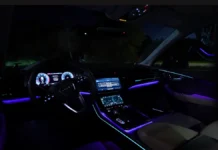
Climb into the RS3 and the first thing you notice is the seat. Deeply bolstered, hugging your ribs and thighs with a firmness that tells you these are chairs designed for lateral loading, not just looking sporty. They’re leather sport seats with power adjustment and heating standard, featuring honeycomb-pattern inserts, RS embossing, and contrasting red stitching that picks up the exterior caliper color.
The flat-bottom steering wheel is the right diameter—not too small to feel oversensitive, not so large it feels like a grocery getter. It’s wrapped in perforated leather, features paddle shifters with a satisfying mechanical action, and has RS-badged drive mode buttons integrated into the lower spokes. This is your control center, and it feels like one.
The Virtual Cockpit Plus
The star of the interior tech lineup is Audi’s 12.3-inch Virtual Cockpit Plus digital instrument cluster. In RS-specific display mode, it shows a unique RS Runway layout—a horizontal sweep gauge with power and torque percentages displayed alongside traditional speed and RPM data. Switch to Performance mode on the display and you get real-time G-force measurement, quarter-mile timer, and 0–60 acceleration data right in the driver’s sightline.
It’s genuinely useful at track days. Pull out of a corner, check peak lateral G. Finish a hot lap, glance at your acceleration stats. The data is clean, well-presented, and doesn’t require you to take your eyes far off the road.
The 10.1-inch MMI touchscreen handles infotainment duties above the center console. It’s responsive, intelligently laid out, and crucially—Audi still includes physical controls for climate. Three rotating knobs for temperature and fan speed sit below the screen, exactly where your muscle memory expects them. After years of watching automakers bury HVAC controls in touchscreen menus, this feels like a minor engineering luxury.
Connectivity and Audio
Standard on the 2026 RS3 is the 680-watt Sonos Premium sound system with 15 speakers, a 16-channel amplifier, and 3D spatial sound processing. It’s a properly excellent system—punchy bass, clear highs, and impressive stereo imaging in a car with a lot of road noise competition from those performance tires. Wireless Apple CarPlay and Android Auto are standard, as is wireless phone charging.
A head-up display projects speed, navigation, and drive mode information onto the windshield—a feature I used constantly and missed immediately in any other car afterward.
Rear Seat and Cargo
Here’s an honest caveat: the RS3 is a five-seater in specification only. Rear passengers get USB-C charging ports, a fold-down armrest with cupholders, and reasonable legroom for average-height adults—but the rear headroom is tight, and the low roofline extracts a price. For commuters and weekend blasts with a passenger, it’s perfectly fine. For families requiring regular rear-seat duty, look elsewhere.
Trunk space is 8.3 cubic feet—compact, but enough for a weekend bag and track-day gear. The materials throughout the rear cabin match the front: high-quality, consistent, no hard plastic surprises.
The One Annoyance
The volume control is positioned on the center console rather than on the steering wheel, which means you’re reaching down mid-drive more often than you’d like. It’s a minor ergonomic quibble in an otherwise well-considered interior—but it’s the kind of thing that bugs you a little more each day.
Learn more about 2026 Audi RS3 Interior Review
Audi RS3 vs. The Competition: BMW M2, AMG, and American Muscle

The RS3 doesn’t exist in a vacuum. At around $66K–$70K, it competes against some seriously capable machinery. Here’s how it stacks up.
The Comparison Table
| Spec | 2026 Audi RS3 | 2026 BMW M2 | 2025 Mercedes-AMG CLA 45 | 2026 Cadillac CT5-V |
|---|---|---|---|---|
| Engine | 2.5L Turbo I5 | 3.0L Twin-Turbo I6 | 2.0L Turbo I4 | 2.7L Twin-Turbo V6 |
| Horsepower | 394 hp | 453 hp | 415 hp | 360 hp |
| Torque | 369 lb-ft | 406 lb-ft | 369 lb-ft | 376 lb-ft |
| 0–60 mph | ~3.3 sec | ~4.1 sec | ~3.9 sec | ~4.4 sec |
| Drivetrain | AWD (Quattro) | RWD / xDrive | AWD | RWD |
| Starting MSRP | ~$66,100 | ~$67,700 | ~$57,500* | ~$51,990 |
| Body Style | Sedan | Coupe | Hatchback (N/A in US) | Sedan |
AMG A45 S not officially sold in US market; Mercedes-AMG CLA 45 ($58K) is the primary US rival.
RS3 vs. BMW M2
The M2 is the RS3’s spiritual rival, but they appeal to slightly different personalities. The M2 makes more power (453 hp from a twin-turbo inline-six) and is a more communicative, rear-wheel-drive purist’s machine. The trade-off? It’s a coupe (no four-door practicality), starts at a similar price, and its AWD xDrive option adds cost. On a dry track, the M2’s rear-drive balance edges ahead in raw driving feedback. In winter, on wet roads, or at everyday speeds, the RS3’s quattro AWD and superior launch traction make it faster in practice.
RS3 vs. Mercedes-AMG CLA 45
The CLA 45 is the closest direct rival—a compact AMG sedan with AWD. It’s quicker on paper in some configurations and has excellent AMG DNA, but its 2.0-liter four-cylinder doesn’t generate the character that the RS3’s five-pot produces. The RS3’s exhaust note, the tactile torque delivery, the sheer sonic theater—the AMG can’t replicate it. The interior quality edge goes to Audi as well. Price gap is modest.
RS3 vs. American Muscle
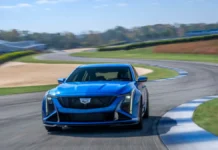
The Cadillac CT5-V is a legitimate performance sedan at a lower price—but it’s a larger car, less agile in corners, and slower to 60 mph. The Dodge Charger Scat Pack and similar American muscle offer more horsepower for less money, but they’re not in the same class of engineering sophistication or all-weather capability. The RS3 isn’t trying to win a straight-line contest with a Hellcat. It’s trying to be the best sports sedan you can drive every single day, in every condition, without compromise.
The RS3’s Actual Advantage
It comes down to three things: the five-cylinder engine’s uniqueness, the torque splitter’s sophistication, and the AWD system’s genuine all-weather confidence. No direct rival combines all three in the same package. The RS3 isn’t the most powerful car in its class—the M2 and AMG have it on top-line figures—but it’s arguably the most complete daily-driver performance sedan under $75K.
Pricing, Ownership, and US Market Value

The 2026 Audi RS3 starts at $66,100 plus $1,295 destination in the US market. There’s a single trim level—Audi has simplified the lineup by making former Technology Package content standard equipment. That means the 680-watt Sonos system, Virtual Cockpit Plus, head-up display, three-zone climate control, and keyless entry are all included at the base price.
The only meaningful option is the Dynamic Plus package at $5,600, which primarily adds carbon-ceramic front brakes and a carbon engine cover. If you’re planning regular track days, it’s worth the investment. For street use only, the standard brakes are adequate.
Color is largely a cost-free decision. Kyalami Green is a no-charge option—a remarkable offering given it’s an RS-exclusive shade that makes the car significantly more distinctive on the road.
Real-World Market Pricing
With options and destination, most buyers will land in the $70,000–$75,000 range. Some dealer markups exist in tighter markets, with examples selling closer to $78K–$80K at peak demand. That said, KBB’s Fair Purchase Price nationally averages around $66,700, suggesting the market is relatively rational on this car currently.
Is It Worth the Price?
Here’s the honest answer: yes, but with eyes open. For $66K, you’re not getting the roomiest back seat or the biggest trunk. You’re paying for the five-cylinder character, the torque splitter technology, the Sonos audio, and the genuine track capability in a package that fits in any parking garage. The RS3 offers something no other car in its price bracket can—and that exclusivity has value.
Audi’s reputation for long-term reliability on the RS3 platform has improved significantly. Owners consistently rate the 2026 model five out of five stars for reliability. Annual ownership costs are higher than mainstream cars—premium fuel, performance tire wear, and service intervals at Audi dealerships aren’t cheap—but for the target buyer, that’s a known and acceptable trade-off.
Final Verdict

The 2026 RS3 is a focused, rewarding machine that doesn’t ask you to choose between excitement and practicality. Its five-cylinder engine is genuinely special, torque splitter makes it handle in ways compact sedans have no business handling. Its interior is polished, technology-rich, and—mostly—ergonomically smart.
It won’t suit buyers who need maximum rear-seat space or the largest cargo hold. It won’t win every straight-line comparison against more powerful rivals. But it occupies a specific, irreplaceable position in the performance car landscape—the kind of car that makes every commute feel like it might accidentally become an adventure.
America’s favorite compact super sedan just got wilder. And that’s exactly the right direction.
For more automotive buying advice:
Explore our complete Audi Buyer’s Guide, or browse all of our official Car Buyer’s Guides.
Frequently Asked Questions
The official Audi-stated 0–60 time for the 2026 RS3 is 3.6 seconds. Independent testing and owner reports consistently place real-world launches closer to 3.3 seconds, particularly when launch control is activated and the transmission is fully warmed up. This makes it one of the quickest accelerating vehicles under $70,000 in the US market.
The RS3 is standard-equipped with quattro AWD, but it features an RS torque splitter that can direct torque specifically to individual rear wheels. In RS Torque Rear drive select mode, power is biased heavily toward the rear axle, giving the car near-rear-drive handling characteristics. Combined with the 2026’s updated brake torque vectoring, the car can be adjusted mid-corner with the throttle in a way that mimics a rear-drive car’s behavior, while retaining AWD safety margins.
The RS3 and M2 start at similar prices (roughly $66K vs. $67K). The M2 offers more power (453 hp) and a rear-drive chassis preferred by purists, while the RS3 counters with AWD traction, a faster real-world 0–60 time, more practical four-door body, and its irreplaceable five-cylinder engine character. For buyers who drive year-round in variable conditions—or who prioritize daily practicality alongside track performance—the RS3 delivers stronger all-around value. Track-day purists may prefer the M2’s more communicative rear-drive dynamics.