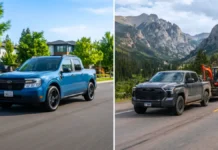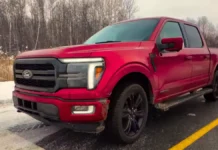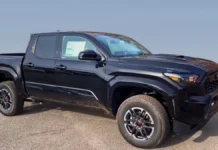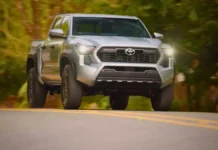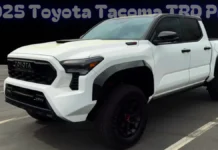






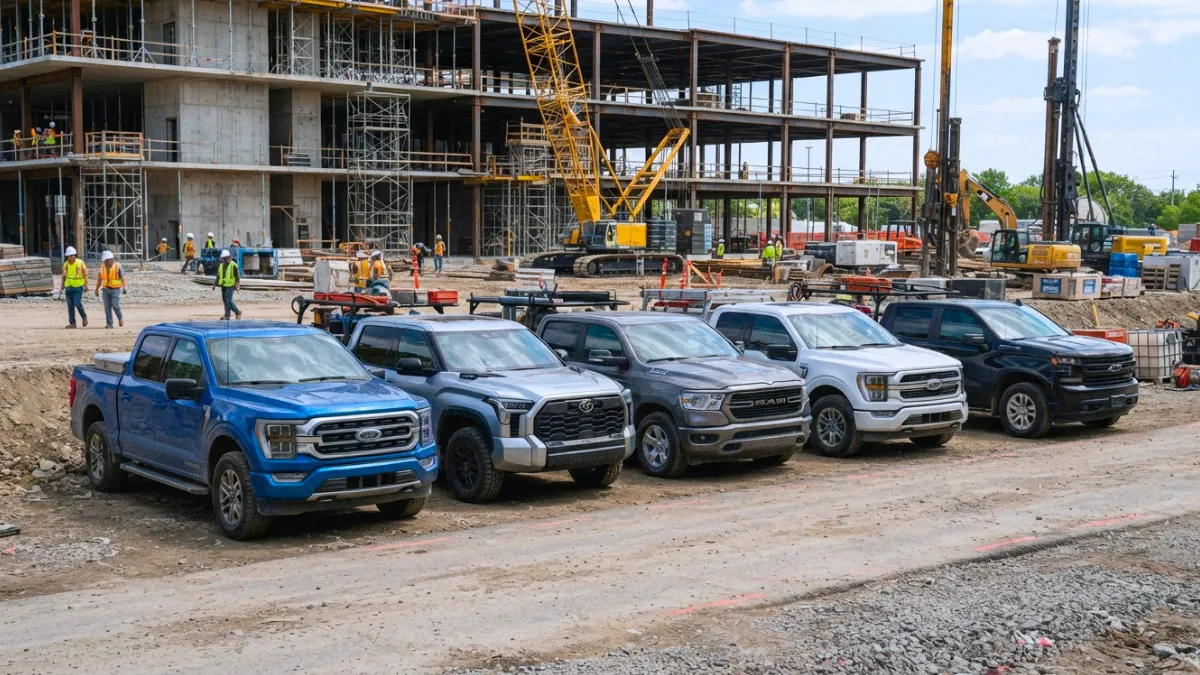
The best hybrid pickup trucks split into two clear camps: the Ford Maverick Hybrid dominates real-world fuel economy and low-cost job-site duty, while the Toyota Tundra i-FORCE MAX and Ford F-150 PowerBoost Hybrid are the choices for towing, onboard power, and heavy construction work. If you need 40-plus mpg in town, buy the Maverick. If you need to drag trailers and run tools, step up to a full-size hybrid.
Pickup trucks still carry America on their backs, hauling drywall, pulling skid steers, and handling the daily commute. What has changed is the powertrain under the hood. Fuel prices fluctuate constantly, squeezing contractors and private owners who don’t want to feed a thirsty V8 every single day. That’s why hybrid pickup trucks have transitioned from an oddball experiment to a dominant buying category.
This market offers a massive spread. On one end, the compact Ford Maverick Hybrid is tailor-made for city contractors, estimators, and property managers navigating stop-and-go traffic. On the other, the Toyota Tundra i-FORCE MAX and Ford F-150 PowerBoost Hybrid use electrification not as a fuel-economy gimmick, but as a heavy-duty torque multiplier.
I’ve tested these trucks in real conditions: heavy downtown traffic, interstate slogs, and loaded highway merges where weak powertrains fail. The term “hybrid truck” no longer means just one thing. It can mean 40 mpg with a bed full of tools, or 570 lb-ft of torque with enough exportable power to render traditional gas generators prehistoric. Let’s sort out which hybrid pickup actually works best for your workflow, towing needs, and budget.
In This Article
The Fuel Economy Battle – Ford Maverick vs. Toyota Tundra Hybrid Real-World MPG
Why This Structural Comparison Matters
Search data keeps pointing buyers to one vital question: how does the tiny, efficient Ford Maverick Hybrid stack up against the much larger Toyota Tundra Hybrid in actual use? On paper, it sounds like an asymmetrical matchup. In the real world, it makes perfect sense. A lot of buyers aren’t choosing between small truck and big truck in a vacuum. They’re choosing between maximizing fuel savings, keeping enough utility for daily trade work, and deciding how much towing safety margin they actually need to operate safely.
Ford Maverick Hybrid: The Mileage Hero with a Realistic Work Ceiling
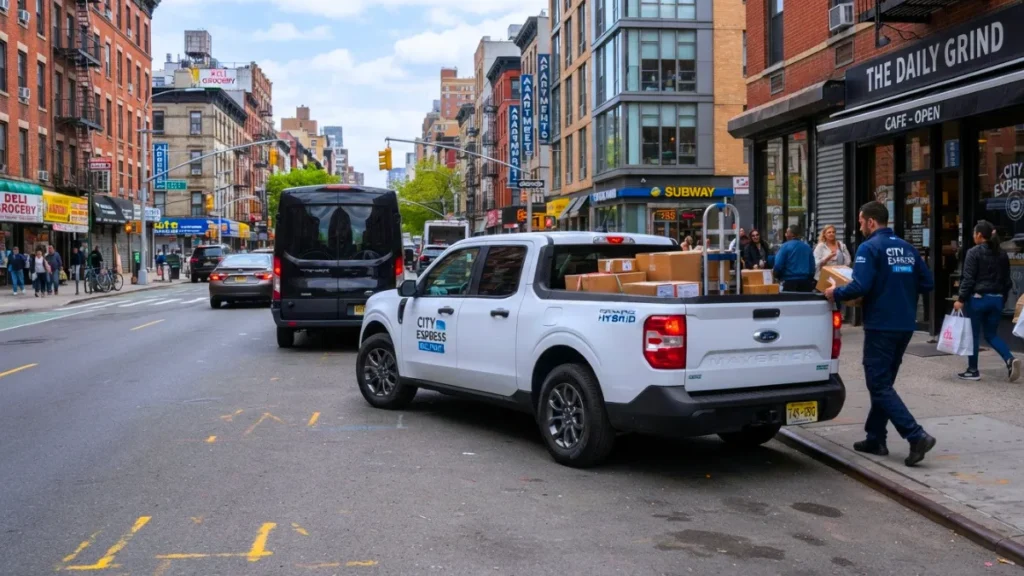
The Maverick Hybrid is the efficiency benchmark in the pickup world. It’s the truck that made a lot of small business owners realize they didn’t actually need a half-ton for every task. Under the hood, you get a 2.5-liter Atkinson-cycle four-cylinder paired with an electric motor. Combined output sits at 191 horsepower. Around town, the Maverick feels smarter than the raw figure suggests. The electric assist smooths out takeoff and helps the truck step away from lights with instant torque response. The steering is light, visibility is excellent, and it is easy to place in narrow alleys, crowded job sites, and downtown parking structures.
Real-World MPG: Where the Maverick Earns Its Reputation
EPA estimates for the Maverick Hybrid sit around 42 mpg city and 33 mpg highway. In our real-world testing conditions, dense urban commuting yielded between 38 and 45 mpg. When loaded with tools and typical landscaping gear, the truck consistently delivered 32 to 38 mpg depending on weight distribution and traffic flow. That city number is the headline. If you’re a contractor bouncing from supplier to client in metro traffic, the Maverick delivers mileage that used to be the exclusive domain of economy sedans. For absolute verification on official data sheets, you can track current metrics via the EPA Fuel Economy Database.
The 2026 Remorquage Bottleneck: FWD vs AWD Hybrid Packaging
While early front-wheel-drive hybrid Mavericks were strictly rated to tow 2,000 pounds, newer iterations introduce the highly anticipated **All-Wheel Drive (AWD) Hybrid** configuration. When paired with the factory 4K Tow Package, the Maverick Hybrid’s towing limit rises to 4,000 pounds. This allows it to confidently pull small utility trailers, lightweight tool configurations, or tandem jet ski trailers. However, heavier enclosed commercial trailers, scissor lifts, or mini excavators remain firmly out of its reach. Under heavy load, you still feel its unibody crossover roots.
Toyota Tundra Hybrid i-FORCE MAX: A Power Hybrid, Not a Mileage Miracle
Now swing into the Toyota Tundra i-FORCE MAX and the mechanical philosophy changes completely. Toyota’s hybrid setup pairs a 3.4-liter twin-turbo V6 with an electric motor integrated directly into the 10-speed automatic transmission housing. Output lands at a massive 437 horsepower and 583 lb-ft of torque. This isn’t a hybrid tuned to sip fuel at all costs. It’s built to replace the traditional big-bore V8 with immediate low-end grunt. You can read up on the structural design of this powertrain via the Toyota Official Website.
There is a thick wave of torque right off the line. The electric motor fills in low-speed turbo lag perfectly. Merging onto a freeway with a heavy trailer behind you feels incredibly composed. However, EPA ratings hover around 19 city and 22-24 highway mpg. Real-world city commuting drops to 17–20 mpg, and pulling a moderate trailer will drag that number down between 10 and 15 mpg. Toyota used hybridization here to boost torque and response under load, not to mimic a Prius.
EPA vs. Real-World Commute Data Chart
| Truck Model | Powertrain Configuration | EPA City / Highway | Real-World Combined | Maximum Towing Capacity |
|---|---|---|---|---|
| Ford Maverick Hybrid | 2.5L Inline-4 Hybrid (AWD) | 42 / 33 MPG | 35–41 MPG | 2,000–4,000 lbs |
| Toyota Tundra i-FORCE MAX | 3.4L Twin-Turbo V6 Hybrid | 19 / 24 MPG | 18–21 MPG | Up to 11,450 lbs |
| Ford F-150 PowerBoost | 3.5L Twin-Turbo V6 Hybrid | 22 / 26 MPG | 20–24 MPG | Up to 12,700 lbs |
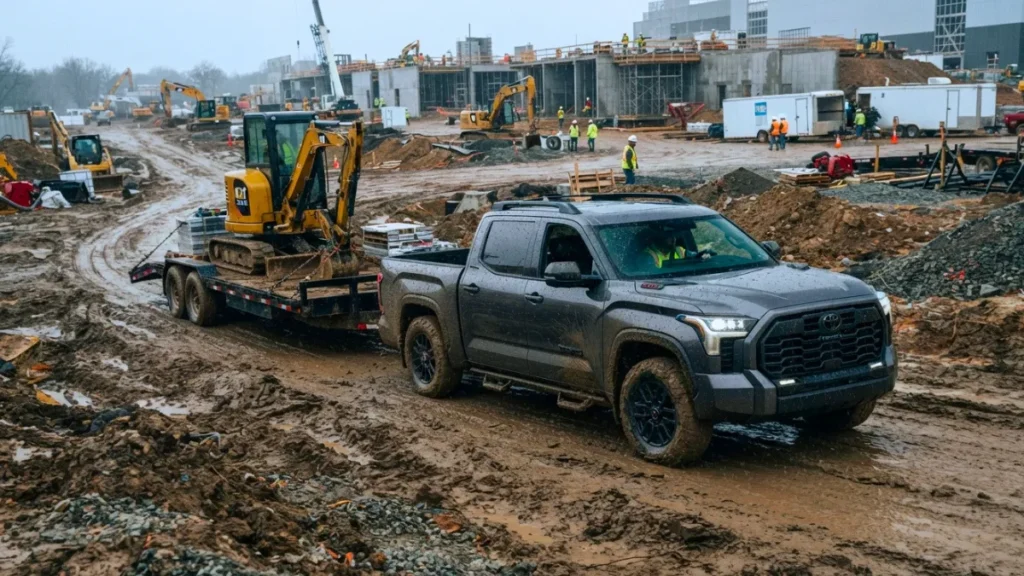
Hard Work – Best Hybrid Pickups for Construction & Heavy Towing
The Exportable Power Revolution on Job Sites
Construction crews don’t care about marketing buzzwords. They care about whether a truck starts every morning and saves time on site. A truck that can run tools, lights, chargers, and small equipment directly from the bed changes job site workflows fundamentally. Hybrid trucks carry a substantial traction battery and advanced power inverter electronics already. By engineering outlets directly into the bed, these trucks transform into highly efficient mobile generators.
Ford F-150 PowerBoost Hybrid: The Contractor’s Ultimate Weapon
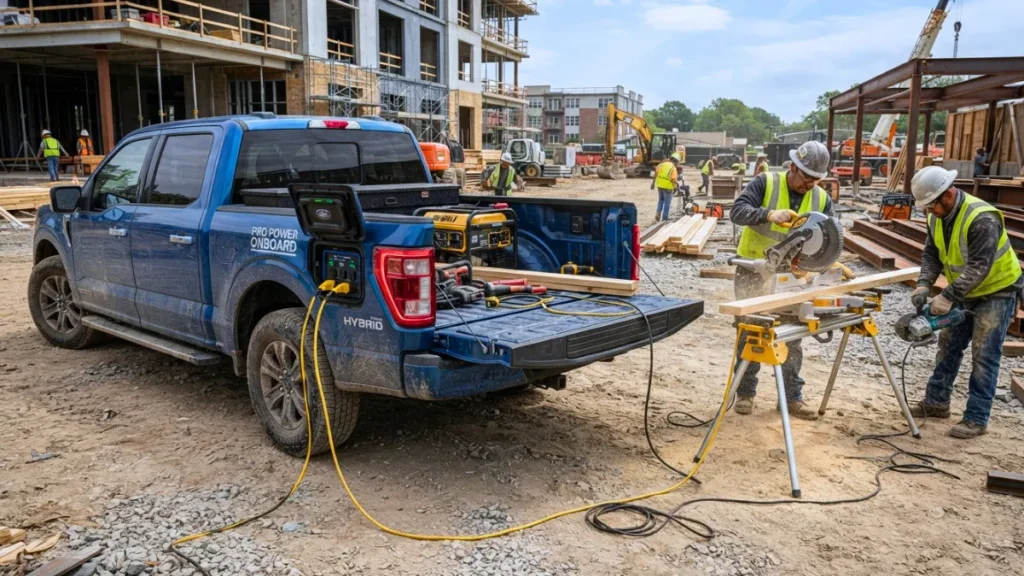
The F-150 PowerBoost Hybrid is the most complete hybrid work truck on sale because it balances strong towing capacity with class-leading onboard power. With the optional **Pro Power Onboard** system configured to its maximum 7.2 kW output, this truck delivers 240V and 120V power directly to the bed. It can run circular saws, heavy miter saws, air compressors, and battery charging banks simultaneously without the noise, emissions, and maintenance headaches of a standalone gas generator.
Mechanically, the PowerBoost pairs a 3.5-liter twin-turbo V6 with a robust electric motor to produce 430 horsepower and 570 lb-ft of torque. It features a maximum towing capacity of up to 12,700 pounds when properly optioned. This allows contractors to comfortably drag heavy equipment trailers, enclosed car haulers, and commercial flatbeds without the truck breaking a sweat.
Toyota Tundra i-FORCE MAX for Severe Work Duty
While Toyota’s i-FORCE MAX platform is exceptionally stout under load, its exportable power options are less revolutionary than Ford’s top tier system. The Tundra offers functional AC outlets in the bed suitable for tool charging and light-duty corded equipment, but it lacks the heavy-duty 7.2 kW electrical architecture needed to power an entire crew’s heavy machinery. The Tundra shines brightest as a traditional, torque-rich half-ton towing platform that uses electricity for effortless mid-range acceleration.
Suspension Stability Under Maximum Payload
Under heavy payload conditions, the frame construction differences become immediate. The Maverick’s unibody setup remains predictable but settles noticeably near its 1,500-lb capacity, making it highly sensitive to uneven weight distribution. The Tundra’s fully boxed steel frame and the F-150’s high-strength steel chassis handle structural loads with far superior composure, maintaining excellent steering tracking and rear-axle dampening over broken job site pavement.
Maintenance & Durability in Harsh Conditions
How Hybrid Systems Survive Mud, Dust, and Thermal Extremes
Traditional truck buyers frequently ask if complex electronics can survive commercial abuse. Modern hybrid components are completely sealed against environmental ingress. Battery packs and high-voltage orange wiring harnesses are engineered to withstand severe weather vibration and extreme temperature cycles. In cold northern climates, the instant electric torque provides highly reliable low-speed traction before the gas engine reaches optimal operating temperatures.
Brake Pad Longevity: The Hidden Hybrid Financial Advantage
One of the most significant cost-saving benefits of fleet hybridization is **regenerative braking**. When slowing down, the electric motor reverses polarity to capture kinetic energy, converting it into electricity to charge the battery. This process handles the vast majority of light to moderate braking events, drastically reducing wear on physical brake pads and rotors. For commercial operators running stop-and-go urban routes daily, this spans the timeline between brake service intervals significantly, lowering fleet downtime and operational costs.
Fleet Durability Forecast
“On commercial duty cycles, hybrid trucks fail in the cooling loops, not the high-voltage batteries. Because these powertrains manage two separate thermal systems—one for the combustion engine and one for the hybrid inverter/battery pack—fluid cleanliness is your absolute lifeline. Clean your radiators regularly on dusty job sites, or the system will automatically de-rate your towing power to protect the electronics.”
— Commercial Fleet Operations Manager, Southwest Region
Frequently Asked Questions
Yes, provided you are driving a Ford F-150 PowerBoost equipped with the 7.2 kW Pro Power Onboard system and have a properly installed home transfer switch. It cannot run multiple central air conditioning units indefinitely, but it easily powers household necessities like refrigerators, freezers, internet routers, lights, and standard 120V home appliances during an emergency.
No. Operating your hybrid vehicle within the manufacturer’s official towing and payload weight guidelines will not impact your warranty coverage. Drivetrain control computers automatically monitor internal thermal parameters to protect the high-voltage electrical components from damage during sustained towing stresses.
Yes, but only for specific trade assignments. The Maverick Hybrid is an exceptional tool for site inspectors, solo tradespeople, property maintenance crews, and estimators who require maximum urban efficiency. It is entirely unsuited for heavy excavation work or pulling commercial dual-axle equipment flatbeds.
The Ford F-150 PowerBoost Hybrid offers the highest overall tow rating capacity at 12,700 lbs, making it the most versatile full-size hauler. However, the Toyota Tundra i-FORCE MAX delivers exceptionally linear mid-range torque fill, making it highly favored by drivers who prefer a robust, traditional mechanical feel over steep highway mountain passes.