




Electric
01
Electric Vehicles
Compact electric cars and electric SUVs designed for daily driving, commuting, and reduced running costs. Explore the full breakdown in the Electric Vehicles section.


A comprehensive guide to Chevrolet models, electric vehicles, SUVs, trucks, performance cars, technology, ownership costs, and buying considerations in the U.S.
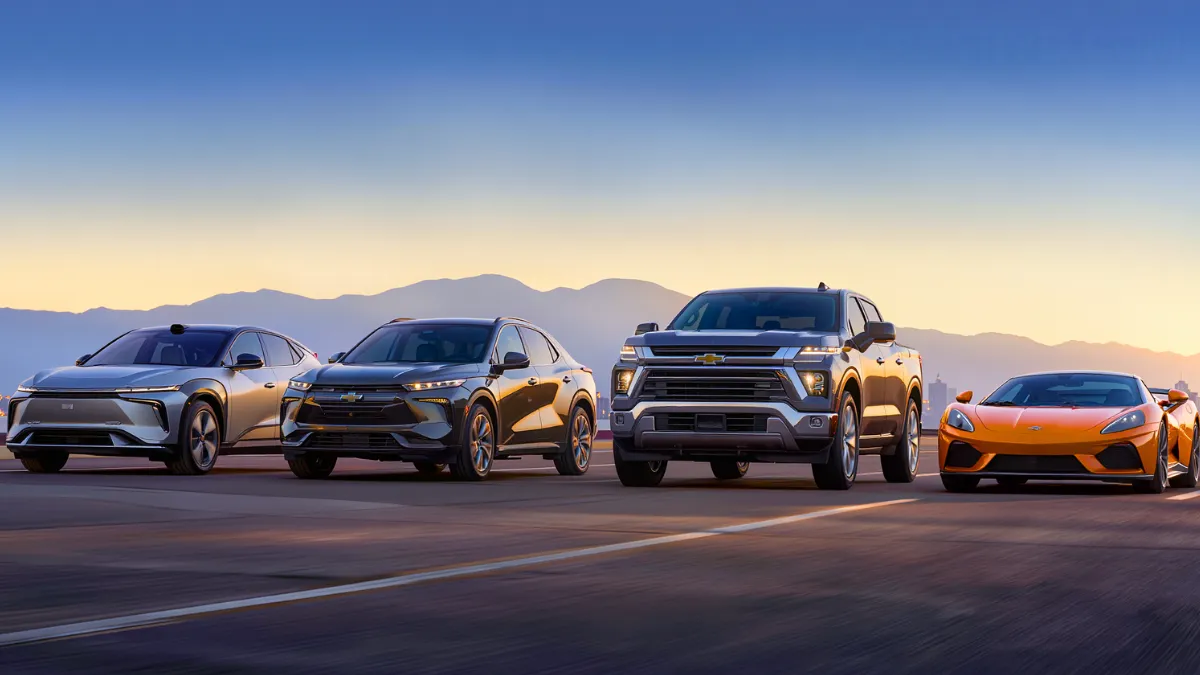
Chevrolet is one of the largest mainstream automotive brands in the United States, with a lineup that spans everyday passenger cars, compact and midsize SUVs, full-size trucks, dedicated electric vehicles, and performance-oriented sports cars. Because the brand covers so many vehicle categories, shopping for a Chevrolet often starts with a basic question: which type of vehicle actually fits your driving needs, budget, and ownership priorities.
Chevrolet's SUV lineup serves buyers who prioritize passenger space, cargo flexibility, and available all-wheel drive for daily commuting and family use. The truck lineup, anchored by the Silverado, targets buyers who need towing capacity, payload, and configurable cab and bed options for work or recreation. Chevrolet's electric vehicle lineup has expanded to include compact EVs, electric SUVs, and other electrified models, giving buyers who want to reduce fuel costs or emissions a range of price points to consider. On the performance side, the Corvette and Camaro represent Chevrolet's enthusiast-focused vehicles, built around handling, power, and driver engagement rather than practicality alone.
This guide is designed to help you understand how these categories differ, what to consider before buying, and where to find deeper, model-specific research. For a broader look at Chevrolet's electric vehicle strategy and model range, see the Chevrolet EV Complete Guide , which expands on many of the electric vehicle topics summarized in this page.
Explore the broader Chevrolet electric vehicle strategy and model range in the Chevrolet EV Complete Guide .
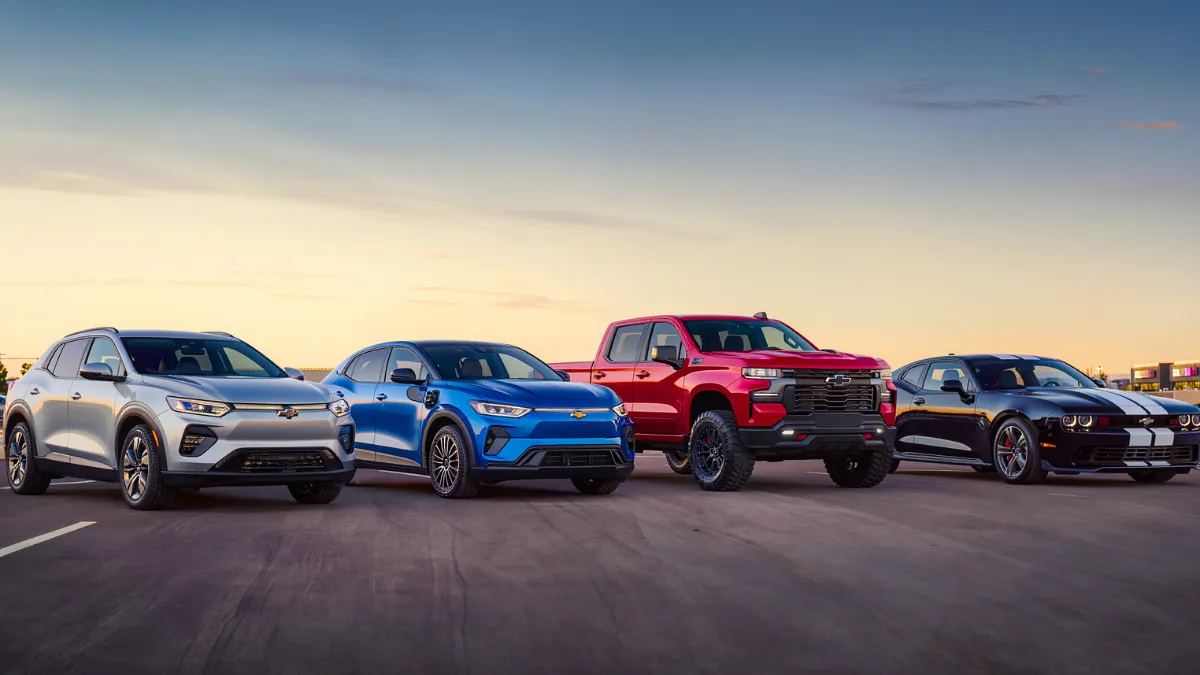
Chevrolet organizes its lineup into five broad categories. Each category serves a different type of buyer, and many shoppers cross-shop between two or three categories before deciding what matters most for their situation.
Compact electric cars and electric SUVs designed for daily driving, commuting, and reduced running costs. Explore the full breakdown in the Electric Vehicles section.
Compact, midsize, and electric SUVs built for families and everyday versatility. See the SUV section for a full comparison of body styles.
Work-ready and off-road capable trucks built around the Silverado platform. Details are covered in the Trucks section.
The Corvette and Camaro represent Chevrolet's enthusiast and track-oriented models. Read more in the Performance section.
Practical SUVs and crossovers built around passenger comfort, cargo room, and available driver-assistance technology, discussed throughout the SUV and Safety sections.
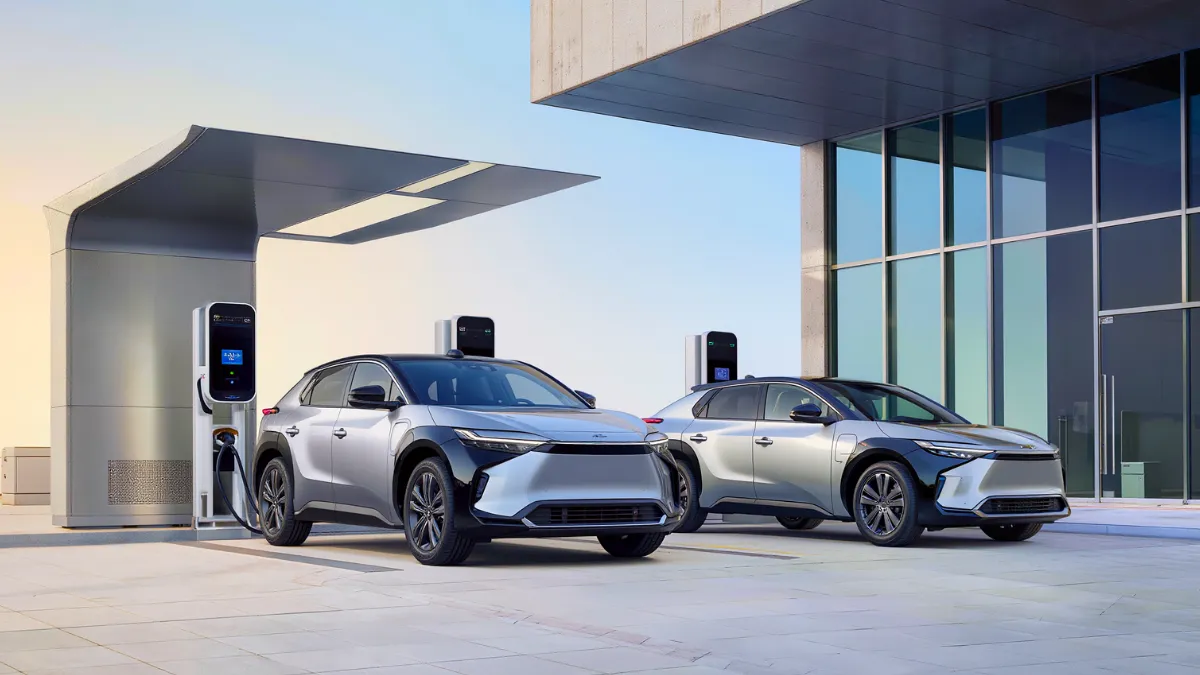
Chevrolet's electric vehicle strategy centers on offering EVs at different price points, from compact and value-oriented models to larger electric SUVs with more range and cargo space. Understanding how these models differ helps narrow down which one fits your budget and driving habits.
Chevrolet EV models generally fall into a few categories: compact electric hatchbacks aimed at value-conscious commuters, and electric SUVs built for buyers who need more interior space or all-wheel drive. Range, charging speed, and available features vary by model and model year, so it is worth reviewing the specific vehicle you are considering rather than assuming all Chevrolet EVs share the same specifications. For a full breakdown of the brand's EV lineup and strategy, the Chevy Electric Cars overview is a useful starting point, and buyers comparing trims and pricing structures across models can reference the Chevy Electric Cars: Models & Buying guide .
Explore Chevrolet's broader electric vehicle lineup and strategy, including the major EV categories available to buyers.
Read the EV overviewCompare Chevrolet electric models, trims, and pricing structures when narrowing down your purchase options.
Explore the buying guideDepending on model year and eligibility, some Chevrolet EVs may qualify for federal or state incentive programs, but these programs change frequently and are subject to income limits, price caps, and manufacturing requirements. Buyers should confirm current eligibility directly with a dealer or official government resource at the time of purchase rather than relying on incentive information from an older article.
Chevrolet's broader approach to zero-emission driving connects to wider industry trends covered in Carshyd's Electric Cars & Zero Emission guide and the general Electric Vehicles (EVs) overview , both of which provide useful context for buyers who are new to EV ownership in general, not specific to Chevrolet.
Related EV Resources
Each Chevrolet EV has its own positioning, price range, and target buyer. The cards below summarize the main models and link to deeper, model-specific coverage.
The Bolt has served as Chevrolet's value-focused compact electric car, aimed at buyers who want lower upfront cost and efficient city driving. For a detailed walkthrough of the current guide, see the Chevy Bolt Electric Car Guide .
Buyers researching long-term dependability can also review the Chevy Bolt reliability analysis , and those looking at a specific model year should check the 2023 Chevrolet Bolt EV Review for hands-on impressions from that year.
The Blazer EV positions Chevrolet in the electric midsize SUV segment, aimed at buyers who want SUV proportions with an electric powertrain. Full details are available in the 2025 Chevrolet Blazer EV guide .
The Equinox EV targets buyers who want a compact electric SUV with everyday practicality. Read the full breakdown in the 2024 Chevrolet Equinox EV guide .
The Spark EV was an earlier entry in Chevrolet's electric lineup, worth understanding for buyers researching Chevrolet's EV history or shopping the used market. See the Chevy Spark EV overview for background.
Specifications, range, and pricing vary by trim and model year. Always confirm current figures with a dealer or the manufacturer before making a purchase decision.
Owning a Chevrolet EV involves a different routine than owning a gasoline vehicle. Understanding charging options and battery expectations up front helps set realistic expectations.
Most EV owners do the majority of their charging at home overnight using a Level 2 charging setup, reserving public charging for longer trips or top-ups away from home. Charging speed depends on the vehicle's onboard charger, the charging equipment used, and, for DC fast charging, the station's power output. Carshyd's dedicated EV Charging guide covers charger types, installation considerations, and planning tips in more depth.
Modern EV batteries are engineered to retain the majority of their usable capacity over many years of ownership, though some gradual degradation is normal and depends on factors like climate, charging habits, and total mileage. For a detailed look at what affects battery lifespan and how to care for it, see EV Battery Lifespan & Maintenance . At the end of a battery's usable life, recycling and second-life programs are increasingly used to recover materials; the EV Battery Recycling Guide explains how this process generally works.
Official range estimates are measured under controlled testing conditions and often differ from real-world results, which are affected by temperature, driving speed, terrain, and climate control use. Before assuming a Chevrolet EV will match its rated range in daily use, it's worth reviewing Carshyd's guide to Electric Car Range Claims to understand how to interpret these figures realistically.
Battery care, charging habits, and long-term capacity retention are important considerations when evaluating an electric vehicle beyond its advertised range.
Official range estimates are useful for comparing vehicles, but actual results can vary with temperature, speed, terrain, and climate control use. See Electric Car Range Claims for additional context.
ELECTRIFIED POWERTRAINS
Alongside its fully electric models, Chevrolet's broader electrification strategy includes interest in hybrid and plug-in hybrid powertrains, which combine a gasoline engine with electric assistance.
POWERTRAIN BASICS
A standard hybrid uses its electric motor primarily to improve fuel efficiency and cannot be plugged in, while a plug-in hybrid (PHEV) adds a larger battery that can be charged externally and driven on electric power alone for a limited distance before the gasoline engine takes over. The distinction matters for buyers deciding between the two, since it affects charging habits, fuel economy, and available tax incentives. Carshyd's Hybrid Car: Meaning & Types guide breaks down these differences in more detail for shoppers who are unfamiliar with hybrid terminology.
CHEVROLET ELECTRIFICATION
It's worth noting that some hybrid concepts discussed in the automotive press—such as electrified pickup truck powertrains—represent future or exploratory technology rather than vehicles currently for sale. Carshyd's piece on Chevy Hybrid Pickup Trucks: Future Innovations should be read in that context; it discusses potential direction and innovation rather than a confirmed current production hybrid truck lineup.
BUYER CONTEXT
Chevrolet's electrification strategy can involve different technologies and future product directions. Buyers should distinguish between vehicles currently available for sale and concepts or future technologies discussed in automotive coverage.
SUV LINEUP
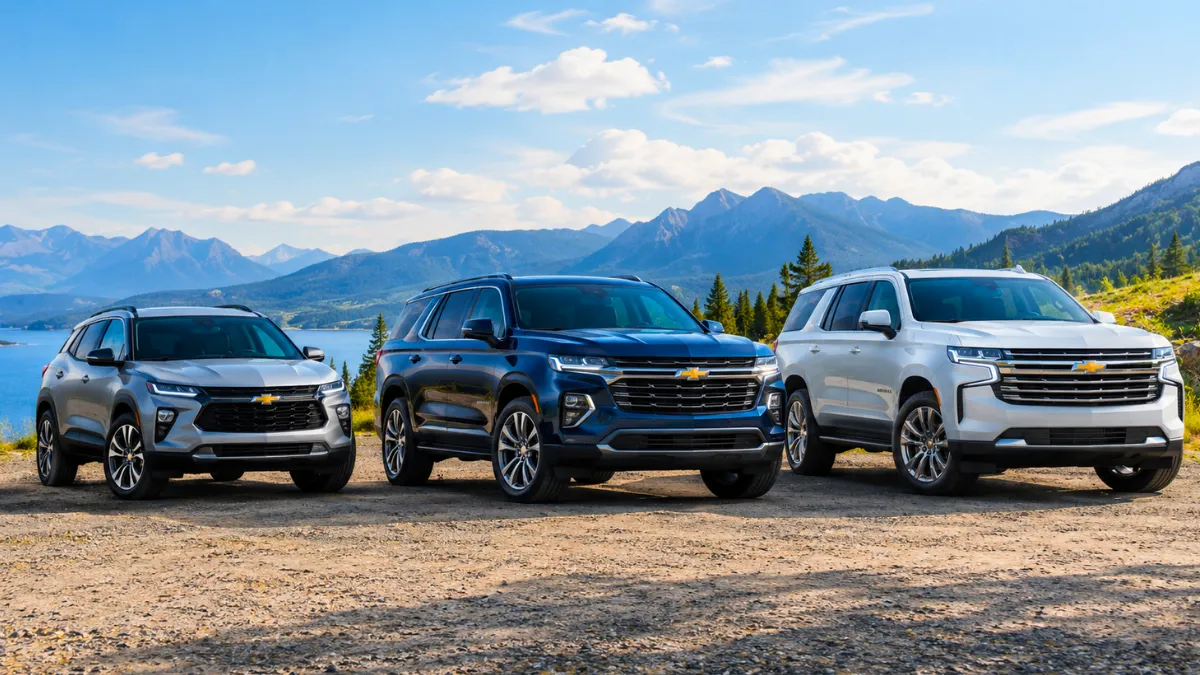
Chevrolet's SUV lineup spans compact, midsize, and electric models, giving family buyers a range of sizes and drivetrain options to match their household needs.
COMPACT
Compact SUVs generally suit buyers who prioritize maneuverability and efficiency.
MIDSIZE
Midsize and larger SUVs offer additional passenger and cargo room, which matters for families that regularly carry passengers, gear, or towed trailers.
ELECTRIC SUV
Chevrolet's electric SUVs extend this same size logic to electrified models.
Chevrolet's electric SUVs extend this same size logic to electrified models: the Equinox EV targets the compact electric SUV segment, while the Blazer EV sits in the midsize electric SUV category.
When comparing SUVs, cargo space, seating configuration, and available towing capacity are practical differentiators, along with whether all-wheel drive is standard or optional. Many Chevrolet SUVs offer AWD as an available option, which can matter significantly for buyers in regions with snow, rain, or unpaved roads. Carshyd's SUVs, Four-Wheel Drive & AWD guide explains how these systems work and when they're worth prioritizing.
PICKUP TRUCKS
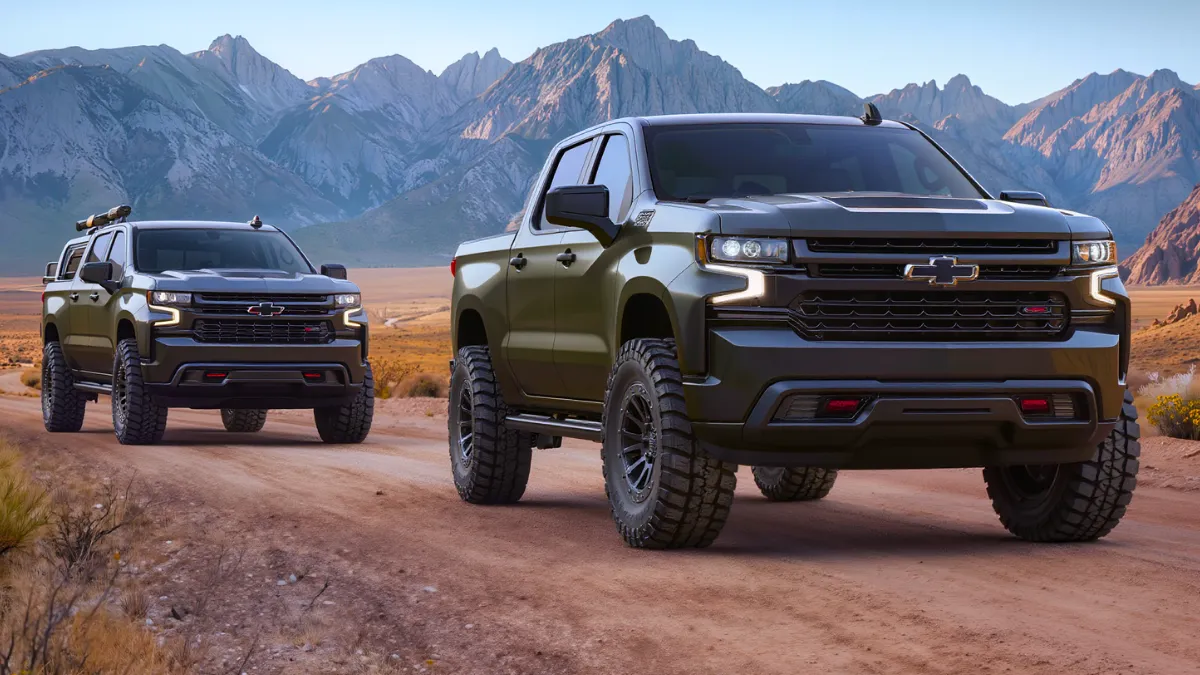
The Chevrolet Silverado is the brand's core full-size pickup truck, offered across a range of trims aimed at everything from work-duty hauling to off-road recreation.
SILVERADO PLATFORM
The Chevrolet Silverado is the brand's core full-size pickup truck, offered across a range of trims aimed at everything from work-duty hauling to off-road recreation.
OFF-ROAD CAPABILITY
Truck buyers typically weigh towing capacity, payload, cab configuration, bed length, and drivetrain when choosing a trim. Off-road-focused variants add reinforced suspension components and off-road-tuned hardware for buyers who spend time on unpaved terrain; Carshyd's 2024 Chevrolet Silverado ZR2 review covers one such off-road-oriented trim in detail, including how it differs from standard Silverado configurations.
ELECTRIFIED TRUCK TECHNOLOGY
As with the rest of the industry, electrification is gradually extending into the truck segment, and Chevrolet has explored hybrid and electrified powertrain concepts for its pickup lineup. Buyers curious about where this technology may be headed can review Carshyd's discussion of Chevy Hybrid Pickup Trucks: Future Innovations, keeping in mind that this content addresses forward-looking technology rather than a currently shipping hybrid Silverado trim.
Before buying a truck, confirm current towing and payload figures directly from Chevrolet or a dealer, since these numbers vary significantly by configuration, engine, axle ratio, and equipment package.
ENTHUSIAST VEHICLES
Chevrolet's performance lineup is built around two nameplates: the Corvette sports car and the Camaro muscle car. Both are engineered around handling, power delivery, and driver engagement rather than everyday practicality.
SPORTS CAR
The Corvette is Chevrolet's flagship sports car, and its current generation uses a mid-engine architecture, a notable departure from the front-engine layout used in earlier Corvette generations. Mid-engine placement affects weight distribution and handling characteristics, which is a key part of the model's driver appeal. For a detailed specifications breakdown, see Incredible Specifications of the Chevrolet Corvette C8, and for model-year specific coverage of the Stingray trim, review The 2024 Chevrolet Corvette Stingray. Buyers wanting a broader introduction to the Corvette as a sports car overall can start with Chevrolet Corvette: Sports Car Overview.
MUSCLE CAR
The Camaro has long represented Chevrolet's muscle car segment, competing on power, styling, and driving feel. Because muscle car production and trim availability change over time, buyers should treat model-year specific content as historical reference rather than assuming it reflects the current lineup. Carshyd's coverage of the 2025 Chevrolet Camaro ZT1 and the 2024 Chevrolet Camaro ZL1 Coupe provide detail on specific high-performance trims from those respective model years.
PERFORMANCE OWNERSHIP
For both nameplates, ownership costs tend to run higher than mainstream Chevrolet models due to performance-oriented tires, brakes, and maintenance intervals, which is worth factoring into a performance-car purchase decision alongside the vehicle's driving characteristics.
OWNERSHIP COSTS
Reliability and long-term ownership costs vary by model, powertrain, and how a vehicle is maintained. Rather than treating any single vehicle as universally "the most reliable," it's more useful to understand what drives ownership costs for each vehicle type.
MAINTENANCE
Gasoline-powered Chevrolet models require conventional maintenance items such as oil changes, brake service, and fluid replacement on a schedule set by the manufacturer. Electric models eliminate oil changes and reduce brake wear thanks to regenerative braking, but they introduce different maintenance considerations around battery health, software updates, and 12-volt auxiliary systems.
RESEARCH
Independent reliability data and owner-reported reliability trends are useful references when comparing specific models. Carshyd's Chevy Bolt reliability analysis is one example of model-specific reliability research worth reviewing before buying a used or new Bolt.
EV OWNERSHIP
For EV buyers specifically, understanding battery care is a central part of managing long-term ownership costs; Carshyd's EV Battery Lifespan & Maintenance guide outlines practical steps for maximizing battery longevity.
Modern Chevrolet vehicles combine structural crash protection with driver-assistance technology built around cameras, radar, and ultrasonic sensors.
Driver-assistance features such as automatic emergency braking, lane-keeping assistance, adaptive cruise control, and blind-spot monitoring rely on a network of sensors that require periodic calibration, particularly after windshield replacement or front-end collision repair.
Software updates can also refine how these systems behave over a vehicle's life. Availability of specific safety features varies by trim and model year, so buyers should confirm which systems are included, standard, or optional before purchase.
Carshyd's Car Safety Features Guide explains how these technologies work across the industry and what to look for when comparing vehicles.
Explore the Car Safety Features Guide →Technology plays an increasingly central role in how Chevrolet vehicles are used day to day, from infotainment and connected services to the software that manages EV charging and driver assistance.
Infotainment systems handle navigation, smartphone integration, and vehicle settings, while connected services can provide remote vehicle status, software updates, and diagnostics depending on subscription and model.
On the EV side, charging and range-management software has become an important differentiator between models, since it affects how efficiently a vehicle plans routes and manages battery use.
Navigation, smartphone integration, and vehicle settings.
Remote vehicle status, updates, and diagnostics.
Charging and range-management functions for electric vehicles.
Looking further ahead, vehicle-to-everything (V2X) communication is an emerging technology category that could allow vehicles to exchange data with infrastructure and other vehicles; Carshyd's Vehicle-to-Everything (V2X) Technology guide explains the concept and its potential applications.
For a broader look at where automotive technology is headed across the industry, not specific to any single brand, see The Future of Automotive Technology .
Explore Automotive Technology →Learn how connected vehicle communication can link vehicles, infrastructure, and other road users through emerging V2X technology.
Explore the V2X Technology Guide →All-wheel drive (AWD) and four-wheel drive (4WD) serve different purposes, and choosing between them depends on how and where you plan to drive.
AWD systems typically operate automatically and continuously adjust power distribution between wheels to improve traction in rain, snow, or light off-pavement conditions, making them common on SUVs and crossovers.
4WD systems, more common on trucks and off-road-focused vehicles, often include driver-selectable modes and low-range gearing designed for more demanding off-road terrain and towing.
Towing capability affects how effectively a vehicle can handle trailers and heavy loads beyond the drivetrain alone.
Ground clearance is an important consideration when driving over rough, uneven, or off-pavement terrain.
Tire selection also affects traction and off-road capability, meaning drivetrain choice is only one part of the equation.
Carshyd's SUVs, Four-Wheel Drive & AWD guide breaks down these systems in more detail, including how to decide which one fits your driving conditions.
When comparing Chevrolet models against each other or against competitors, it helps to evaluate the same set of factors consistently rather than focusing on a single spec.
| Factor | Why it matters |
|---|---|
| Purchase price | Sets your baseline budget and affects financing terms and monthly payment. |
| Range or fuel economy | Determines how often you'll need to charge or refuel based on your typical driving. |
| Horsepower & torque | Affects acceleration, towing performance, and overall driving character. |
| Towing & payload | Relevant for truck and SUV buyers who haul trailers, equipment, or cargo. |
| Cargo space | Important for family use, road trips, and everyday errands. |
| Drivetrain (FWD/AWD/4WD) | Impacts traction, handling, and capability in poor weather or off-road conditions. |
| Charging or fueling access | Determines how practical daily ownership will be based on where you live and drive. |
| Warranty coverage | Affects out-of-pocket repair risk during the ownership period. |
| Total ownership costs | Combines maintenance, insurance, depreciation, and energy costs over time. |
Rather than ranking Chevrolet models against one another in the abstract, use this table as a framework: identify which two or three factors matter most for your situation, then compare specific models against those priorities using current manufacturer data.
Answers to common questions about Chevrolet electric vehicles, SUVs, trucks, performance cars, charging, ownership, and buying considerations.
For buyers with reliable access to home or nearby charging, Chevrolet EVs can work well for daily commuting and local driving. Buyers without consistent charging access may find a hybrid or gasoline model more practical.
Chevrolet's electric lineup includes compact electric cars like the Bolt and electric SUVs such as the Equinox EV and Blazer EV. Availability varies by model year and market.
EV batteries are designed to retain the majority of their capacity over many years, though real-world degradation depends on climate, charging habits, and usage. See the EV Battery Lifespan & Maintenance guide for more detail.
Charging cost depends on local electricity rates, battery size, and whether you charge at home or at a public station, with public fast charging typically costing more per session than home charging.
Many Chevrolet SUVs offer AWD as a standard or optional feature depending on trim. Confirm availability for the specific model and trim you're considering.
The Silverado lineup is Chevrolet's primary towing-capable truck platform, with towing capacity varying by engine, configuration, and axle ratio. Confirm exact figures for your specific build.
The Corvette is widely regarded as a capable performance option in its class, built around a mid-engine layout in its current generation. See the Corvette C8 specifications guide for details.
Review maintenance history, remaining warranty, and, for EVs, battery health and charging history. A pre-purchase inspection is recommended for any used vehicle, electric or gasoline.
EVs typically avoid oil changes and experience less brake wear due to regenerative braking, which can lower routine maintenance costs compared to gasoline vehicles, though tire and battery-related costs still apply.
Charging speed and convenience depend on your home setup and access to public charging near your routes. The EV Charging guide outlines charger types and planning considerations.
Treat official range estimates as a best-case reference rather than a guarantee, since real-world range varies with temperature, speed, and driving style. See Electric Car Range Claims for more context.
Midsize and compact SUVs are generally the most practical choice for family use, balancing passenger space, cargo room, and available driver-assistance features.
Charging access, passenger and cargo requirements, towing needs, drivetrain capability, ownership costs, and performance priorities can all change which Chevrolet vehicle makes sense for a particular buyer.